


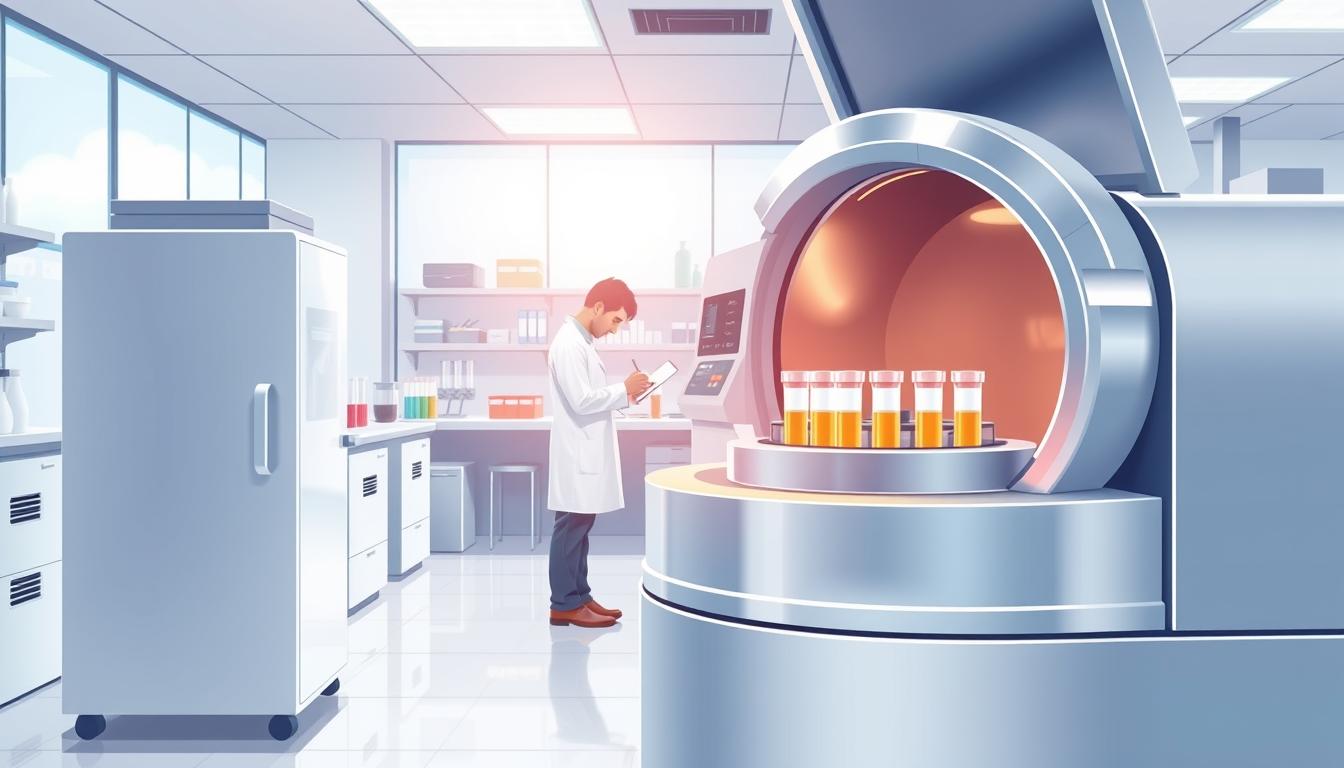
Ever wondered how scientists separate tiny particles in a split second? What technology lets researchers unlock secrets of complex samples?
A centrifuge is a groundbreaking lab tool. It separates substances of different densities through fast rotation. This device uses centrifugal force to change scientific research and medical diagnostics.
The centrifugation process lets researchers isolate cells, proteins, and other tiny parts with great precision. Scientists use these machines to process biological samples, analyze chemical compounds, and do important experiments in many fields.
Centrifuges are key in understanding complex biological systems. They separate materials based on density, making them essential in today’s research labs.
Key Takeaways
- Centrifuges separate substances using rapid rotational force
- Critical equipment in scientific and medical research
- Enables precise isolation of microscopic components
- Used across multiple scientific disciplines
- Helps researchers understand complex biological systems
Introduction to Centrifuges
Centrifuges are amazing scientific tools that have changed lab work a lot. They can separate mixtures based on how dense they are. These devices use spinning to analyze and process complex samples very precisely.
Scientists use centrifuges for many different studies. They work by creating strong gravitational forces. This helps researchers find out about different densities in samples.
Defining the Centrifuge
A centrifuge is a special machine that separates particles in liquids by spinning them fast. It spins samples at very high speeds. This way, it can:
- Isolate different molecular components
- Analyze biological and chemical samples
- Process materials with exceptional accuracy
Historical Development of Centrifuge Technology
The history of centrifuges started in the mid-19th century. Key milestones in centrifuge development include:
- 1864: First commercial centrifuge unveiled
- 1869: Friedrich Miescher pioneered laboratory centrifuge applications
- Antonin Prandtl developed specialized dairy centrifuges for cream separation
“The centrifuge revolutionized scientific research by providing unprecedented insights into material composition and separation techniques.”
Today, centrifuges can spin up to 150,000 rpm. This shows how far technology has come in separating mixtures efficiently and accurately.
How Centrifuges Work
Centrifuges are key scientific tools that use centrifugal force to separate materials. They make complex separation processes simple through advanced engineering.
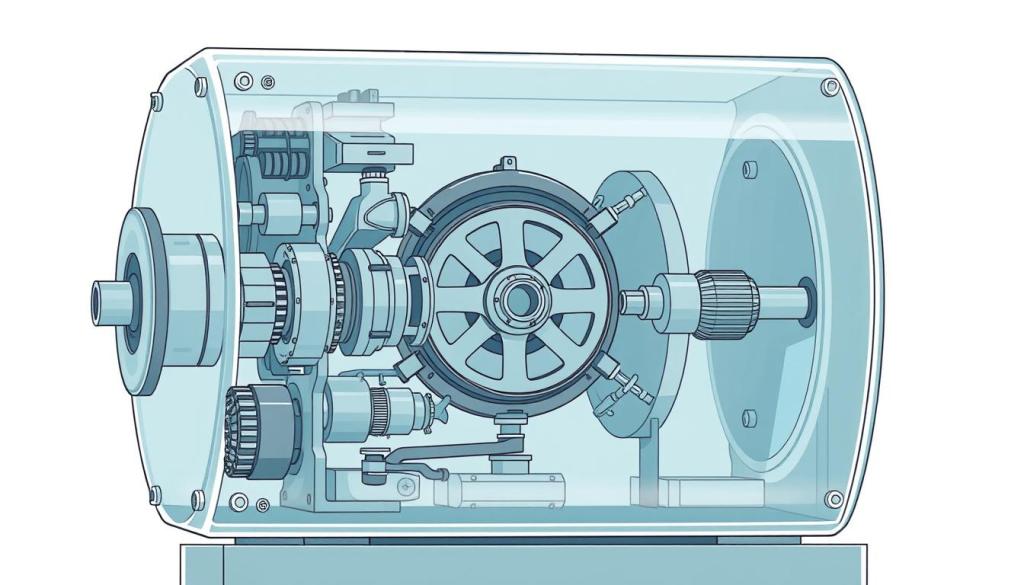
Centrifuges work by spinning liquid samples fast. This spinning creates a strong centrifugal force. It pushes denser particles away, making quick and clean separation possible.
Principle of Centrifugation
Centrifugation uses basic physics to separate substances. Important factors include:
- Particle density differences
- Rotational speed
- Relative centrifugal force (RCF)
- Sample volume and container design
Components of a Centrifuge
Modern centrifuges have key parts that work together for precise separation:
| Component | Function |
|---|---|
| Rotor | Holds sample tubes and enables high-speed rotation |
| Motor | Generates rotational energy for separation |
| Control Panel | Manages speed, time, and temperature settings |
| Safety Mechanisms | Prevents operational errors and ensures user protection |
Researchers can achieve amazing separation by understanding centrifugal force. Centrifuges can spin up to 26,000 RPM. This creates forces much stronger than Earth’s gravity, making material purification possible in many fields.
“Centrifugation transforms complex mixtures into precisely separated components through the elegant application of physics.” – Scientific Research Quarterly
Types of Centrifuges
Centrifuges are key in labs for biomedical research and industrial uses. They work by spinning fast to separate different densities. This makes them vital in science and industry.
Laboratory Centrifuges
Laboratory centrifuges are precise tools for small samples in biomedical research. They come in different types:
- Benchtop centrifuges: Perfect for smaller labs
- Microcentrifuges: For very small samples
- Ultracentrifuges: High-speed for advanced research
Industrial Centrifuges
Industrial centrifuges are strong for big volumes and various materials. They’re used in many sectors for important separations:
- Continuous flow centrifuges for big volumes
- Disc stack centrifuges for top separation
- Scraper bowl centrifuges for tough separations
Clinical Centrifuges
Clinical centrifuges are needed for precise medical tests. Hematocrit and refrigerated centrifuges are key for blood and sample analysis in labs.
Choosing a centrifuge depends on the research or industrial needs. Important factors include speed, force, and temperature.
Applications in Scientific Research
Scientific instruments are key in advancing biomedical research. Centrifuges are essential for separating mixtures and processing complex biological samples. They help researchers gain deep insights in various scientific fields.

Centrifuges have changed laboratory techniques. They can isolate and analyze tiny components with great accuracy.
Biological Sample Processing
In biological research, centrifuges are crucial for several important tasks:
- Isolating specific cell types from mixed samples
- Concentrating cell populations
- Removing unwanted cells
- Preparing samples for detailed molecular studies
Chemical Analysis Techniques
Researchers use centrifugation for advanced chemical separation and analysis:
| Technique | Primary Application |
|---|---|
| Density Gradient Centrifugation | Isolating immune cell subpopulations |
| Ultracentrifugation | Extracting exosomes from cell cultures |
| Molecular Separation | Purifying nucleic acids |
“Centrifuges transform complex biological mixtures into analyzable components, driving scientific discovery.” – Research Methodology Journal
Centrifuges are not just for traditional labs. They support innovative research in stem cell therapy, genetics, and drug development. These tools keep expanding our knowledge of biological systems.
Utilization in Medical Laboratories
Medical labs use centrifugation a lot for testing and research. The right lab equipment is key to separating samples accurately.
Centrifuges are vital in hospitals. They help doctors get important info from patient samples.
Blood Separation Techniques
Blood separation is a big part of medical testing. It involves a few important steps:
- Spinning whole blood at specific speeds
- Separating blood parts by density
- Getting plasma, red blood cells, and white blood cells
“Precision in blood separation determines the quality of diagnostic insights.”
Urine Analysis
Urine tests also use centrifugation. Labs use it to:
- Make sediment easier to see under a microscope
- Find cells
- Spot health issues
The field of biomedical research keeps growing. Centrifugation is still a key part of today’s tests.
Role in Environmental Testing
Scientific instruments are key to understanding and protecting our environment. Centrifuges are essential for environmental researchers. They help analyze complex ecological samples with great precision and speed.
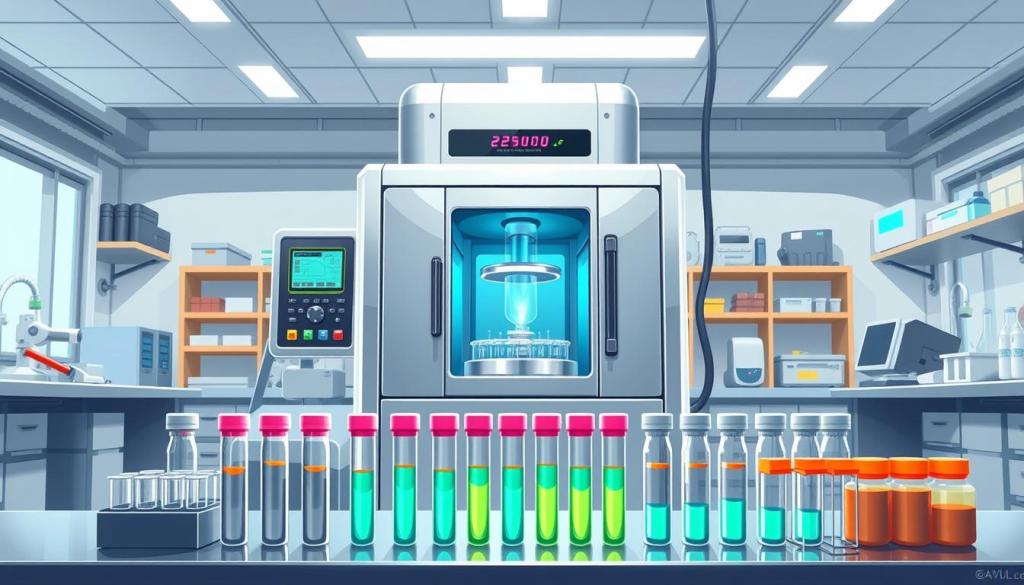
Environmental labs use centrifuges for separating mixtures and purifying materials. These machines help scientists get important insights from water and soil samples. This is crucial for detailed environmental monitoring.
Water Quality Assessment Techniques
Testing water quality needs advanced separation methods. Centrifuges are great at this. They:
- Concentrate suspended particles
- Isolate microorganisms
- Extract dissolved chemical compounds
Soil Sample Analysis Strategies
Centrifuges help break down complex soil compositions. They extract valuable info about environmental health. Key uses include:
- Separating soil components by density
- Analyzing mineral content
- Detecting environmental pollutants
“Centrifugation transforms environmental research by providing unprecedented precision in sample analysis.” – Environmental Science Research Institute
Next-generation centrifuges are very energy-efficient. Some models cut energy use by over 70%. These green scientific tools give accurate results and reduce environmental harm.
Centrifuge Safety Protocols
Laboratory equipment like centrifuges needs strict safety rules to keep people safe and instruments working right. Knowing and following these safety steps is key in using centrifuges.
Keeping labs safe means knowing the dangers of using centrifuges. Scientists must learn all about safety rules to avoid accidents and make sure instruments work well.
Safe Operating Procedures
Important safety steps for using centrifuges include:
- Check centrifuge tubes to make sure they’re right for the job
- Make sure samples are balanced to within 0.1 grams
- Wait 10 minutes after spinning before opening the lid
- Always wear the right protective gear
Maintenance and Calibration
Keeping equipment in good shape is vital. Experts suggest these upkeep tips:
| Maintenance Activity | Frequency |
|---|---|
| Routine Inspection | Before Each Use |
| Professional Calibration | Annually or More Frequently |
| Rotor Condition Assessment | Every 6 Months |
Warning signs like strange noises or too much vibration need quick action and might need a pro.
“Keeping equipment in good shape cuts down on the chance of it breaking and helps it last longer.”
Following these safety steps helps scientists avoid dangers in centrifuge use and keeps the lab safe.
Innovations in Centrifuge Technology
Scientific instruments are always getting better, and centrifuges are leading the way. Today’s centrifuges are more powerful, precise, and useful in labs and industries.
Cutting-Edge Design Improvements
New advancements in centrifuge tech have changed the game. Key updates include:
- Improved rotor designs for better efficiency
- Less vibration, down to 0.003mm
- Better temperature control
- Smart digital controls
Performance Breakthroughs
Modern centrifuges have amazing specs that boost research:
| Model | Max Speed | Centrifugal Force | Cooling Capability |
|---|---|---|---|
| CT-G185R | 32,531 xg | Rapid cooling (4 minutes) | ±1℃ accuracy |
| CT-Q175R | 17,500 rpm | 29,102 xg | 4°C in 4 minutes |
Future Trends in Centrifuge Technology
The future of centrifuges looks bright with new tech trends:
- AI for better monitoring
- More automation in labs
- Energy-saving designs
- Smaller lab tools
These changes are making research and industry work better. They help scientists and industries do their jobs more accurately and efficiently.
The continuous evolution of centrifuge technology shows the amazing potential of today’s scientific tools.
Conclusion: The Significance of Centrifuges
Centrifuges are key scientific tools that have changed research in many areas. They are essential lab equipment that helps separate substances by density. This gives scientists valuable tools to study complex biological and chemical systems.
Centrifuges do more than just process samples. They are crucial in medical diagnostics and pharmaceutical research. They can separate components at high speeds, from 14,000 to 20,000 RPM. This makes them vital in medical, environmental, and drug development fields.
Technological Evolution and Future Potential
Centrifuge technology keeps getting better. Modern ones can handle from 24 microtubes to big samples. Some industrial models can even handle a lot of work. New energy-saving tech, like Variable Frequency Drives, also improves their efficiency.
Global Scientific Impact
As research gets more complex, centrifuges will keep being essential. They are great at separating blood, purifying drugs, and analyzing the environment. These tools are crucial for future scientific discoveries, helping us learn more about the world.
FAQ
What is the primary purpose of a centrifuge?
A centrifuge separates mixtures by density. It spins samples fast. This makes denser particles move away from the center.
How does a centrifuge work in a laboratory setting?
In labs, centrifuges spin samples at high speeds. This creates a force that separates particles by weight, density, and size. It’s key for isolating cells and purifying proteins.
What are the main types of centrifuges used in research?
There are three main types: lab, industrial, and clinical centrifuges. Each is designed for different uses, from molecular biology to industrial processing.
What medical applications do centrifuges have?
In medical labs, centrifuges separate blood into its components. They’re also used in urine analysis to diagnose conditions by examining cells and molecules.
Are there any safety considerations when using a centrifuge?
Yes, safety is key. Users must follow procedures, wear protective gear, and maintain the machine. This prevents accidents and ensures accurate results.
How are centrifuges used in environmental testing?
Environmental scientists use centrifuges to assess water quality and analyze soil. They help separate contaminants, aiding in pollution monitoring and ecological research.
What recent innovations have improved centrifuge technology?
New centrifuges have advanced rotors, higher speeds, and digital controls. Trends include miniaturization, energy efficiency, and AI integration for precise research.
Can centrifuges be used in different scientific fields?
Yes, centrifuges are used in many fields. They’re crucial in molecular biology, chemistry, and more. They help prepare and analyze samples for research.
What makes centrifuges essential in modern research?
Centrifuges are vital for separating mixtures precisely. They help isolate components and purify samples. This is key for scientific progress in many areas.
How long have centrifuges been used in scientific research?
Centrifuges have a long history, starting in dairy processing. They’ve evolved into sophisticated tools over a century. This has greatly advanced research techniques.





Leave a Comment
Your email address will not be published. Required fields are marked *