


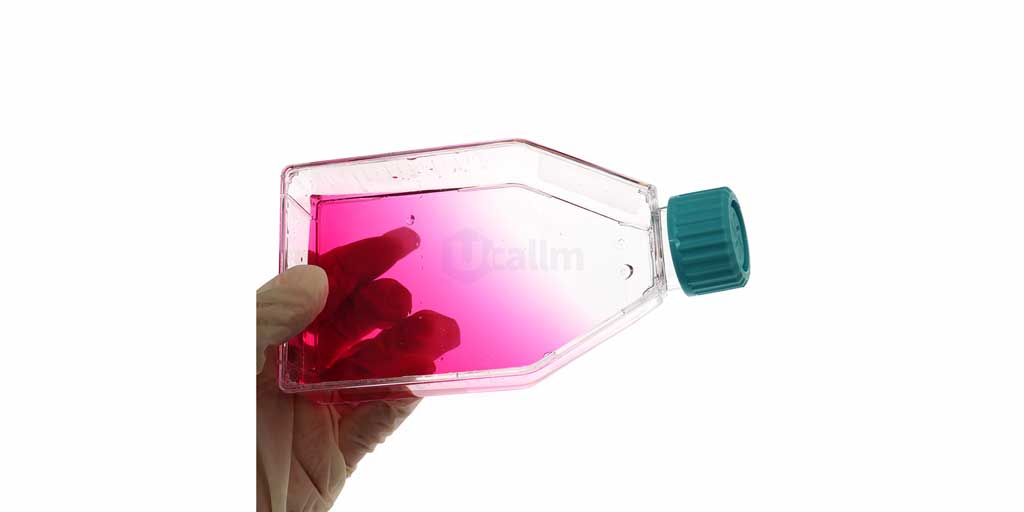
Cell culture is a fundamental research technique in life sciences and has become an important means of modern biomedical research. Cell culture Flasks are commonly used and important laboratory consumables in cell culture experiments. Choosing the appropriate cell culture Flask has a crucial impact on the growth of cells and the accuracy of experimental results.Cell culture flasks can be classified into Plug Seal caps (requiring gas exchange) and sealed caps (suitable for transporting or anaerobic cells) based on the type of cap. It is classified into torticollis and straight neck according to the different designs of the neck. The culture areas include 12.5 cm², 25 cm², 75 cm², 175 cm², 225 cm², etc.There are TC treatment and non-TC treatment surface treatment methods. So, how to choose a suitable cell culture flask for the experiment from so many specifications?
Selection of Culture Area
The culture areas of the cell culture flasks include 12.5 cm², 25 cm², 75 cm², 175 cm² and 225 cm². The number of cells that can be cultured in culture flasks of different culture areas varies (see Table 1), and the final application scenarios will also be different. The selection of the culture area mainly depends on the flux level required for the experiment and the specific experimental requirements.
Cell Cultrue Flask | Base Area(cm²) | Add the amount of culture medium(mL) | Available cell quantity |
25cm² plastic culture flask | 25 | 5 | 5×10⁶ |
75cm² plastic culture flask | 75 | 15~30 | 2×10⁷ |
25cm² glass culture flask | 19 | 4 | 3×10⁶ |
100cm² glass culture flask | 37.5 | 10 | 6×10⁶ |
250cm² glass culture flask | 78 | 15 | 2×10⁷ |
2500cm² rotating culture flask | 700 | 100~250 | 2.5×10⁸ |
Table 1 General Information of Different Types of Cell Culture Flask
Selection of Bottle Cap Type
There are various styles of caps for cell culture flasks, including sealed caps, polyester caps, Plug Seal caps, and spacer caps, etc. The sealing cap is formed in one piece without an inner gasket and is often used for closed culture, which can ensure its airtightness. Polyester caps are often used for open culture. Just gently loosen the bottle cap to ensure the exchange of gas inside the bottle with that in the environment. The breathable cap is equipped with a 0.2μm hydrophobic filter membrane on the bottle cap, providing sterile gas exchange and reducing the risk of contamination. It is often used for open culture and is recommended for CO2 incubator culture, especially suitable for experiments that require long-term culture. The septum cover is equipped with a pre-cut opening on the septum, which enables the pipette tip (or pipette of 5ml or less) to be inserted through the septum for liquid addition, aspiration or cell harvest, reducing the chance of contamination and maintaining a closed and sterile environment for the culture flask.
Selection of Surface Treatment
The main treatment methods for cell culture flasks include TC treatment and non-TC treatment. Which surface treatment method to choose mainly depends on whether the cultured cells are adherent cells or conventional cells. The raw material generally used for cell culture plates is polystyrene, which is hydrophobic. For adherent cells, they need to adhere to the hydrophilic surface and grow laterally. Cell culture flasks treated with TC, after surface modification, are more suitable for adherent cell culture.
Selection of Neck Design
The neck design of cell culture flasks comes in various styles, including straight neck, diagonal neck, angled neck, triangular neck and rectangular neck. A straight neck can reduce the shaking of cultured genes and prevent them from flowing into the bottle cap. Torticollis is easy to pour, and pipettes or cell scrapers can easily enter the bottle. Angular neck: Pipettes or cell scrapers can easily enter the bottle body and can reduce the shaking of cultured genes and the flow to the bottle cap. Triangular shape: It is easier to reach the bottle corner with a pipette or cell scraper, and the wide bottom increases stability. Rectangular: The rectangular culture flask with a torticollis has a slope design from the bottom to the neck, which is convenient for pouring. Pipettes or cell scrapers can easily enter the flask. Most torticollis flasks have a skirt to increase stability. Rectangular culture flasks with straight necks and angular necks have the entire bottom as the culture surface, which saves space and reduces the shaking of culture genes and the flow onto the bottle cap.The inclined neck structure is convenient for pipetting operations, while the straight neck is more suitable for automated equipment.
Order Information
Catalog Number | Product Name | Capacity | Culture area | Qty/Pk | Qty/Cs |
25 ml | 12.5 cm2 | 10/Pk | 200/Cs | ||
50 ml | 25 cm2 | 10/Pk | 200/Cs | ||
250 ml | 75 cm2 | 5/Pk | 100/Cs | ||
600 mL | 175 cm2 | 5/Pk | 100/Cs | ||
900 mL | 225 cm2 | 5/Pk | 100/Cs | ||
25 ml | 12.5 cm2 | 10/Pk | 200/Cs | ||
50 ml | 25 cm2 | 10/Pk | 200/Cs | ||
250 ml | 75 cm2 | 5/Pk | 100/Cs | ||
600 mL | 175 cm2 | 5/Pk | 100/Cs | ||
900 mL | 225 cm2 | 5/Pk | 100/Cs | ||
25 ml | 12.5 cm2 | 10/Pk | 200/Cs | ||
50 ml | 25 cm2 | 10/Pk | 200/Cs | ||
250 ml | 75 cm2 | 5/Pk | 100/Cs | ||
600 mL | 175 cm2 | 5/Pk | 100/Cs | ||
900 mL | 225 cm2 | 5/Pk | 100/Cs | ||
25 ml | 12.5 cm2 | 10/Pk | 200/Cs | ||
50 ml | 25 cm2 | 10/Pk | 200/Cs | ||
250 ml | 75 cm2 | 5/Pk | 100/Cs | ||
600 mL | 175 cm2 | 5/Pk | 100/Cs | ||
900 mL | 225 cm2 | 5/Pk | 100/Cs |



Leave a Comment
Your email address will not be published. Required fields are marked *