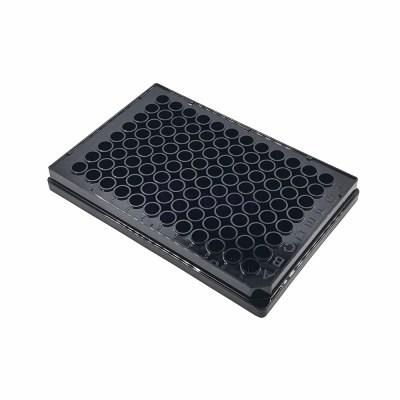
Product details
Poly-Lysine is coated on the surface of the cell plate and promotes cell adhesion. Adhesion dependent cells, coated with positively charged polymer polylysine, can improve the adhesion rate of cells in serum-free or low-serum culture environment, strengthen the adsorption of serum proteins and extracellular matrix proteins on the surface of culture vessels, and accelerate cell proliferation. Poly-lysine-coated culture plates are suitable for neuronal cell culture, glial cell culture and transfected cell line culture, and can promote nerve cell differentiation and neurite growth. The adhesion, proliferation and division ability of transfected cells and nerve cells were improved, such as HEK293, PC12, L929 and some 3T3 cell lines, nerve cells such as neurons and neurotic glial cells.
Poly-lysine, a positively charged amino acid polymer coated on the surface of culture vessels, not only promotes cell adhesion, but also enhances the adsorption of serum proteins and extracellular matrix proteins, and can also be used as a sticky tablet for histological analysis. Polylysine is divided into D and L types. Both Poly-D-lysine poly-d-Lysine (PDL) and Poly-L-lysine poly-L-Lysine (PLL) have molecular weights ranging from 150,000 to 300,000, which can promote cell adhesion growth, and the most commonly used concentration is 0.1 mg/mL. The difference between the two products is that PDL is not absorbed by cells, but PLL can be absorbed by some cells, and excessive intake will produce certain cytotoxicity.
- Pre-coated biocoatings save time and money on experiment preparation
- The use of high quality Poly-D-Lysine, molecular weight 75-150KD, high viscosity, strong cell adhesion
- Promotes adhesion, proliferation and differentiation of refractory cells such as nerve cells
- Synthesis of Poly-D-Lysine, avoiding the introduction of natural polymers, protein impurities caused by biological activity stimulation
- Verified by different cell culture tests, the cell adhesion rate was more than 90%, and the cell viability rate was more than 95%
- Provides a variety of ready-to-use coated products to meet customers’ different experimental needs
- Molecular weight: PDL 75-150kDa, PLL 30-70kDa
- Batch to batch stability ensures repeatability of experimental results
- Each packaging bag is printed with the batch number, easy to trace the quality
- Irradiation sterilization, SAL10-6, DNase/RNase free, pyrogen free
| Label/ Print | With plastic label |
| Closure type | Slip-on lid |
| Base shape | Flat base |
| Number of wells | 12 |
| Growth area | 3.8 cm² |
| Volume of work | 0.8-1.2 mL |
| Vessel type | Plate |