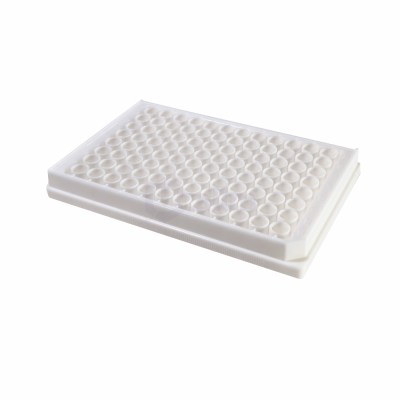
Product details
Fibronectin (FN) is an extracellular glycoprotein that exists in either a soluble form in body fluids or an insoluble form in the extracellular matrix. It consists of two polypeptide chains (dimers), one end of which is connected by a disulfide bond. Each polypeptide further folds an energetic and structurally distinct domain that binds various components of the ECM (glycosaminoglycan, proteoglycan, and collagen) as well as cell surface proteins. As one of the major cell adhesion molecules, FN plays a key role in many important physiological processes, such as embryo formation, wound healing, hemostasis, and thrombolysis. Changes in fibronectin expression, degradation, and combination are closely associated with a large number of pathologies, including cancer and fibrosis. Recombinant fibronectin can be used as a cell culture substrate to replace Matrigel, rat tail collagen, blood-derived fibronectin, etc., improve cell adhesion rate, enhance cell metabolism level, and shorten cell growth cycle. It can also be directly added to the medium to replace or reduce the amount of serum, promote cell adhesion, migration, mobile growth, and maintain cell state.
- Pre-coated biocoatings save time and money on experiment preparation
- Batch to batch stability ensures repeatability of experimental results
- Provides a variety of ready-to-use coated products to meet customers’ different experimental needs
- Each packaging bag is printed with the batch number, easy to trace the quality
- Irradiation sterilization, SAL10-6, DNase/RNase free, pyrogen free
Product characteristics
| Label/ Print | With plastic label |
| Closure type | Slip-on lid |
| Base shape | Flat base |
| Number of wells | 6 |
| Growth area | 9.5 cm² |
| Volume of work | 2-4 mL |
| Vessel type | Plate |