


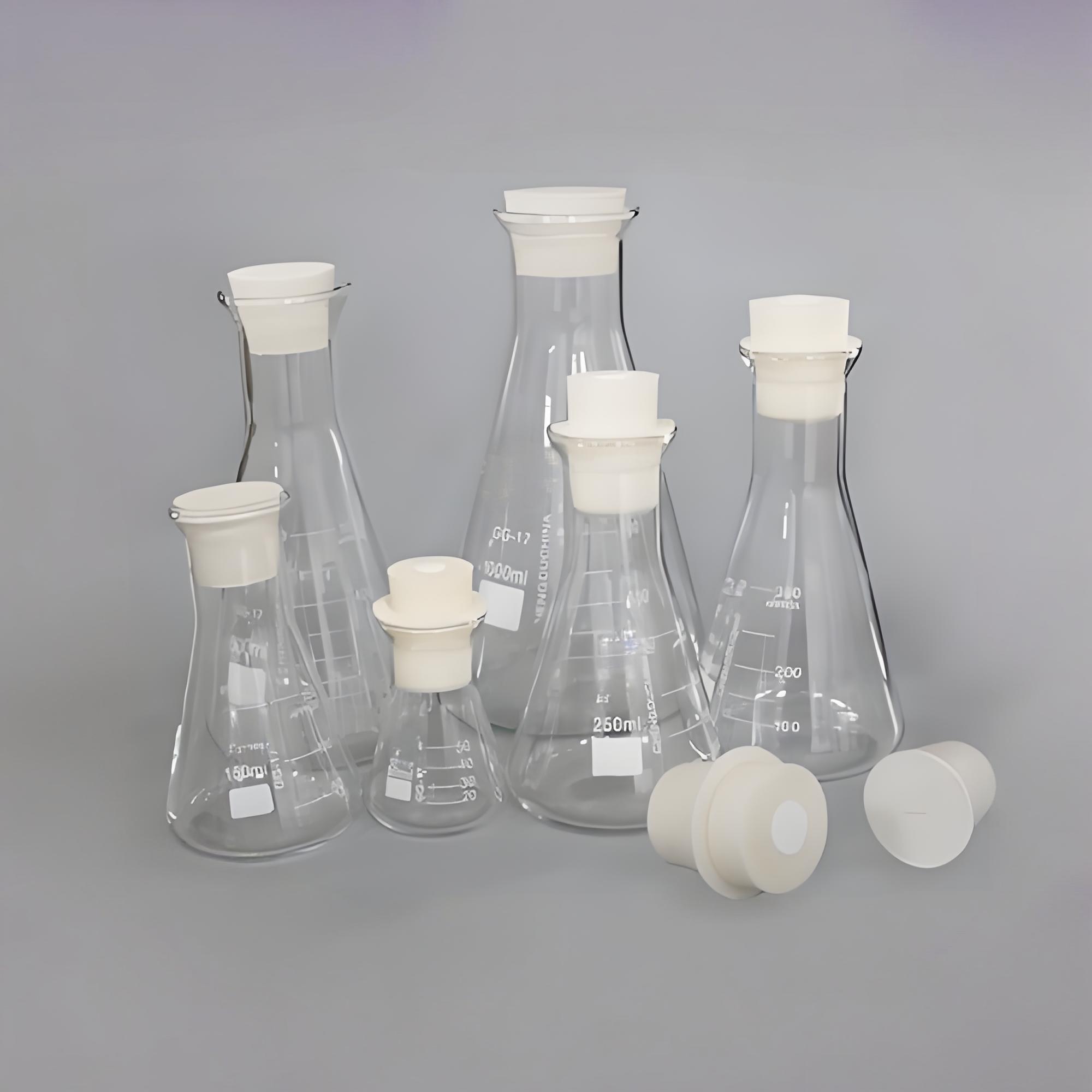
When it comes to anaerobic cultivation, the choice between silicone and glass stoppered conical flasks is crucial. We examine the critical differences between these two types, focusing on their impact on maintaining oxygen-free environments.
The stopper material plays a significant role in ensuring the integrity of anaerobic cultures. You need to consider factors such as temperature requirements, chemical compatibility, and sealing efficiency when selecting the right flask for your research.
We will guide you through the historical development of Erlenmeyer flask designs and modern advancements in glass and silicone stopper technologies, providing insights into the best product for your specific needs.
Key Takeaways
- Understanding the differences between silicone and glass stoppered conical flasks for anaerobic cultivation.
- Factors to consider when selecting a flask for anaerobic microbiology and biochemistry research.
- The impact of stopper material on maintaining oxygen-free environments.
- Historical context and modern advancements in Erlenmeyer flask designs.
- Guidance on choosing the right flask based on temperature requirements and chemical compatibility.
Understanding Stoppered Conical Flasks
Stoppered conical flasks, also known as Erlenmeyer flasks, are vital for creating anaerobic environments. These flasks are designed with a conical shape, facilitating the mixing of cultures and the creation of sealed environments when paired with appropriate stoppers.
Key Features and Materials
These flasks are made from borosilicate glass (Boro3.3), offering superior thermal and chemical resistance. The uniform wall thickness ensures even heat distribution, crucial for maintaining consistent culture conditions. Various capacities are available, ranging from 100ml to 2000ml, to accommodate different culture volumes.
Role in Anaerobic Cultivation
The conical shape and ground joints of these flasks enable effective sealing with different types of stoppers, creating the necessary anaerobic conditions. The capacity of the flask can be chosen based on the culture volume and available incubator space, making them versatile for various research needs.
Glass Stoppered Conical Flasks
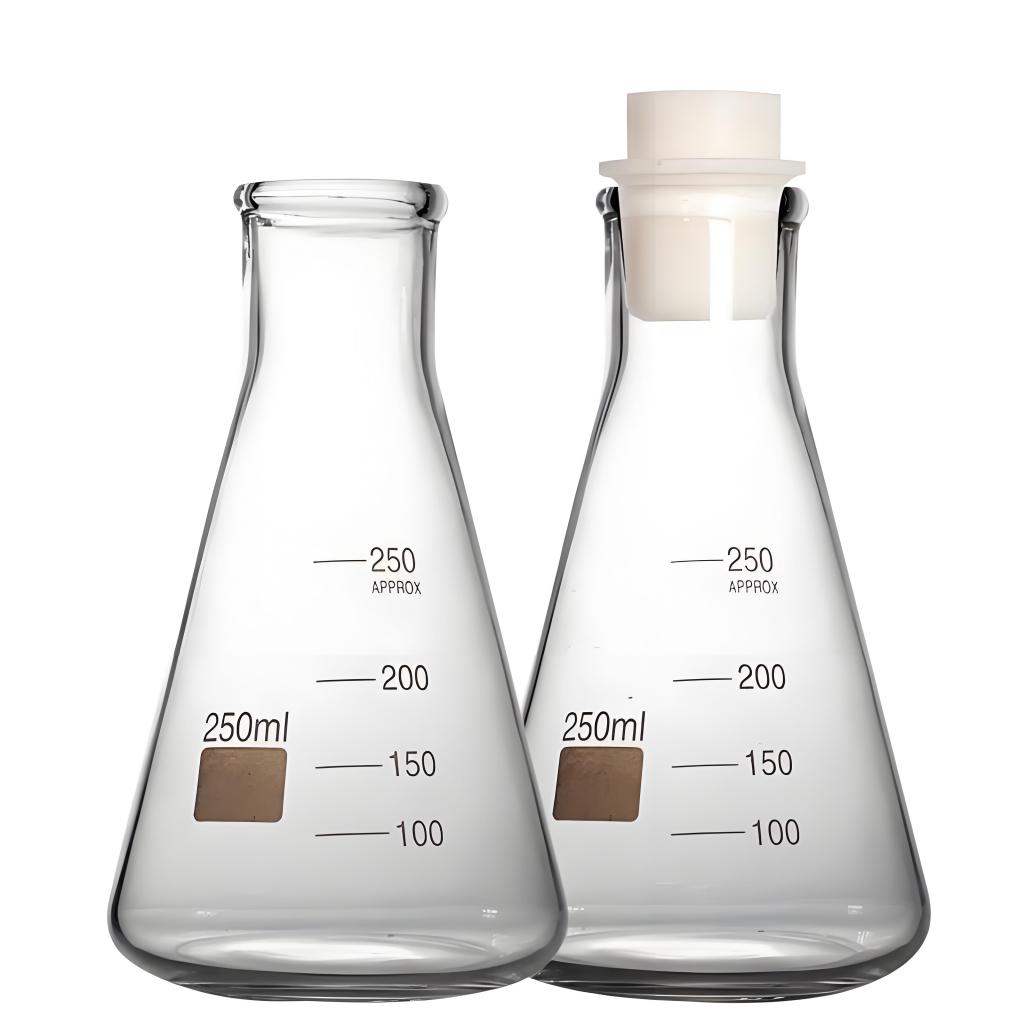
Silicone stoppered conical flask
For laboratories requiring precise control over oxygen levels, glass stoppered conical flasks are an ideal choice. We utilize these flasks due to their superior material properties and sealing efficiency.
Material Properties and Temperature Resistance
Our glass stoppered flasks are made from 3.3 Borosilicate Glass, offering exceptional temperature resistance and chemical inertness. The uniform wall thickness distribution makes these Erlenmeyer flasks suitable for heating applications, and they comply with ISO4797 standards.
Sealing Efficiency for Oxygen Exclusion
The precision-ground glass joints in these glass stoppered flasks create a superior seal, minimizing oxygen permeability during anaerobic cultivation. This results in a highly effective barrier against oxygen diffusion, maintaining strict anaerobic conditions.
Rubber/Silicone Stoppered Flasks
Erlenmeyer flasks with rubber or silicone stoppers are a popular choice for anaerobic cultivation due to their unique properties. These flasks are designed to ensure a tight seal, crucial for maintaining oxygen-free environments.
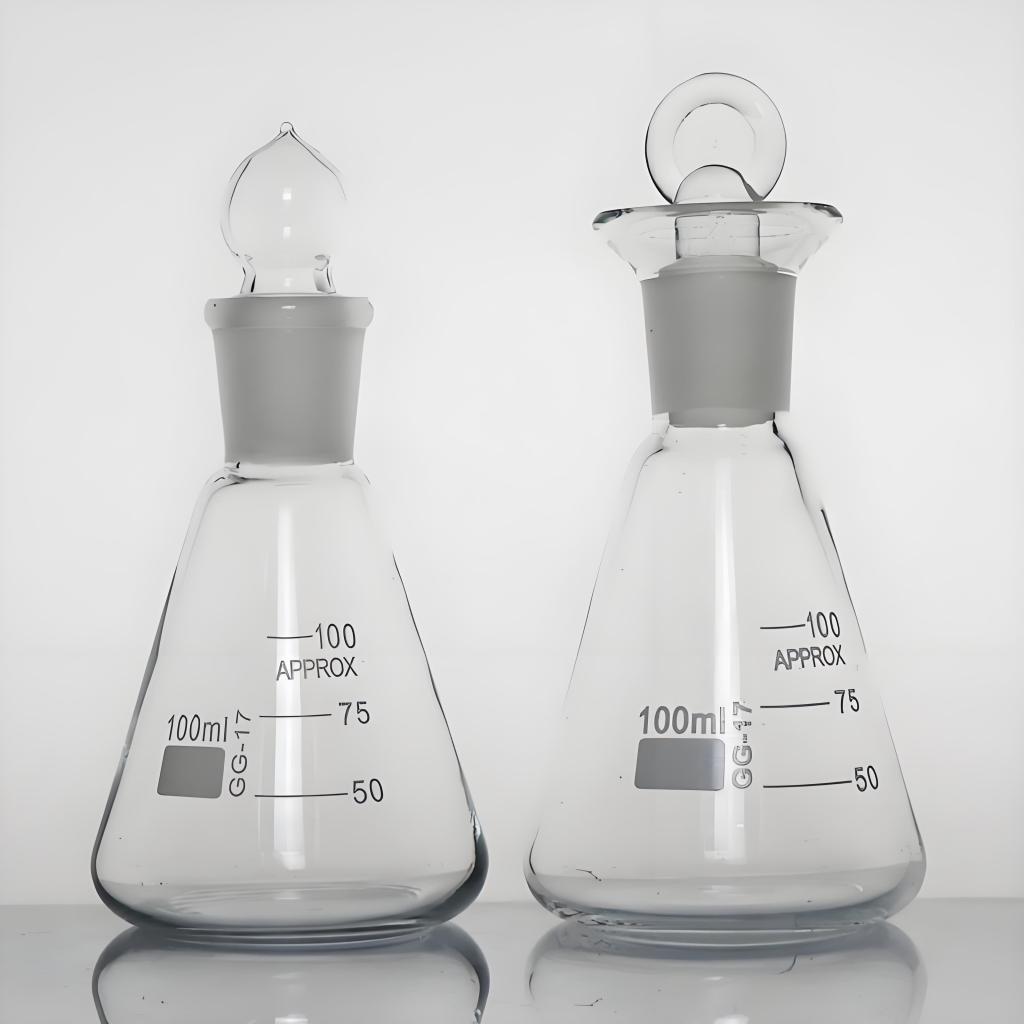
Ground glass stoppered conical flask
Flexibility and Chemical Resistance
The flexibility of rubber and silicone stoppers allows for a compression seal, even with minor variations in flask neck dimensions. This flexibility, combined with high chemical resistance, makes them suitable for a wide range of applications, including use with various media components and metabolic byproducts in anaerobic cultivation.
Performance in Oxygen-Free Environments
In oxygen-free environments, the performance of rubber and silicone stoppers is critical. Silicone stoppers, in particular, have varying gas permeability characteristics, which can affect oxygen diffusion rates. Researchers must consider these factors when selecting a stopper for long-term anaerobic experiments using an Erlenmeyer flask.
Conclusion: Selecting the Ideal Flask for Anaerobic Work
Anaerobic cultivation requires precise control over oxygen levels, making the choice of flask critical. We help you navigate the selection between glass and silicone stoppered Erlenmeyer conical flasks based on your specific needs, including organism sensitivity and temperature cycling requirements.
By understanding the comparative advantages of each stopper type and considering factors like flask capacity, you can optimize your laboratory setup for anaerobic work. Proper maintenance and care of your Erlenmeyer flasks ensure continued performance and experimental reproducibility.
References and further readings:
1.Lee, H., & Zhang, R. (2019). Impact of stopper material on headspace gas composition in anaerobic bioreactors. Applied Microbiology and Biotechnology, 103(15), 6241-6250.https://link.springer.com/article/10.1007/s00253-019-09917-6
2.Lee, H., & Zhang, R. (2019). Impact of stopper material on headspace gas composition in anaerobic bioreactors. Applied Microbiology and Biotechnology, 103(15), 6241-6250.
https://www.sciencedirect.com/science/article/abs/pii/S0960852417317030?via%3Dihub3.Garcia-Peña, E. I., et al. (2018). Silicone stoppers enhance methane production in syntrophic anaerobic cultures. Bioresource Technology, 247, 585-591.
https://linkinghub.elsevier.com/retrieve/pii/S0960852417317030
FAQ
What is the difference between a glass stopper and a silicone stopper for Erlenmeyer flasks?
Glass stoppers are made from borosilicate glass, offering high temperature resistance and chemical inertness, while silicone stoppers provide flexibility and a tight seal, suitable for applications requiring a secure closure.
How do I choose the right capacity for my Erlenmeyer flask?
The capacity of the flask you need depends on the volume of your culture or reaction mixture. We offer various capacities to accommodate different experimental requirements.
Are Erlenmeyer flasks suitable for anaerobic cultivation?
Yes, our Erlenmeyer flasks, when paired with the appropriate stopper, can be used for anaerobic cultivation by preventing oxygen from entering the flask.
What are the benefits of using an Erlenmeyer conical shape?
The conical shape allows for efficient mixing and minimizes the risk of spills, making it ideal for laboratory applications.
Can I use Erlenmeyer flasks with different types of stoppers?
Yes, you can use our Erlenmeyer flasks with either glass or silicone stoppers, depending on your specific needs and the requirements of your experiment.
How do I ensure a tight seal with my Erlenmeyer flask stopper?
To ensure a tight seal, select a stopper that fits snugly into the flask’s neck, and verify that the material is compatible with your experiment’s conditions.
Leo Bios
Hello, I’m Leo Bios. As an assistant lecturer, I teach cellular and
molecular biology to undergraduates at a regional US Midwest university. I started as a research tech in
a biotech startup over a decade ago, working on molecular diagnostic tools. This practical experience
fuels my teaching and writing, keeping me engaged in biology’s evolution.



Leave a Comment
Your email address will not be published. Required fields are marked *