


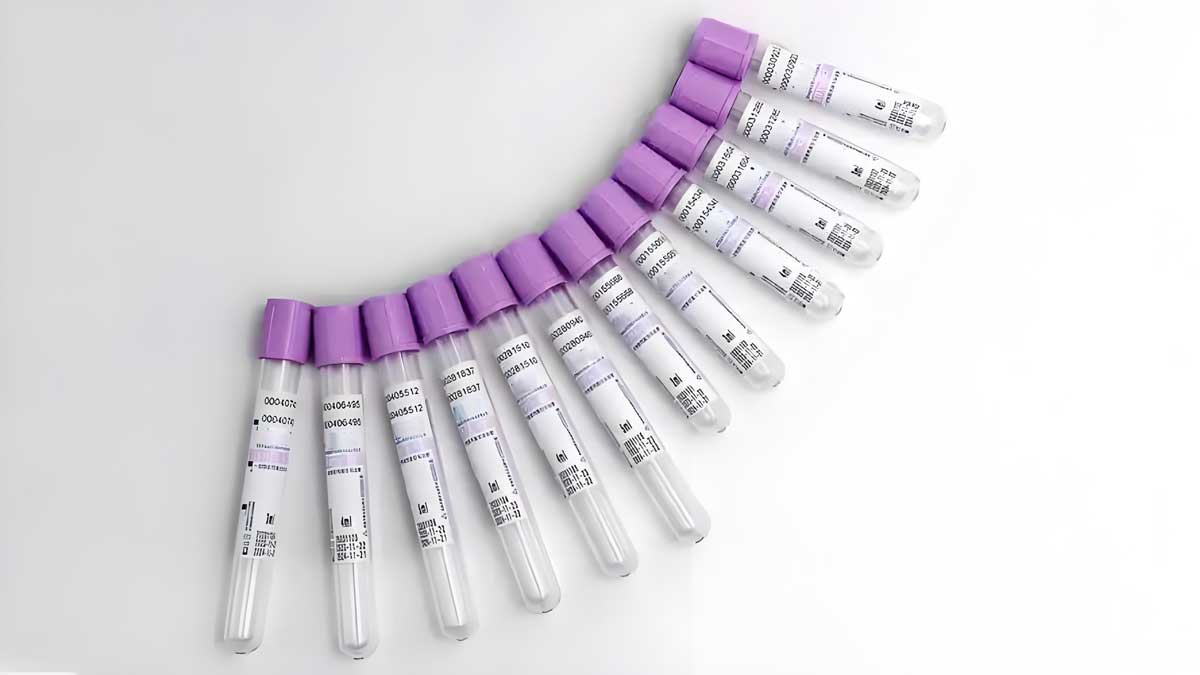
Lavender blood tubes, also known as purple top tubes, play a crucial role in modern medical diagnostics. These specialized tubes contain ethylenediaminetetraacetic acid (EDTA), an anticoagulant that prevents blood clotting during collection and analysis.
We utilize these tubes for most hematology procedures, including assessing complete blood count and preparing EDTA plasma. The EDTA in these tubes binds to calcium ions, interrupting the clotting process and ensuring that the blood sample remains intact for accurate testing.
Understanding the purpose and applications of lavender blood tubes is essential for healthcare professionals involved in phlebotomy and laboratory testing. By using these tubes, we can ensure that blood samples are collected and analyzed accurately, leading to reliable diagnostic results.
Key Takeaways
- Lavender blood tubes contain EDTA, an anticoagulant that prevents blood clotting.
- These tubes are used for most hematology procedures, including complete blood count assessments.
- The EDTA in lavender blood tubes binds to calcium ions, ensuring that the blood sample remains intact.
- Understanding the purpose of lavender blood tubes is crucial for healthcare professionals.
- Lavender blood tubes facilitate accurate diagnostic results by ensuring reliable blood sample collection and analysis.
Understanding Lavender Blood Collection Tubes
Understanding the characteristics of lavender blood collection tubes is essential for accurate laboratory results. These tubes are specifically designed for collecting whole blood samples for hematological analysis.
Composition and Design Features
The lavender blood tube contains EDTA (ethylenediaminetetraacetic acid) as an additive, which acts as an anticoagulant by binding to calcium ions in the blood. This prevents clotting and ensures the integrity of the blood sample.
EDTA as an Anticoagulant
EDTA is effective in preventing clot formation by chelating calcium ions, which are crucial for the coagulation cascade. This mechanism ensures that the blood sample remains in a liquid state, suitable for hematological testing.
Physical Characteristics
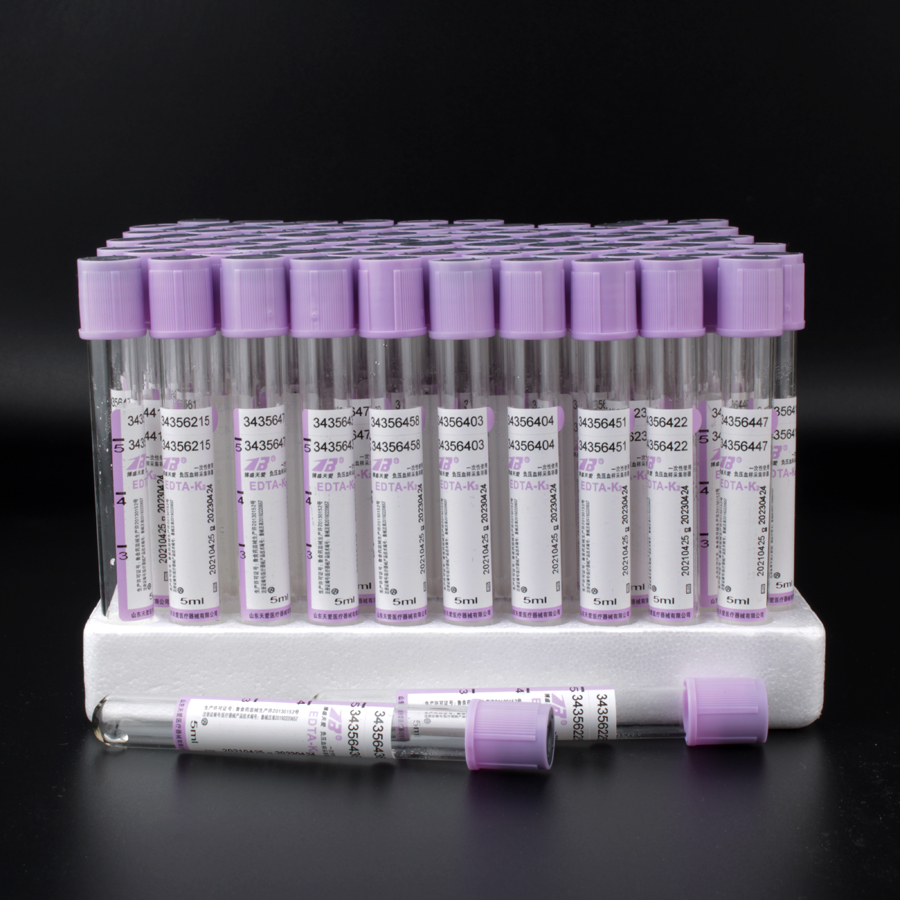
Modern lavender tubes are typically made of plastic, reducing the risk of breakage. They feature a lavender or purple stopper that creates a vacuum seal, allowing for precise blood volume collection through the vacutainer system.
| Feature | Description |
|---|---|
| Additive | EDTA |
| Material | Plastic |
| Stopper Color | Lavender/Purple |
| Collection Method | Vacutainer System |
How Lavender Tubes Prevent Blood Clotting
The primary mechanism by which lavender tubes prevent blood clotting is through the action of EDTA. By binding to calcium ions, EDTA interrupts the coagulation pathway, thereby preventing clot formation.
The Calcium Binding Mechanism
The calcium binding mechanism is crucial for preventing clotting. EDTA chelates calcium ions, making them unavailable for the clotting process.
Importance of Proper Filling and Handling
Proper filling and handling of lavender tubes are critical to maintaining the integrity of the blood sample. The ratio of blood to EDTA must be within specific parameters to prevent sample degradation.
What Is The Lavender Blood Tube Used For: Primary Applications
The primary application of lavender blood tubes is in hematology testing, where they facilitate the analysis of whole blood components without the interference of clotting. These tubes are specifically designed to preserve the integrity of blood cells, making them ideal for various diagnostic tests.
Hematology Testing and Analysis
Hematology testing is a critical component of medical diagnostics, and lavender blood tubes play a vital role in this process. The tubes contain EDTA, an anticoagulant that prevents blood clotting and preserves the cellular components of blood.
Full Blood Count and Complete Blood Count
Full Blood Count (FBC) and Complete Blood Count (CBC) are the most commonly ordered tests using lavender tubes. These tests provide critical information about red blood cells, white blood cells, and platelets, which is essential for diagnosing various conditions, including anemia, infection, and bleeding disorders.
Blood Film and Cell Morphology Studies
Blood film examinations require intact cellular structures, making EDTA-preserved samples ideal for studying cell morphology and identifying abnormalities such as sickle cells or malaria parasites. This test is crucial for diagnosing hematological disorders and monitoring the effectiveness of treatment.
Other Clinical Applications
Beyond basic hematology, lavender tubes are used for various other clinical applications. These include HbA1c testing for diabetes monitoring and specialized tests using EDTA samples.
HbA1c Testing for Diabetes Monitoring
HbA1c testing relies on EDTA tubes because they preserve the glycated hemoglobin structure needed for accurate assessment of glucose control over 2-3 months. This test is essential for managing diabetes and preventing long-term complications.
Specialized Tests Using EDTA Samples
Specialized laboratory procedures using lavender tubes include flow cytometry for immunophenotyping, molecular diagnostic tests, and certain drug level monitoring. These tests are critical for diagnosing and managing various conditions, including immunological disorders and certain cancers.
lavender-blood-tubes
Comparing Lavender Tubes to Other Blood Collection Tubes
Understanding the differences between various blood collection tubes is essential for laboratory accuracy. The lavender top tube, with its EDTA anticoagulant, is distinct from other tubes used in phlebotomy. We will compare the lavender tube with other commonly used tubes to highlight their differences and applications.
Differences from Red and Gold Top Tubes
Red top and gold top tubes are used for serum collection and contain clot activators, unlike the lavender top tube which preserves whole blood. The primary difference lies in their end product: EDTA tubes preserve whole blood with cellular elements intact, while serum tubes allow blood to clot, producing serum for biochemical analysis.
Serum vs. Whole Blood Collection
Serum separator tubes (SST), like gold top tubes, are designed for biochemistry tests that require serum. In contrast, lavender top tubes are used for hematology tests that require whole blood.
Test Compatibility Differences
The additive in each tube type determines its compatibility with various laboratory tests. For instance, EDTA in lavender tubes makes them suitable for complete blood counts (CBC), while serum tubes are used for tests like lipid profiles and electrolyte analysis.
Differences from Blue and Green Top Tubes
Blue top tubes contain sodium citrate and are used for coagulation studies, while green top tubes contain heparin-based anticoagulants and are used for certain chemistry tests. The anticoagulant in blue top tubes works by binding to calcium ions, different from the mechanism of EDTA in lavender tubes.
Alternative Anticoagulants and Their Functions
Sodium citrate in blue top tubes and heparin in green top tubes serve as anticoagulants but work through different mechanisms. EDTA, found in lavender tubes, is specifically used for hematology applications.
Clinical Applications Comparison
The choice between these tubes depends on the clinical application. For coagulation studies, blue top tubes are preferred, while for hematology tests, lavender top tubes are used.
When to Use Lavender Tubes vs. Other Options
The decision to use a lavender top tube over other types depends on laboratory test requirements. Specific tests are validated only for certain tube types and additives.
Laboratory Test Requirements
Lavender tubes are used for tests that require whole blood, such as CBC and blood smears.
Order of Draw Considerations
When multiple tubes are drawn, the order of draw is crucial to prevent additive cross-contamination. Lavender tubes are typically drawn after plain and coagulation tubes.
| Tube Type | Additive | Primary Use |
|---|---|---|
| Lavender Top | EDTA | Hematology Tests |
| Red/Gold Top | Clot Activator | Serum Biochemistry Tests |
| Blue Top | Sodium Citrate | Coagulation Studies |
| Green Top | Heparin | Chemistry Tests |
Conclusion: Importance of Lavender Blood Tubes in Modern Medicine
The importance of lavender blood tubes cannot be overstated in medical research and diagnostics. These tubes, containing EDTA as an anticoagulant, have become indispensable tools in modern medicine, playing a crucial role in patient diagnosis, treatment monitoring, and medical research.
The standardization of blood collection procedures using color-coded tubes has improved laboratory efficiency and reduced pre-analytical errors. Lavender tubes are universally recognized for hematology testing across healthcare systems. Blood donor screening relies heavily on these tubes for typing and infectious disease testing, ensuring the safety and compatibility of blood products.
Research laboratories frequently request EDTA samples for developing new diagnostic tests and conducting clinical trials. The versatility of lavender tubes allows for both immediate testing and sample storage, making them valuable for time-sensitive diagnostics and longitudinal studies. As laboratory medicine advances, the applications for EDTA-preserved whole blood continue to expand, particularly in molecular diagnostics and personalized medicine approaches.
Understanding when and how to use lavender blood tubes appropriately ensures optimal patient care, accurate diagnostic information, and efficient laboratory operations across the healthcare continuum.
References and further readings:
1.Boumba, V. A., & Vougiouklakis, T. (2015).
Impact of blood collection tubes on erroneous 1-propanol detection and on forensic ethanol analysis. Journal of Forensic Toxicology & Pharmacology.
https://www.researchgate.net/publication/2817367782.Wang, X. H., Momeni, A., Eid, I., Li, L., & Brackett, F. (2018).
Major discrepancies of HCV viral loads determined by real time polymerase chain reaction caused by use of collection tubes that differ only with the presence or absence of separator gel. Annals of Clinical and Laboratory Science, 48(3), 286–290.
https://www.annclinlabsci.org/content/48/3/286.full.pdf3.Burgess, P. (2022).
Venepuncture—taking blood with care. British Journal of Healthcare Assistants, 16(4), 162–165.
https://www.magonlinelibrary.com/doi/full/10.12968/bjha.2022.16.4.1624.Bowen, R. A. R., & Adcock, D. M. (2016).
Blood collection tubes as medical devices: The potential to affect assays and proposed verification and validation processes for the clinical laboratory. Clinical Biochemistry, 49(18), 1321–1330.
https://www.sciencedirect.com/science/article/pii/S0009912016303150
FAQ
What additive is present in a lavender top blood collection tube?
Lavender top tubes contain EDTA (ethylenediaminetetraacetic acid) as an anticoagulant additive, which prevents blood clotting by binding to calcium ions.
What type of tests are typically performed using samples collected in lavender top tubes?
Lavender top tubes are primarily used for hematology testing, including complete blood counts (CBC), blood cell differential, and other related analyses.
How does EDTA in lavender tubes prevent blood clotting?
EDTA acts by chelating calcium ions, which are essential for the blood clotting cascade, thereby preventing the formation of clots and keeping the blood in a liquid state for analysis.
Can lavender top tubes be used for plasma or serum separation?
Lavender top tubes are generally used for whole blood analysis. While they can be centrifuged to obtain plasma, they are not typically used for serum separation due to the presence of EDTA.
How do lavender top tubes differ from other colored top tubes?
Different colored top tubes contain various additives or anticoagulants. For example, red top tubes contain no additives and are used for serum separation, while blue top tubes contain sodium citrate for coagulation studies.
Are there specific handling or storage instructions for lavender top tubes?
Lavender top tubes should be stored at room temperature and gently inverted several times after collection to ensure proper mixing of the EDTA with the blood sample.
Can lavender top tubes be used for all types of hematology testing?
While lavender top tubes are versatile and used for a wide range of hematological analyses, specific tests may require different tube types or additives, so it’s essential to check the laboratory’s requirements.
Leo Bios
Hello, I’m Leo Bios. As an assistant lecturer, I teach cellular and
molecular biology to undergraduates at a regional US Midwest university. I started as a research tech in
a biotech startup over a decade ago, working on molecular diagnostic tools. This practical experience
fuels my teaching and writing, keeping me engaged in biology’s evolution.





Leave a Comment
Your email address will not be published. Required fields are marked *