


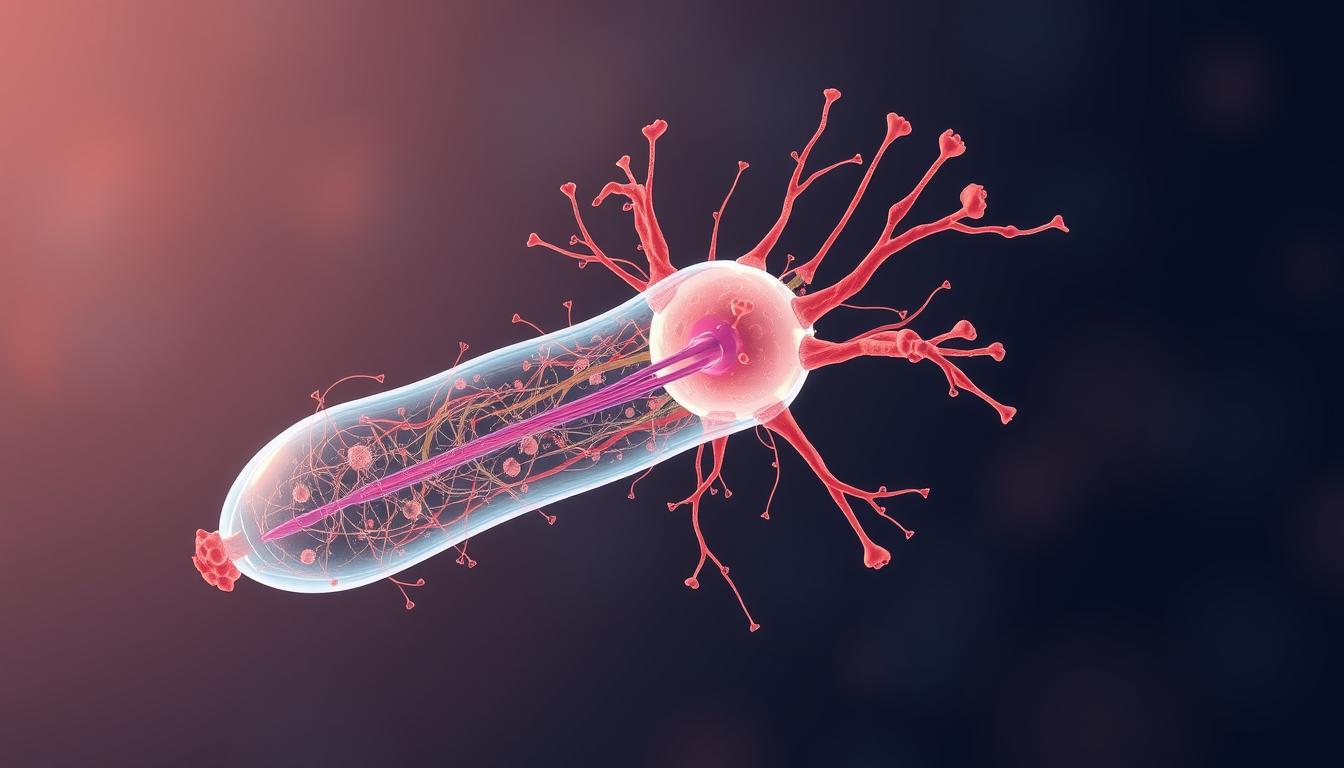
Fibroblasts are very special because they can do many things. They grow, move, and change to fit different tissues. They make collagen, elastin, and other important parts. These help give strength and support to our body.
Key Takeaways
- Fibroblasts are critical connective tissue cells with multiple essential functions
- They produce complex extracellular matrix components
- Fibroblasts play significant roles in tissue repair and wound healing
- These cells can migrate and adapt to different tissue environments
- Fibroblasts demonstrate remarkable cellular versatility
Overview of Fibroblasts and Their Function
Fibroblasts are a key part of our body’s structure. They were first found in 1858 by Rudolf Virchow. These cells help us understand how tissues heal and are built.
These cells are everywhere in connective tissue. They make proteins that hold our tissues together. They help heal wounds and keep cells in the right place.
What Are Fibroblasts?
Fibroblasts are special cells with unique traits:
- They have a spindle shape.
- They can make complex protein networks.
- They play a big role in healing and keeping tissues healthy.
- They are found in many body tissues.
Role of Fibroblasts in Connective Tissue
In connective tissue, fibroblasts are like architects. They make important parts of the tissue. Their main jobs are:
| Function | Specific Activity |
|---|---|
| Matrix Production | Make collagen, elastin, and proteoglycans |
| Tissue Repair | Help with wound healing |
| Structural Support | Keep tissues strong and elastic |
These cells change how they work based on what the tissue needs. They are very important for keeping our body systems working well.
Key Products of Fibroblasts
Fibroblasts are amazing cells that help keep our tissues strong and healthy. They make important parts that help our body’s connective tissues work well. This is key for our health and for healing.

Fibroblasts make essential parts of the extracellular matrix. They do this through several important steps:
Collagen Synthesis
Collagen is a big deal for fibroblasts. They make many types of collagen, with type I being the most common. This process helps our tissues stay strong and flexible.
- Produces over 28 different collagen types
- Creates structural proteins essential for tissue integrity
- Supports wound healing and tissue repair mechanisms
Elastin Production
Elastin helps our tissues stay flexible and elastic. Fibroblasts make this protein. It lets our skin, blood vessels, and other tissues stretch and bounce back.
Ground Substance Components
Fibroblasts also make glycosaminoglycans, which form the ground substance. This is a gel-like matrix that helps cells talk to each other and keeps tissues hydrated. It’s important for getting nutrients and supporting cells.
| Component | Primary Function |
|---|---|
| Proteoglycans | Water retention and tissue lubrication |
| Glycosaminoglycans | Cellular communication and structural support |
These amazing products show how fibroblasts are key to keeping our tissues healthy. They support many important biological processes.
The Importance of Fibroblast Secretions
Fibroblasts are key players in fixing damaged tissues and fighting off infections. They help keep our bodies healthy by starting and leading the healing process.
Fibroblasts do more than just hold things together. They are active in fixing tissues and fighting off infections. They quickly respond to injuries and challenges.
Contribution to Tissue Repair
Fibroblasts have amazing healing powers. They help fix wounds by doing several important things:
- They make the stuff that holds tissues together.
- They send out signals that help cells move to the right place.
- They help rebuild tissues.
- They help cells talk to each other.
Influence on Inflammation
Fibroblasts also play a big role in fighting off infections. They do this by:
- Releasing signals that call in immune cells.
- Helping immune cells get to where they need to go.
- Supporting blood cells during infections.
| Fibroblast Function | Tissue Repair Impact |
|---|---|
| Extracellular Matrix Production | Supports structural integrity |
| Cytokine Secretion | Regulates inflammatory response |
| Cell Signaling | Coordinates healing mechanisms |
Fibroblasts are very important in healing wounds and fighting infections. They help keep our bodies in balance and fix damaged tissues.
Types of Fibroblasts
Fibroblast cell functions are very complex. Different types of fibroblasts have unique roles in keeping and fixing connective tissue proteins. These cells are very adaptable in the human body.
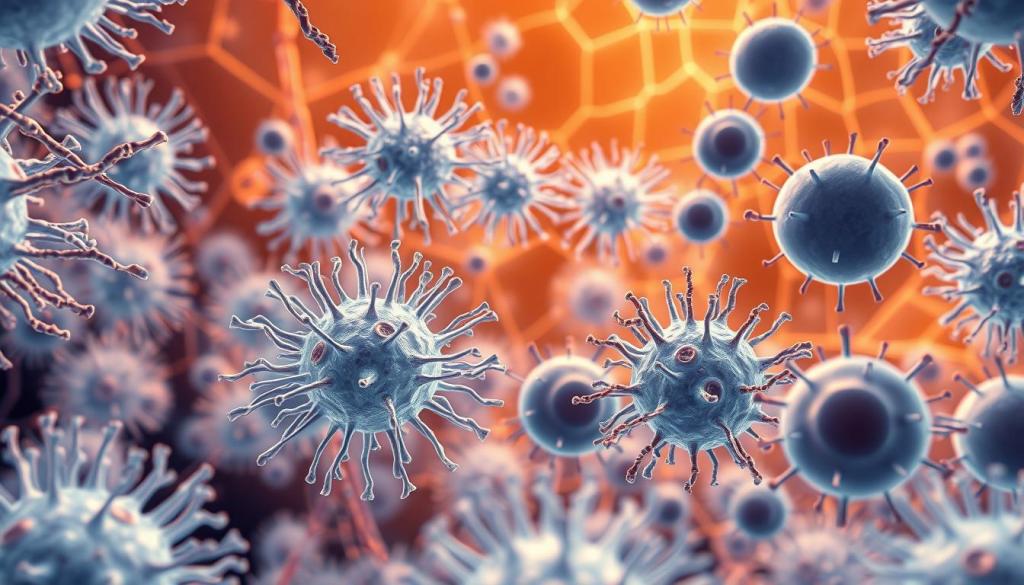
Researchers have found several types of fibroblasts. Each type has its own characteristics and jobs:
Resident Fibroblasts
Resident fibroblasts are the main protectors of normal tissue. They keep the extracellular matrix in check and ensure tissue balance. They do important work in:
- Producing connective tissue proteins
- Regulating tissue microenvironment
- Supporting normal cellular interactions
Activated Fibroblasts
When there’s tissue injury or disease, fibroblasts turn into activated states. Activated fibroblasts quickly respond to challenges by:
- Changing their type
- Making more proteins
- Starting repair processes
Myofibroblasts
Myofibroblasts are the most specialized type of fibroblast. They have unique contractile abilities. During wound healing, they play a key role in rebuilding tissue.
Their amazing flexibility lets them quickly adjust to various conditions. This shows how complex fibroblast biology is.
Fibroblast Activation and Function
Fibroblasts are key in healing wounds and repairing tissues. They change and adapt to help the body heal. This happens through complex pathways.
Factors Triggering Fibroblast Activation
Many factors trigger fibroblast activation:
- Growth factors
- Mechanical stress
- Inflammatory cytokines
- Tissue damage signals
Fibroblasts react quickly to their surroundings. Cellular signaling pathways control their activation. This can change based on the tissue.
Fibroblast Behavior During Wound Healing
During wound healing, fibroblasts change a lot. They move to the wound, grow fast, and make important parts of the tissue.
| Activation Stage | Primary Function |
|---|---|
| Initial Response | Migration to wound site |
| Proliferation Phase | Cell multiplication |
| Remodeling Phase | Matrix production and tissue restructuring |
Researchers use markers like PDGFRα and dermatopontin to study fibroblasts. These cells can adapt to many conditions. They show amazing flexibility.
Fibroblasts and Aging
The aging process changes how fibroblasts work, leading to big changes in cells. As we get older, these important cells change a lot. These changes affect how our skin looks and feels.
With age, fibroblasts change how they make the stuff around cells. Scientists have found some key changes in older fibroblasts:
- They make less elastin.
- They don’t make as much collagen.
- They get more inflamed.
- They heal slower.
Changes in Fibroblast Function with Age
Older fibroblasts don’t make as much of the important stuff around cells. The skin’s main protein, type I collagen, lasts about 15 years. This shows how these proteins slowly wear down with age.
Impact on Skin Elasticity
Elastin production drops with age, making skin less firm and elastic. Older fibroblasts grow slower, which makes skin less elastic and causes wrinkles.
Studies show that sun-exposed skin ages faster. People with lighter skin see more changes in their skin’s structure.
Learning about these cell changes could help find ways to slow down skin aging.
Fibroblasts in Disease
Fibroblasts are key in many diseases, affecting how wounds heal and tissues repair. They interact with other cells in complex ways. This can make diseases worse.
Fibroblast Contributions to Fibrosis
Fibrosis is a big medical problem. It happens when fibroblasts don’t work right, making too much tissue. This leads to:
- Abnormal tissue scarring
- Disrupted tissue repair mechanisms
- Compromised organ function
Myofibroblasts are the most advanced type in fibrosis. They make a lot of tissue. This can cause organs to fail in diseases like:
- Systemic sclerosis
- Idiopathic pulmonary fibrosis
- Liver cirrhosis
- Kidney fibrosis
Role in Chronic Inflammatory Conditions
Fibroblasts play a big role in chronic inflammation. They work closely with immune cells, keeping inflammation going.
In diseases like rheumatoid arthritis and inflammatory bowel disease, fibroblasts have special roles. They make important inflammatory markers like IL-6 and CXCL10. They also make chemokines that keep the immune system active.
Learning about fibroblasts in disease could lead to new treatments. It could help stop the cycle of inflammation.
Fibroblast Research and Regenerative Medicine
Medical research is always changing with new discoveries about fibroblast cells. These cells are key in fixing tissues and could lead to new treatments. This opens up exciting possibilities for healing.
Advances in Fibroblast Studies
Recent studies have shown how powerful fibroblast cells are. From 2000 to 2023, scientists looked at 820 papers. Only 35 met strict standards, showing how important it is to understand these cells well.
- Single-cell RNA sequencing found ten main types of fibroblast cells
- 92.5% of these fibroblast groups had unique traits
- Studies are now focusing on treatments for wounds
Potential for Cell Therapy Applications
Fibroblasts are very useful in regenerative medicine. They can make parts of the matrix and release growth factors. This makes them key in creating new tissues.
| Therapy Area | Potential Applications |
|---|---|
| Wound Healing | Diabetic foot ulcer treatment |
| Tissue Engineering | Skin reconstruction |
| Cellular Reprogramming | Induced pluripotent stem cell generation |
The future of fibroblast research is very promising. Scientists are working hard to see how these cells can fix and grow tissues. This could lead to new, personalized treatments.
Methods to Isolate and Study Fibroblasts
Researchers have created advanced ways to get and study fibroblast cells. They use special lab methods to learn about these cells’ roles. This helps us understand their biological processes better.
Advanced Fibroblast Extraction Techniques
Scientists use different ways to get fibroblasts from tissues. The main methods are:
- Enzymatic digestion
- Tissue explant culture
- Selective adhesion techniques
- Physical friction extraction
Laboratory Analysis of Extracellular Matrix Components
To study what fibroblasts make, scientists use detailed methods. They use:
- Immunostaining techniques
- Flow cytometry analysis
- Molecular biology assessments
- Biochemical assays
Innovative Isolation Protocols
Today’s research has improved how to get fibroblasts. They use magnetic methods to remove other cells. They also separate cells based on specific markers like CD45, CD31, and MEFSK4.
The process involves special enzymes and controlled environments. These help keep the cells alive and study their functions well.
Conclusion: The Role of Fibroblasts in Health and Disease
Fibroblasts are key cells in keeping our tissues healthy and working right. They make important proteins that help our tissues stay strong and talk to each other. This is crucial for our body’s structure and function.
Fibroblasts do more than just keep tissues together. They help fix damaged tissues, fight off infections, and even help diseases spread. By making proteins like collagen and elastin, they keep our tissues in balance and ready for challenges.
Summary of Key Points
Fibroblasts are vital in many body processes. They help our muscles, bones, and even our brains stay strong. Their ability to change and adapt shows how important they are for our health.
Future Directions in Fibroblast Research
New research tools, like single-cell technologies, will help us learn more about fibroblasts. Scientists will study how they work in diseases, find new treatments, and explore ways to fix damaged tissues. This will help us use fibroblasts to improve health and fix damaged tissues.
References and further readings:
1.Sorrell, J. M., & Caplan, A. I. (2004). Fibroblast heterogeneity: more than skin deep. Journal of Cell Science, 117(5), 667–675.
https://journals.biologists.com/jcs/article-abstract/117/5/667/27913/Fibroblast-heterogeneity-more-than-skin-deep?redirectedFrom=fulltext2.Theocharis, A. D., et al. (2016). Extracellular matrix structure. Advanced Drug Delivery Reviews, 97, 4–27.
https://www.sciencedirect.com/science/article/abs/pii/S0169409X15002574?via%3Dihub3.Driskell, R. R., et al. (2013). Distinct fibroblast lineages determine dermal architecture in skin development and repair. Nature, 504(7479), 277–281.
https://www.nature.com/articles/nature127834.Tomasek, J. J., et al. (2002). Myofibroblasts and mechano-regulation of connective tissue remodeling. Nature Reviews Molecular Cell Biology, 3(5), 349–363.
https://www.nature.com/articles/nrm809
FAQ
What are fibroblasts and what is their primary function?
Fibroblasts are important cells in connective tissue. They help keep tissues strong and working right. They make things like collagen and elastin, which support tissues and keep them healthy.
What are the main products that fibroblasts produce?
Fibroblasts make three key things: collagen, elastin, and glycosaminoglycans. Collagen makes tissues strong, elastin lets them stretch, and glycosaminoglycans keep them moist. These are vital for tissues to function well.
How do fibroblasts contribute to wound healing?
When there’s a wound, fibroblasts get to work. They grow, make new tissue, and help fix the damage. They also make growth factors and tighten the wound, helping it heal.
Do different types of fibroblasts exist?
Yes, there are different kinds of fibroblasts. There are regular fibroblasts, activated ones that respond to injury, and myofibroblasts that can contract. Each type has its own job in the body.
How do fibroblasts change with aging?
As we get older, fibroblasts don’t work as well. They make less collagen and elastin. This can make our skin lose its stretchiness and be more prone to damage.
What role do fibroblasts play in disease?
Fibroblasts can cause problems in diseases. In fibrosis, they make too much tissue, causing scarring. In conditions like rheumatoid arthritis, they keep inflammation going, harming tissues.
How are fibroblasts studied in laboratory settings?
Scientists use special methods to study fibroblasts. They use things like enzymes and advanced tools to learn about their work. This helps us understand their role in the body.
What is the potential of fibroblast research in regenerative medicine?
Research on fibroblasts could lead to big advances in medicine. It could help fix damaged tissues and treat diseases. Scientists are looking into how fibroblasts might be used to heal the body.
Leo Bios
Hello, I’m Leo Bios. As an assistant lecturer, I teach cellular and
molecular biology to undergraduates at a regional US Midwest university. I started as a research tech in
a biotech startup over a decade ago, working on molecular diagnostic tools. This practical experience
fuels my teaching and writing, keeping me engaged in biology’s evolution.




Leave a Comment
Your email address will not be published. Required fields are marked *