



know how to expand cells well. This includes making cells grow more and finding the best ways to do it. Growing cells is important in science and biotech. It helps in making new treatments, testing drugs, and studying life processes.
To grow cells right, you need to pick the right cells and the best conditions for them. There are many types of cells to choose from, each with its own growth needs. By using the right methods, scientists can make important products and learn more about life.
Key Takeaways
- Cell culture expansion is vital for biotechnology and research.
- Understanding different cell types is crucial for effective growth.
- Optimizing growth conditions enhances cell viability and productivity.
- Strategies for cell culture expansion can improve outcomes and efficiency.
- Diverse applications include therapeutic development and drug testing.
Cell Culture Basics
Understanding cell culture basics is key for growing cells well. Knowing what affects cell growth helps researchers improve their work. This leads to better results in their studies.
Cell Culture Environments: Incubators and Their Key Parameters
Creating the right environment is crucial for cell health. Incubators control temperature, CO2, and humidity. A temperature of 37°C and 5% CO2 are best for cell growth.
Keeping these conditions steady reduces cell stress. This is important for cell health.
Culture Vessels: Flasks, Plates, and Bioreactors
Different vessels are used for different cells and scales. Flasks, plates, and bioreactors are common. Each is best for certain needs.
Choosing the right vessel is important. It affects how well cells grow and multiply.
Culture Media Composition and Formulation Principles
Formulating culture media is vital for cell nutrition. It needs nutrients, growth factors, and specific items for each cell type. For example, RPMI 1640 is good for T cells.
Knowing what cells need helps create the best media. This supports strong cell growth and activity.
For more on culture media and environments, check out this comprehensive guide.
Pre-expansion Cell Preparation
Before starting cell culture expansion, it’s crucial to prepare well. This means choosing the right cell source, characterizing cells, and freezing them properly.
Cell Source Selection and Isolation Methods
Choosing the right cell source is the first step. Cells can come from blood or tissue biopsies, or from established cell lines. These lines are often found in places like the American Type Culture Collection (ATCC). The method of isolation depends on the source, aiming for the best quality cells.
Cell Characterization: Morphology, Purity, and Viability Assessment
After picking the cell source, it’s time to check the cells. We look at their shape, purity, and if they’re alive. Tests like MTT or XTT assays help check if cells are healthy and free from contamination. This step is key to making sure research is reliable.
Cryopreservation and Thawing Protocols for Cell Stocks
Freezing cells properly is essential for keeping them for a long time. Cryoprotectants like dimethyl sulfoxide (DMSO) help cells survive freezing and thawing. Cooling slowly, between 1 to 3°C per minute, also helps keep cells alive. When thawing, following the right steps is important to keep the cells healthy for future use.
Cell Seeding and Initial Culture
Creating the right initial culture conditions is key for cell growth. Finding the best cell seeding density and using the right seeding methods are important. They help make a good cell culture environment.
Optimal Seeding Density Determination
Finding the right cell seeding density is crucial for cell growth. For most cells, a density of 20,000 to 100,000 cells/mL works well. This density helps cells attach and grow, creating a great environment for them.
Adherent vs. Suspension Cell Seeding Techniques
Seeding methods vary for adherent and suspension cells. Adherent cells need to attach to surfaces first. Suspension cells can grow in fluid without attaching to surfaces. Knowing this helps choose the best way to monitor cell cultures.
Initial Culture Conditions and Monitoring
After seeding, it’s important to watch the cells closely. Look for when they reach 70-80% confluency. This helps decide when to subculture. Keeping conditions optimal is vital for cell growth.
Cell Expansion Strategies
Scaling up cell cultures requires effective strategies for different cell types. It’s important to understand the needs of adherent and suspension cells. This knowledge is key for successful expansion.
Sub-culturing and feeding strategies are crucial during the expansion process. These methods help cells grow and thrive.
Sub-culturing of Adherent Cells: Detachment Methods and Passaging Ratios
Sub-culturing adherent cells involves detachment methods for continuous growth. Trypsinization is a common technique that uses trypsin-EDTA solution. It helps release cells.
The passaging ratio varies from 1:3 to 1:10, based on the cell line and growth rate. Choosing the right passaging ratio is important for cell health and growth.
Expansion of Suspension Cells: Fed-batch and Continuous Culture Approaches
Fed-batch culture is effective for suspension cells, adding nutrients and fresh media periodically. This method supports long-term cell growth and productivity.
Continuous culture systems keep cell density and nutrient levels constant. This approach improves scalability and cell proliferation.
Scale-up Strategies from Small-scale to Industrial-scale Expansion
Scaling up from lab to industrial scale requires careful planning. Adjusting volume, surface area, and nutrient systems is crucial. Larger bioreactors are needed to meet cell demand while maintaining quality.
Nutrient and Growth Factor Management
Managing nutrients and growth factors is key to a good cell culture. We need to watch and adjust nutrient levels to help cells grow well. This creates a healthy space for cells to thrive.
Dynamic Monitoring and Supplementation of Nutrients
Dynamic monitoring means checking nutrient levels and pH often. Using advanced tools lets us watch and adjust in real-time. This helps cells grow strong and healthy.
Role of Growth Factors in Cell Proliferation and Expansion
Growth factors like EGF and FGF are very important. They help cells grow faster. It’s important to match growth factors with the needs of each cell type for the best results.
Serum-free and Chemically-defined Media for Expansion
Looking into serum-free media has big benefits, especially for medical use. It makes growth more consistent. This is great for making treatments on a larger scale.
Contamination Control
Keeping cell cultures sterile is key to success. It’s important to stop unwanted microorganisms from growing. This helps keep cells healthy and experiments reliable. Knowing about contaminants and using strict sterilization helps a lot.
Types of Contaminants in Cell Culture: Bacteria, Fungi, and Mycoplasma
Many contaminants can harm cell cultures. Bacteria, fungi, and mycoplasma are the biggest problems. Each one poses different challenges:
- Bacteria: They grow fast and can ruin cultures. They cause turbidity, pH changes, and cell death.
- Fungi: They form visible colonies and release toxins. These toxins harm cells and mess up the culture.
- Mycoplasma: These small bacteria are hard to spot. But they can change how cells behave and affect results.
Sterilization and Disinfection Protocols for Culture Equipment
Good sterilization is key to avoiding contamination. Here are some ways to do it:
- Autoclaving: Uses steam to sterilize materials effectively.
- 70% Ethanol Sprays: Good for cleaning surfaces and equipment before use.
- Disposable Sterile Products: Using single-use items lowers cross-contamination risk.
Detection Methods and Preventive Measures against Contamination
It’s important to check for contamination often. Using different detection methods helps prevent it:
- PCR Techniques: Very sensitive for finding mycoplasma contamination.
- Visual Inspections: Looking for turbidity or abnormal growth helps spot bacteria or fungi.
- Regular Testing: Using sterile techniques and testing often cuts down contamination risks.
Quality Control during Cell Expansion
Quality assurance is key to reliable research in cell expansion. It ensures cells meet standards for studies and applications. This includes cell viability assays, genetic stability checks, and functional tests for top-quality cell lines.
Cell Viability and Proliferation Assays
Checking cell viability is crucial for cell health and growth. MTT and XTT assays are common for this. They show how well cells can grow and divide. This helps decide if cells are right for certain uses.
Karyotype and Genetic Stability Analysis
Genetic stability is vital, especially with modified cells or stem cells. Karyotype analysis checks for genetic stability. It makes sure cells stay genetically sound, avoiding unexpected issues in research.
Functional Characterization of Expanded Cells
It’s important to check if cells work as planned. Functional assays confirm cells’ abilities match their intended use. This step is key to quality control, ensuring cells are well-suited for research. For more on cell culture purity, see this resource.
| Assay Type | Description | Purpose |
|---|---|---|
| MTT Assay | Measures cellular metabolic activity | Assess cell viability |
| XTT Assay | Colorimetric assay for cell proliferation | Evaluate growth rates |
| Karyotype Analysis | Examination of chromosomal structure | Confirm genetic stability |
| Functional Assays | Testing specific cellular functions | Validate intended use of cells |
Challenges and Solutions in Cell Culture Expansion
In cell culture, we often face big challenges that slow down growth. It’s key to know these problems to find good solutions. This helps us grow more cells for medical use.
Cell-specific Expansion Challenges
Some cells grow differently and need special care. We must learn what each cell type needs. Knowing this helps us grow cells better and faster.
Strategies to Overcome Contact Inhibition and Senescence
Contact inhibition makes cells stop growing when they’re too close. We can use special methods to keep cells growing. This helps cells keep dividing and avoids them getting old too soon.
Optimization of Culture Conditions for Difficult-to-expand Cell Types
We need to keep checking and changing things like temperature and nutrients. This helps cells grow well, even the hard ones. A good environment lets cells reach their full potential. For more on this, check out this resource on optimizing culture conditions.
Advanced Techniques in Cell Culture Expansion
New methods in cell culture are changing how we grow cells. These methods make cells grow better and more efficiently. They help scientists create conditions that are more like the real world.
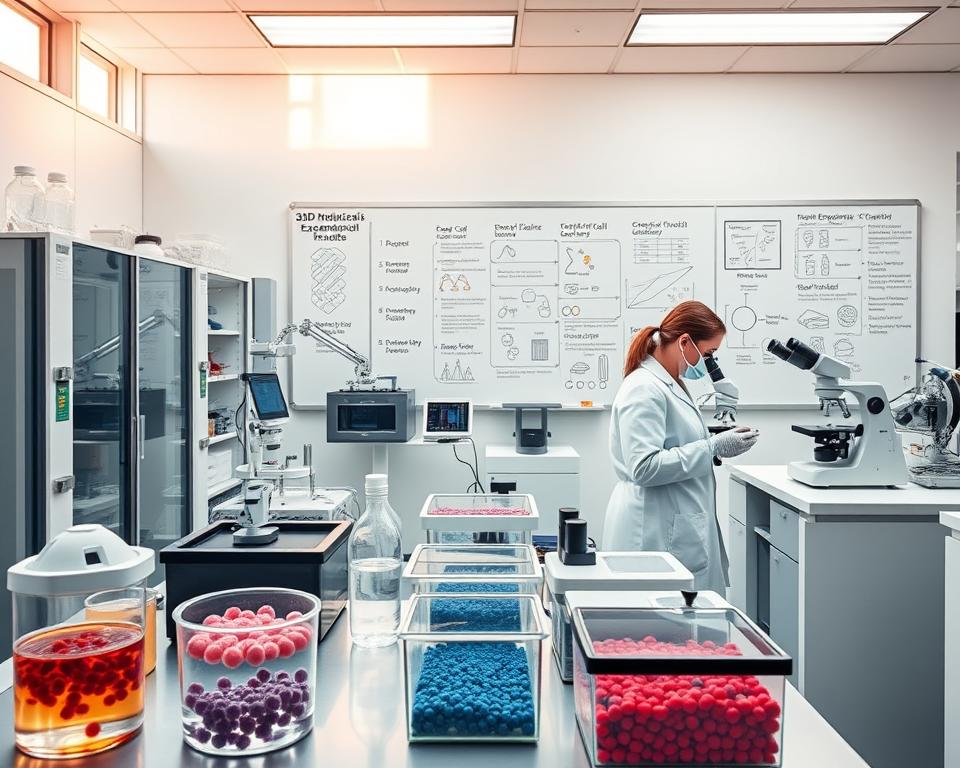
3D Cell Culture for Enhanced Expansion and Physiological Relevance
3D cell culture is a big step up from 2D methods. It lets cells act more naturally, get nutrients better, and interact with each other. This makes it a better way to study how cells grow and work, leading to better results.
Microcarrier-based Expansion Systems
Microcarrier technology is great for growing certain types of cells. It lets cells grow in high numbers while still getting the nutrients they need. This means less space and resources are needed, making it easier to grow more cells.
Bioprocess Engineering Approaches for Efficient Expansion
Using bioprocess engineering makes growing cells more efficient. Automation and fast methods help grow cells better and faster. This way, labs can make more cells while keeping quality high.
Applications of Expanded Cells
Expanded cells are key in many scientific fields. They help us understand complex biological processes better. Their uses are wide-ranging, showing their importance in research and treatments.
Biomedical Applications: Tissue Engineering and Cell-based Therapies
Cell culture has changed tissue engineering and cell-based therapies. Expanded cells help make biocompatible scaffolds for fixing tissues. They are crucial for creating tissues that act like our own, helping with cancer and genetic disorders.
Being able to choose the right cells for therapy makes treatments more effective. This is a big step forward in cell therapy.
Pharmaceutical Research: Drug Screening and Toxicity Testing
In drug research, expanded cells are very important. They help test how well and safe new drugs are. This is a key step before drugs go to clinical trials.
These cell cultures let researchers check how drugs affect cells. This helps decide if a drug is worth developing further. Using expanded cells makes drug development faster and more efficient.
Basic Biological Research: Studying Cell Biology and Disease Mechanisms
Expanded cells are great for basic research. They let scientists study how cells work and react. This helps us understand diseases better.
By studying these processes, we can find new ways to treat diseases. It also helps us learn more about how cells function.
Conclusion and Future Perspectives
Learning how to grow cells in culture is key for moving research and treatments forward. A look at cell culture practices shows us that careful setup, constant checking, and strict quality checks are crucial. These steps help make cell culture growth successful.
New trends in cell culture tech are moving towards automation and perfusion. These changes will make processes faster and bigger. Also, they will help lower contamination risks and make results more consistent. This is important as the need for quality cell products grows.
As we explore this field, keeping up with new research and tech is vital. New methods and tools will change how we do cell culture. This will open up new areas in personalized medicine and regenerative therapies. For more info, check out the detailed studies here.
References and further readings:
1.Chen, Y., Zhang, H., Zhang, W., & Liu, C. (2024). Bioprocess optimization of human mesenchymal stem cell expansion using 3D microcarriers in stirred tank bioreactors. Biotechnology and Bioengineering, 121(3), 579–593.
https://analyticalsciencejournals.onlinelibrary.wiley.com/doi/10.1002/bit.28034
2.King, J. A., Miller, W. M., & Papoutsakis, E. T. (2022). Process control strategies to maintain genetic and functional stability during large-scale mammalian cell culture. Biotechnology Advances, 60, 108013.
https://linkinghub.elsevier.com/retrieve/pii/S0734975022001094
FAQ
What are the key techniques for expanding cell cultures?
Expanding cell cultures involves several key steps. First, optimize growth conditions and adjust seeding density. Use effective passaging protocols and specialized culture media for the cell type. Consider 3D cell culture or microcarrier systems for better growth.
How can I select the right cell type for expansion?
Choosing the right cell type depends on your application. You can pick from primary cells, immortalized cell lines, or stem cells. Each has its own growth challenges and benefits. It’s important to know the growth capabilities of these cells.
What are optimal conditions for cell proliferation?
For cell proliferation, keep the temperature at 37°C and CO2 at 5%. Use controlled incubators with the right humidity. Also, monitor nutrient levels and add growth factors specific to the cell type to boost growth.
What are sub-culturing protocols for adherent cells?
Sub-culturing adherent cells involves detaching them with trypsin-EDTA. Passaging ratios are usually 1:3 to 1:10. Watch for confluency to know when to pass cells before overcrowding.
How do I control contamination in cell cultures?
To control contamination, use thorough sterilization like autoclaving and 70% ethanol sprays. Use disposable sterile products. Regularly check for bacteria, fungi, and mycoplasma with PCR.
What are the challenges in expanding specific cell types?
Expanding some cell types can be tough due to low growth rates or specific needs. To overcome this, customize media and use mechanical dissociation. Also, optimize culture conditions to meet the cell type’s specific needs.
Leo Bios
Hello, I’m Leo Bios. As an assistant lecturer, I teach cellular and
molecular biology to undergraduates at a regional US Midwest university. I started as a research tech in
a biotech startup over a decade ago, working on molecular diagnostic tools. This practical experience
fuels my teaching and writing, keeping me engaged in biology’s evolution.




Leave a Comment
Your email address will not be published. Required fields are marked *