



Choosing the right 48-well plates is crucial in labs. They are key for many scientific tasks because they are versatile and efficient. The 48 well plate format is great for tasks like drug discovery and cell culture.
Using premium 48-well plates saves money and space. They hold more samples, which means less reagent is needed. This makes them perfect for long-term studies. They also fit well with many high-throughput screening plates and lab tools. For more info, check out this guide.
It’s not just about how many plates you have. It’s about making your research better. Think about what you need for your studies and assays.
Key Takeaways
- Premium 48-well plates enhance sample density for better outcomes.
- Effective reagent use leads to cost savings in long-term experiments.
- Standardization facilitates compatibility with high-throughput screening instruments.
- Ideal for drug discovery and cell culture applications.
- Careful selection enhances the reliability of scientific research.
What Defines “Premium” in 48-Well Plates?
Premium 48-well plates are defined by three key factors. These ensure they work well in labs. Knowing these can help pick the best plates for different uses.
Material Quality and Biocompatibility Standards
The first thing that makes a plate premium is its material. Top plates are made from materials like polystyrene or cyclic olefin copolymer. These materials are safe for cells and don’t harm samples.
They also last long, keeping their shape and strength in lab conditions.
Precision Manufacturing and Consistency Requirements
How plates are made is very important. Premium plates must have exact well shapes and sizes. This is key for getting the same results every time.
They also have special surface treatments. These help samples work better and reduce errors. This makes them reliable lab tools.
Certifications and Regulatory Compliance Indicators
Being certified is another sign of premium quality. Look for ISO standards and FDA approvals. These show the plates are safe and work well for many experiments.

48 well plate template
What Are the Essential Design Features to Consider?
When picking out premium 48-well plates, certain design features are key. They affect how well the plates perform and their use in labs. Knowing about well geometry, volume capacity, lid design, and microplate bottom types helps use them best.
Well Geometry and Volume Capacity for Specific Assays
The shape of a microplate’s wells is crucial for different tests. Changing well sizes to fit specific tests ensures the right amount of liquid. For some tests, deeper wells are needed to get accurate results.
Lid Design for Minimizing Evaporation and Contamination
The lid of 48-well plates is vital for keeping samples safe. A good lid design helps control evaporation, keeping test results consistent. It also keeps out contaminants, making sure tests are reliable. It’s important to find lids that seal well but are still easy to open.
Bottom Type (Flat, U-bottom, V-bottom) and Its Impact on Sample Handling
The type of bottom on a microplate affects how samples are handled and test results. Flat bottoms are best for optical tests because they provide even light. U-bottoms help mix samples well, which is good for some tests. V-bottoms make it easier to get samples out, especially in cell culture.
How to Evaluate Compatibility with Laboratory Equipment?
Checking if 48-well plates work well with key lab tools is key for top results in your tests. Knowing how these plates work with automated systems, microplate readers, incubators, and shakers makes your experiments better and faster.
Automated Liquid Handling Systems and Robotic Workflows
Automated systems are made for certain plate sizes. Making sure 48-well plates fit well in these systems helps get accurate results faster. It’s also vital to check if the plate design helps with liquid handling to prevent problems in your tests.
Microplate Readers and Imaging Instruments
It’s crucial that the plate materials match the microplate reader’s needs. This match ensures you get precise data, especially in tests where accuracy is critical. Choosing plates that let light through better can also make your results clearer.
Incubators and Shakers: Temperature and Vibration Resistance
Checking if 48-well plates can handle temperature and vibrations is important for incubators and shakers. These traits are key for delicate cell cultures. Keeping the environment stable is essential for good results in your experiments.
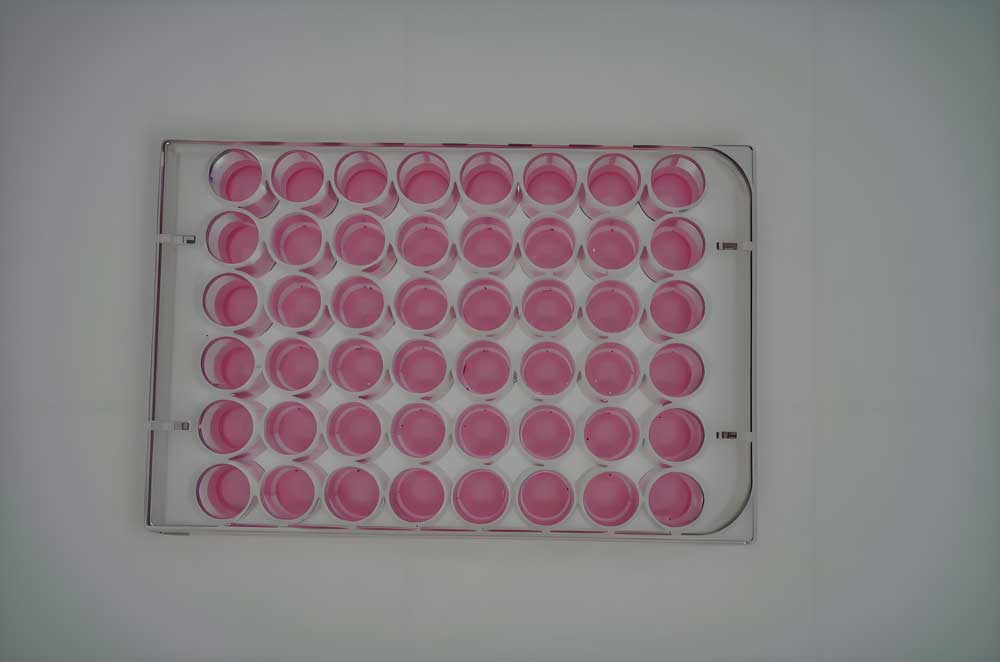
48 well plate surface area
What Are the Cost-Benefit Factors in Premium Plate Selection?
Choosing premium 48-well plates requires a careful cost-benefit analysis. The initial cost might seem high compared to standard plates. Yet, their long-term benefits, like reusability and durability, often make them worth it, especially in busy labs.
Initial Purchase Price vs. Reusability and Durability
When looking at premium plates, consider both the upfront cost and their reusability. These plates are built to last, reducing the need for frequent replacements. This makes them a cost-effective choice over time.
Long-Term Savings through Reduced Experimental Errors
Another key factor is the reduction of experimental errors. Premium plates help prevent contamination, leading to more accurate results. This means fewer repeat experiments, saving money and boosting lab productivity.
Hidden Costs: Maintenance and Disposal Considerations
Don’t forget about the hidden costs of maintenance and disposal. Keeping the plates in good condition requires regular upkeep, adding to lab expenses. Also, knowing the costs of disposing used plates is important for following regulations. Premium plates designed for easy disposal can help save on these costs.
How to Ensure Supplier Reliability and Product Consistency?
Building strong partnerships with reliable suppliers is key to a lab’s success. The reliability of suppliers directly affects the consistency of products. This, in turn, impacts the results of experiments. By carefully evaluating manufacturers, you can learn about their reputation and quality assurance practices.
Reputation and Track Record of Manufacturers
Choosing a supplier means checking their reputation. A good reputation usually means better product quality. Look for suppliers with good reviews and a history of on-time delivery. Talking to peers can also give you insights into a supplier’s performance.
Sample Testing and Quality Assurance Protocols
Top suppliers have strict quality assurance protocols. These may include:
- Comprehensive sample testing to ensure compliance with industry standards
- Regular production audits to maintain quality control
- Transparent communication about quality metrics and testing results
These steps help ensure product consistency. This means every batch meets the lab’s needs.
After-Sales Support and Technical Assistance
A reliable supplier offers great after-sales support. This support is crucial for solving any problems after buying. Technical help can fix operational issues and improve how you use lab equipment. Having access to technical support builds trust in the supplier, making your lab experience better.
What Are the Emerging Trends in Premium 48-Well Plate Technology?
The world of premium 48-well plate technology is changing fast. New trends focus on making things work better and being more flexible in labs. Thanks to new materials and ways of making things, tests can do better.
One big change is the use of advanced surface coatings. These coatings help cells stick better and make tests more sensitive. This is key for getting accurate results in biology.
Another big step is 3D printing. It lets scientists make plates that fit their exact needs. This means they can change the shape or size of wells for more precise tests.
Finally, 48-well plates are now being linked with digital systems. This makes labs work smarter, not harder. It helps collect and analyze data faster, speeding up research.
By embracing these new trends, labs can stay ahead of the game. They can work more efficiently and effectively, leading to better discoveries.
References and further readings:
1.Niles, W. D., & Coassin, P. J. (2008).
Cyclic Olefin Polymers: Innovative Materials for High-Density Multiwell Plates. Assay and Drug Development Technologies, 6(5), 577–590.
https://www.liebertpub.com/doi/10.1089/adt.2008.134.
2.Seeber, S., Ros, F., Thorey, I., et al. (2014).
A robust high-throughput platform to generate functional recombinant monoclonal antibodies using rabbit B cells from peripheral blood. PLOS ONE, 9(1), e86184.
https://journals.plos.org/plosone/article?id=10.1371/journal.pone.0086184
3.Kim, H. S., Hsu, S. C., Han, S. I., et al. (2017).
High-throughput droplet microfluidics screening platform for selecting fast-growing and high lipid-producing microalgae. Plant Direct, 1(1), e00011.
https://onlinelibrary.wiley.com/doi/10.1002/pld3.11
FAQ
What advantages do 48-well plates offer compared to other formats?
48-well plates hold more samples and use less reagent. They fit well with high-throughput screening tools. This makes them great for detailed biology studies.
How do I determine if a 48-well plate is “premium”?
Premium plates are made from top materials like polystyrene or cyclic olefin copolymer. They are made with care and meet ISO and FDA standards.
What design features should I consider in a 48-well plate?
Look for plates with adjustable well sizes and volumes. A good lid design helps prevent evaporation. The bottom type affects how you handle samples and get results.
Why is compatibility with laboratory equipment essential for 48-well plates?
Compatible plates work well with automated systems, readers, and incubators. This reduces errors and boosts research efficiency.
What cost-benefit factors should I consider when selecting premium 48-well plates?
Premium plates cost more upfront but save money in the long run. They last longer and give more reliable results.
How can I assess the reliability of suppliers for 48-well plates?
Check the supplier’s reputation and quality control. Look for after-sales support. This ensures you get high-quality plates.
What are the emerging trends in 48-well plate technology?
New trends include special coatings for better cell growth. 3D printing for custom designs is also popular. Digital systems help manage data better.
Leo Bios
Hello, I’m Leo Bios. As an assistant lecturer, I teach cellular and
molecular biology to undergraduates at a regional US Midwest university. I started as a research tech in
a biotech startup over a decade ago, working on molecular diagnostic tools. This practical experience
fuels my teaching and writing, keeping me engaged in biology’s evolution.



Leave a Comment
Your email address will not be published. Required fields are marked *