



The materials used for petri dishes greatly affect lab results. Glass petri dishes, especially those made from high-quality glass, stand out. They are strong and have clear optical clarity.
Glass petri dishes are made from top-notch silica and boron trioxide. This mix makes them last longer and keeps the culture media clean. Their clear glass is key for seeing samples under microscopes. It helps scientists measure microbial growth and study cell shapes accurately.
Glass petri dishes are a must-have in labs. They help researchers find new scientific knowledge.
Key Takeaways
- Glass petri dishes offer exceptional chemical resistance due to their laboratory-grade composition.
- The optical clarity of glass is essential for accurate microscopic observations.
- High-quality materials reduce the risk of sample contamination.
- Understanding petri dish materials is crucial for successful experimental outcomes.
- Glass petri dishes are ideal for a wide range of laboratory applications.
References and further readings:
1.Försterling, H. D., Pavláth, A. E., & Mester, Á. R. (2017).
The sperm stewing in its own ROS – in the plastic Petri dish. Annals of Translational Medicine, 5(17), 366.
https://www.ncbi.nlm.nih.gov/pmc/articles/PMC5599282/
2.Huang, C., Shen, X., Liu, X., Chen, Z., Shu, B., & Wan, L. (2019).
Hybrid breath figure method: A new insight in Petri dishes for cell culture. Journal of Colloid and Interface Science, 553, 720–728.
https://www.sciencedirect.com/science/article/abs/pii/S0021979719302437?via%3Dihub
Advantages of Glass Petri Dishes
Glass petri dishes are a top choice for labs. They resist chemicals well, can handle high heat, and can be used many times. These traits make them very useful in science.
Chemical Resistance for Diverse Media
Glass petri dishes are great because they don’t react with many chemicals. This means the media for growing organisms stays the same. It’s important for getting accurate results without surprises.
High-Temperature Sterilization Compatibility
Glass petri dishes can handle very high temperatures. They can be safely sterilized in an autoclave. This kills all bacteria, making lab results more reliable.
Reusability and Cost-Effectiveness
Glass petri dishes are also very cost-effective. They can be used many times if cleaned and sterilized properly. This saves money and reduces waste. For more on their benefits, check out Westlab’s comparison.
Disadvantages of Glass Petri Dishes
Although glass petri dishes are durable and resistant to chemicals, they have some downsides. Their fragility is a big drawback, making them less suitable for many situations.
Fragility and Risk of Breakage
Handling glass petri dishes can be risky because they break easily. Drops or bumps can cause them to shatter, posing dangers in labs. This fragility also means more costs for replacements and can slow down lab work.
Weight and Storage Considerations
Compared to plastic, glass petri dishes are heavier. This makes them hard to move around in some labs. Storing them safely is also tricky, as they need careful stacking and secure shelves. Plastic dishes, being lighter, are easier to store and save space.
Plastic Petri Dishes: The Modern Alternative
In recent years, plastic petri dishes have become key in labs. They are now a big part of lab work, often used instead of glass. This change is because plastics are versatile and work well for many tasks.
Types of Plastics Used
Most plastic petri dishes are made from polystyrene. It’s chosen for being clear and affordable. Other plastics like polycarbonate and copolyester are used when certain tests need special conditions. Each plastic has its own strengths, making sure the right one is picked for each lab need.
Manufacturing Processes for Plastic Petri Dishes
Injection molding is the main way plastic petri dishes are made. This method makes it easy to produce lots of dishes quickly and consistently. It’s great for labs that need a lot of dishes fast.
Because of injection molding, dishes can be made with special features. For example, they can have grooves for better grip or designs that help with air flow for cultures.
Benefits of Plastic Petri Dishes
Plastic petri dishes bring many advantages to today’s labs. They are light and easy to throw away. This makes labs work better and get more accurate results.
Lightweight and Ease of Handling
Plastic petri dishes are light, making them easy to handle. This is great for labs where people move a lot of dishes around. It helps labs work faster and more efficiently.
Disposability for Reduced Contamination Risk
Being disposable, plastic petri dishes help avoid contamination. They don’t carry over old contaminants, keeping studies clean. This lets researchers trust their results more, thanks to the benefits of plastic petri dishes.
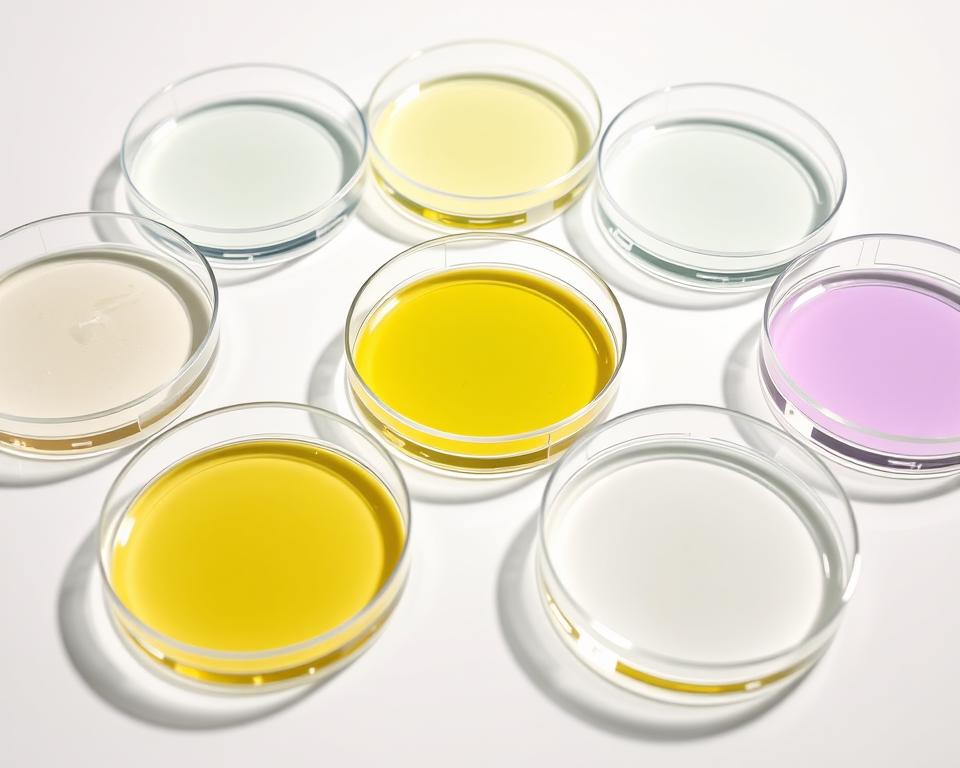
Drawbacks of Plastic Petri Dishes
Plastic petri dishes are easy to use and throw away. But, they have some big downsides for lab work. These include possible chemical leaching and not being able to handle high heat well. Both can mess up your experiments.
Potential Chemical Leaching
Some plastics, like those with BPA, can leak chemicals into what you’re studying. This can mess up how microorganisms grow and behave. So, picking the right plastic is key to avoid these problems and keep your science accurate.
Limited Heat Resistance
Plastic petri dishes also can’t handle high heat well. They can’t be sterilized in an autoclave, which is a big problem. This means you might have to use other ways to clean them, which might not work as well. This can lead to more problems in your lab work.
FAQ
What are the primary materials used in petri dish manufacture?
Petri dishes are made from glass or plastic. The plastics used are polystyrene, polycarbonate, and copolyester.
What are the advantages of using glass petri dishes?
Glass petri dishes are great because they resist chemicals well. They can handle high temperatures and can be reused. This makes them cost-effective over time.
Why is optical clarity important in petri dishes?
Optical clarity is key for microscope use. It lets researchers see microbial growth and cell behavior clearly.
What are the risks associated with glass petri dishes?
Glass petri dishes are fragile and can break easily. This is a risk when handling and moving them. They are also heavy, making storage hard.
What types of plastics are commonly used for petri dishes?
Polystyrene is the most used plastic for petri dishes. It’s clear and affordable. Polycarbonate and copolyester are also used for specific needs.
How are plastic petri dishes manufactured?
Plastic petri dishes are made by injection molding. This method makes mass production efficient and quality consistent.
What benefits do plastic petri dishes provide?
Plastic petri dishes are light and easy to handle. This makes workflows smoother. They are also disposable, which lowers cross-contamination risks.
What drawbacks should be considered when using plastic petri dishes?
Plastic petri dishes might leach chemicals, especially BPA. They also can’t handle high heat well. This limits their use in certain sterilization methods.
Leo Bios
Hello, I’m Leo Bios. As an assistant lecturer, I teach cellular and
molecular biology to undergraduates at a regional US Midwest university. I started as a research tech in
a biotech startup over a decade ago, working on molecular diagnostic tools. This practical experience
fuels my teaching and writing, keeping me engaged in biology’s evolution.



Leave a Comment
Your email address will not be published. Required fields are marked *