



Selecting the appropriate multi-well plate is crucial in laboratory research, as it directly impacts experimental outcomes. The ANSI/SLAS standards define the dimensional requirements for microplates, ensuring compatibility across laboratory automation systems.
We recognize the importance of standardized dimensions in facilitating seamless integration with various laboratory equipment, such as plate readers and liquid handlers. By understanding the different well configurations and their specific applications, researchers can optimize assay performance and achieve reliable results.
The right choice of multi-well plate can prevent common laboratory errors and improve workflow efficiency. As researchers, you need to be aware of the dimensional specifications that govern microplate compatibility.
Key Takeaways
- Understanding ANSI/SLAS standards for microplate dimensions is crucial for laboratory compatibility.
- Different well configurations have specific applications in various research fields.
- Standardized dimensions facilitate seamless integration with laboratory equipment.
- Proper plate selection can prevent laboratory errors and improve workflow efficiency.
- Optimizing assay performance requires understanding well dimensions and volume capacity.
Understanding Microplates and Their Applications
Microplates, also known as multi-well plates, have become an essential tool in laboratory automation and high-throughput screening. These plates are flat plates with multiple “wells” that serve as small test tubes, allowing for the simultaneous processing of numerous samples.
What Are Microplates?
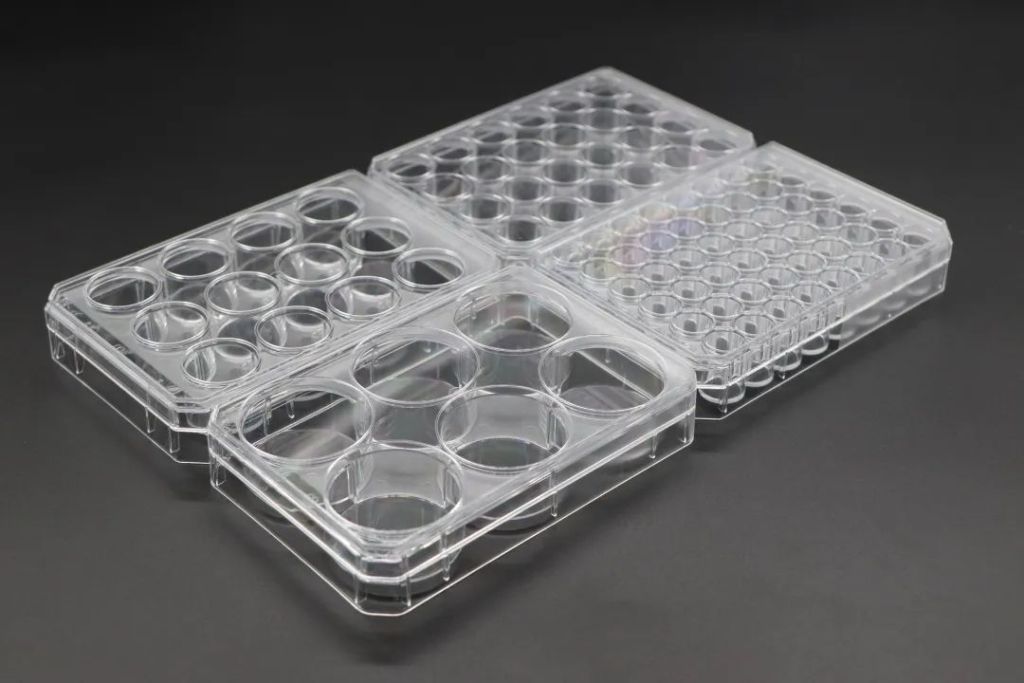
A microplate typically consists of 6, 12, 24, 48, 96, 384, or 1536 sample wells arranged in a 2:3 rectangular matrix. Each well can hold between tens of nanolitres to several millilitres of liquid. The design of microplates has evolved to accommodate various laboratory needs, including “tissue culture treated” plates for cell-based assays.
Common Uses in Research and Diagnostics
Microplates are widely used in various scientific disciplines, including enzyme-linked immunosorbent assays (ELISA) in clinical diagnostics and cell-based assays in pharmaceutical research. They have become indispensable in high-throughput screening, drug discovery, genomics, proteomics, and microbiology. The versatility of microplates allows researchers to conduct multiple experiments simultaneously, significantly increasing throughput and efficiency.
The Evolution of Well Plates in Laboratory Settings
The first microplate was created in 1951 by Dr. Gyula Takátsy, who machined six rows of 12 “wells” in Lucite. Since then, microplates have evolved to meet the changing needs of laboratory automation. The standardization of microplate dimensions has enabled seamless integration with various laboratory instruments, such as liquid handlers and plate readers. As laboratory automation continues to advance, microplates remain a crucial component in modern research and diagnostics.
As we continue to explore the world of microplates, it’s clear that their impact on laboratory workflows has been profound. By understanding their applications and evolution, researchers can better utilize these tools to advance scientific discovery.
Standard Well Plate Dimensions and Specifications
Understanding the standard dimensions of well plates is crucial for laboratory professionals who rely on these tools for various research and diagnostic applications. The ANSI/SLAS standards play a pivotal role in defining these dimensions to ensure compatibility and functionality across different laboratory equipment.
ANSI/SLAS Standards for Microplates
The Society for Laboratory Automation and Screening established the ANSI/SLAS standards to govern microplate dimensions. These standards are critical for ensuring that microplates are compatible with laboratory equipment and automated systems, regardless of the manufacturer. The ANSI/SLAS standards define not only the footprint dimensions but also the bottom flange geometry, which are rigorously followed by microplate manufacturers.
Footprint Dimensions and Tolerances
The footprint dimensions for standard microplates are specified as 127.76 mm × 85.48 mm with a tolerance of ±0.5 mm, as per ANSI/SLAS1-2004. These precise footprint dimensions are essential for ensuring that microplates fit properly in automated systems, plate readers, and other laboratory instruments. The standardized length and width measurements facilitate the interchangeability of microplates across different equipment.
well plate type
Height and Flange Specifications
The height of a standard microplate is defined as 14.35 mm ±0.76 mm according to ANSI/SLAS2-2004. While some manufacturers may deviate from this height standard, they generally adhere to the footprint and flange specifications. The bottom flange specifications, including a corner notch or chamfer at the A1 position, are critical for proper plate handling and orientation in automated systems.
By adhering to these standards, manufacturers can ensure that their microplates are compatible with a wide range of laboratory equipment, enhancing the efficiency and reliability of research and diagnostic processes.
Types of Multi Well Plates
Multi well plates are available in various configurations to suit different laboratory needs. The choice of plate depends on the specific requirements of the experiment, including the number of samples, the type of assay, and the equipment used.
Well Configurations: 6, 12, 24, 48, 96, 384, and 1536 Wells
Microplates come in a range of well configurations, from 6-well plates for larger sample volumes to 1536-well plates for high-throughput screening. The most commonly used formats are 96-well and 384-well plates, which offer a good balance between sample capacity and experimental throughput. The well density and individual well volume capacity vary significantly across these configurations, allowing researchers to choose the most suitable format for their assays.
Well Shapes and Bottom Geometries
Wells within microplates can have different shapes, including round and square wells. The shape of the well affects sample recovery, mixing efficiency, and compatibility with laboratory equipment. Additionally, the bottom geometry of the wells can be flat (F-bottom), V-shaped (V-bottom), U-shaped (U-bottom), or have minimal rounded edges (C-bottom). Each geometry is suited for specific applications, such as cell culture, precipitation assays, or sample recovery.
Materials Used in Microplate Manufacturing
Microplates are manufactured from a variety of materials, including polystyrene (PS) for optical clarity, polypropylene (PP) for chemical resistance and temperature stability, and specialized materials like cyclo-olefins for UV transparency. The choice of material impacts experimental parameters such as binding properties, temperature resistance, and compatibility with different solvents and reagents. For instance, PCR plates are often made from polypropylene due to its thermal stability, while tissue-culture treated plates are typically made from polystyrene.
By understanding the different types of multi well plates available, researchers can select the most appropriate plates for their specific experimental needs, ensuring optimal results and efficient use of resources.
Selecting the Right Multi Well Plate for Your Research
Choosing the correct multi well plate is crucial for the success of your research. The diverse range of multi well plates available can make selection challenging, but understanding your specific research needs can guide the process.
Assay Requirements and Compatibility
Different assay types have unique requirements that influence plate selection. For instance, biochemical assays may require plates with specific optical properties, while cell-based assays need plates with surface treatments that promote cell attachment. We recommend considering the detection method (fluorescence, luminescence, absorbance, etc.) when selecting plates, as optical clarity and background signal can significantly impact assay sensitivity.
For example, when performing fluorescence assays, it’s essential to choose plates with low background fluorescence to minimize signal interference. Similarly, for cell-based assays, plates with treated surfaces can enhance cell adhesion and growth.
Instrument Compatibility Considerations
Instrument compatibility is a critical factor in selecting multi well plates. The dimensions of the plate must match the specifications of your laboratory equipment, such as automated liquid handlers, plate readers, and incubators. We suggest visiting our resource section for a list of compatible instrument manufacturers and models to ensure seamless integration.
For instance, some automated systems require precise knowledge of microplate dimensions to function correctly. Ensuring compatibility can prevent operational issues and optimize workflow efficiency.
Application-Specific Selection Criteria
When selecting a multi well plate, consider the specific requirements of your application. Factors such as sample volume, the need for replicates, and experimental conditions should influence your choice. For cell-based assays, considerations include gas exchange requirements and sterility.
| Application | Key Considerations |
|---|---|
| Cell-based assays | Surface treatment, gas exchange, sterility |
| Biochemical assays | Optical properties, well dimensions |
| High-throughput screening | Well density, automation compatibility |
By carefully evaluating these factors, you can select a multi well plate that meets your research needs, enhancing the quality and reliability of your results.
Conclusion: Making an Informed Decision on Well Plates
In the realm of laboratory research, the importance of adhering to standard well plate dimensions cannot be overstated. As we’ve discussed, the ANSI/SLAS standards play a crucial role in ensuring compatibility across different manufacturers and laboratory equipment.
When selecting microplates, researchers must consider several key factors, including well configuration, plate dimensions, and experimental requirements. Understanding the relationship between these elements is vital for achieving successful research outcomes.
While standardized dimensions provide a framework, it’s essential to consider specific application needs, such as assay type, sample volume, and detection method. By doing so, researchers can optimize their experimental conditions to generate reliable, reproducible data.
Investing time in selecting the right multi well plate at the beginning of a project can save significant resources and prevent experimental failures later. For more detailed specifications on microplates that meet ANSI/SLAS standards, researchers can refer to resources provided by manufacturers and industry organizations.
References and further readings:
1.Stoddart, M. J., & Miller, R. H. (2008). The Importance of Selecting the Right Multiwell Plate Format for Cell Culture. Journal of Biomolecular Screening, 13(2), 151-157.
2.van der Valk, J., et al. (2016). Optimization of cell culture in multi-well plates for high-throughput screening. Journal of Laboratory Automation, 21(3), 244-256.
3.López, M., et al. (2015). Evaluation of Multiwell Plate Formats for High-Throughput Screening of Cellular Assays. PLOS ONE, 10(11), e0143739.3.Mahajan, M. S., et al. (2019). Analyzing the Impact of Multiwell Plate Dimensions in the Context of Cell-Based Assays. Journal of Cell Biology, 218(2), 315-325.
FAQ
What are the most common microplate formats used in laboratory settings?
The most commonly used microplate formats are 96-well, 384-well, and 1536-well plates, which are widely used for various applications, including high-throughput screening and cell culture.
What is the ANSI/SLAS standard for microplates?
The ANSI/SLAS standard defines the footprint dimensions, tolerances, and flange specifications for microplates, ensuring compatibility with various laboratory instruments and equipment.
How do I choose the right multi-well plate for my research?
To choose the right multi-well plate, consider factors such as assay requirements, instrument compatibility, and application-specific selection criteria, including well configuration, material, and surface treatment.
What are the different types of well configurations available?
Well configurations range from 6 to 1536 wells, with common formats including 96-well, 384-well, and 1536-well plates, each designed for specific applications and high-throughput screening needs.
What materials are used in microplate manufacturing?
Microplates are manufactured from various materials, including polystyrene, polypropylene, and glass, each offering distinct properties and benefits for specific applications, such as cell culture, PCR, or liquid handling.
How do I ensure compatibility between my microplate and laboratory instruments?
To ensure compatibility, verify that your microplate meets the ANSI/SLAS standards and check the instrument manufacturer’s specifications for compatible plate formats and footprint dimensions.
Leo Bios
Hello, I’m Leo Bios. As an assistant lecturer, I teach cellular and
molecular biology to undergraduates at a regional US Midwest university. I started as a research tech in
a biotech startup over a decade ago, working on molecular diagnostic tools. This practical experience
fuels my teaching and writing, keeping me engaged in biology’s evolution.



Leave a Comment
Your email address will not be published. Required fields are marked *