


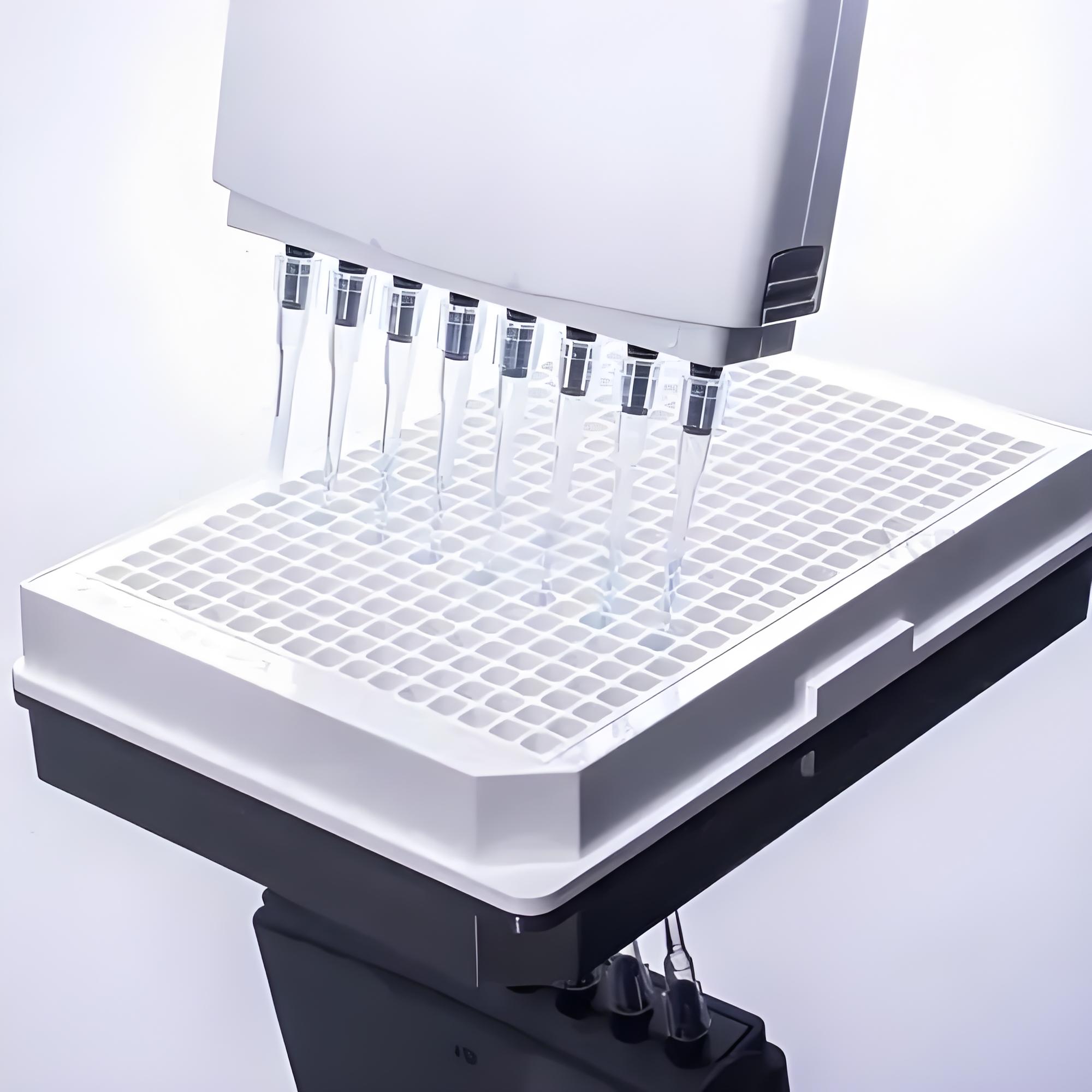
Automating liquid handling with 384 Well PCR Plates is a crucial aspect of modern laboratory automation, particularly for high-throughput applications requiring precise liquid handling. We will explore the critical considerations for implementing these systems.
The PCR Plate is designed for efficient and reliable PCR applications, featuring a 30ul capacity and a Roche-Type layout. Its full skirt design adds stability, reducing the risk of cross-contamination.
When automating liquid handling, laboratories must evaluate several key factors, including technical specifications and potential challenges. Proper plate selection directly impacts experimental reproducibility and laboratory efficiency.
Key Takeaways
- Understand the critical role of 384 Well PCR Plates in laboratory automation.
- Evaluate technical specifications for compatibility with automated systems.
- Consider the impact of plate selection on experimental reproducibility.
- Assess the challenges associated with integrating automated liquid handling systems.
- Recognize the importance of precise liquid handling in high-throughput applications.
Key Features of 384 Well PCR Plates for Laboratory Automation
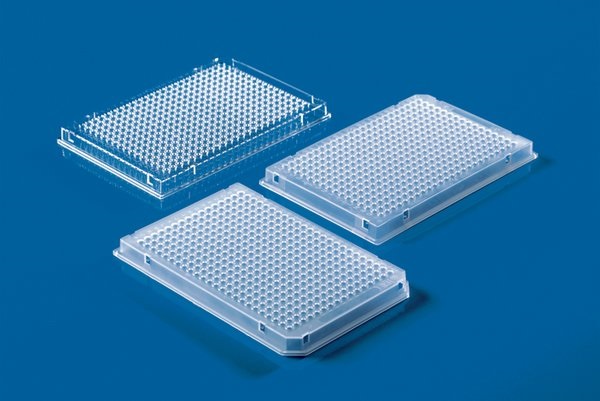
To maximize the potential of 384 Well PCR Plates, it’s essential to understand their key features and benefits. The design and functionality of these plates play a crucial role in laboratory automation, particularly in high-throughput PCR workflows.
Full-Skirted Design for Enhanced Stability and Handling
The full-skirted design of 384 Well PCR Plates provides crucial structural integrity when handled by automated liquid handling robots. This design feature prevents plate deformation and ensures consistent well positioning, reducing the risk of cross-contamination.
High-Throughput Capacity for Efficient PCR Workflows
The 384-well format quadruples sample processing capability compared to standard 96-well formats, maintaining reaction efficiency. With a typical well volume of 30μl, these plates contribute to reagent conservation and cost efficiency without compromising PCR performance.
Material Composition and Quality Considerations
The material composition of 384 Well PCR Plates, particularly medical-grade polypropylene, ensures chemical compatibility, temperature resistance, and consistent PCR reaction conditions. Quality control considerations include manufacturing precision, well-to-well consistency, and rigorous testing protocols to ensure reliable performance in automated systems.
Critical Factors When Selecting 384 Well PCR Plates for Automated Systems
When automating liquid handling with 384 well PCR plates, several critical factors must be considered to ensure seamless integration and optimal performance. The compatibility of PCR plates with automated systems is paramount for efficient workflows.
Plate Dimensions and Compatibility with Liquid Handling Robots
The precise dimensional specifications of 384 well PCR plates are crucial for compatibility with major liquid handling platforms. Adherence to SBS (Society for Biomolecular Screening) standards ensures that plates fit and function correctly in automated systems.
Standard Measurements and Tolerances
Manufacturing tolerances significantly affect plate positioning accuracy. Factors such as flatness, well spacing, and overall dimensions impact liquid dispensing precision. Ensuring that plates meet these standards is vital.
Notch Designs for Proper Orientation
The various notch designs available in 384 well PCR plates play a critical role in ensuring proper plate orientation during automated loading. Standardized notch positions, such as the two-notch design, enable robotic systems to verify correct plate placement.
Barcode Integration for Sample Tracking and Identification
Barcoded plates enable seamless tracking and sample identification, streamlining the entire PCR process. Both 1D and 2D barcode formats are used for sample tracking and integration with laboratory information management systems (LIMS).
Color Options and Their Impact on Signal Detection
The color of PCR plates, particularly white plates, significantly impacts fluorescence signal detection in qPCR applications. White plates enhance visibility and contrast, making it easier to distinguish samples and improving signal-to-noise ratios.
| Feature | Description | Benefit |
|---|---|---|
| Standardized Dimensions | Adherence to SBS standards | Ensures compatibility with automated systems |
| Notch Designs | Various notch configurations | Ensures proper plate orientation |
| Barcode Integration | 1D and 2D barcode formats | Streamlines sample tracking and identification |
| Color Options | White plates for qPCR | Enhances signal detection and sample visibility |
Optimizing Performance with 384 Well PCR Plate in Automated Workflows
When using 384 well PCR plates in automated systems, optimization is key to achieving consistent and reliable outcomes. We will explore several critical factors that influence the performance of these plates in high-throughput research settings.
Preventing Cross-Contamination in High-Density Formats
Cross-contamination is a significant challenge in high-density 384 well formats. We address this by designing plates with features that minimize aerosol transfer between adjacent wells during automated pipetting operations. For instance, our 384-Well Barcoded PCR Plates are engineered to reduce the risk of cross-contamination, ensuring the integrity of your PCR results.
Temperature Uniformity and Thermal Cycling Efficiency
Temperature uniformity across the 384 well plate surface is crucial for PCR reproducibility. We examine how thermal cycling efficiency in 384 well formats differs from larger well formats, including ramping rate optimization and considerations for reaction volume standardization to ensure consistent DNA amplification.
RNase/DNase-Free Options for Sensitive Applications
For sensitive molecular biology applications, particularly those involving RNA work or low-copy number DNA detection, RNase/DNase-free manufacturing processes are essential. Our plates are certified to be free from nucleases and protein contaminants, ensuring the reliability of your experimental results.
By focusing on these critical aspects, you can optimize the performance of your 384 well PCR plates in automated workflows, achieving higher throughput and reliability in your PCR processes.
Conclusion: Maximizing Efficiency in Your Automated PCR Processes
In conclusion, selecting the right 384 Well PCR Plate is crucial for maximizing efficiency in automated PCR processes. We recommend considering factors such as plate dimensions, barcode integration, and material composition to ensure compatibility and optimal performance with your automated liquid handling systems.
When evaluating different 384 Well PCR Plate options, consider the price-to-performance ratio and validate plate performance in your specific automated system. White, full skirted, barcoded PCR plates are generally considered the gold standard for high-throughput applications, offering the best combination of robotic handling compatibility and signal detection capabilities.
References and further readings:
1.Stark, A., Pisanic II, T. R., Herman, J. G., & Wang, T. H. (2022). High-throughput sample processing for methylation analysis in an automated, enclosed environment. SLAS Technology, 27(2), 142–151.
https://www.sciencedirect.com/science/article/pii/S24726303210002482.Torres-Acosta, M. A., Lye, G. J., & Dikicioglu, D. (2022). Automated liquid-handling operations for robust, resilient, and efficient bio-based laboratory practices. Biochemical Engineering Journal, 186, 108574.
https://www.sciencedirect.com/science/article/pii/S1369703X220038253.Schuster, J., Kamuju, V., Zhou, J., & Mathaes, R. (2024). Piston-driven automated liquid handlers. SLAS Technology, 29(3), 135–145.
https://www.sciencedirect.com/science/article/pii/S2472630324000104
FAQ
What are the benefits of using full-skirted PCR products in automated liquid handling systems?
Full-skirted products provide enhanced stability and handling, making them ideal for laboratory automation. They also facilitate easier handling and reduce the risk of sample contamination.
How do I ensure compatibility between my PCR products and liquid handling robots?
To ensure compatibility, verify that the dimensions of your products match the specifications of your liquid handling robots. We offer a range of products with standardized dimensions to fit most automated systems.
What is the significance of RNase/DNase-free options in PCR applications?
RNase/DNase-free options are crucial for sensitive PCR applications, as they prevent the degradation of DNA or RNA samples. Our products are available in RNase/DNase-free options to ensure the integrity of your samples.
Can I customize the color of my PCR products for signal detection purposes?
Yes, we offer various color options for our products, which can impact signal detection in your applications. Choosing the right color can enhance the performance of your assays.
How do I prevent cross-contamination when using high-density PCR formats?
To prevent cross-contamination, ensure proper handling and loading of your products. Our products are designed with features that minimize the risk of cross-contamination, such as individual wells and optimized well geometry.
What is the importance of barcode integration in PCR products for automated workflows?
Barcode integration enables efficient sample tracking and identification, streamlining your workflow and reducing the risk of sample misidentification. Our products can be customized with barcodes to meet your specific needs.
Are the PCR products made from high-quality materials?
Yes, our products are made from high-quality polypropylene material, ensuring optimal performance and minimizing the risk of sample contamination or degradation.
Leo Bios
Hello, I’m Leo Bios. As an assistant lecturer, I teach cellular and
molecular biology to undergraduates at a regional US Midwest university. I started as a research tech in
a biotech startup over a decade ago, working on molecular diagnostic tools. This practical experience
fuels my teaching and writing, keeping me engaged in biology’s evolution.



Leave a Comment
Your email address will not be published. Required fields are marked *