



Following OSHA’s safety rules shows how important it is to wear the right protective gear. By using nitrile gloves, lab workers can lower the chance of getting sick. They also make sure the lab stays safe.
Nitrile gloves are a great choice because they last long and resist chemicals well. This makes them perfect for the many tasks done in a biology lab.
Key Takeaways
- Nitrile gloves are essential for preventing contamination in biology labs.
- Proper glove usage ensures compliance with OSHA safety standards.
- Nitrile provides better chemical resistance compared to other glove materials.
- Wearing gloves minimizes the risk of laboratory-acquired infections.
- Glove compliance supports overall laboratory safety protocols.
Understanding Nitrile Gloves and Their Importance
Nitrile gloves are key in personal protective gear, especially in labs. They’re made from synthetic rubber, offering protection without latex allergens. Many professionals choose nitrile gloves for their top-notch qualities.
What Are Nitrile Gloves?
Nitrile gloves are made from synthetic rubber, similar to latex but safe for those allergic. They’re great for many uses, especially for those who need protection. These gloves can handle tough environments, keeping users safe from harmful substances.
Key Benefits of Using Nitrile Gloves
- Superior Chemical Resistance: Nitrile gloves resist many chemicals and solvents well.
- Puncture Protection: They’re tougher than latex, reducing the chance of tears and punctures.
- Comfort and Flexibility: Nitrile gloves fit snugly, allowing for easy movement, perfect for detailed work.
- Latex-Free: Nitrile is safe for those allergic to latex.
Nitrile vs. Latex Gloves
Comparing nitrile and latex gloves shows nitrile’s advantages. Nitrile gloves are better for labs because of their strong features. Here’s a comparison:
| Feature | Nitrile Gloves | Latex Gloves |
|---|---|---|
| Allergen-Free | Yes | No |
| Puncture Resistance | High | Medium |
| Chemical Resistance | Excellent | Good |
| Flexibility | Very Good | Good |
| Cost | Moderate | Lower |
Safety Protocols in the Biology Laboratory
Nitrile gloves are key to keeping labs safe. They stop contamination from harmful substances. Wearing them protects both the person and the lab’s work.
The Role of Gloves in Preventing Contamination
In biology labs, gloves block harmful stuff. They’re crucial when dealing with samples or chemicals. Nitrile gloves keep hands safe from dangerous materials. Following safety rules, like wearing gloves, keeps the lab clean and safe.
Types of Contaminants Nitrile Gloves Protect Against
Nitrile gloves keep out many harmful things, including:
- Chemicals: They protect against harmful chemicals found in labs.
- Biological agents: They block bacteria, viruses, and other germs.
- Particulates: They stop dust and small particles from getting into samples.
Applications of Nitrile Gloves in Laboratory Settings
Nitrile gloves are key in labs because they resist chemicals well and protect against harm. They are used in many areas, like microbiology, handling dangerous chemicals, and working with biological samples.
Usage in Microbiology Experiments
In microbiology, nitrile gloves are vital for working with cultures and samples. They keep out harmful germs, reducing the chance of contamination. Because they last long, many experts prefer them for their work.
Nitrile Gloves in Chemical Handling
Nitrile gloves are essential for working with chemicals. They can handle many solvents and corrosive substances, protecting against spills. Labs often buy nitrile gloves in bulk to keep their work safe and efficient.
Their Role in Biological Sample Processing
Processing biological samples needs high cleanliness and safety. Nitrile gloves help prevent contamination, keeping samples safe for analysis. Buying nitrile gloves in bulk helps labs work better and safer.
| Application Area | Key Benefits |
|---|---|
| Microbiology | Protects against infectious agents, ensuring safety during specimen handling. |
| Chemical Handling | Resistant to various solvents, providing a critical barrier against hazardous materials. |
| Biological Sample Processing | Minimizes contamination risk, preserving sample integrity for accurate research results. |
Choosing the Right Nitrile Gloves
Choosing the right nitrile gloves is key for safety and comfort in the lab. There are many options out there. Knowing what to look for can make picking easier and improve your lab time.
Factors to Consider When Selecting Gloves
Several things matter when picking nitrile gloves:
- Chemical Compatibility: Check the chemicals you’ll work with. Make sure the gloves protect you well.
- Glove Thickness: Thicker gloves protect better against cuts and spills.
- Comfort and Dexterity: Choose gloves that let you move freely without feeling cramped.
Sizes and Fits: Why They Matter
The fit of your gloves is very important in the lab. Gloves that don’t fit right can make your hands tired and affect your work. Here’s what to think about:
- Proper Size: Gloves come in many sizes. Finding the right one is key for both safety and comfort.
- Finger Length and Width: Measure your hands to pick the best size. This helps with grip and movement.
Different Grades of Nitrile Gloves
Nitrile gloves come in different grades for various lab needs:
| Grade | Description | Applications |
|---|---|---|
| General Purpose | A budget-friendly choice for everyday tasks. | Basic cleaning, handling non-hazardous materials. |
| Medical Grade | Top-notch gloves for medical use. | Surgeries, patient checks. |
| Industrial Grade | Stronger and thicker for better protection. | Working with chemicals, assembly lines. |
Investing in quality nitrile gloves boosts safety and performance. You can find affordable options that still offer good quality. Picking the right gloves for your needs can greatly improve your lab experience.
Comparing Nitrile Gloves with Other Types of Protective Gloves
Nitrile gloves are a top pick for labs because they outperform others. They are better than vinyl, latex, and polyethylene gloves in many ways. This includes protection, durability, and fit for different tasks.
Advantages Over Vinyl Gloves
Nitrile gloves resist chemicals better than vinyl gloves. This is key in labs where harmful substances are present. They also don’t tear as easily, offering a strong barrier against harmful stuff.
They fit hands better and allow for more dexterity. This is great for detailed work in labs. Vinyl gloves can’t match this level of fit and function.
How Nitrile Stands Against Latex and Polyethylene
Nitrile gloves are better than latex gloves for many people, especially those with allergies. They protect against a wide range of chemicals, making them versatile for labs. Polyethylene gloves are thinner and less strong, not ideal for tough lab work.
Nitrile gloves are strong yet flexible. They are the best choice for important lab tasks. This makes them a top pick for protection.
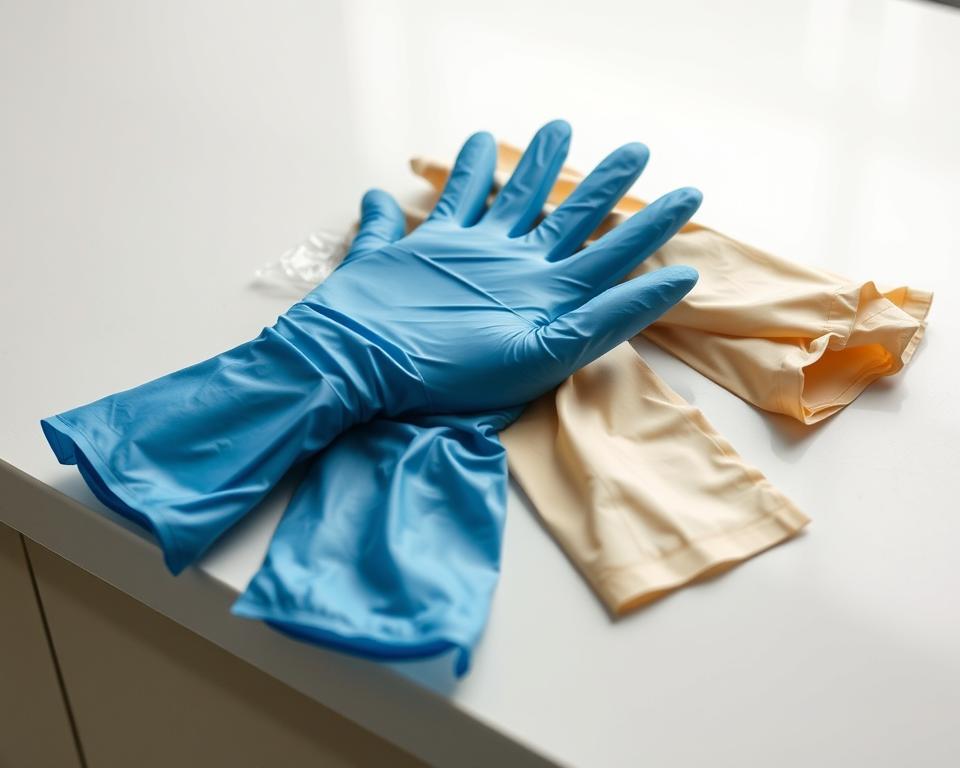
| Type of Gloves | Chemical Resistance | Durability | Allergy-friendly | Fit and Comfort |
|---|---|---|---|---|
| Nitrile Gloves | High | Excellent | Yes | Good |
| Vinyl Gloves | Low | Fair | No | Poor |
| Latex Gloves | Moderate | Good | No | Excellent |
| Polyethylene Gloves | Very Low | Poor | Yes | Poor |
When to Change Nitrile Gloves in a Laboratory
Knowing when to change nitrile gloves is key to keeping labs safe. It protects both workers and the samples they handle. Following the right glove change practices helps avoid contamination and keeps the lab safe.
Signs That Nitrile Gloves Need Replacement
- Visible tears or punctures in the glove.
- Discoloration from chemicals.
- Loss of elasticity or fit from wear.
- Direct contact with biological samples, especially infectious ones.
Best Practices for Glove Change in Labs
Following glove change practices boosts lab safety. Here are some best practices:
- Change gloves between tasks or materials.
- Remove and discard gloves after working with hazardous substances.
- Check gloves for damage before starting tasks.
- Train staff on the importance of glove use and care.
Proper Techniques for Wearing and Removing Gloves
Learning the right way to use gloves is key to keeping labs safe. Knowing how to put on and take off nitrile gloves correctly is important. It helps keep everyone safe and prevents contamination.
How to Wear Nitrile Gloves Correctly
Before you put on nitrile gloves, make sure your hands are clean and dry. This is crucial for a good fit. Here are some glove wearing techniques:
- Check the glove size for a snug fit.
- Open the glove package carefully to prevent any tears.
- Slide your fingers into the glove, ensuring that your thumb is correctly positioned.
- Smooth out any wrinkles for a tight fit against your skin.
Safe Removal Techniques to Avoid Contamination
Removing gloves correctly is just as important as putting them on. The right steps during proper glove removal help avoid contamination:
- Grasp the cuff of one glove without touching the outside surface.
- Peel the glove off, turning it inside out as you do so.
- Hold the removed glove in the palm of the gloved hand.
- Insert a finger of your ungloved hand into the cuff of the remaining glove, and repeat the removal process.
- Dispose of the gloves in a designated waste bin immediately.
For more on glove techniques, check out this resource. It highlights the role of hand hygiene with glove use.
Environmental Considerations of Nitrile Gloves
Nitrile gloves are crucial in labs for safety. Yet, they are not biodegradable, causing waste issues. Labs are now looking into green alternatives to nitrile gloves. These new gloves are made from renewable materials and are safer for the planet.
Biodegradable Alternatives to Nitrile Gloves
Companies are working on biodegradable gloves to replace nitrile ones. They use materials like cornstarch and bamboo. These gloves help reduce waste and support eco-friendly lab practices.
Recycling Programs and Their Importance
Recycling nitrile gloves is key to lessening environmental harm. Recycling programs teach labs to dispose of gloves properly. This way, we can keep our labs safe and green. For more info, check out this resource on environmental impacts.
Training and Education on Glove Use in Labs
Teaching lab workers how to use nitrile gloves is key. Adding glove use to training programs boosts safety and follows safety rules. This way, everyone knows how to handle chemicals and biological samples safely.
Incorporating Glove Use into Lab Training Programs
Training that highlights nitrile gloves as PPE is vital. It should include how to wear, change, and remove them. Hands-on practice shows the importance of gloves in keeping experiments safe.
Importance of Following Laboratory Safety Guidelines
Following safety rules creates a responsible lab environment. It’s important to change gloves often and not reuse them. By making these habits part of daily work, labs can work better and stay safe. For more on using nitrile gloves right, check out this resource.
Future Trends in Laboratory Glove Technology
The world of laboratory glove technology is always getting better. We’re seeing new safety features and designs that make gloves more comfortable to wear. These changes help scientists work better without losing safety.
New technologies are making gloves safer and more comfortable. This means better protection and easier use in labs. These updates are setting new standards for safety gear.
The future of lab gloves looks bright. With these new technologies, we’ll see more use of nitrile gloves. This will help keep labs safe and efficient for scientists.
References and further readings:
1.Nelson, D. I., Phalen, R. N. (2022).
Review of the performance, selection, and use of gloves for chemical protection. ACS Chemical Health & Safety, 29(1), 26–37.
https://pubs.acs.org/doi/10.1021/acs.chas.1c00084
2.Freitas, J., Lomba, A., Sousa, S., Gonçalves, V., et al. (2025).
Consensus-based guidelines for best practices in the selection and use of examination gloves in healthcare settings. Nursing Reports.
Retrieved from https://pmc.ncbi.nlm.nih.gov/articles/PMC11767351/
FAQ
Why do we need to wear gloves when working in a biology laboratory?
Gloves are key to keeping a lab clean and safe. They block your skin from harmful stuff like chemicals and germs. This follows OSHA’s rules for safety gear.
What Are Nitrile Gloves?
Nitrile gloves are made from synthetic rubber. They’re stronger and safer than latex gloves. They’re good for people with latex allergies too.
Key Benefits of Using Nitrile Gloves?
Nitrile gloves are great because they don’t tear easily. They also protect well against chemicals and solvents. This makes them safe for handling harmful stuff.
How Do Nitrile Gloves Compare to Latex Gloves?
Nitrile gloves are better at resisting chemicals and are less likely to cause allergies. They’re also more durable than latex gloves.
What is the Role of Gloves in Preventing Contamination?
Gloves keep your skin safe from harmful stuff in labs. They help keep the work area clean and prevent infections.
What Types of Contaminants Do Nitrile Gloves Protect Against?
Nitrile gloves protect against chemicals, germs, and other harmful materials. This keeps you safe while working in labs.
How Are Nitrile Gloves Used in Microbiology Experiments?
In microbiology, nitrile gloves are crucial. They prevent exposure to harmful germs when working with cultures and samples.
Why Are Nitrile Gloves Important in Chemical Handling?
Nitrile gloves are important for handling chemicals. They resist solvents and corrosive materials, keeping you safe.
What Is Their Role in Biological Sample Processing?
Nitrile gloves are key in processing biological samples. They prevent contamination, keeping the results accurate and the lab safe.
What Factors Should Be Considered When Selecting Nitrile Gloves?
Look at chemical resistance, thickness, and the task at hand. Make sure they fit well for comfort and dexterity.
Why Do Sizes and Fits Matter When Choosing Nitrile Gloves?
The right fit is important. It helps you work better and prevents fatigue. This makes lab work more efficient.
What Are the Different Grades of Nitrile Gloves?
There are many grades of nitrile gloves. Each is designed for specific tasks, ensuring the right protection.
What Are the Advantages of Nitrile Gloves Over Vinyl Gloves?
Nitrile gloves are more durable and resistant to chemicals. They’re less likely to tear, offering better protection.
How Do Nitrile Gloves Stand Against Latex and Polyethylene?
Nitrile gloves are better for those allergic to latex. They’re also stronger than polyethylene gloves, offering better protection.
When Should Nitrile Gloves Be Changed in a Laboratory?
Change gloves when they’re damaged or when handling hazardous materials. This keeps the lab clean and safe.
What Are the Best Practices for Changing Gloves in Labs?
Always change gloves between tasks, especially when moving to hazardous materials. This keeps the lab clean and safe.
How Should Nitrile Gloves Be Worn Correctly?
Wear gloves when your hands are dry and clean. Make sure they fit snugly without gaps for the best protection.
What Are Safe Removal Techniques for Nitrile Gloves?
To remove gloves safely, grasp the cuff and peel off. Turn the glove inside-out to avoid touching the outside.
What Are Biodegradable Alternatives to Nitrile Gloves?
New biodegradable options are coming. They’re safer and better for the environment than traditional nitrile gloves.
Why Are Recycling Programs for Nitrile Gloves Important?
Recycling programs help reduce waste. They encourage labs to be more eco-friendly, which is good for the planet.
How Can Glove Use Be Incorporated into Lab Training Programs?
Teach staff how to wear, change, and remove gloves properly. This keeps the lab safe and follows safety standards.
Why Is It Important to Follow Laboratory Safety Guidelines?
Following safety guidelines is crucial. It keeps the lab clean, reduces risks, and ensures everything runs smoothly.
What Innovations Are Emerging in Nitrile Glove Manufacturing?
New advancements are making nitrile gloves better. They’re more resistant to chemicals and easier to use.
How Does Technology Impact Laboratory Safety Standards?
Technology is changing PPE standards. It’s making gloves safer and more effective, meeting new safety needs.
Leo Bios
Hello, I’m Leo Bios. As an assistant lecturer, I teach cellular and
molecular biology to undergraduates at a regional US Midwest university. I started as a research tech in
a biotech startup over a decade ago, working on molecular diagnostic tools. This practical experience
fuels my teaching and writing, keeping me engaged in biology’s evolution.

Leave a Comment
Your email address will not be published. Required fields are marked *