


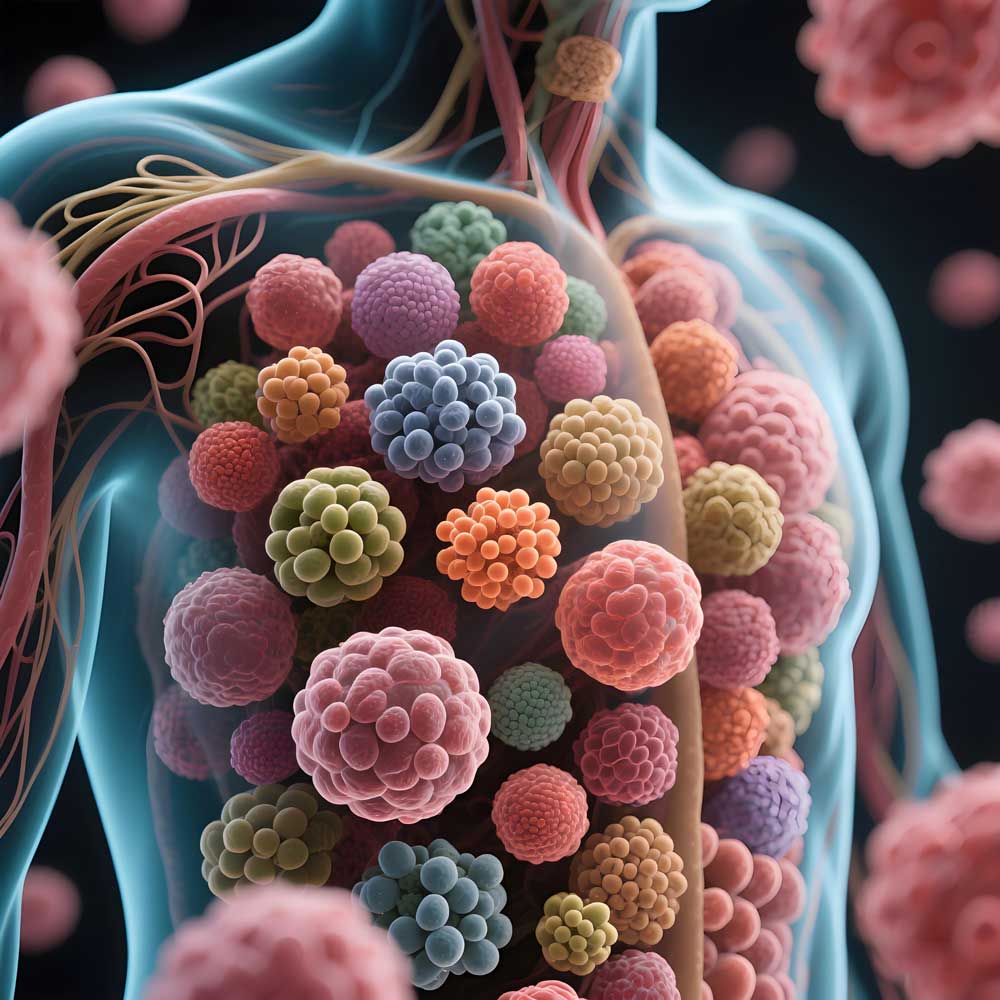
People often wonder how many cells are in their bodies. The answer is about 30 trillion human cells. Each cell has a special job, making our bodies complex and unique.
Scientists have found that the number of cells can change. This depends on things like age, sex, and health. A new study shows we might have more bacterial cells than human cells. This changes how we see the balance between our cells and the bacteria in us.
Knowing how many cells we have is important. It helps in many areas of science, from health to medicine.
Key Takeaways
- The human body contains around 30 trillion human cells.
- Cell counts can vary based on individual factors like age and health.
- Recent studies reveal bacterial cells may outnumber human cells.
- Understanding cellular composition is vital for health assessments.
- Research methodologies continue to evolve, leading to more precise estimates.
Tracing the Historical Journey of Determining “How Many Cells Do Humans Have”
The quest to find out how many cells humans have has seen a lot of progress. At first, scientists used simple math based on body weight or size. These early methods helped lay the groundwork for more detailed studies later on.
The introduction of microscopy in the 17th century was a big step forward. It allowed scientists to see cells more clearly. This breakthrough helped them count and identify different types of cells in the body more accurately.
Over time, new techniques for growing cells in labs have improved our knowledge. Today, we can count cells with great precision. These advances show how far we’ve come in understanding the human body’s complex makeup.
“How Many Cells Are in Our Body?” – Methodological Marvels, Pitfalls, and Innovations in Cell Counting
Figuring out how many cells are in our body is a complex task. Scientists use different methods to get closer to the truth. These include flow cytometry, imaging, and advanced math models. Each method has its own strengths and challenges.
Flow cytometry is great for looking at many things at once. Imaging gives us clear pictures of cells. Math models help predict what might be found in other parts of the body. But, there are also problems. Things like how different people are, how dense tissues are, and getting good samples can be tough.
Also, how well things are set up and the data used can change the numbers. Scientists keep working to make their methods better. With new tech, they’re getting closer to knowing how many cells we have.
Decoding the Cellular Makeup: Types and Proportions of Cells in the Human Body – Answering “How Many Cells in a Body”
The human body is made up of about 200 different types of cells. Each cell has a special job in different organs and systems. Knowing about these cells helps us understand how our body works and stays healthy.
Red blood cells carry oxygen, neurons send signals, adipocytes store fat, and skin cells protect us. These cells are crucial for our survival.
The number of cells in our body affects how well it functions. For example, red blood cells make up about 84% of all cells. This shows how vital they are for life.
Other cells have different numbers. Knowing these numbers helps us understand how our body works. It shows how cells interact and keep us alive.
| Type of Cell | Function | Approximate Proportion in Body |
|---|---|---|
| Red Blood Cells (Erythrocytes) | Oxygen transport | ~84% |
| Neurons | Signal transmission | ~1% |
| Muscle Cells (Myocytes) | Movement | ~3% |
| Adipocytes | Fat storage | ~5% |
| Skin Cells (Keratinocytes) | Protection and barrier | ~3% |
“How Many Cells Do We Have in Our Bodies?” – The Impact of Age on Cellular Quantity and Characteristics
Knowing how many cells we have in our bodies changes with age. As we get older, the number and type of cells in our bodies change a lot. Young people have more stem cells, which help fix and grow new cells. But, as we age, we have fewer stem cells, affecting how well our cells can replace themselves.
Age also affects how well certain cells work. For example, older red blood cells don’t carry oxygen as well as younger ones. This means our blood doesn’t carry oxygen as efficiently as it used to. These changes affect our health and how we manage it.
To show how age changes our cells, here’s a table of key changes at different ages:
| Age Group | Estimated Stem Cell Count | Red Blood Cell Efficiency | Cellular Regeneration Rate |
|---|---|---|---|
| Infants | High | Optimal | Rapid |
| Teens | Moderate | Very Efficient | Fast |
| Adults | Decreasing | Efficient | Variable |
| Seniors | Low | Reduced | Slower |
Understanding how age affects our cells is key to staying healthy. By keeping an eye on these changes, we can find ways to stay healthy longer. For more information, learn about our cells and how they change as we age.
Gender – Specific Variations in “How Many Cells Are in a Body” – Unraveling the Differences
Looking into gender cell differences gives us a deeper understanding of our bodies. It shows that men and women have different types of cells. Men have more muscle cells because they have more lean muscle mass.
Hormones play a big role in these differences. For example, immune and fat cells are distributed differently in men and women. These differences affect our bodies and health in many ways.
In hospitals, knowing these differences is crucial. Doctors can give better care by understanding these gender-specific traits. This leads to better health results for everyone.
Nutrition and Metabolism: Keys to Understanding “How Many Cells Are in the Human Body”
The link between nutrition and cells is crucial for cell health. Essential nutrients are key to keeping cells working well. They help with cell growth, division, and repair.
Metabolism and cells are closely tied. How well the body uses nutrients affects cell lifespan. People with faster metabolisms have cells that renew faster, helping the body adapt and heal.
Let’s look at how different nutrients affect cells:
| Nutrient | Function | Impact on Cells |
|---|---|---|
| Proteins | Building blocks for cells | Support cell growth and repair |
| Vitamins | Regulate cellular functions | Prevent cellular dysfunction |
| Minerals | Support metabolic processes | Enhance cellular function |
| Fatty Acids | Cell membrane structure | Influence cell signaling |
When we talk about the number of cells in the human body, diet matters a lot. Bad nutrition can harm cells, causing them to shrink or not work right. Eating well helps cells grow and keeps the body healthy.
Environmental Exposures and Their Surprising Influence on “How Many Cells in Body”
The link between our environment and health is intricate, especially when it comes to cells. Studies show that toxins and pollutants can change how cells work and stay healthy. This can lead to more cell death, making us wonder how many cells we need to stay healthy.
Many environmental factors affect how many cells we have. For example, being around industrial chemicals can make it harder for our bodies to make new cells. This can cause a big change in how many cells we have over time. In polluted areas, our cells’ ability to grow back may get worse, showing how our environment affects our cells.
In short, knowing how our environment impacts our cells helps us understand our health better. As we learn more about cells, it’s clear that where we live is key to our cell health and function.
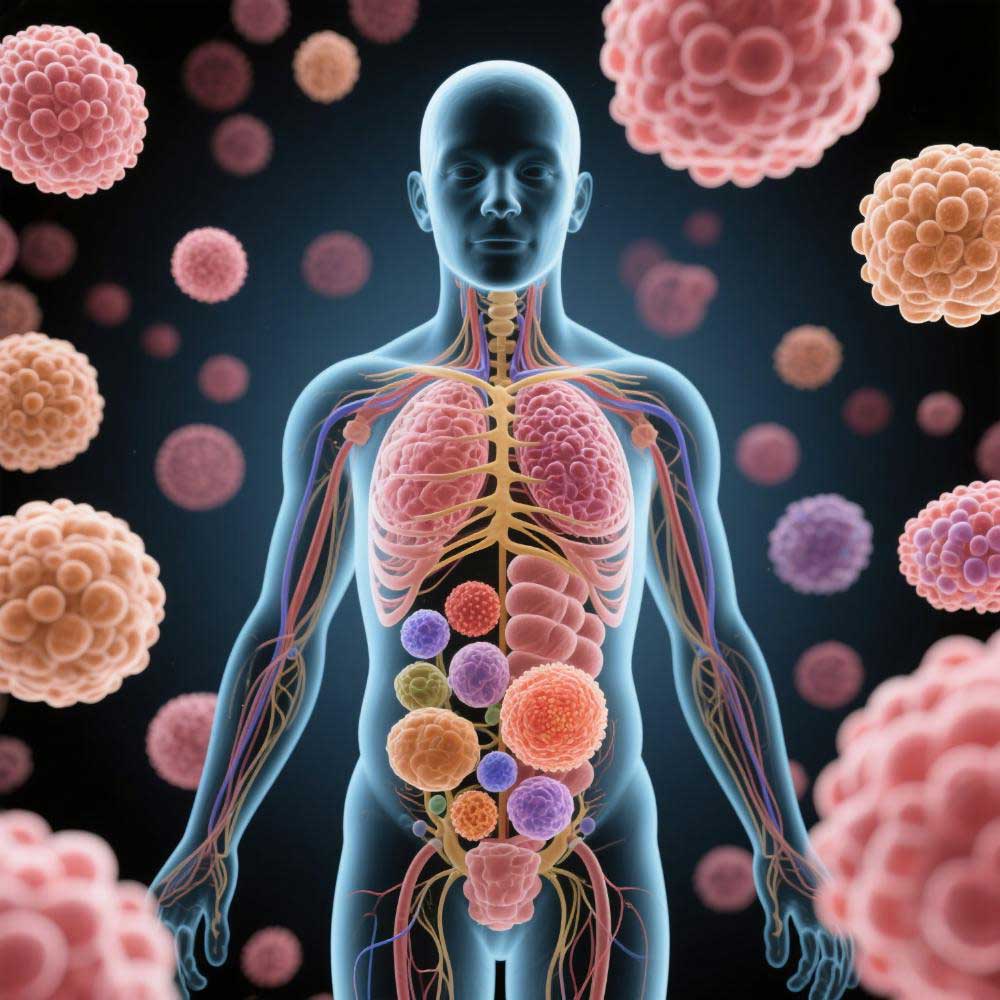
Stem Cells: The Unsung Heroes Shaping “How Many Cells in the Human Body” through Turnover and Homeostasis
Stem cells are key to keeping the body’s cells balanced and renewed. They can turn into many different cell types. This helps keep the body’s cells diverse.
There are two main types of stem cells: embryonic and adult. Embryonic stem cells can become any cell type. Adult stem cells help repair and grow tissues in the body.
The role of stem cells is crucial in fighting diseases and aging. They replace damaged cells and keep the body stable. Knowing about stem cells helps us understand how many cells are in the human body.
Stem cells help control how many cells we have and how well tissues work. They also help in creating new treatments. This could lead to better medicine and therapies for each person.
Cellular Interactions: A Hidden Factor in Determining “How Many Cells Are in a Human”
Cellular interactions are key in figuring out how many cells are in a human. These interactions include signaling and communication between different cell types. Keeping these interactions balanced is crucial for our body’s health.
The number of cells in our body can change due to many factors. These factors include the cells’ own traits and things from our environment. For instance, when our body fights off infections, it shows how outside factors can affect cell numbers.
To understand how many cells are in a human, we must look at the complex cell networks. Cells working together help our body stay healthy and fight diseases. Studying cell count dynamics shows that cell relationships are more than just numbers. They affect how our body systems work together.
Cell Death and Regeneration: Balancing Act for Maintaining “How Many Cells Do We Have in Our Bodies”
Cell death and regeneration are key to keeping our bodies healthy. Every day, billions of cells die in a controlled process called apoptosis. This helps get rid of damaged or unwanted cells.
This process keeps our tissues and organs working right. It’s a vital part of our body’s health.
In our bodies, there are about 30 to 37.2 trillion cells. This number changes with age and health. As we get older, our cells’ ability to grow back slows down.
Scientists are studying how cells die and grow back. They want to know how well our bodies can replace lost cells.
Knowing how many cells we have helps us understand the balance between death and growth. Different cells die and grow back at different rates. For example, red blood cells die fast, but neurons take longer.
Studies are ongoing to learn more about this. They aim to help in regenerative medicine and fight age-related diseases.
The health of our tissues depends on the balance between cell death and growth. This balance affects our health and helps us understand diseases and treatments.
As we learn more, we can improve personalized medicine and treatments. For more on cell counts, check out understanding our cellular count.
Cutting – Edge Technologies for Precise “How Many Cells Are in a Body” Counting
New advances in cell counting have made a big leap. High-resolution microscopy and flow cytometry are now used. They help us see and count cells more accurately.
Multiplex assays are also key. They let scientists study many cell types at once. This way, they can understand the body’s cells better than before.
Artificial intelligence and machine learning are making things even better. They quickly sort through images and data. This makes counting and studying cells faster and more reliable.
Knowing how many cells are in the body is crucial for new medical discoveries. These advanced tools are helping doctors and scientists. They are pushing the limits of what we know about health and disease.
| Technology | Description | Advantages |
|---|---|---|
| High-Resolution Microscopy | Imaging technique that provides detailed visualizations of cells. | Increased accuracy and the ability to observe cellular interactions. |
| Flow Cytometry | Technique that analyzes the physical and chemical characteristics of cells. | Rapid analysis of thousands of cells, enabling quick assessments. |
| Multiplex Assays | Simultaneous measurement of multiple antigens or cells. | Higher throughput and enriched datasets from a single sample. |
| AI-Driven Analytics | Utilizes machine learning to interpret cell counting data. | Improves accuracy, reduces manual errors, and accelerates analysis. |
Resolving Discrepancies in “How Many Cells Are in Our Body” Estimates: Sources and Solutions
Estimates of how many cells are in our body often vary, leading to significant discrepancies in cell estimates. These inconsistencies come from different sources of estimation errors. For example, different counting methods can give different results, causing confusion.
To fix these issues, researchers suggest a standard way to count cells. Using the same methods in all studies can greatly reduce these differences. It’s also important to include a variety of people in research. This makes sure the findings apply to everyone, not just a few.
By working together and improving technology, scientists hope to better understand our body’s cells. More accurate counting will help in many areas of research and medicine.
Computational Modeling: Predicting “How Many Cells in Body” with Mathematical Precision
Computational modeling is key in understanding biological systems. It uses math to predict cell counts and study how cells behave. This helps scientists better understand cell growth and numbers in different groups.
Scientists use predictive modeling to learn about cell interactions and growth. They find out how age and health impact cell numbers. They also explore how the environment affects cell behavior.
As we get better at computational modeling, we can tackle health problems better. Data analytics helps make these models more precise. This means we can know not just how many cells there are, but what they’re doing.
| Modeling Aspect | Description | Significance |
|---|---|---|
| Cell Dynamics Simulation | Mathematical representations of cell proliferation | Improved accuracy in estimating total cell counts |
| Impact Assessment | Analysis of factors affecting cell numbers | Insights into health and disease correlations |
| Predictive Analytics | Utilization of data-driven insights | Enhanced capacity for strategic health interventions |
“How Many Cells Are in a Human Body?” – Implications for Personalized Medicine and Groundbreaking Therapeutics
Knowing how many cells are in a human body is key for personalized medicine. It helps us create treatments that fit each person’s cells. This is especially important for health issues that need special care.
Learning about our cells leads to new ways to treat diseases. This includes regenerative medicine, fighting cancer, and improving the immune system. It means we can make treatments that really work for each person.
In short, knowing about human cells is not just interesting. It’s the start of new ways to help people stay healthy. As we learn more, we can find better ways to treat each person’s body.
References and further readings:
1.Bianconi, E., Piovesan, A., Facchin, F., Beraudi, A., Casadei, R., Frabetti, F., … & Canaider, S. (2013). An estimation of the number of cells in the human body. Annals of Human Biology, 40(6), 463–471.
https://www.tandfonline.com/doi/full/10.3109/03014460.2013.8078782.Sender, R., Fuchs, S., & Milo, R. (2016). Are We Really Vastly Outnumbered? Revisiting the Ratio of Bacterial to Host Cells in Humans. Cell, 164(3), 337–340.
https://linkinghub.elsevier.com/retrieve/pii/S0092867416000532
FAQ
How many cells are in a human body?
The human body has about 30 trillion cells. Each cell has its own structure and function.
What factors influence the number of cells in our body?
Several factors can change the number of cells in our body. These include age, sex, height, and health status.
Are there more bacterial cells than human cells in our body?
New studies show that bacterial cells might be more than human cells. This challenges the old 10:1 ratio.
How are the number of cells in the human body estimated?
Scientists use advanced methods like flow cytometry and imaging. They also use mathematical models to estimate cell numbers.
How many distinct cell types are there in the human body?
There are about 200 different cell types in us. These include red blood cells, neurons, and skin cells.
How does age affect the number of cells in the human body?
As we age, some cell types like stem cells decrease. The efficiency of cells like red blood cells also goes down.
Does gender affect the total number of cells in our body?
Yes, gender can change cell counts. Men usually have more muscle cells because of their muscle mass.
What role does nutrition play in cellular health?
Good nutrition and metabolism help cells grow and stay healthy. Without enough nutrients, cells can weaken or not work right.
How do environmental factors impact cell counts in the body?
Toxins and pollutants can harm cells. This can lead to more cell death and less ability to replace cells.
What is the role of stem cells in the human body?
Stem cells help replace lost or damaged cells. They are key for keeping the body’s cells in balance.
What are cellular interactions and why are they important?
Different cells working together is crucial. It helps keep the body in balance and can change cell counts over time.
How do cell death and regeneration balance cellular populations?
The right balance between cell death and new cell growth is important. It keeps the body’s cells healthy.
What are cutting-edge technologies used in cell counting?
New tools include advanced imaging and AI. They help scientists count cells more accurately.
What factors contribute to discrepancies in cell number estimates?
Differences in counting methods and sample types can cause disagreements. Also, different studies use different metrics.
How does computational modeling help in estimating cell numbers?
Modeling lets researchers simulate cell behavior. It helps predict how cell numbers might change.
Why is understanding cell numbers important for personalized medicine?
Knowing about cell types helps tailor treatments. This is important in regenerative medicine, oncology, and immunotherapy.
Leo Bios
Hello, I’m Leo Bios. As an assistant lecturer, I teach cellular and
molecular biology to undergraduates at a regional US Midwest university. I started as a research tech in
a biotech startup over a decade ago, working on molecular diagnostic tools. This practical experience
fuels my teaching and writing, keeping me engaged in biology’s evolution.




Leave a Comment
Your email address will not be published. Required fields are marked *