


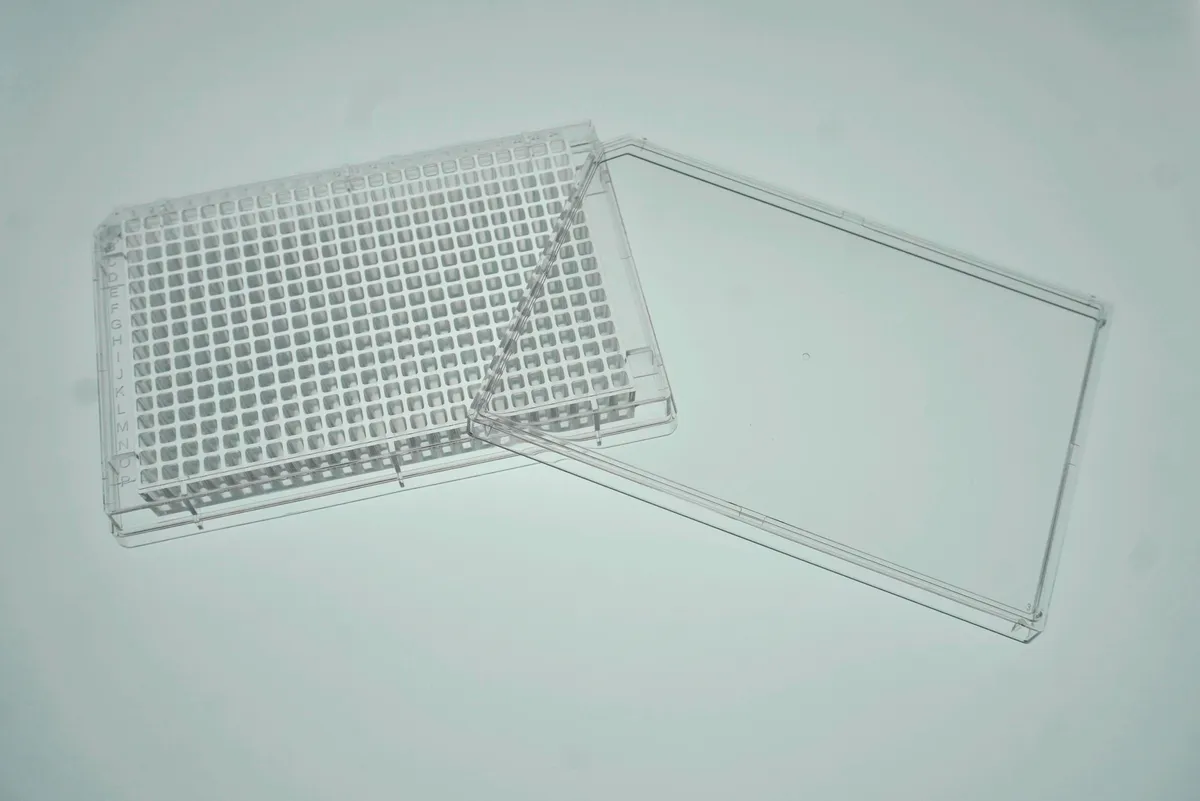
Could your research breakthrough be hidden in a 384 well PCR plate? Modern labs are changing science with high-throughput screening. These microplates play a big role.
384 well PCR plates are a big step forward in genomic research. They let scientists work with many samples at once. Jon Curtis’s work in the 1990s made these plates a reality.
These plates are made with precision. They help researchers do big experiments with less material. This makes genetic studies faster and easier.
Key Takeaways
- 384 well PCR plates enable massive sample processing capabilities
- High-throughput screening accelerates genetic research
- Advanced plate designs minimize reagent usage
- Compatible with automated laboratory systems
- Critical for genomic, proteomic, and diagnostic research
Overview of 384 Well PCR Plates
Molecular biology has seen big changes thanks to new lab tools. 384 well PCR plates are a key part of this, helping scientists do lots of genetic tests at once. They make it easier to study genes in detail.
These special plates have changed how we do genetic research. They let scientists run many qPCR tests at the same time. This makes labs work better and saves time.
Definition of PCR Plates
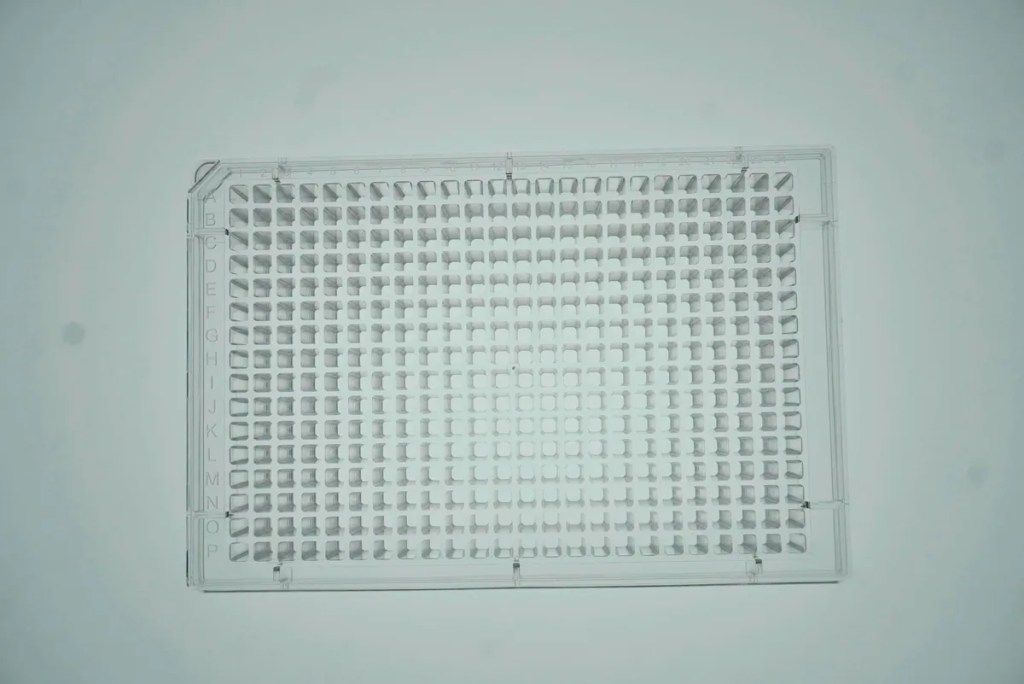
A 384 well PCR plate is a special microplate with 384 wells. It’s set up in a 16×24 grid. Each well is made to:
- Hold small amounts of liquid (5-20 µL)
- Keep the temperature even
- Stop samples from mixing with each other
Applications in Molecular Biology
These plates are used in many areas of science:
- Genetic screening
- Studying how genes work
- Finding mutations
- Researching new medicines
384 Well PCR Plates price
Advantages of Using 384 Well Plates
Using 384 well PCR plates has many benefits:
| Advantage | Impact on Research |
|---|---|
| Increased Throughput | Can test more samples at once |
| Reduced Reagent Consumption | Costs go down and less sample needed |
| Enhanced Precision | Results are more reliable |
384 well PCR plates help scientists do detailed genetic studies quickly. They are key to making new discoveries in genomics.
Design Features of 384 Well PCR Plates
Modern biotech needs precise engineering in lab supplies. 384 well PCR plates are at the top for high-throughput research.
Material Composition and Quality
PCR plates are made from top-grade polypropylene. This ensures they conduct heat well and have little background noise. Key features include:
- 100% virgin polypropylene material
- Manufactured in 100,000 grade clean rooms
- Compliance with ISO 9001 and ISO 13485 certifications
- Rigorous quality assurance procedures
Well Design and Volume Capacity
The well design is smart for better research. It’s made to reduce contamination and has the right volume:
- Elevated wells reduce cross-contamination risks
- Volumes ranging from 30-40 μl per well
- Low profile design minimizes condensate issues
Compatibility with Automated Systems
Advanced PCR plates work well with today’s lab automation. They come in different designs for various needs:
| Skirt Type | Compatibility | Application |
|---|---|---|
| Non-Skirted | Standard Thermal Cyclers | Basic PCR Protocols |
| Semi-Skirted | Robotic Handling | High-Throughput Screening |
| Full-Skirted | Advanced Thermal Blocks | Precision Research |
These designs help researchers do complex molecular biology work reliably and efficiently.
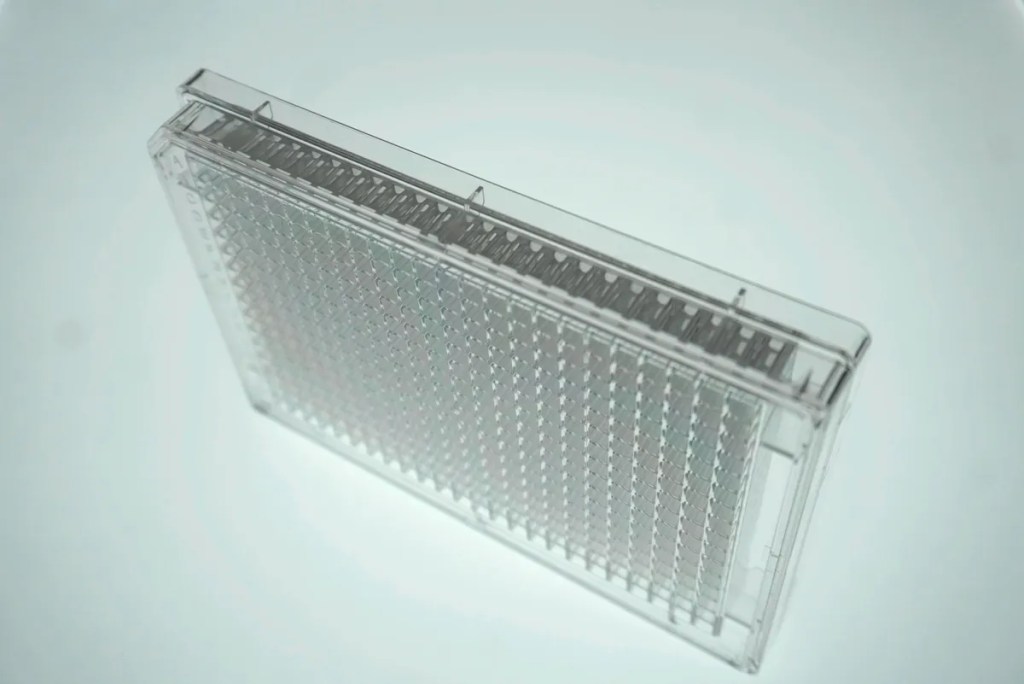
384 Well PCR Plates
High-Throughput Applications
High-throughput screening has changed biological research a lot. It lets scientists work with thousands of samples fast and well. Microplate technology is key in making these discoveries happen across many fields.
Today’s labs use 384 well PCR plates to make experiments better. These plates are great for studying genes and proteins.
Streamlining Experimentation Processes
Now, researchers can check many samples at once. This is fast and accurate. The main benefits are:
- Less time for experiments
- More data
- Less need for manual work
- More reliable results
Benefits for Genomic and Proteomic Research
Using 384 well PCR plates changes research a lot. It gives:
- Quick genetic tests
- Deep molecular studies
- Less expensive tests
Case Studies in High-Throughput Screening
Teams have seen big wins with microplate tech. For example, they can do up to 46,000 PCRs in an hour. This is thanks to new automation.
| Research Area | Processing Capacity | Key Benefit |
|---|---|---|
| Genomic Research | 250,000 PCRs/day | Massive parallel processing |
| Pharmaceutical Development | Thousands of samples/week | Accelerated drug discovery |
| Diagnostic Testing | Rapid genetic screening | Improved patient outcomes |
The future of science is bright with these new tools. They help us understand complex life systems better than ever.
Choosing the Right PCR Plate
Choosing the right PCR plate is key for successful molecular biology lab work. Researchers need to look at many factors. This ensures their experiments are precise and can be repeated.
When picking 384 well PCR plates, researchers must consider a few important things:
- How much liquid they need for their experiments
- The temperature changes during the experiment
- If the plate works well with detection systems
- The quality of the plate material
Experimental Needs Assessment
Different experiments need different types of plates. High-throughput screening often uses 384 well plates. These plates save reagents and can handle lots of samples.
Material Performance Implications
The type of material in the plate affects the results. Polycarbonate and polypropylene have their own benefits:
- Polycarbonate: Keeps temperature well
- Polypropylene: Works well with chemicals
- Using medical-grade materials ensures the plate works the same every time
Measurement Technique Matching
It’s important to choose plates that match your measurement methods. Think about the color of the wells, how light passes through, and any special coatings. These help detect signals in bulk assays better.
Researchers should look for plates that have:
- Uniform wells
- Even temperature
- Little background noise
- High manufacturing standards
The right PCR plate turns complex lab supplies into powerful tools. It helps make new discoveries through careful planning.
Optimizing Thermal Cycling Conditions
Getting the temperature right is key for qPCR and real-time PCR success. Researchers need to make sure the temperature is the same everywhere in 384 well plates. This ensures the DNA amplification works well.
Keeping the temperature steady is vital for PCR. The machines used must keep the temperature within 0.5°C of what’s set. This small difference is what makes genetic analysis accurate.
Importance of Temperature Uniformity
To get a consistent temperature in a 384 well plate, several steps are important:
- Use advanced thermal cyclers that can control temperature well
- Choose plates with wells that are the same size
- Use VeriFlex Block technology for better temperature control
- Watch the heating and cooling rates to keep them steady
Role of Plate Construction in PCR Efficiency
The design of PCR plates affects how well they work. Thin walls help heat spread faster and more evenly. This is good for real-time PCR.
Adjusting Parameters for 384 Well Formats
For qPCR in 384 wells, consider these tips:
- Go for plates with full or semi-skirted wells to avoid warping
- Use 5-15 µL of reaction mix for better results
- Try gradient cycling with 2°C steps for better primer use
- Choose plates that lose less liquid (less than 1%)
By carefully controlling the temperature, scientists can make their molecular biology research more reliable and consistent.
Sample Management Strategies
Effective sample management is key in high-throughput PCR research. Researchers using microplate technology need strong strategies for success and data integrity.
Sample preparation needs careful attention to many factors. Using automation-friendly methods can make lab work smoother and cut down on mistakes.
Best Practices for Sample Preparation
Structured sample management includes several important strategies:
- Use consistent labeling protocols
- Standardize sample volume measurements
- Maintain precise temperature control
- Utilize clean, calibrated pipetting techniques
Tips for Reducing Contamination Risks
Preventing contamination is crucial in molecular biology. To lower risks, researchers can:
- Regular workspace decontamination
- Use dedicated pipettes for different samples
- Follow strict personal protective equipment rules
- Create specific preparation zones
Utilizing Barcoding for Sample Tracking
Modern microplate tech offers advanced barcoding for tracking samples. Alphanumeric well identification helps manage complex sample collections with high accuracy.
Automated sample management solutions cut down on errors and boost research efficiency. They are essential in today’s molecular biology labs.
Troubleshooting Common Issues
Researchers often face challenges when using 384 well PCR plates for real-time PCR. Knowing how to solve these problems can greatly improve results and data quality.
For successful qPCR experiments, researchers need to pay close attention to details. They also need to be ready to solve problems as they come up. The next sections will look at some of the main challenges in high-throughput molecular biology.
Identifying Poor Amplification Problems
Poor amplification can stop important genomics research. To find the cause, researchers should do a thorough check:
- Check primer quality and specificity
- Verify template DNA concentration
- Examine thermal cycling conditions
- Validate enzyme performance
Addressing Cross-Contamination Risks
Cross-contamination is a big risk to qPCR experiment integrity. To avoid mixing samples, strict lab protocols are needed:
- Use dedicated pipettes for different sample types
- Implement rigorous cleaning procedures
- Utilize tight-sealing plate technologies
- Work in controlled, clean environments
Solutions to Inconsistent Results
To reduce variability in real-time PCR, researchers should optimize their experiments. This includes standardizing reaction volumes and ensuring uniform thermal cycling. Also, using high-quality reagents is key for consistent results.
The Future of PCR Technology
The world of biotech instrumentation is changing fast. It’s bringing new ideas to PCR technology. These ideas are making genomics research better and more exciting.
Innovations in PCR Plate Design
New PCR plate technology is changing how we do research. Some key changes include:
- Ultra-lightweight plates that use less material
- Plates that heat up faster for quicker tests
- More wells for testing many samples at once
Emerging Trends in High-Throughput Research
Genomics research is getting faster and more efficient. Now, scientists can do complex PCR tests in minutes. Some new cyclers can finish a 30-cycle test in just 2 minutes.
| Technology Feature | Performance Metric |
|---|---|
| Ramp Rates | Exceeding 1000°C per second |
| Energy Efficiency | 50 times better than standard cyclers |
| Cycle Time | 2-10 minutes for 30 cycles |
Potential Impact on Diagnosing Diseases
The future of PCR technology could change how we diagnose diseases. It could lead to quicker, more accurate tests. This could mean earlier treatment and a better understanding of genetic differences.
As biotech tools get better, scientists will have even more powerful tools. These tools will change how we do genomics research and medical tests.
Conclusion and Best Practices
The development of 384 well PCR plates is a big step forward in molecular biology. These tools help scientists do more tests at once, using less material. This makes it easier to study genes and proteins.
Choosing the right 384 well PCR plates is key for labs. They need to be made well to keep experiments accurate. Plates with strong materials help keep everything running smoothly.
Using 384 well PCR plates right is important. Things like how you seal them and manage samples matter a lot. This helps avoid mistakes and makes sure results are reliable.
The future of studying life at a molecular level looks bright. With better 384 well PCR plates, scientists will be able to do even more. They’ll need less sample and get better results in their studies.
References and further readings:
1.Jones, W., et al. (2014). Standardization of high-throughput qPCR using 384-well plates and robotic pipetting. BMC Genomics, 15(1), 880.
https://bmcgenomics.biomedcentral.com/articles/10.1186/1471-2164-15-8802.O’Connell, M. A., et al. (2013). High-throughput qPCR for SNP genotyping in 384-well format: application in breeding programs. Plant Methods, 9, 43.
http://plantmethods.biomedcentral.com/articles/10.1186/1746-4811-9-43
FAQ
What are 384 well PCR plates and why are they important in molecular biology?
384 well PCR plates are special microplates for high-throughput research. They let scientists work on thousands of samples at once, using less reagent. This makes big genetic studies faster and more efficient.
What materials are typically used in manufacturing 384 well PCR plates?
These plates are made from top-quality polypropylene. It’s chosen for its great heat conductivity and low background signal. This material helps with even heat, precise temperature control, and works well with lab tools.
How do 384 well PCR plates differ from traditional 96 well plates?
384 well plates can handle four times as many samples as 96 well plates. They have smaller wells, use less reagent, and work better with high-throughput tech. This makes them more efficient for research.
What types of research benefit most from 384 well PCR plates?
Genomics, drug discovery, genetic screening, proteomics, and diagnostics all benefit from these plates. They’re great for big studies that need fast sample processing, like gene analysis and medical research.
What considerations are important when selecting a 384 well PCR plate?
Think about your experiment type, sample volume, thermal cycling, and detection system. Also, consider the plate material and your research goals. Choosing the right plate is key for a smooth workflow.
How can researchers minimize contamination risks when using 384 well PCR plates?
Use strict handling protocols and automation-friendly features. Proper sealing and sterile techniques help too. Minimize transfers and consider plates with anti-contamination coatings.
What emerging trends are shaping 384 well PCR plate technology?
New trends include better thermal uniformity and advanced materials. There’s also a focus on barcoding for tracking and compatibility with advanced lab systems.
Are 384 well PCR plates compatible with all thermal cyclers?
Most modern cyclers work with 384 well plates, but check your instrument. Many plates are made to fit most systems, ensuring compatibility.
What volume ranges are typical for 384 well PCR plates?
Volumes range from 10-50 microliters, with some as low as 2-5 microliters. The exact volume depends on your experiment and detection method.
How do professionals optimize thermal cycling for 384 well PCR plates?
Calibrate temperature gradients and use plates with even thickness. Choose the right cycling protocols and adjust parameters for the 384 well format.
Leo Bios
Hello, I’m Leo Bios. As an assistant lecturer, I teach cellular and
molecular biology to undergraduates at a regional US Midwest university. I started as a research tech in
a biotech startup over a decade ago, working on molecular diagnostic tools. This practical experience
fuels my teaching and writing, keeping me engaged in biology’s evolution.




Pingback: Microwell: Advanced Solutions for Laboratory Analysis
Pingback: High-throughput Multicolor Optogenetics in Microwell Plates
Pingback: 384 Microwell Plate: Lab Testing Solutions & Supplies