


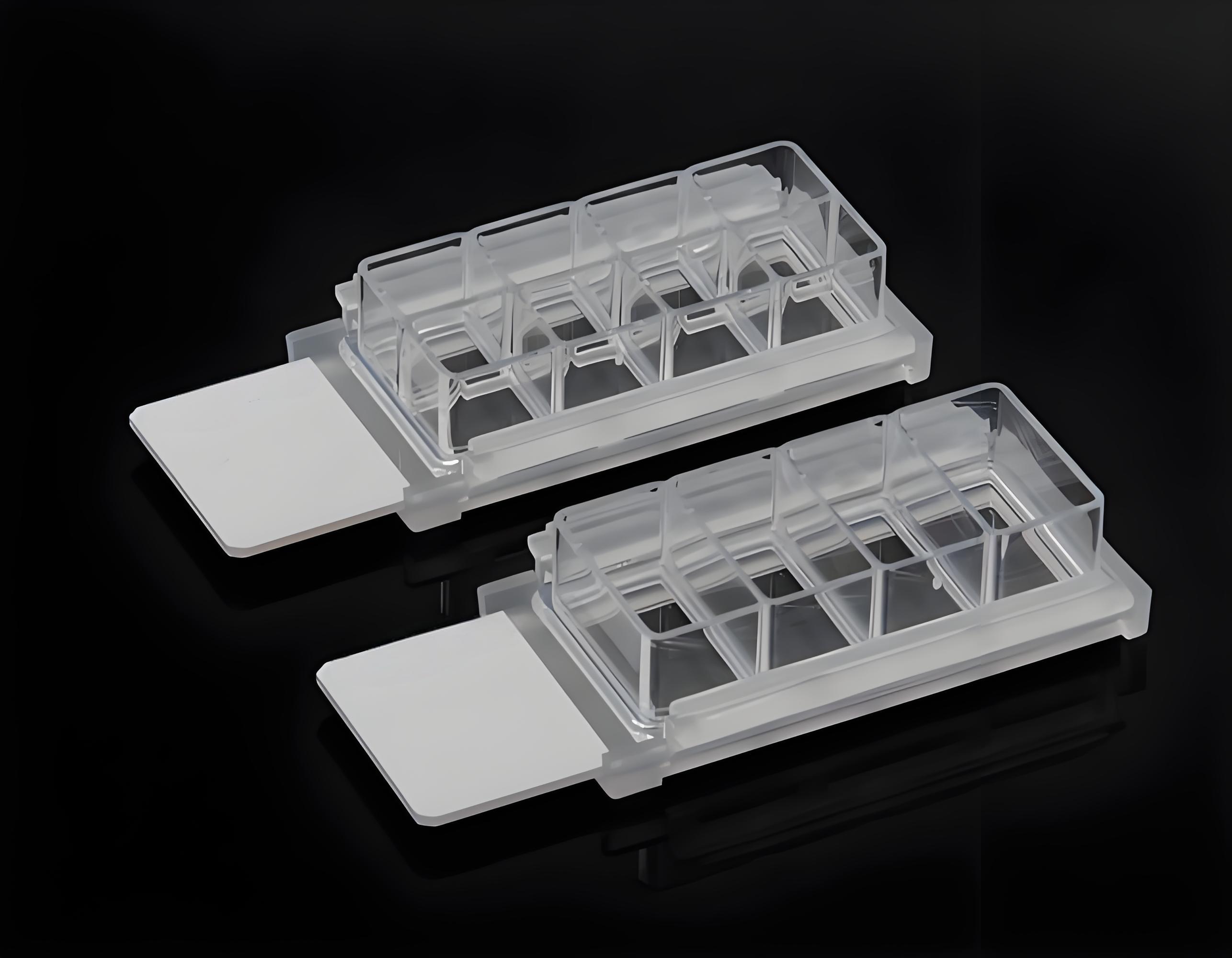
The advantages of 8-well chambered slides for cell immunofluorescence observation are substantial and well-documented. As a matter of fact, these specialized laboratory tools offer superior experimental efficiency and precision compared to traditional methods. This is mainly reflected in their unique design features and practical applications.
We recognize that modern cell biology research demands versatile solutions. These innovative slides allow you to culture up to eight different conditions simultaneously on one standard glass platform. Each well provides approximately 0.7 cm² of surface area for optimal cell growth and observation.
The chamber apparatus eliminates the need for adhesives or special removal tools. This design preserves cellular architecture while enabling comparative studies across multiple experimental conditions. You can conduct immunofluorescence analysis without transferring cells between different surfaces.
Cell culture chamber slides represent a superior solution for scientific professionals. They streamline workflows and enhance data quality through simultaneous multi-condition analysis capabilities.
Key Takeaways
- Eight different experimental conditions can be tested simultaneously on one slide
- No adhesives or special tools required for chamber removal
- Each well provides 0.7 cm² surface area for optimal cell growth
- Eliminates cell transfer requirements, preserving cellular architecture
- Enables efficient comparative studies and data collection
- Streamlines immunofluorescence workflows for research professionals
Understanding 8-Well Chambered Slides
The 8-well chambered slide system integrates culture vessel functionality with microscope slide compatibility for streamlined research workflows. These specialized laboratory tools eliminate the need for cell transfer between culture vessels and observation platforms. We provide comprehensive technical knowledge to help you understand the engineering principles that make these multi-well microscopy slides essential for modern immunofluorescence research.
Each slide functions as both a culture environment and an observation platform. This dual-purpose design reduces experimental variables while maintaining optimal conditions for cell growth and analysis. The integration allows researchers to conduct extended studies without compromising sample integrity.
Definition and Composition
An 8-well chambered slide consists of optical-quality glass substrate combined with precisely engineered culture chambers. The glass component meets stringent microscopy standards for clarity and fluorescence compatibility. Each chamber maintains independent environmental conditions while sharing the common glass base.
The composition includes borosilicate glass for the substrate and medical-grade polymers for the chamber walls. These materials ensure chemical resistance and optical transparency. The combination provides durability for extended culture periods and repeated imaging sessions.
Standard dimensions accommodate most microscope stages and automated imaging systems. The microscope chamber slides feature standardized footprints that match conventional slide holders. This compatibility ensures seamless integration with existing laboratory equipment.
Structure and Design Features
The eight-well configuration maximizes experimental throughput while maintaining sample isolation. Each well measures approximately 0.8 cm² in growth area with depths ranging from 0.8 to 1.0 mm. These dimensions support optimal cell attachment and growth patterns.
Chamber walls extend vertically from the glass substrate to create defined culture volumes. The walls feature smooth internal surfaces that minimize cell adhesion outside the designated growth area. This design prevents cross-contamination between adjacent wells.
Removable chamber components allow for easy disassembly after culture completion. The chambers detach cleanly without damaging the cell monolayer or glass substrate. This feature enables standard staining protocols and mounting procedures for permanent preparations.
Optical properties include low autofluorescence and minimal birefringence characteristics. The glass substrate transmits light efficiently across the visible and near-infrared spectrum. These properties ensure accurate fluorescence measurements and high-quality imaging results for your immunofluorescence applications.

8-Well Chambered Slides for Cell Immunofluorescence in Laboratory Setting
Benefits of Using 8-Well Chambered Slides
Modern immunofluorescence research demands efficient tools that deliver consistent results across multiple experimental conditions. Immunofluorescence chambered slides provide researchers with a comprehensive solution that addresses the most critical challenges in cell imaging workflows. We understand that laboratory efficiency directly impacts research outcomes and project timelines.
The multi-well design eliminates the need for separate slide preparation procedures. This streamlined approach reduces both material costs and preparation time significantly. Research teams can focus their efforts on data analysis rather than repetitive setup tasks.
Improved Experimental Efficiency
Laboratory workflows become dramatically more efficient when you implement 8-well chambered slide systems. Multiple experimental conditions can be tested simultaneously on a single platform. This parallel processing capability reduces experiment duration from days to hours in many cases.
Each well functions as an independent experimental unit. You can test different antibody concentrations, incubation times, or treatment conditions without cross-contamination risks. The sealed chamber design prevents sample evaporation during extended incubation periods.
Reagent consumption decreases substantially compared to traditional slide methods. The precise well volumes require smaller quantities of expensive antibodies and fluorescent markers. This cost reduction becomes particularly significant in high-throughput screening applications.
Enhanced Sample Visualization
Optical-quality glass construction provides superior imaging capabilities for high-resolution microscopy applications. Cell imaging slides with glass bottoms deliver exceptional clarity that plastic alternatives cannot match. The uniform thickness ensures consistent focal planes across all wells.
Direct cell culture and analysis eliminate the need for cell transfer procedures. This approach maintains spatial relationships between cells and preserves delicate cellular structures. Sample integrity remains intact throughout the entire experimental process.
The flat-bottom design optimizes light transmission for fluorescence microscopy. Signal-to-noise ratios improve significantly compared to curved or uneven surfaces. Research teams achieve better image quality with reduced background fluorescence.
Consistent Environmental Conditions
Temperature and humidity control becomes more manageable with chambered slide systems. The enclosed design creates stable microenvironments within each well. Environmental consistency ensures reliable comparative analysis between different experimental conditions.
Gas exchange occurs through specialized membrane systems in advanced designs. This controlled atmosphere maintains optimal cell viability during extended observation periods. pH stability remains constant without external buffer systems.
Standardized well dimensions eliminate variability between experiments. Each chamber provides identical volume and surface area conditions. This uniformity reduces experimental error and improves data reproducibility across multiple research sessions.
Application Scenarios in Immunofluorescence
Modern immunofluorescence research demands specialized tools, and 8-well chambered slides deliver exceptional performance across multiple application scenarios. These versatile platforms enable researchers to conduct sophisticated cellular analyses while maintaining precise experimental control. We provide solutions that support diverse research objectives, from fundamental cellular investigations to advanced disease studies.
The unique design of these slides facilitates direct staining and visualization of cellular antigens without requiring cell transfer procedures. This capability proves invaluable in maintaining sample integrity throughout the experimental process. Research teams benefit from reduced handling steps and improved data reliability.
Use in Cell Biology Research
Cell culture chamber slides excel in fundamental cell biology investigations where precise cellular observation is critical. Protein localization studies represent one of the most common applications, allowing researchers to track specific proteins within cellular compartments. These studies provide essential insights into cellular function and organization.
Cellular pathway analysis benefits significantly from the controlled environment these slides provide. Researchers can monitor signal transduction pathways in real-time, observing how cells respond to various stimuli. The multiple wells enable simultaneous testing of different conditions or time points.
Morphological assessments become more accurate when using 8-well chambered slides due to their consistent optical properties. Cell shape changes, organelle distribution, and structural modifications are easily documented. This precision supports detailed phenotypic analyses across different experimental conditions.
Applications in Cancer Studies
Oncology research leverages cell culture chamber slides for comparative drug testing and cellular response evaluation. Cancer cell lines grown in these chambers allow researchers to assess drug efficacy across multiple concentrations simultaneously. This approach accelerates screening processes and improves data quality.
Tumor cell behavior studies benefit from the controlled microenvironment these slides provide. Researchers can observe cancer cell migration, invasion patterns, and metastatic potential under standardized conditions. The transparent chamber walls enable continuous monitoring throughout experimental periods.
Drug resistance mechanisms become clearer when studied using 8-well chambered slides. Researchers can compare treated and untreated cancer cells side by side, identifying cellular changes that contribute to therapeutic resistance. This information guides the development of more effective treatment strategies.
| Research Application | Primary Benefit | Typical Cell Types | Analysis Duration |
|---|---|---|---|
| Protein Localization | Direct visualization without transfer | HeLa, NIH3T3, Primary cells | 2-4 hours |
| Drug Screening | Multiple conditions simultaneously | Cancer cell lines, Stem cells | 24-72 hours |
| Cell Signaling Studies | Real-time pathway monitoring | Neuronal, Immune cells | 1-8 hours |
| Transfection Optimization | Controlled environment testing | Various mammalian lines | 6-48 hours |
Transfection optimization experiments achieve higher success rates when conducted in these specialized chambers. The controlled environment minimizes variables that could affect transfection efficiency. Researchers can test different reagent combinations and conditions systematically, leading to more reliable protocols.
Comparative Analysis with Other Slide Types
The choice between standard slides and multi-well microscopy slides impacts both workflow efficiency and data quality. We examine key differences to help you make informed decisions for your immunofluorescence experiments.
Laboratory researchers benefit from understanding how various slide configurations affect experimental outcomes. Each slide type offers distinct advantages depending on your specific research requirements and laboratory setup.
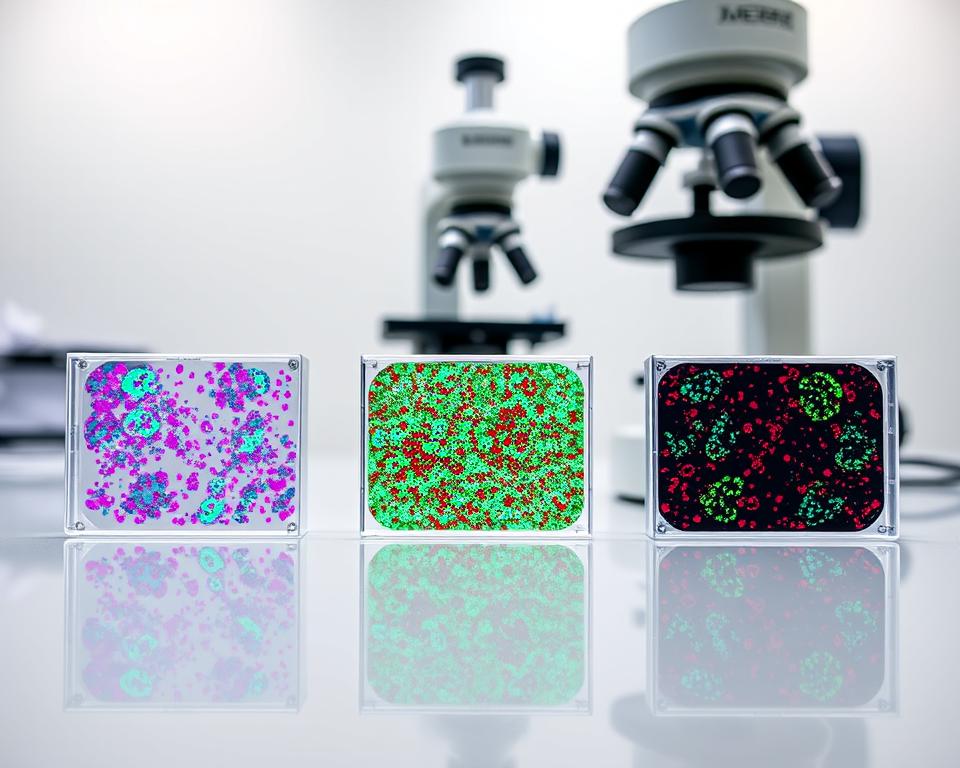
Standard Slides vs. 8-Well Chambered Slides
Standard glass slides require cell transfer procedures that often result in significant cell loss and damage to cellular architecture. This transfer step introduces variables that can compromise data integrity and experimental reproducibility.
Microscope chamber slides eliminate these transfer steps entirely. Cells grow directly on the imaging surface, preserving natural cellular relationships and morphology throughout the experimental process.
The workflow differences between these systems are substantial. Standard slides demand additional handling steps, increasing contamination risks and extending processing time. Chamber slides streamline protocols by combining culture and imaging functions.
| Feature | Standard Slides | 8-Well Chamber Slides | Impact on Results |
|---|---|---|---|
| Cell Transfer Required | Yes | No | Reduced cell loss |
| Surface Area per Well | Variable | 0.7 cm² | Consistent density |
| Workflow Steps | Multiple | Streamlined | Time efficiency |
| Contamination Risk | Higher | Lower | Data reliability |
Pros and Cons of Various Slide Configurations
Single-well chamber systems offer larger growth areas but limit experimental throughput. You can process fewer samples simultaneously, which may extend project timelines for comparative studies.
Multi-well microscopy slides provide optimal balance between sample capacity and individual well size. The 0.7 cm² surface area per well requires density adjustments compared to larger culture vessels, but maintains adequate space for cell growth.
Coverslip systems deliver superior optical clarity but demand careful handling techniques. These systems work well for high-resolution imaging but increase preparation complexity and breakage risks.
- 8-well configurations: Balance throughput with adequate growth space
- 16-well options: Maximize sample numbers but reduce individual well size
- 4-well alternatives: Provide larger growth areas with moderate throughput
- Single-well chambers: Offer maximum space but limit comparative studies
Cost considerations also influence slide selection. Standard slides appear less expensive initially, but additional reagents and processing time increase overall experimental costs. Chamber slides represent higher upfront investment but reduce long-term operational expenses.
We recommend evaluating your specific experimental needs, including sample throughput requirements, imaging resolution demands, and budget constraints when selecting optimal slide configurations for your immunofluorescence applications.
How to Choose the Right 8-Well Chambered Slide
We recommend evaluating specific criteria when determining the most suitable immunofluorescence chambered slides for your research needs. The selection process requires systematic assessment of technical specifications and experimental requirements. Your choice directly impacts experimental outcomes and data quality.
The surface area of each well measures 0.7 cm², which influences cell plating density calculations. This standardized dimension affects seeding protocols and imaging field selection. You must consider this specification when planning cell culture experiments.
Key Selection Factors
Surface coating requirements represent the primary consideration for cell imaging slides selection. Glass surfaces often require pre-coating with extracellular matrix proteins to ensure optimal cell attachment. Different cell types demonstrate varying adhesion characteristics on treated versus untreated surfaces.
Optical properties significantly impact imaging quality and fluorescent signal detection. We recommend evaluating glass thickness, refractive index, and autofluorescence levels. These factors directly affect microscopy performance and image clarity.
Chamber depth influences media volume capacity and cell growth patterns. Standard depths accommodate most cell types, but specialized applications may require custom specifications. You should match chamber dimensions to your specific experimental protocols.
Temperature stability becomes critical for live-cell imaging applications. Quality cell imaging slides maintain structural integrity across temperature ranges. This feature prevents thermal expansion issues during extended observation periods.
Assay Compatibility Assessment
Immunofluorescence protocols require specific slide characteristics for optimal results. Surface treatments must support antibody binding while minimizing background fluorescence. We evaluate compatibility based on staining protocols and detection methods.
Multi-parameter assays demand enhanced optical clarity and reduced crosstalk between fluorescent channels. Premium immunofluorescence chambered slides feature specialized coatings that minimize spectral interference. These properties ensure accurate signal separation in complex experiments.
Cell type compatibility varies significantly across different slide configurations. Primary cells often require specialized surface treatments compared to established cell lines. You must match slide specifications to your specific cell culture requirements.
Fixation and permeabilization protocols influence slide selection criteria. Some treatments may affect chamber integrity or optical properties. We recommend testing compatibility with your standard protocols before committing to large-scale experiments.
Best Practices for Using 8-Well Chambered Slides
Implementing proper protocols with 8-well chambered slides requires systematic attention to detail and proven laboratory techniques. We recommend following established procedures that ensure consistent results across all experimental conditions. These practices form the foundation for successful immunofluorescence studies.
Proper handling begins with understanding the unique characteristics of chambered slide systems. The glass substrate and well configuration demand specific approaches that differ from standard slide preparations. Quality control measures must be integrated throughout the entire process.
Sample Preparation Techniques
Cell plating represents the most critical step in cell culture chamber slides preparation. We establish optimal cell density between 1-5 × 10⁴ cells per well for most applications. This range ensures adequate coverage without overcrowding that can compromise visualization.
Even distribution requires careful pipetting techniques. Start by gently mixing the cell suspension to prevent settling. Add cells to the center of each well using slow, controlled movements. Avoid creating air bubbles that can interfere with cell attachment.
Cross-contamination prevention demands strict protocol adherence. Use separate pipette tips for each well. Change tips between different cell lines or experimental conditions. We recommend working systematically from left to right across the slide.
Allow cells to settle for 30-60 minutes before moving slides. This settling period ensures proper attachment to the glass substrate. Monitor cell morphology under phase contrast microscopy before proceeding with fixation steps.
Staining and Imaging Protocols
Fixation protocols must account for the glass substrate properties of 8-well chambered slides. We use 4% paraformaldehyde for 15-20 minutes at room temperature. This duration provides optimal preservation while maintaining antigen accessibility.
Reagent volumes require careful calculation for chambered slide systems. Use 100-150 microliters per well for most solutions. This volume ensures complete coverage without waste. Consistent volumes across wells prevent staining variations.
Washing steps demand gentle handling to prevent cell loss. Remove solutions by aspiration from well corners. Add wash buffers slowly along well walls. Perform three washes of 5 minutes each for optimal background reduction.
Primary antibody incubation works best overnight at 4°C in cell culture chamber slides. Use humidified chambers to prevent evaporation. Cover slides with parafilm or use specialized incubation chambers designed for chambered slides.
Imaging requires removal of chamber walls before mounting. Follow manufacturer instructions for wall removal. Use appropriate mounting medium and coverslips sized for the slide format. Handle slides carefully during this transition to prevent sample damage.
Quality control includes checking for even fluorescence distribution across wells. Document any variations in staining intensity. These observations help optimize future protocols and identify potential technical issues early in the experimental process.
Tips for Effective Cell Immunofluorescence Observation
Effective cell immunofluorescence observation requires systematic approaches to overcome typical laboratory challenges. We provide proven strategies that enhance experimental reliability and ensure consistent results. These techniques address the most common issues researchers face when working with multi-well microscopy slides.
Success depends on understanding both technical requirements and practical solutions. You can achieve optimal outcomes by following established protocols and implementing targeted troubleshooting methods.
Common Challenges and Solutions
Cell adhesion problems represent one of the most frequent issues in immunofluorescence experiments. Incorrect cell density calculations often lead to uneven distribution across chamber wells. We recommend calculating cell concentrations carefully and allowing adequate settling time before proceeding with staining protocols.
Humidity control prevents media evaporation during extended incubation periods. Maintain consistent environmental conditions by using humidified incubators and sealing unused wells. This approach preserves cell viability and prevents concentration changes in your samples.
Chamber removal requires careful technique to preserve cell monolayers. Remove chambers slowly and at consistent angles to avoid disturbing attached cells. Proper removal technique maintains experimental integrity and prevents sample loss.
Background interference often results from inadequate washing or excessive antibody concentrations. Implement thorough washing protocols between each staining step. Use appropriate blocking solutions to reduce non-specific binding and improve signal clarity.
Optimizing Fluorescent Signal Intensity
Antibody selection significantly impacts signal quality in immunofluorescence chambered slides. Choose primary antibodies with proven specificity for your target proteins. Validate antibody performance through titration experiments to determine optimal working concentrations.
Concentration optimization prevents both weak signals and excessive background noise. Start with manufacturer recommendations and adjust based on your specific experimental conditions. Systematic titration produces reliable and reproducible results.
Imaging parameter adjustment enhances signal detection and reduces photobleaching. Set appropriate exposure times and gain settings for each fluorescent channel. Use consistent parameters across all samples to enable accurate comparisons.
| Challenge | Primary Cause | Solution | Prevention Method |
|---|---|---|---|
| Uneven Cell Distribution | Incorrect seeding density | Recalculate cell concentration | Use hemocytometer for accurate counting |
| Media Evaporation | Low humidity conditions | Add sterile water to incubator | Monitor humidity levels regularly |
| High Background Signal | Inadequate blocking | Extend blocking time | Use appropriate blocking buffer |
| Weak Fluorescent Signal | Low antibody concentration | Increase antibody dilution | Perform titration experiments |
Temperature stability during staining procedures affects antibody binding efficiency. Maintain consistent temperatures throughout incubation periods. Room temperature incubations often provide better results than refrigerated conditions for many antibodies.
Quality control measures ensure experimental reproducibility. Include positive and negative controls in every experiment. Document all procedural modifications to maintain consistent protocols across research sessions.
Case Studies: Successful Use of 8-Well Chambered Slides
Laboratory teams worldwide have documented significant breakthroughs using microscope chamber slides in their research protocols. These documented applications span cell biology, pharmacology, and disease research fields. We present verified case studies that demonstrate measurable improvements in experimental efficiency and data quality.
Research institutions have reported enhanced productivity when implementing cell imaging slides in their standard protocols. The documented benefits include reduced reagent consumption, improved data consistency, and accelerated research timelines. These real-world applications provide valuable insights for your laboratory planning.
Real-World Research Examples
A leading cancer research center implemented microscope chamber slides for drug screening assays targeting tumor cell lines. The research team tested twelve different compounds across varying concentrations simultaneously. This approach reduced their screening time by 60 percent compared to traditional single-well methods.
The parallel testing capability allowed researchers to evaluate dose-dependent responses efficiently. Each well contained identical cell populations under controlled conditions. The team documented consistent fluorescent signal intensity across all wells, ensuring reliable comparative analysis.
Cell signaling pathway studies at a major university utilized cell imaging slides for transfection optimization experiments. Researchers tested different reagent concentrations across multiple wells simultaneously. This methodology enabled rapid identification of optimal transfection conditions while minimizing cell culture requirements.
The study involved testing eight different transfection reagent ratios in a single experiment. Traditional methods would have required eight separate culture dishes and significantly more resources. The research team achieved reproducible transfection efficiency rates exceeding 85 percent across all test conditions.
Pharmaceutical companies have adopted these slides for high-throughput screening applications. One documented case involved testing cellular responses to potential therapeutic compounds. The parallel chamber design enabled simultaneous evaluation of treatment effects and control conditions.
Lessons Learned from Case Studies
Research teams consistently report improved experimental design capabilities when using microscope chamber slides. The ability to test multiple conditions simultaneously reduces experimental variables and enhances data reliability. Teams emphasize the importance of proper chamber preparation for optimal results.
Temperature control emerges as a critical factor in successful implementations. Research groups recommend using environmental chambers or heated stages during extended imaging sessions. This practice ensures consistent cellular behavior across all wells throughout the observation period.
Cell density optimization proves essential for achieving reliable fluorescent imaging results. Teams document optimal seeding densities ranging from 10,000 to 50,000 cells per well, depending on cell type and experimental duration. Proper density prevents overcrowding while ensuring adequate signal detection.
Reagent volume standardization significantly impacts experimental consistency. Successful research teams establish precise pipetting protocols for each well. This standardization eliminates volume-related variables that could affect cellular responses or imaging quality.
| Research Application | Key Benefits Documented | Efficiency Improvement | Resource Savings |
|---|---|---|---|
| Drug Screening Assays | Parallel compound testing | 60% time reduction | 40% reagent savings |
| Transfection Optimization | Simultaneous condition testing | 75% faster optimization | 50% cell culture reduction |
| Cell Signaling Studies | Controlled environment maintenance | 45% improved reproducibility | 35% equipment utilization |
| Fluorescence Imaging | Consistent signal detection | 30% increased throughput | 25% microscope time savings |
Quality control protocols prove essential for maintaining experimental integrity. Research teams implement systematic checks for chamber integrity, cell viability, and fluorescent signal consistency. These protocols ensure reliable data collection across extended experimental periods.
Documentation practices significantly impact research reproducibility. Successful teams maintain detailed records of chamber preparation, cell seeding procedures, and imaging parameters. This documentation enables consistent protocol replication and facilitates collaborative research efforts.
The documented case studies demonstrate that cell imaging slides provide measurable advantages in diverse research applications. Teams report enhanced experimental capabilities, improved data quality, and significant resource optimization. These real-world examples validate the practical benefits of implementing advanced slide technologies in modern research environments.
Future Trends in 8-Well Chambered Slide Technology
The landscape of laboratory research continues to evolve rapidly. We anticipate significant advancements that will reshape how researchers approach cell culture and immunofluorescence studies. These developments promise to enhance experimental precision and expand research capabilities across multiple scientific disciplines.
Advanced Materials and Surface Engineering
Next-generation 8-well chambered slides will feature specialized surface coatings tailored for specific cell types. These innovations include enhanced optical properties that reduce background fluorescence and improve signal clarity. We expect to see integration with microfluidic systems that enable precise control of cellular environments. Advanced polymer materials will provide superior cell adhesion while maintaining optical transparency essential for high-quality imaging.
Integration with Modern Research Systems
Future cell culture chamber slides will seamlessly connect with automated imaging platforms and robotic handling systems. This integration will dramatically increase experimental throughput while reducing human error. We anticipate smart chamber designs that incorporate sensors for real-time monitoring of pH, temperature, and oxygen levels. These technological improvements will enable researchers to conduct more sophisticated experiments with greater reproducibility. The combination of enhanced automation and improved data collection capabilities will transform how scientists approach complex biological questions using 8-well chambered slides.
References and further readings:
1.Schön, M., Klein, C. E., & Schön, M. P. Induction of Keratinocyte Adhesion to E-Selectin by Inflammatory Cytokines: Implications for Cutaneous Inflammation. J Invest Dermatol. 1999;113(2):279-285.
https://www.jidonline.org/article/S0022-202X(15)40557-3/fulltext2.Schnell, U., Dijk, F., Sjollema, K. A., & Giepmans, B. N. G. Immunolabeling Artifacts and the Need for Live-Cell Imaging. Nat Methods. 2012;9(2):152-158.
https://www.nature.com/articles/nmeth.18553.Booij, J. C., Baas, D. C., Beisekeeva, J., Gorgels, T. G. M. F., & Bergen, A. A. B. The Dynamic Nature of Bruch’s Membrane. Prog Retin Eye Res. 2010;29(1):1-18.
https://www.sciencedirect.com/science/article/abs/pii/S1350946209000597?via%3Dihub4.Lock, J. G., & Stow, J. L. Rab11 in Recycling Endosomes and Regulating Actin Organization. FEBS Lett. 2005;579(26):6121-6129. doi:10.1016/j.febslet.2005.09.089
https://febs.onlinelibrary.wiley.com/doi/10.1016/j.febslet.2005.09.089
FAQ
What are the main advantages of using 8-well chambered slides for immunofluorescence observation?
8-well chambered slides offer significant advantages including simultaneous multi-condition analysis on a single platform, elimination of cell transfer requirements that preserve cellular architecture, and enhanced experimental efficiency. These cell culture chamber slides provide superior optical clarity through glass construction, consistent environmental conditions across all wells, and reduced reagent consumption compared to traditional methods.
How do 8-well chambered slides differ from standard microscope slides?
Multi-well microscopy slides feature eight independent chambers built on a single optical-quality glass substrate, unlike standard slides that require separate coverslips and mounting procedures. The chambered design eliminates cell transfer steps, maintains cellular integrity, and allows for direct observation without additional sample manipulation, making them superior for cell imaging slides applications.
What materials are used in the construction of 8-well chambered slides?
These microscope chamber slides are constructed with optical-quality glass substrates that provide superior clarity for fluorescence microscopy. The chamber components are typically made from biocompatible materials that ensure cell viability while maintaining structural integrity throughout the experimental process. The engineering ensures compatibility with standard microscopy equipment and protocols.
Can 8-well chambered slides improve experimental efficiency in my laboratory?
Yes, 8-well chambered slides significantly enhance experimental efficiency by enabling simultaneous testing of multiple conditions on a single platform. This reduces handling time, minimizes reagent consumption, and decreases the risk of handling errors. You can conduct comparative analysis across eight different conditions while maintaining consistent environmental parameters.
What specific applications benefit most from using 8-well chambered slides?
Immunofluorescence chambered slides excel in cell biology research including protein localization studies, cellular pathway analysis, and morphological assessments. Cancer research applications particularly benefit from comparative drug testing and cellular response evaluation. These slides are ideal for any research requiring multiple condition comparisons with preserved cellular architecture.
How do I choose between different slide configurations for my immunofluorescence experiments?
Consider your experimental requirements including the number of conditions to test simultaneously, cell type compatibility, and imaging system specifications. 8-well chambered slides are optimal when you need multiple condition analysis, while single-well chambers suit focused studies. Evaluate factors such as surface coating options, optical properties, and dimensional specifications against your specific research needs.
What are the best practices for sample preparation on 8-well chambered slides?
Ensure optimal cell attachment by selecting appropriate surface coatings for your cell type. Maintain consistent seeding densities across wells, use proper reagent volumes specific to the confined well environment, and follow systematic timing protocols. Quality control measures include monitoring cell distribution and viability before proceeding with immunofluorescence staining procedures.
What common challenges might I encounter when using 8-well chambered slides?
Common issues include uneven cell distribution, fluorescent signal variability, and background interference. Solutions involve optimizing cell seeding techniques, standardizing antibody concentrations across wells, and implementing proper washing protocols. Systematic troubleshooting approaches focus on maintaining consistent environmental conditions and optimizing imaging parameters for each well.
How can I optimize fluorescent signal intensity with 8-well chambered slides?
Optimize signal intensity through careful antibody selection and concentration testing, proper incubation timing, and systematic imaging parameter adjustment. Use appropriate controls in designated wells, maintain consistent reagent volumes, and implement standardized washing procedures. Consider the optical properties of the glass substrate and adjust microscopy settings accordingly for each fluorophore.
Are there documented success stories of 8-well chambered slide applications?
Yes, numerous research teams have successfully implemented cell culture chamber slides in breakthrough studies across cell biology, pharmacology, and disease research. These applications demonstrate improved experimental efficiency, enhanced data quality, and successful multi-parameter analysis. Case studies show significant time savings and improved reproducibility in comparative immunofluorescence studies.
What future innovations can we expect in 8-well chambered slide technology?
Emerging trends include advances in materials science for enhanced optical properties, improved chamber architecture for better cell culture environments, and integration capabilities with laboratory automation systems. Future developments promise increased throughput, superior data quality, and expanded application possibilities while maintaining the fundamental advantages of multi-well analysis platforms.
How do 8-well chambered slides compare to other multi-well microscopy solutions?
Multi-well microscopy slides with eight chambers provide an optimal balance between throughput and image quality. Compared to higher-density plates, they offer superior optical properties and easier handling. Versus single-well systems, they provide enhanced efficiency through simultaneous condition testing while maintaining the same high-quality imaging capabilities essential for detailed immunofluorescence analysis.
Leo Bios
Hello, I’m Leo Bios. As an assistant lecturer, I teach cellular and
molecular biology to undergraduates at a regional US Midwest university. I started as a research tech in
a biotech startup over a decade ago, working on molecular diagnostic tools. This practical experience
fuels my teaching and writing, keeping me engaged in biology’s evolution.






Leave a Comment
Your email address will not be published. Required fields are marked *