


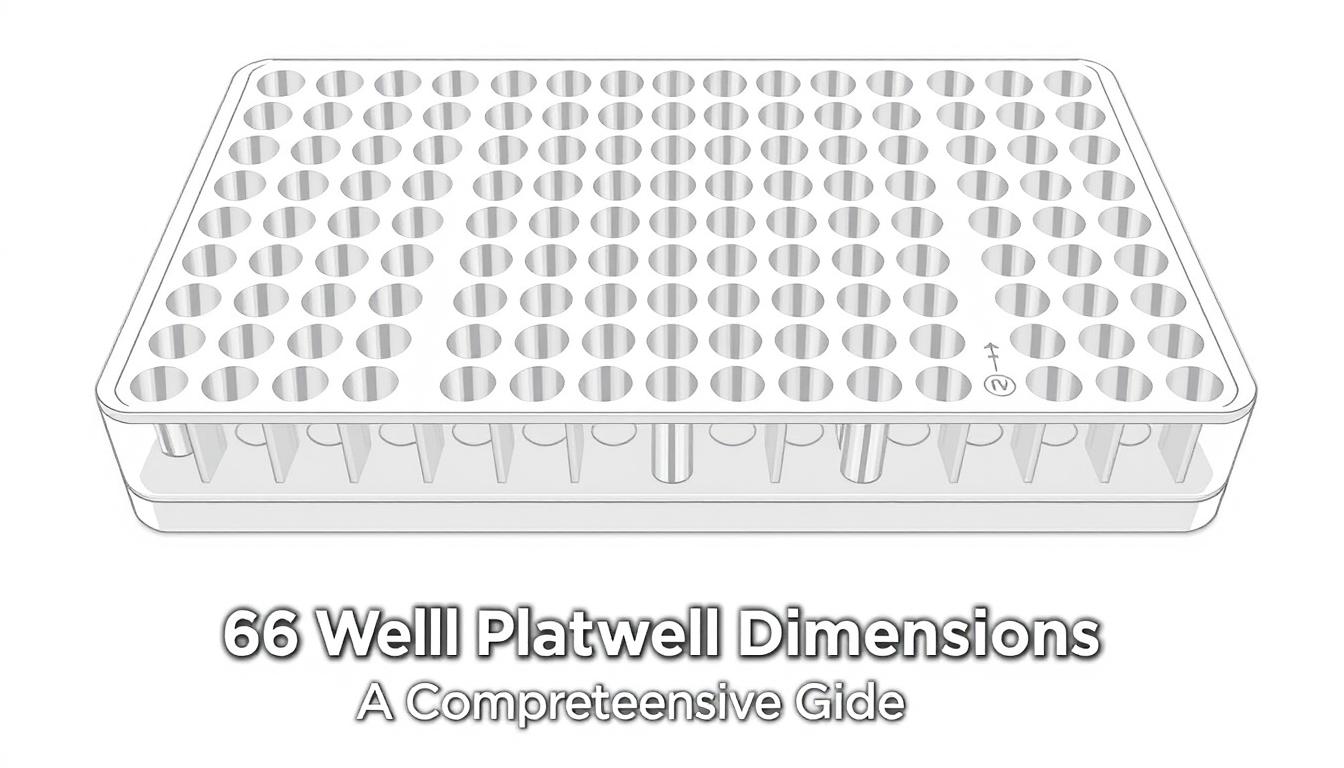
Have you ever wondered why precision in lab tools can make or break your research? In modern biological studies, consistency is everything. The right equipment ensures reliable results, and few tools are as critical as the 96-well plate.
These plates serve as the backbone for high-throughput testing, diagnostics, and cell culture. Their standardized design allows seamless integration with automated systems, reducing errors and improving efficiency. Whether for PCR, ELISA, or drug screening, accurate well geometry ensures reproducibility.
Understanding the specifications—such as spacing, volume capacity, and material—helps researchers select the best fit for their experiments. This guide explores the essential aspects, from well shape to compatibility with lab instruments.
Key Takeaways
- Standardized dimensions ensure compatibility with automated lab equipment.
- Well geometry (U-bottom, V-bottom, flat) impacts application success.
- Material choice balances optical clarity and chemical resistance.
- Precise spacing and volume capacity enhance experimental accuracy.
- Common uses include PCR, ELISA, and high-throughput screening.
Understanding the Basics of 96-Well Plates
The foundation of high-throughput testing lies in meticulously designed lab consumables. Standardization, such as ANSI/SBS guidelines, ensures these tools work seamlessly across instruments. This uniformity minimizes errors in automated workflows, from pipetting to data analysis.
Two main types dominate labs: standard and deep-well plates. Standard versions hold 0.1–0.2 mL per well, ideal for assays like ELISA. Deep-well variants accommodate 2.0 mL, suited for nucleic acid extraction or larger sample volumes.
A 9mm gap between wells optimizes robotic liquid handlers. This spacing balances density and precision, critical for high-throughput screens. The design reduces spillover risks during transfers.
Surface treatments vary for specific needs. TC-treated plates enhance cell adhesion, vital for culture studies. Meanwhile, glass-bottom options (0.17mm thick) enable crisp microscopy imaging without distortion.
Each feature—volume capacity, spacing, or coating—serves a purpose. Matching these specs to experimental needs ensures accuracy and efficiency.
Key Specifications of 96 Well Plate Well Dimensions
Lab efficiency hinges on understanding critical specifications. These parameters ensure compatibility with automated systems and experimental precision. Below, we break down the essentials—from volume capacity to material science.
Standard Well Size and Volume Capacity
Most designs hold 0.1–0.2 mL, perfect for assays like ELISA. Deep-well variants support up to 2.0 mL, ideal for dna extraction or sample storage. Matching volume needs to plate type avoids overflow or insufficient mixing.
Well Spacing and Plate Layout
A 9mm gap between wells optimizes robotic handling. This spacing balances density and minimizes cross-contamination. Uniform layouts streamline high-throughput workflows.
Material and Bottom Shape Variations
Material choice impacts durability and performance. Polypropylene resists chemicals and high heat, while polystyrene offers superior optical quality for fluorescence assays.
“Gamma-irradiated plates maintain sterility without compromising structural integrity.”
| Material | Best For | Limitations |
|---|---|---|
| Polypropylene | High temps, chemical exposure | Lower optical clarity |
| Polystyrene | Imaging, fluorescence | Less heat-resistant |
Bottom shapes—flat, U-, or V-bottom—affect meniscus formation and pellet visibility. Flat designs suit microscopy, while U-bottoms enhance mixing.
Applications in Biological Research
From drug discovery to diagnostics, standardized formats streamline complex workflows. These tools support diverse techniques, ensuring accuracy across automated systems and manual processes.
High-Throughput Screening
Automated systems rely on uniform layouts for rapid testing. Consistent spacing minimizes errors in liquid handling, critical for drug development. Gamma-sterilized options maintain sterility without compromising structural integrity.
Multi-well correlation studies demand precision. Plate readers analyze hundreds of samples simultaneously, requiring low well-to-well variability. Surface treatments like TC-coating enhance cell adhesion for reliable data.
Imaging and Microscopy
Clear-bottom designs with 0.17mm cover glass optimize light transmission. This thickness matches the refractive index of immersion oil, reducing distortion in super-resolution microscopy.
Material quality impacts imaging clarity. Polystyrene offers optical transparency, while cyclic olefin copolymer (COC) resists autofluorescence. Flat-bottom wells ensure even focal planes for high-content screening.
“Live-cell imaging benefits from plates balancing optical clarity and cell viability.”
- Autoclave vs. Gamma-Sterilized: Autoclaving suits heat-tolerant assays, while gamma irradiation preserves sterility for sensitive research.
- Refractive Index: Matching materials to immersion media avoids light scattering artifacts.
Choosing the Right 96-Well Plate for Your Experiment
Selecting the optimal lab tools can significantly impact experimental outcomes. Matching plate specifications to assay requirements ensures accuracy and efficiency. Below, we outline key factors to streamline your decision-making.
Assay-Specific Plate Properties
Compare *product* features using this matrix:
| Assay Type | Recommended Plate | Key Features |
|---|---|---|
| ELISA | Polystyrene, flat-bottom | High optical clarity |
| Cell *Culture* | TC-treated, gas-permeable | Enhances adhesion |
| PCR | Polypropylene, skirted | Heat-resistant |
For cell *culture*, prioritize CO₂ compatibility and gas exchange. TC-treated surfaces improve attachment, while thin lids reduce evaporation. Growth medium *volume* typically ranges from 0.1–0.2 mL per well.
Chemical and Temperature Tolerance
Polypropylene plates withstand harsh solvents like DMSO. Polystyrene suits aqueous *samples* but degrades with organics. Verify temperature ranges (-20°C to 50°C) for storage and incubation.
“Gamma-irradiated plates maintain sterility for sensitive applications without autoclaving.”
- Non-binding surfaces: Reduce background noise in immunoassays.
- V-bottom wells: Simplify pellet retrieval in centrifugation.
- Barcoding: Essential for high-throughput tracking.
Conclusion
Accurate lab tools shape reliable results in modern research. Dimensional precision in microplates ensures consistent data, whether for high-throughput screening or culture studies. Matching plate specifications to instrumentation minimizes errors and maximizes efficiency.
Emerging trends, like automated liquid handling and smart products, push boundaries. These innovations enhance reproducibility while reducing manual steps. Choosing the right design remains critical for experimental success.
From diagnostics to drug discovery, standardized formats drive progress. Investing in quality lab tools elevates outcomes, ensuring every experiment counts.
FAQ
What are the standard dimensions for wells in a 96-well plate?
The typical well diameter ranges from 6.4mm to 6.9mm, with a depth of about 10.7mm. Most designs hold a working volume of 200-400µL, though some specialized versions support higher capacities.
How does well spacing affect experimental results?
Proper spacing ensures minimal cross-contamination and compatibility with robotic handlers. Standard pitch (center-to-center distance) is 9mm, optimized for automated systems and precise liquid handling.
What bottom types are available for these plates?
Manufacturers offer flat, round, or conical bottoms. Flat bottoms suit absorbance readings, while round bottoms improve mixing. Conical designs facilitate pellet formation in centrifugation.
Which materials work best for cell culture applications?
Polystyrene plates with treated surfaces enhance cell adhesion. For sensitive assays, opt for low-binding or black-walled plates to reduce background noise in fluorescence detection.
Can these plates be used for DNA amplification?
Yes, PCR-compatible versions feature thin walls for efficient heat transfer. Always verify thermal cycling performance with the manufacturer’s specifications before use.
What factors should guide plate selection for high-throughput screening?
Consider automation compatibility, optical clarity for detection methods, and chemical resistance. Brands like Corning, Thermo Fisher, and Greiner Bio-One provide specialized options for different assay types.





Leave a Comment
Your email address will not be published. Required fields are marked *