


Ever thought about how scientists count tiny things we can’t see? It’s key for finding diseases, doing medical studies, and keeping us safe. Knowing how to count bacteria is very important.
In labs, scientists use special ways to make tiny bacteria countable. They use different methods to figure out how many bacteria are in a sample. This helps them understand what’s in the sample.
These methods include old and new ways of studying bacteria. Each one helps scientists learn more about bacteria. This knowledge is vital for making new discoveries in medicine and research.
Key Takeaways
- Bacterial measurement requires specialized laboratory techniques
- Multiple methods exist for quantifying bacterial populations
- Accurate bacterial counting is essential for medical diagnostics
- Techniques vary in complexity and sensitivity
- Modern technologies continue to improve bacterial detection methods
Understanding Bacteria and Its Importance in Testing
Bacteria are tiny living things that are very important in science. They are found everywhere, from inside us to extreme places. They help us learn about life and health.
Studying bacteria needs special methods and careful counting. Scientists use these to learn about bacteria and how they live in different places.
Exploring Bacterial Characteristics
Bacteria are very different and can live in many places. They can be found in:
- Human body systems
- Soil and water environments
- Food products
- Industrial settings
Significance of Bacterial Measurement
Measuring bacteria accurately is very important in science. Microbial enumeration protocols help doctors and scientists:
- Diagnose infectious diseases
- Understand microbial population dynamics
- Develop targeted treatment strategies
- Monitor environmental microbiological conditions
Bacteria can change fast, adapting to their surroundings. The World Health Organization says studying bacteria is key to solving health problems worldwide.
Understanding bacterial behavior is key to developing innovative medical and scientific solutions.
Methods for Measuring Bacteria in Laboratories
Scientific research uses many advanced techniques to study bacteria. These methods help scientists understand bacterial populations and their characteristics.
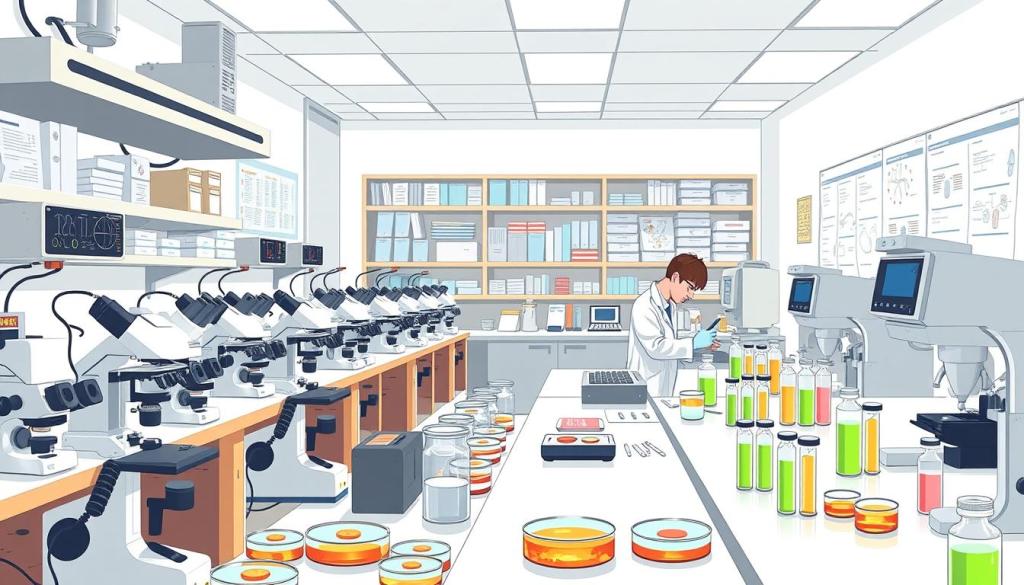
Laboratory scientists use different ways to study bacteria. Each method has its own benefits for detecting and analyzing microbes in various research settings.
Culture-Based Techniques
Culture-based techniques are key in identifying microbes. They involve:
- Growing bacteria on special nutrient media
- Watching how colonies form and look
- Identifying bacteria by their growth patterns
Traditional microbiology looks at cell size, shape, and how they process nutrients. Bacteria cultures usually take one to two days to grow enough for testing.
Direct Count Techniques
Direct count techniques give quick insights into bacterial numbers. Important methods include:
- Microscopy: Seeing individual bacterial cells
- Flow cytometry: Counting and analyzing bacterial populations
- Digital counting methods
These methods allow for fast and precise bacterial tests with little time needed.
Molecular Methods
Modern molecular techniques change how we assess microbial loads through genetic analysis. Advanced methods like DNA sequencing and PCR help researchers:
- Find specific bacterial strains
- Spot genetic markers
- Do quick microorganism identification
These advanced methods can give results in minutes. They mark a big step forward in detecting and studying bacteria.
Culture-Based Techniques: An Overview
Bacterial colony counting and bacterial concentration determination are key in microbiology. They help scientists learn about bacterial growth and behavior. This is done through controlled lab methods.
Labs use special culture-based techniques to study bacteria. These methods grow bacteria in controlled conditions. This helps scientists understand their properties and how they interact.
Plate Counting: Revealing Bacterial Populations
Plate counting is a basic method for figuring out bacterial concentration. Scientists use it to:
- Count live bacterial cells
- Figure out population density
- Look at bacterial growth rates
Serial Dilutions: Precision in Bacterial Measurement
Serial dilutions are vital for counting bacterial colonies. By making samples less concentrated, researchers can:
- Count bacterial colonies accurately
- Stop plates from getting too crowded
- Get precise population estimates
Incubation Methods: Creating Optimal Growth Conditions
Different bacteria need specific conditions to grow. Aerobic and anaerobic techniques help create the best environments. This lets scientists study bacterial growth.
Proper incubation is key to successful bacterial culture and accurate research outcomes.
Researchers must pick the right media, temperature, and oxygen levels. This supports bacterial growth and ensures accurate concentration determination.
Direct Count Techniques: Digital and Manual Approaches
Microbiological testing is key to accurately measuring microbial populations. Scientists use direct count methods to analyze bacteria without traditional cultivation. This approach is more precise.
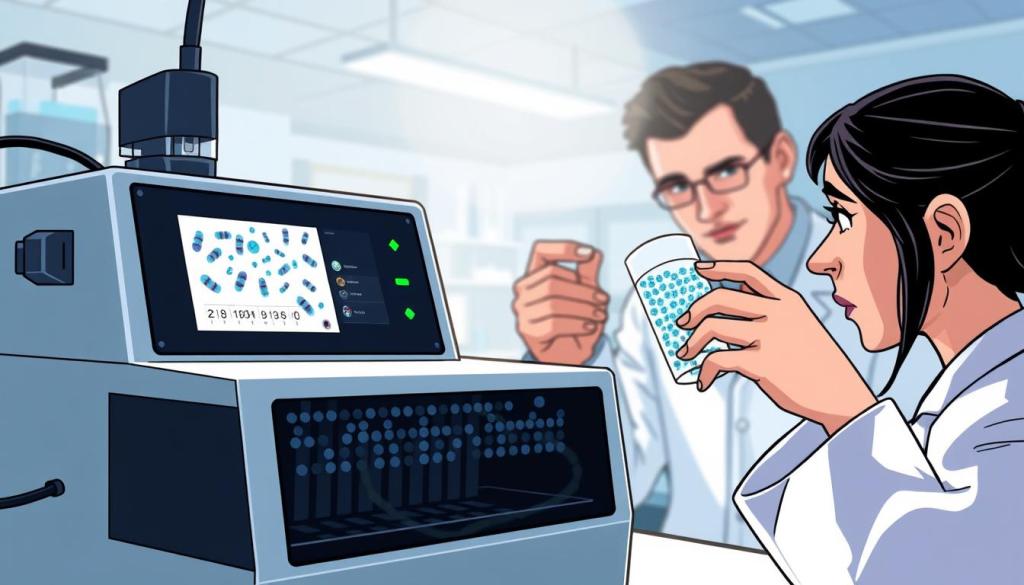
Researchers use various strategies to count bacteria accurately. These methods give quick insights into microbial communities. They offer benefits over traditional culture-based approaches.
Microscopy Techniques
Microscopy is a basic tool for direct bacterial counting. Researchers use different microscopic methods to see and count bacterial cells:
- Bright-field microscopy
- Phase-contrast microscopy
- Fluorescence microscopy
Direct microscopic counts need special equipment like the Petroff-Hausser counting chamber. This tool helps scientists count bacterial populations with high accuracy.
| Microscopy Type | Key Characteristics | Accuracy Range |
|---|---|---|
| Bright-field | Basic visualization | Lower precision |
| Phase-contrast | Enhanced cell visibility | Medium precision |
| Fluorescence | Specific cell labeling | High precision |
Flow Cytometry
Flow cytometry is an advanced method for counting microbial populations. It allows for quick analysis of individual cells based on their characteristics.
This technique has big advantages in microbiological testing, including:
- Rapid cell analysis
- Ability to detect non-culturable bacteria
- Detailed cellular characterization
Researchers must note that direct count techniques have limitations. They might overestimate counts because they can’t tell live from dead cells.
Molecular Methods: Advanced Techniques
Modern microbiology has changed how we measure bacteria. Advanced molecular techniques give us new ways to identify and count bacteria. These methods are fast and very accurate.
Molecular methods are at the forefront of bacterial research. They use DNA to study bacteria in detail. This helps scientists understand bacteria better than ever before.
Polymerase Chain Reaction (PCR): A Powerful Detection Tool
PCR has changed how we detect bacteria. It makes specific DNA parts more visible. There are different types of PCR:
- Quantitative PCR (qPCR)
- Digital PCR (dPCR)
- Real-time PCR
These PCR methods are very sensitive. For example, RT-qPCR can spot bacteria even if there are only 2 genetic copies in a sample.
Next-Generation Sequencing: Comprehensive Bacterial Analysis
Next-Generation Sequencing (NGS) is another big step forward. It lets us analyze bacteria’s genes in depth. This includes:
- Metagenomics
- Amplicon sequencing
- Whole genome sequencing
NGS gives us a detailed look at bacterial communities quickly. It’s a powerful tool for understanding bacteria’s genetic makeup.
Factors Influencing Bacterial Measurement
Getting accurate bacterial counts depends on many important factors. These factors can greatly affect the results of tests for microbes. Researchers must think about these elements carefully to get reliable results.
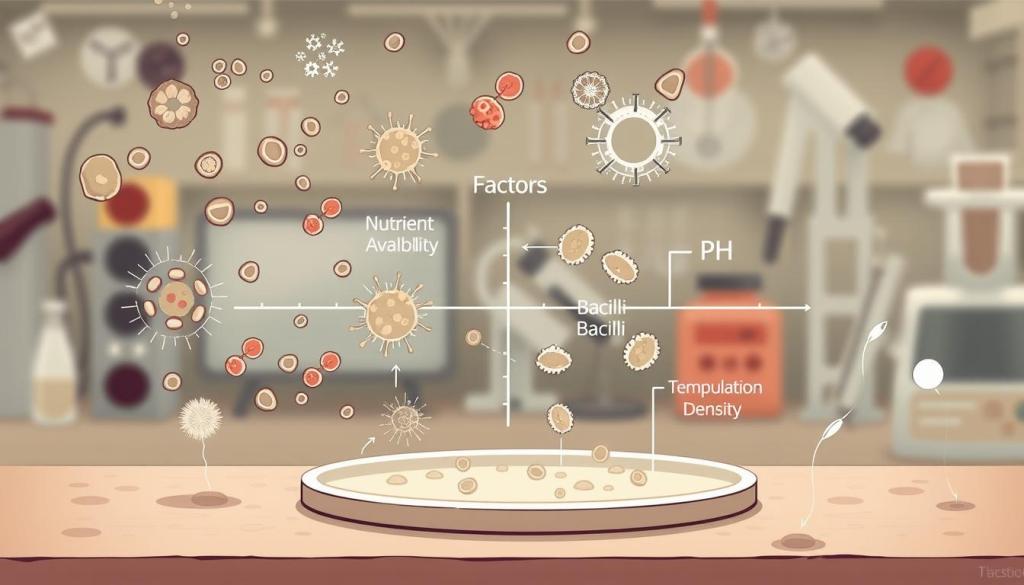
Several key considerations play a crucial role in bacterial measurement accuracy:
- Sample collection techniques
- Environmental conditions
- Bacterial growth characteristics
- Measurement methodology
Sample Collection Methods
Getting the sample right is key to successful bacterial tests. Different samples need special ways to collect them to keep microbes safe. Important steps include making sure tools are clean, avoiding contamination, and using the right ways to keep samples fresh.
Environmental Conditions Impact
Bacteria grow best under certain conditions. Important factors for testing microbes include:
- Temperature range (optimal growth between 25°C and 45°C for mesophiles)
- pH levels (most bacteria thrive between pH 5 to 8)
- Oxygen availability
- Nutrient concentration
Knowing these conditions helps scientists make better tests for bacteria. Each type of bacteria has its own needs for growth. These needs affect how well we can find and count them.
Importance of Accurate Bacterial Measurement
Bacterial measurement is key in many fields. It helps researchers and doctors understand how microbes work. They use special tests to see how microbes interact.
Knowing how many microbes there are is very important. It helps scientists in many ways. They can:
- Diagnose infectious diseases
- Monitor treatment effectiveness
- Conduct epidemiological studies
- Develop targeted antimicrobial strategies
Implications in Research
In research, knowing how many bacteria there are is crucial. Bacterial cell viability assays help scientists learn about microbes. They find out how microbes work together and how to treat them.
“Accurate bacterial measurement is the cornerstone of microbiological research and clinical diagnostics.” – Microbiological Research Institute
Relevance in Clinical Settings
In hospitals, knowing about microbes is vital. Microbial load assessment helps doctors figure out what’s causing infections. It also helps them see how well treatments are working.
Studies show how important it is to measure microbes accurately. For example, healthy adult feces can have a lot of bacteria. This shows how complex our bodies’ microbes are.
Limitations of Bacterial Measurement Techniques
Scientific research on bacteria faces unique challenges. Counting bacterial colonies and determining their concentration are complex tasks. These processes have limitations that can affect the accuracy of experiments.
- Detection sensitivity varies across different methodologies
- Some techniques cannot identify bacteria in low concentrations
- Distinguishing between closely related bacterial species remains challenging
Detection Limits: Understanding the Challenges
Different methods have varying levels of sensitivity in detecting bacteria. Some methods can only work when there are a certain number of bacteria present. For example, some need at least 40-400 cells/mL to give accurate results.
Specificity Issues in Bacterial Identification
It’s hard for researchers to tell apart different bacterial strains. Techniques like PCR can sometimes count DNA from dead cells as live. This can lead to wrong conclusions in research.
| Measurement Technique | Detection Sensitivity | Potential Limitations |
|---|---|---|
| Culture-Based Methods | Requires 24-48 hours | Cannot detect viable but non-culturable bacteria |
| Molecular Methods | Rapid detection | May include DNA from dead cells |
| Microscopy | Immediate visualization | Limited quantitative accuracy |
It’s important for researchers to know these limitations. This helps them choose the right methods and understand their results accurately.
Trends in Bacterial Measurement Technology
The world of microbiological testing is changing fast. New technologies are making it easier to count microbes. These advancements are making labs work faster and more accurately.
Labs are moving towards better ways to measure bacteria. Some big changes are happening:
- Increased automation of sample processing
- Development of high-throughput screening platforms
- Integration of artificial intelligence in data analysis
- Portable point-of-care testing devices
Automation in Laboratories
Robots are changing how labs work. They can handle many samples at once. This cuts down on mistakes and makes work faster. Now, labs can count microbes quickly and accurately.
Rise of Point-of-Care Testing
Portable devices are getting better. They can test for bacteria anywhere. This means fast answers in places like hospitals or outdoors.
New tools like biosensors and microfluidics are changing the game. They help scientists spot and study microbes better. This opens up new ways to help health and the environment.
Ensuring Reliability in Bacterial Measurement
Measuring bacteria needs careful attention and strong quality control. Labs must have detailed plans to ensure the accuracy and consistency of their methods.
Reliable bacterial measurement relies on several key factors:
- Rigorous quality control protocols
- Standardized operating procedures
- Precise equipment calibration
- Comprehensive personnel training
Quality Control Practices
Quality control in bacterial measurement involves several steps. Labs must set up systematic verification methods to check their techniques. This includes:
- Using positive and negative control samples
- Conducting regular proficiency testing
- Maintaining detailed documentation
- Implementing continuous performance monitoring
Standard Operating Procedures
Standard Operating Procedures (SOPs) are vital for consistent and accurate bacterial measurement. These detailed guidelines help reduce variability and standardize processes in different labs.
The recommended calibration method using serial dilution can achieve high precision. It shows the importance of structured protocols in measuring bacteria reliably.
Future Directions in Bacterial Measurement
Modern microbiology is changing fast, thanks to new bacterial culture methods. These methods are changing how we detect microbes. New technologies are making it easier to find and study bacteria quickly and accurately.
Nanomaterials and advanced single-cell analysis are leading the way. Scientists are creating fast detection systems. These systems can spot microorganisms in minutes, which is key for public health.
The rise of antibiotic-resistant infections is a big challenge. Over 2.8 million cases happen every year in the U.S. New methods could help fight this by improving how we detect and track bacteria.
The future of bacterial measurement combines advanced molecular techniques with real-time monitoring. DNA sequencing and nanozyme technologies are promising. They offer faster and more accurate ways to assess microbial populations.
These advancements could greatly improve public health. They could change how we fight infectious diseases. By tracking bacteria better, we can develop more effective treatments and prevent outbreaks.
FAQ
What are the primary methods used to measure bacteria in a laboratory?
There are three main ways to measure bacteria. Culture-based techniques grow bacteria on nutrient media. Direct count techniques use microscopy and flow cytometry. Molecular methods use PCR and genetic analysis to count and identify bacteria.
Why is accurate bacterial measurement important?
Accurate bacterial measurement is key in many fields. It helps in medical diagnostics, environmental science, food safety, and research. It aids in understanding microbial populations, diagnosing infections, and developing treatments.
What challenges exist in measuring bacteria?
Measuring bacteria has several challenges. It’s hard to detect them in low concentrations. It’s also tough to tell live from dead cells. Choosing the right measurement technique is crucial.
How do culture-based techniques work for bacterial measurement?
Culture-based techniques grow bacteria on nutrient media. They use plate counting and serial dilutions. Bacteria grow on agar plates, forming visible colonies that are counted to estimate the number of viable cells.
What are the advantages of molecular methods in bacterial quantification?
Molecular methods like PCR and NGS are very sensitive and specific. They can quickly detect and quantify specific bacterial species or genes. This is especially useful when traditional culture methods fail.
Can all bacteria be measured using the same technique?
No, different bacteria and research goals need different techniques. The choice depends on the bacteria’s characteristics, the sample type, the required precision, and the lab’s resources.
What is the difference between direct and indirect bacterial counting methods?
Direct counting methods observe and count bacterial cells right away using microscopy or flow cytometry. Indirect methods, like culture-based techniques, grow bacteria into visible colonies before counting.
How do environmental conditions affect bacterial measurement?
Environmental factors like temperature, pH, and nutrient availability affect bacterial growth and survival. These factors can influence the accuracy of measurement techniques.
What emerging technologies are transforming bacterial measurement?
New technologies include automated systems, point-of-care devices, biosensors, microfluidic platforms, and AI-assisted analysis. They improve the speed, accuracy, and accessibility of bacterial detection and quantification.
How can researchers ensure reliable bacterial measurements?
To ensure reliable measurements, researchers must follow quality control practices. They should develop SOPs, train personnel, use controls, and follow regulatory guidelines and industry standards.





Leave a Comment
Your email address will not be published. Required fields are marked *