



Are you ready to unlock the molecular secrets hidden within tiny lab wells? The 96 well PCR plate is a game-changer. It transforms genetic research and diagnostic capabilities in scientific labs.
Molecular biology supplies have evolved a lot. Polymerase chain reaction plates are now key tools for precise scientific work. These 96 well PCR plates help researchers amplify and analyze genetic material with great efficiency and accuracy.
Today’s labs depend on these advanced tools for complex genetic studies. They use these plates to screen biological samples and create new diagnostic methods. The plates’ design allows for high-throughput screening and handling of many samples at once.
Key Takeaways
- 96 well PCR plates revolutionize genetic research methodologies
- Designed for high-precision molecular biology investigations
- Supports simultaneous processing of multiple genetic samples
- Essential tool for diagnostic and research applications
- Enables advanced genetic analysis with remarkable efficiency
Introduction to 96 Well PCR Plates
The microplate format has changed molecular biology research a lot. 96 well PCR plates are key tools for scientists everywhere. They help with high-throughput screening and PCR amplification in a very efficient and precise way.
PCR plates are a smart way to do genetic research. They help a lot with handling and analyzing samples. Their design lets researchers work on many samples at once, making labs more productive.
What is a 96 Well PCR Plate?
A 96 well PCR plate is a special microplate for molecular biology. It has:
- 96 wells for samples
- 0.2 mL of space in each well
- Made of thin polypropylene
- Helps with even heat transfer
Importance in Molecular Biology Research
These plates are very important in genetic research. They make complex processes easier. With their design, researchers can:
- Do many PCR amplification tests at once
- Lower the risk of sample contamination
- Work more efficiently
- Save time on experiments
Scientists use 96 well PCR plates for many things. This includes studying genes, finding mutations, and DNA analysis in forensic science. They are an indispensable tool in today’s molecular biology labs.
Key Features of 96 Well PCR Plates
Genomics research tools have changed lab work a lot. 96 well PCR plates are key in this change. They are important for scientists doing experiments in molecular biology.
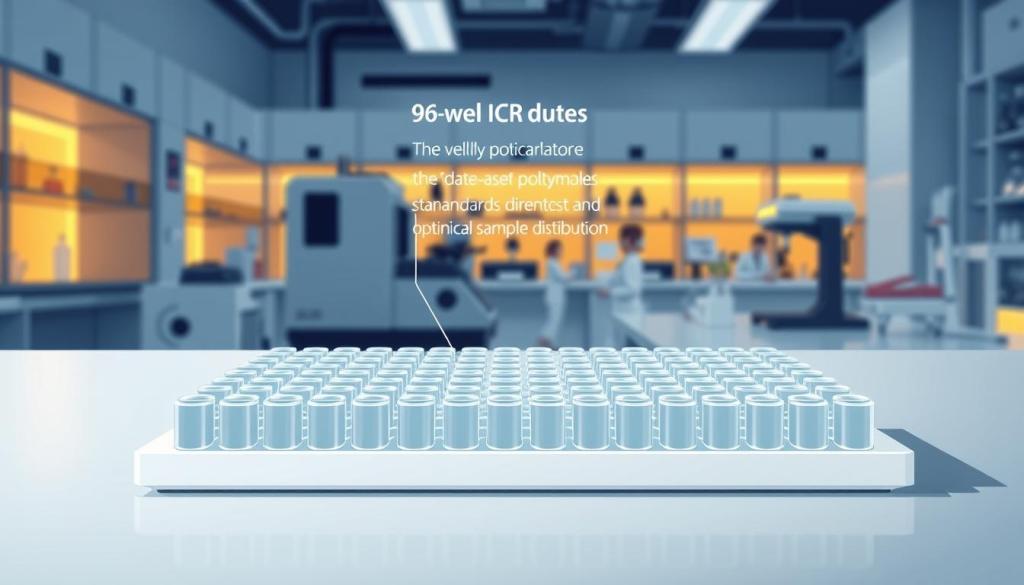
PCR plates work well because of their special materials and design. Scientists use them to get reliable results in their research.
Material Composition and Durability
PCR plates are made from 100% virgin medical-grade polypropylene. This makes them great for genomics research. They have:
- Exceptional heat transfer properties
- High chemical resistance
- Low risk of sample contamination
- Consistent performance in thermal cycling
Thermoforming and Design Benefits
Modern PCR plates use advanced thermoforming. This makes research more efficient. There are different types of plates:
- Non-skirted plates: Great for standard thermal cyclers
- Semi-skirted plates: Better for pipetting
- Full-skirted plates: Strong for automated systems
Precision in design means better research quality and results.
There are also special designs like barcodes and color codes. These help manage samples better in high-throughput research.
Types of 96 Well PCR Plates
Researchers in molecular biology use different 96 well PCR plates for their needs. Knowing the types of plates helps scientists pick the best ones for their work.
Standard and Specialized Plate Designs
The world of molecular biology supplies has many 96 well PCR plate options. These are designed for various research needs:
- Standard Depth Plates: Most common for routine PCR experiments
- Low-Profile Plates: Help keep samples from evaporating during long protocols
- Raised-Rim Plates: Make handling easier by adding stability
Flat vs. V-Bottom Plate Configurations
The right plate shape can greatly affect your results. There are two main types used in labs:
- Flat-Bottom Plates
- Best for standard liquid handling
- Make pipetting samples easier
- Ensure even sample distribution
- V-Bottom Plates
- Help keep more sample
- Less dead volume
- Better centrifugation results
Choosing the right 96 well PCR plate is key for reliable research results.
When picking PCR plates, consider things like material, shape, and lab equipment compatibility. These factors are important for molecular biology experiments.
Applications of 96 Well PCR Plates
96 well PCR plates have changed molecular biology and clinical diagnostics. They make high-throughput screening fast and precise.
PCR amplification has changed science, with 96 well plates key in many areas. They are great for handling many samples at once.
Use in Genetic Research
Genetic studies use 96 well PCR plates for detailed genomic work. Scientists can now study many genetic samples without spending a lot.
- Rapid genome sequencing
- Mutation detection
- Genetic variant analysis
- Population genetics research
Role in Clinical Diagnostics
Clinical labs use 96 well PCR plates for quick disease detection. These plates help screen many patient samples accurately and fast.
- Infectious disease screening
- Genetic disorder identification
- Personalized medicine research
- Pharmacogenomic studies
The use of 96 well PCR plates in research and diagnostics shows their key role in today’s science.
Advantages of Using 96 Well PCR Plates
Researchers in genomics use 96 well PCR plates as key tools. These plates are crucial for advanced lab work. They make scientific research more efficient and precise.
The design of 96 well PCR plates is amazing. It changes how scientists do molecular research. Now, scientists can work on many samples at once, making research faster.
High Throughput Capabilities
96 well PCR plates are great for high-performance labs. They offer several benefits:
- Process up to 96 reactions at once
- Hold reaction volumes from 10-200 microliters
- Save space with their compact design
- Speed up sample processing
Consistency in Sample Preparation
Keeping experiments consistent is key in genomics. 96 well PCR plates help a lot. They have uniform well sizes and precise spacing, leading to:
- Standardized reaction conditions
- Less experimental variability
- Better reproducibility of results
- Lower risk of contamination
These plates are designed to help researchers get more reliable results. They are useful in many scientific fields.
Selecting the Right 96 Well PCR Plate
Choosing the right 96 well PCR plate is key for successful molecular biology research. Scientists need to look at many factors. This ensures the best performance in PCR plates in different lab settings.

When picking PCR supplies, researchers should think about a few important things:
- Well volume needs
- Skirt type and plate design
- Thermal cycling compatibility
- Material type
- Specific research needs
Critical Factors in Plate Selection
The selection process requires understanding your specific needs. Different 96 well PCR plates have unique benefits for different research goals.
| Plate Characteristic | Recommended Consideration |
|---|---|
| Well Volume | 0.2 mL standard, 0.1 mL low-profile options |
| Skirt Type | Fully skirted for maximum stability |
| Material | Medical-grade polypropylene |
| Color | White for enhanced fluorescence detection |
Instrument Compatibility Assessment
It’s crucial to make sure your 96 well PCR plate works well with your thermal cycler. Matching plates to instruments prevents errors and keeps research reliable.
- Verify plate dimensions match instrument specs
- Check thermal transfer characteristics
- Confirm automation system integration
Researchers should choose plates that perform well, lose little sample, and cycle reliably. This is important for various molecular biology tasks.
Proper Handling and Storage of PCR Plates
Keeping PCR plates in good condition is key for successful experiments. Lab experts must handle these tools carefully to get accurate results.
Effective handling of PCR plates requires attention to several key practices:
- Always use clean, sterile techniques when manipulating plates
- Avoid touching the bottom of wells to prevent contamination
- Handle plates with precision to maintain sample integrity
- Use proper protective equipment during plate management
Best Practices for Usage
Researchers should follow specific guidelines to maximize PCR plate performance:
- Inspect plates for any visible damage before use
- Store plates in sealed containers when not in active use
- Protect plates from direct sunlight and extreme temperatures
- Use only compatible sealing films or caps
Guidelines for Storage Conditions
Proper storage is essential for maintaining plate quality and preventing degradation:
| Storage Parameter | Recommended Condition |
|---|---|
| Temperature | -20°C to 4°C |
| Humidity | Low humidity environment |
| Protection | Sealed in protective packaging |
Pro tip: Always check manufacturer recommendations for specific storage instructions related to your particular PCR plate type. Different microplate formats may have unique storage requirements that can impact experimental outcomes.
Common Challenges in Using PCR Plates
Researchers often face big challenges when using 96 well PCR plates. These issues are key to keeping molecular biology research top-notch. It’s vital to understand and solve these problems.

Managing Sample Contamination
Sample contamination is a big risk in PCR experiments. It can come from:
- Cross-contamination between wells
- Improper handling techniques
- Inadequate sterilization of pipette tips
- Environmental particulate interference
To avoid contamination, researchers need to follow strict lab practices. They must also manage their workflow carefully. This helps keep molecular cross-contamination at bay during biotech consumables preparation.
Addressing Evaporation Issues
Evaporation during thermal cycling can mess up PCR results. It can cause data to be inconsistent and less reliable.
| Evaporation Prevention Strategy | Effectiveness |
|---|---|
| Specialized PCR plate sealing films | High |
| Compression mats | Moderate |
| Mineral oil overlay | Low |
Choosing the right sealing methods and controlling lab conditions can help. This reduces evaporation risks during thermal cycling.
By using strict contamination prevention and managing thermal cycling well, researchers can improve their genomics research tools. This keeps their experiments reliable and accurate.
Future Trends in PCR Plate Technology
The world of molecular biology is changing fast, with 96 well PCR plates leading the way. Labs and researchers are seeing big changes that could change how we use PCR plates. These changes could make a big difference in science and medicine.
Recent studies show exciting new things in PCR plate tech. Here are some key trends:
- Smart PCR plates with built-in biosensors
- Multi-layered plates for better heat control
- Biodegradable plates to help the environment
- Plates designed for easy automation
Innovations in Materials and Designs
The field of molecular biology is seeing big changes in materials. Cutting-edge 96 well PCR plates now use new polymers. These polymers conduct heat better and reduce contamination risks.
Researchers can look forward to plates with:
- Better chemical resistance
- Even temperature
- Well designs for exact volume control
Impact of Automation on PCR Processes
Automation is changing PCR plates a lot. New robots work well with 96 well PCR plates, making labs up to 60% more efficient. The new plates are made for high-speed screening and precise tests.
The future of PCR technology lies in intelligent, adaptable plate designs that streamline complex research processes.
The PCR plate market is expected to grow to USD 572.64 million by 2033. This growth is at a 3.1% CAGR. This means big chances for new discoveries and medical progress.
Conclusion on the Role of 96 Well PCR Plates
The microplate format has changed science a lot. It gives researchers a powerful tool for quick and precise tests. 96 well PCR plates are a big step forward in labs. They let scientists work on many samples at once, very efficiently and accurately.
PCR amplification has changed genetic studies a lot. It lets researchers do complex tests with very little sample. These plates are very useful in many areas, like genomics and medicine.
Labs all over the world know how important these plates are. They keep samples safe by storing them in the right conditions. This can be from -20°C to 25°C for dry plates. For sensitive stuff, it might be even colder.
As we move forward, these PCR plates will get even better. We’ll see new designs that reduce contamination and improve tests. These updates will help scientists make new discoveries in many fields.
FAQ
What is a 96 well PCR plate?
A 96 well PCR plate is a special microplate for PCR. It has 96 wells in an 8×12 grid. Made from high-quality polypropylene, it’s key for handling many DNA samples at once.
What materials are typically used in manufacturing 96 well PCR plates?
Most are made from polypropylene. It’s chosen for its good heat transfer, chemical resistance, and low binding to samples. This ensures even heating and keeps samples safe.
What are the main applications of 96 well PCR plates?
They’re used a lot in genetic research and clinical diagnostics. They help with DNA amplification, genetic testing, and more. This is in labs for medicine, pharma, and research.
How do flat-bottom and V-bottom PCR plates differ?
Flat-bottom plates are good for even sample collection. V-bottom plates help keep samples together and make centrifugation better. The choice depends on the experiment and sample needs.
What factors should researchers consider when selecting a 96 well PCR plate?
Consider the material, well depth, skirt design, and compatibility with cyclers. Think about the sample volume and your research needs. Look at thermal conductivity and risk of contamination too.
How can researchers prevent sample contamination in PCR plates?
To avoid contamination, use sterile techniques and wear protective gear. Use filtered tips and work in clean areas. Follow strict protocols and sterilize equipment regularly.
What are the storage recommendations for 96 well PCR plates?
Store plates in sealed containers at room temperature. Keep them away from sunlight and extreme temperatures. Unopened plates can be stored for a long time. Opened ones need careful handling to avoid contamination.
How do automation technologies impact 96 well PCR plate usage?
Automation makes PCR plate use more efficient. It reduces errors, boosts reproducibility, and saves time. Robots can now handle loading, prep, and cycling with great precision.
What emerging trends exist in PCR plate technology?
New trends include better materials, optical features, and designs to reduce evaporation. These advancements aim to work with advanced instruments and automation.
Are 96 well PCR plates compatible with all thermal cyclers?
Most plates fit standard cyclers, but check compatibility. Different designs and materials can affect fit and performance.




Pingback: Optical Genetics with Optical Fibers in 96 Well Plate
Pingback: Quality 96 Well PCR Plate for Laboratory Research