


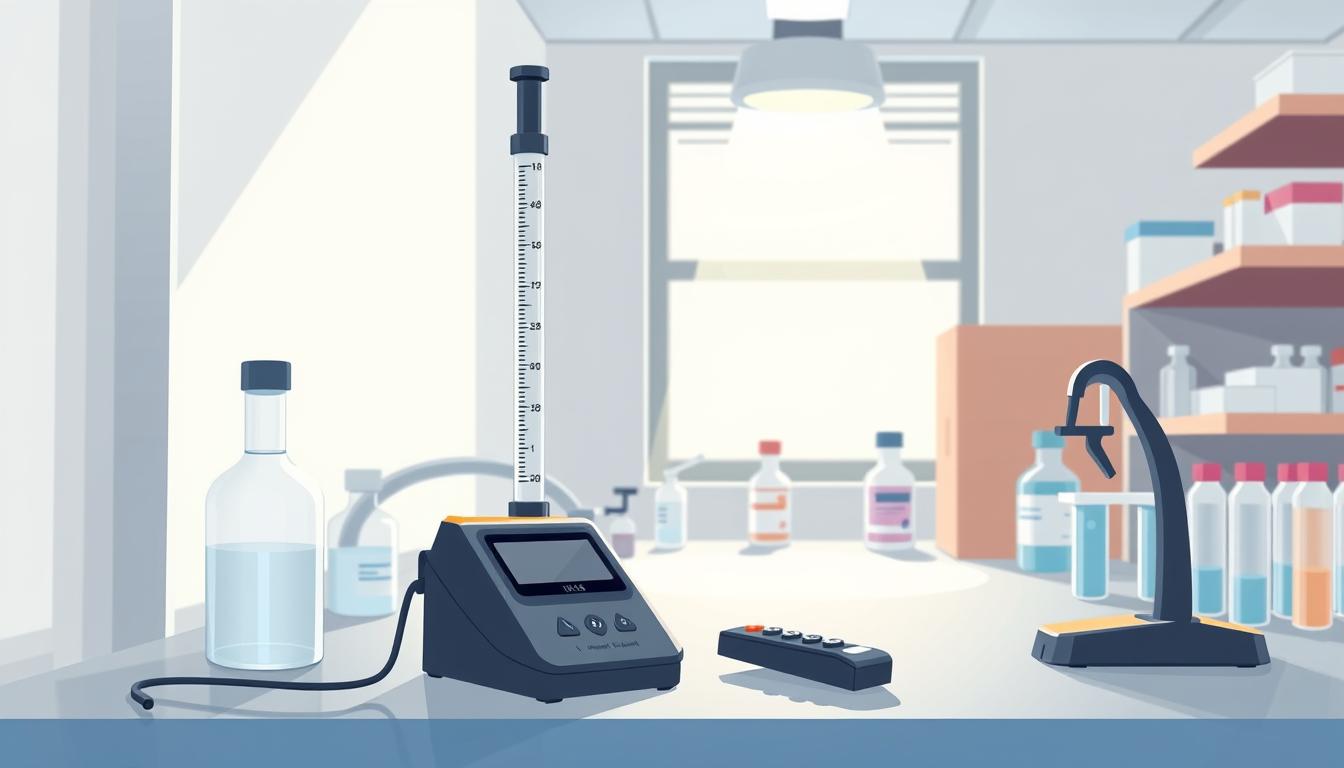
Are you ready to improve your lab skills? Learning to use serological pipettes is key. It’s not just a skill, but an art that’s crucial for research success.
Serological pipettes are vital for precise liquid transfers in labs. They can measure from less than 1 milliliter to 50 milliliters. This makes them essential for many research areas.
Scientists use these pipettes for accurate handling of liquids. This is important in cell culture, chemical analysis, and making reagents. The accuracy of these tools is critical, as errors can be up to 10% with manual methods.
Learning the right techniques for using serological pipettes can greatly improve research. Today, about 70% of labs use disposable pipettes. This is to reduce contamination risks.
Key Takeaways
- Serological pipettes enable precise liquid transfers from 0.1 to 50 milliliters
- Proper technique can reduce liquid transfer errors by up to 10%
- Pipette controllers enhance precision through controlled vacuum mechanisms
- 70% of laboratories prefer disposable serological pipettes
- Accurate measurement requires careful handling and technique
Understanding the Serological Pipette
Serological pipettes are key tools in precise liquid handling. They are used to move and measure liquids with great accuracy. These tools are essential in scientific research, medical tests, and many experiments.
Scientists use serological pipettes for liquids from less than 1 milliliter to 50 milliliters. Their main feature is a graduated tube with clear volume markers. This makes it easy to measure liquids accurately in labs.
Key Characteristics of Serological Pipettes
- Provide precision measurement across various volume ranges
- Available in sterile and non-sterile configurations
- Manufactured from disposable plastic or reusable glass materials
- Critical for accurate liquid transfer in scientific research
Types of Serological Pipettes
Laboratory experts have two main types of serological pipettes:
- Glass Serological Pipettes
- Reusable after thorough sterilization
- Environmentally friendly option
- Suitable for repeated use with proper maintenance
- Plastic Serological Pipettes
- Pre-sterilized and disposable
- Lightweight and cost-effective
- Reduces contamination risks
Selecting the right serological pipette is key for reliable results.
Knowing about liquid handling techniques helps researchers pick the best pipette for their work. This is true for cell culture to chemical analysis.
Importance of Proper Serological Pipette Technique
Laboratory precision relies on careful sample transfer. Even tiny mistakes can ruin the whole experiment. Keeping samples clean is key to reliable science.
Using a serological pipette right is vital for good results. Scientists need to follow certain steps for accurate and consistent findings.
Impact on Experimental Outcomes
Wrong pipetting can mess up experiments a lot. Researchers should pay attention to a few important things:
- Keep aspiration and dispensing speeds the same
- Read volume at the bottom of the meniscus
- Use gentle pressure when moving liquids
- Handle liquids correctly above gradation marks
Reducing Cross-Contamination
Stopping cross-contamination is hard in labs. Microorganisms are everywhere – in air and on surfaces. So, scientists must be very careful to avoid contamination.
- Use new pipettes for each sample
- Follow proper disposal rules
- Clean equipment often
- Keep sterile solutions at the right temperature
By getting better at using serological pipettes, scientists can make their experiments more reliable and repeatable.
Selecting the Right Serological Pipette
Choosing the right serological pipette is key for keeping measurements accurate in labs. You need to think about several factors. These factors affect how precise and reliable your experiments will be.

Lab experts must look at a few important things when picking serological pipettes:
- Volume range needs
- Material fit
- Lab setting
- Sample care
Volume and Material Considerations
Serological pipettes vary in size, from under 1 mL to 50 mL. Choosing the right size is crucial for exact measurements. Using a big pipette for small amounts can mess up your results.
“Precision starts with the right tool for the lab task.”
Glass vs. Plastic Pipettes
Deciding between glass and plastic pipettes depends on your lab’s needs:
- Plastic Pipettes:
- Disposable and sterile
- Less chance of contamination
- Perfect for one-time use
- Glass Pipettes:
- Can be reused and stands up to chemicals
- Works with many solvents
- Needs deep cleaning after each use
About 70% of labs choose disposable plastic pipettes. They’re easy to use and cut down on contamination risks. Knowing the benefits of each material helps labs get the best accuracy.
Preparing the Serological Pipette for Use
Laboratory precision begins with careful preparation of serological pipettes. Researchers must follow key steps of sterilization and calibration. This ensures accurate and clean results in experiments.
Proper preparation is crucial for scientific accuracy. Sterile techniques are essential to keep laboratory work clean and reliable.
Sterilization Techniques for Laboratory Pipettes
Keeping pipettes clean is vital to avoid contamination. Labs use several methods to ensure pipettes are clean:
- Gamma irradiation for disposable pipettes
- Alcohol-based surface disinfection
- Autoclave treatment for reusable glass pipettes
- UV light sterilization
“Cleanliness is next to scientific accuracy in the laboratory.” – Laboratory Safety Principle
Pipette Calibration Methods
Calibration is key for accurate volume measurements. Researchers should pay attention to a few important points:
- Regularly check volume accuracy
- Use standard calibration weights
- Ensure meniscus reading is at eye level
- Keep records of calibration results
Pro tip: Calibrate serological pipettes at least annually or after significant impacts to maintain measurement integrity.
Serological pipettes measure from 1 ml to 50 ml. They come in increments like 1 ml, 2 ml, 5 ml, and 10 ml. Proper calibration reduces errors and improves results.
Techniques for Accurate Aspiration
Micropipetting is more than just clicking a button. It’s about mastering the art of precise liquid handling. You need to understand how the pipette, liquid, and lab environment work together.
For successful liquid transfer, several key factors must be controlled:
- Maintaining the correct pipette angle
- Controlling aspiration speed
- Managing pipette height during liquid uptake
- Preventing air bubble formation
Optimal Angle and Height Strategies
The angle of your serological pipette is very important. Experts say to hold it at a 45-degree angle for accurate volume measurements. This helps in smooth liquid uptake and reduces contamination risks.
Achieving Precise Aspiration Speed
Speed matters in liquid handling. Fast or uneven movements can lead to air bubbles or uneven volume. Aim for a steady, controlled motion for smooth liquid flow into the pipette tip.
Precision in micropipetting is not just a skill – it’s an art that requires practice and attention to detail.
Lab professionals should practice consistent techniques. This ensures each aspiration is done the same way. With practice and a steady hand, accuracy in liquid transfers improves greatly.
Dispensing Liquids with Precision
Precision is key when using serological pipettes in labs. Scientists need to transfer samples accurately to keep their work reliable and reproducible.

To dispense liquids well, you must learn specific techniques. These help avoid mistakes in lab work. The aim is to move liquids smoothly and avoid problems like droplets and liquid sticking.
Techniques for Complete Dispensing
There are a few important steps for successful liquid dispensing:
- Keep the dispensing angle steady
- Control how fast you dispense
- Apply gentle pressure when releasing
- Make sure the tip touches the inner wall of the container
Avoiding Droplet Formation
Droplets can mess up your measurements and sample transfers. To avoid this, try these tips:
- Choose the right pipette tip size
- Adjust the dispensing angle
- Practice releasing liquids carefully
- Use pipette controllers with smooth vacuum
| Technique | Impact on Precision |
|---|---|
| Vertical Dispensing | Reduces liquid retention |
| Controlled Speed | Minimizes droplet formation |
| Tip Wall Contact | Ensures complete liquid transfer |
Professional labs focus on training staff in advanced dispensing methods. This keeps their experiments accurate.
Cleaning and Maintaining Serological Pipettes
Keeping serological pipettes clean is key to good lab work. It’s all about stopping contamination to keep research accurate and reliable.
Cleaning these pipettes needs a few steps to keep them working well. This stops bad stuff from spreading between tests.
Recommended Cleaning Solutions
Each type of mess needs its own cleaning method:
- Aqueous solutions: Rinse well with distilled water
- Organic solvents: First, use a detergent mix, then rinse with distilled water
- Radioactive materials: Rinse several times with strong detergent and distilled water
Regular Maintenance Protocols
Good upkeep includes a few important steps:
- Check pipettes for damage often
- Clean inside parts with alcohol wipes
- Make sure they dry completely to avoid rust
Contamination can ruin experiments and cost a lot of money.
To get rid of DNA and RNA, use sodium hypochlorite or UV light. For work with DNA and RNA, clean often with special cleaners to keep samples good.
With strict cleaning and upkeep, scientists can make their lab work better. This also cuts down on contamination risks.
Best Practices for Serological Pipette Use
Mastering liquid handling techniques is key for lab professionals. It’s not just about using a tool. It’s about understanding the best ways and avoiding mistakes.
Improving lab results starts with better pipette handling. Studies show that up to 25% of errors come from bad training and habits.
Avoiding Common Errors in Pipetting
To avoid mistakes, focus on a few important things:
- Keep a steady pipetting angle (20-45 degrees)
- Move smoothly when taking and giving liquids
- Don’t let the pipette tip touch container walls
- Rinse pipette tips before using with thick liquids
Documenting Pipetting Processes
Keeping detailed records is vital for keeping experiments honest. Labs that document well can cut errors by up to 40%.
| Documentation Element | Recommended Practice |
|---|---|
| Calibration Records | Log calibration every 6 months |
| Usage Tracking | Record each pipette’s usage frequency |
| Maintenance Logs | Document cleaning and maintenance procedures |
By following these tips, scientists can make their research more reliable. This is thanks to careful liquid handling and precise measurements.
Adapting to Different Liquid Types
Mastering liquid handling techniques means knowing how to handle different liquids. Researchers need to adjust their methods to get precise results with each type of liquid.

Each liquid type needs its own pipetting method to keep results accurate and samples intact. The liquid’s viscosity and chemical makeup greatly affect how it’s handled in labs.
Handling Viscous vs. Aqueous Solutions
Pipetting methods change a lot between viscous and aqueous solutions:
- Aqueous solutions usually need standard pipetting methods
- Viscous liquids require slower aspiration and dispensing
- Open-end pipettes are best for thick substances like oils and cell culture media
Considerations for Sensitive Samples
Sensitive samples need extra care during transfer. Researchers must think about a few key things:
- Keep samples away from temperature changes
- Use sterile, gamma-irradiated pipettes for delicate specimens
- Choose the right pipette size (1 mL to 50 mL) for the volume needed
Specialized techniques are key to protecting fragile or easily damaged substances. Proper pipetting helps avoid contamination and keeps sample quality high in various research settings.
Troubleshooting Common Serological Pipette Issues
Laboratory work needs precision and careful upkeep, especially with serological pipettes. Researchers often face problems that can affect their results.
Knowing the usual pipette problems helps scientists keep their work running smoothly. This prevents mistakes in their research.
Identifying Dispensing Errors
Dispensing errors can really mess up research findings. Look out for these signs:
- Inconsistent liquid volumes
- Unexpected droplet formation
- Uneven liquid distribution
- Difficulty achieving precise measurements
Solutions for Clogging Problems
Clogging is a big problem in lab work. Here are some ways to fix it:
- Regular cleaning and maintenance
- Using the right cleaning solutions
- Checking rubber inserts and valves
- Inspecting tubing for damage
Experts say to check your equipment often to avoid accuracy issues. Keeping up with maintenance stops problems before they start.
Precision starts with proper care and quick action on equipment issues.
Using these fixes, lab workers can avoid problems and keep their research top-notch.
Safety and Ergonomics in Pipette Use
Working with laboratory equipment needs careful safety and ergonomic practices. Serological pipetting requires precise techniques and personal protection. This ensures the best results and keeps users safe.
Keeping lab workers safe when using pipettes is crucial. It starts with knowing the risks of repetitive tasks. This knowledge helps prevent contamination.
Importance of Personal Protective Equipment
Using the right personal protective equipment (PPE) is key for safe lab work. Important items include:
- Safety glasses with side shields
- Disposable laboratory gloves
- Long-sleeved lab coats
- Closed-toe protective footwear
Ergonomic Pipetting Techniques
Good ergonomic practices greatly benefit lab work. Here are some tips to reduce physical strain:
- Keep wrists straight
- Adjust your workspace for easy reach
- Choose light pipette controllers
- Take short breaks during long pipetting sessions
| Ergonomic Metric | Impact on Lab Performance |
|---|---|
| Proper Posture | 50% reduction in shoulder strain |
| Ergonomic Training | 15% improvement in pipetting accuracy |
| Electronic Pipette Use | 25% decrease in repetitive strain injuries |
Using safety protocols and ergonomic techniques keeps lab workers and experiments safe.
Training and Resources for Lab Personnel
Using serological pipettes well needs ongoing learning and good training resources. Lab workers can get better at their jobs with special training. This training helps them use pipettes more accurately, which is key for good results.
There are many ways to learn about pipettes, like hands-on workshops. These teach the right way to handle pipettes and how to avoid mistakes. You get to practice and learn from experts at the same time.
Online resources are also great for learning about pipettes. Websites have videos, guides, and interactive lessons. They help everyone, from newbies to seasoned researchers, keep up with the latest in pipetting.
Keeping up with training is crucial for doing science well. It helps lab workers make fewer mistakes and do better experiments. By always learning, research teams can keep their work at the highest level.
FAQ
What is a serological pipette?
A serological pipette is a precise tool for moving liquids in labs. It’s made of plastic or glass. These pipettes help scientists measure and transfer liquids accurately, from 1 to 50 mL.
How do I choose between glass and plastic serological pipettes?
Choosing depends on your lab needs. Plastic ones are disposable and cut down on contamination. Glass ones are more durable and can be sterilized for repeated use. Think about what you need for your experiments.
What are the most common errors in serological pipetting?
Common mistakes include wrong pipetting angle and speed. Not pre-wetting the tip and poor technique can also cause issues. These errors can mess up your results.
How often should serological pipettes be calibrated?
Calibrate them every year or more if you use them a lot. This keeps them accurate for handling liquids.
What techniques prevent cross-contamination during pipetting?
To avoid contamination, wear gloves and use new tips for each sample. Keep the pipette angle right and don’t touch the tip to containers. Dispose of tips properly and clean between uses.
How do I handle viscous liquids with a serological pipette?
For thick liquids, use slow speeds and wider tips. Pre-wet the tip and use specific techniques for viscosity. This ensures accurate transfer.
What personal protective equipment is necessary for pipetting?
Wear gloves, safety glasses, and a lab coat. They protect against chemicals and biological threats, keeping your work area clean.
How can I prevent repetitive strain injuries while pipetting?
Keep good posture and use ergonomic pipettes. Take breaks, switch hands, and use electronic pipettes. A well-set workstation and proper technique are key.
What are the best cleaning methods for serological pipettes?
Throw away disposable pipettes after use. Clean glass ones with mild detergent and deionized water. Sterilize them by autoclaving or chemical methods.
Where can I get additional training for serological pipette techniques?
Look for workshops, online courses, and training from manufacturers. You can also find seminars at scientific conferences and professional development courses.






Leave a Comment
Your email address will not be published. Required fields are marked *