



Ever wondered about the tools scientists use for exact liquid measurements? In labs, knowing the difference between pipette types is key to success.
Serological and volumetric pipettes are two important tools in science. They look similar but serve different needs in labs.
Exploring the difference between these pipettes opens up a world of precision in science. They are vital in medical research, diagnostics, and many other fields.
Key Takeaways
- Serological and volumetric pipettes are distinct laboratory tools with specific uses
- Understanding pipette types is critical for accurate liquid measurements
- Different pipettes serve unique scientific and research purposes
- Precision varies between serological and volumetric pipette designs
- Proper selection of pipette types impacts experimental accuracy
Introduction to Pipettes
Precision measurement is key in scientific research. Laboratory equipment, like pipettes, is vital for accurate results. Pipettes help researchers transfer and dispense liquids with great accuracy.
Pipettes come in different designs for various scientific needs. They are crucial for tasks in many fields, from medical research to drug development.
Importance of Accurate Measurements
Accurate liquid handling is essential in labs. It ensures the quality and reliability of experiments. Pipettes help by:
- Transferring exact liquid volumes
- Reducing human error
- Making experiments reproducible
- Keeping research standards high
“In science, precision is not just a goal—it’s a requirement.” – Research Laboratory Standard
Overview of Laboratory Equipment
Pipettes are a key part of lab equipment. Their design meets the complex needs of today’s science. Different types of pipettes have unique features:
- Volumetric pipettes measure up to four significant figures
- Micropipettes range from 1 to 1000 μL
- Electronic pipettes cut down on human error
- Multichannel pipettes speed up processes
Knowing the details of each pipette type helps researchers choose the right one for their experiments.
Definitions of Serological Pipettes
Serological pipettes are key tools in labs for handling liquids. They help scientists and medical professionals with precise volume transfers. These tools are crucial in many scientific and medical fields.
These pipettes come in sizes from 0.1 ml to 50 ml. Their design allows for accurate liquid measurements with little error.
Structure and Design
The design of serological pipettes includes important features:
- Graduation marks along the entire length
- Transparent material for easy reading
- Blow-out type design for complete liquid transfer
- Available in both glass and plastic materials
Common Uses in Laboratories
Serological pipettes are used in many scientific areas for precise liquid handling. They are vital in different research settings:
- Cell culture work
- Microbiology experiments
- Clinical diagnostic procedures
- Chemical solution preparation
Experts suggest calibrating these pipettes every 3-6 months. This keeps their accuracy and reliability high in scientific work.
Definitions of Volumetric Pipettes
Volumetric pipettes are key tools in scientific labs. They help measure volumes with great precision. These tools are made to ensure accurate volume transfers every time.
In scientific labs, volumetric pipettes are crucial. They help with tasks that need precise volume measurements. Their design makes them stand out from other pipettes.
Structural Design of Volumetric Pipettes
The design of volumetric pipettes has some special features:
- A single precise graduation mark at the top
- Narrow neck for enhanced reading accuracy
- Calibrated for extreme measurement precision
- Available in fixed volume sizes including 1 ml, 10 ml, 25 ml, and 50 ml
Common Laboratory Applications
Volumetric pipettes are used in many scientific fields, especially in:
- Analytical chemistry
- Standard solution preparation
- Pharmaceutical research
- Precise chemical dilution processes
Professionals value volumetric pipettes for their accuracy. They can measure volumes with up to 4 significant figures. The design helps reduce errors and ensures consistent results.
Key Differences Between Serological and Volumetric Pipettes
It’s important for lab workers to know the differences between serological and volumetric pipettes. These tools are key for accurate liquid handling in science.
Lab techs need to see the unique traits of each pipette type. The main differences lie in design, calibration, and use.
Calibration and Precision Variations
Serological pipettes are great for handling liquids, with marks for different volumes. Volumetric pipettes, on the other hand, focus on exactness with just one mark.
- Serological pipettes have “To Deliver” (TD) marks for variable volumes
- Volumetric pipettes have “To Contain” (TC) marks for exact volumes
- Volumetric pipettes can measure up to 4 significant figures accurately
Liquid Transfer Method Differences
The way you use these pipettes is different. Serological pipettes are good for general lab work. Volumetric pipettes are for tasks needing high accuracy.
- Serological pipettes are for flexible liquid handling in many fields
- Volumetric pipettes are for precise measurements in chemistry
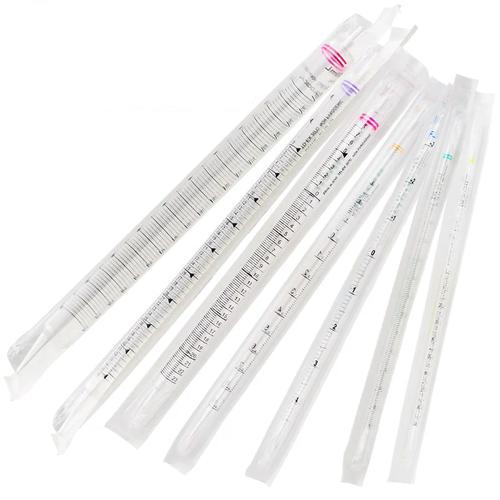
- Color-coded stripes on serological pipettes help identify them quickly
Scientists choose between these pipettes based on their research needs. Each has its own benefits in the lab.
Advantages of Serological Pipettes
Serological pipettes are key in the lab, offering great versatility and ease of use. They help researchers accurately transfer volumes. This makes them essential in many lab settings.
- Wide volume range from 1 mL to 50 mL
- Exceptional adaptability in different scientific disciplines
- Pre-sterilized and disposable design
- Fast liquid release and filling capabilities
Versatility in Applications
Scientists use serological pipettes for many tasks. They are great in fields like:
- Cell culture research
- Microbiology experiments
- Biochemical analysis
- Molecular biology investigations
Precision in liquid transfer is the cornerstone of reliable scientific research.
Ease of Use
Serological pipettes are designed to be simple and efficient. Their easy-to-use design helps avoid mistakes. This makes them good for both new and experienced lab workers.
The color-coded rings help users quickly find the right size. This makes the pipettes even more user-friendly.
Experts value the pipettes’ “To Deliver” (TD) calibration. It ensures accurate volume delivery and consistent results.
Advantages of Volumetric Pipettes
Volumetric pipettes are key tools in science labs, known for their unmatched accuracy. They are made for the most precise liquid measurements needed in research.
Scientists use these pipettes for their ability to transfer liquids with exactness. Their design is crucial in labs where small errors can greatly affect results.
High Accuracy and Precision
Volumetric pipettes are top-notch for their accuracy. They are designed to:
- Give exact volume measurements with little room for error
- Ensure consistent liquid transfer in analytical chemistry
- Support critical scientific research needing precise amounts
Capacities and Measurement Ranges
These tools come in different sizes, fitting various research needs. They have a “To Contain” (TC) mark for the exact volume when filled.
- Available in many volume ranges
- Perfect for making standard solutions
- Essential for titration processes
Volumetric pipettes are at the forefront of scientific measurement technology. They help scientists handle liquids with precision and reliability.
Limitations of Serological Pipettes
Serological pipettes are key tools in labs with their own set of challenges. They are versatile but have limits that can affect the accuracy and reliability of experiments.
The main issues with serological pipettes are measurement errors and the complexity of maintenance. Scientists need to know these to get precise results in their work.
Potential for Measurement Errors
Serological pipettes have several risks for measurement errors:
- Multiple calibration marks can cause inconsistent volume readings
- Less precise than volumetric pipettes for exact measurements
- Higher margin of human-use error compared to specialized pipetting tools
Maintenance and Cleaning Challenges
Lab professionals face big challenges with serological pipettes:
- Require thorough cleaning between different liquid transfers
- Risk of cross-contamination if not properly sanitized
- Disposable nature means frequent replacement
| Limitation Category | Specific Challenge | Impact on Experiments |
|---|---|---|
| Measurement Precision | Multiple calibration marks | Potential volume delivery variations |
| Contamination Risk | Incomplete cleaning | Compromised experimental integrity |
| Cost Efficiency | Single-use design | Increased laboratory expenses |
Understanding these limitations helps researchers choose the right serological pipettes for their lab needs.
Limitations of Volumetric Pipettes
Volumetric pipettes are key in scientific measurement but have their own challenges. They offer great precision but also have unique limitations. These can affect how labs work.
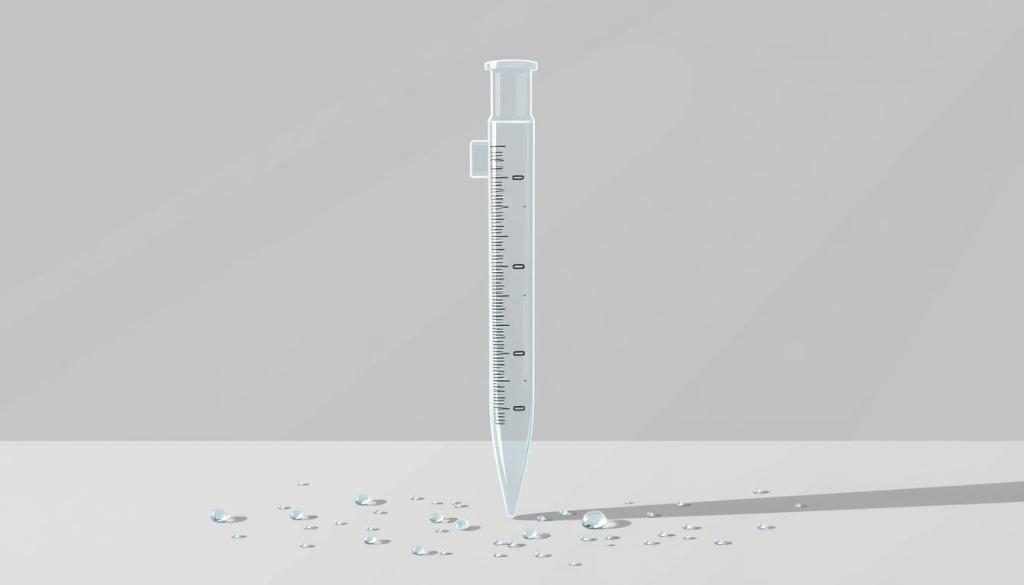
Time-Consuming Precision
Using volumetric pipettes requires a lot of care. Their single calibration point means handling them slowly. This makes liquid transfer take longer.
Scientists spend a lot of time to get accurate measurements. It’s not easy.
- Precise filling requires multiple steps
- Slow liquid delivery compared to other pipettes
- Requires specialized training to master techniques
Volume Range Restrictions
Volumetric pipettes are made for specific volumes. This limits their use. Each pipette is for one volume only. So, labs need many pipettes for different needs.
| Pipette Size | Tolerance | Typical Application |
|---|---|---|
| 0.5 mL | ±0.006 mL | Microvolume research |
| 25 mL | ±0.03 mL | Volumetric analysis |
| 50 mL | ±0.05 mL | Large volume experiments |
Lab experts must pick the right volumetric pipettes for their research. Knowing their strengths and weaknesses helps get the best results. This ensures reliable data.
Applications of Serological Pipettes
Serological pipettes are key tools in today’s labs. They help with precise liquid handling in many fields. This makes them vital for research and medical work.
Scientists use serological pipettes for many important tasks. Their design is perfect for different lab settings.
Use in Medical and Clinical Labs
In medical labs, serological pipettes have many roles:
- They help prepare and analyze blood samples.
- They aid in diagnosing diseases and screening.
- They handle diagnostic reagents.
- They prepare patient specimen dilutions.
Role in Research Settings
Research labs use serological pipettes for specific tasks:
- They are crucial for cell culture work.
- They help in microbiology experiments with samples.
- They are used in chemical analysis and solution making.
- They support molecular biology research.
Serological pipettes come in a range of volumes, from under 1 milliliter to 50 milliliters. Researchers value their flexibility and precision. They have multiple calibration marks for different needs.
Thanks to their versatility and accuracy, serological pipettes are essential in labs. They help make new discoveries and support detailed research.
Applications of Volumetric Pipettes
Volumetric pipettes are key in scientific glassware, offering precision in many fields. They are crucial in labs where exact measurements are needed.
Scientists use volumetric pipettes for their high accuracy. These tools can measure a fixed volume very precisely, often up to 4 significant figures.
Use in Educational Laboratories
Schools use volumetric pipettes to teach basic measurement skills. Students get hands-on experience with these tools, learning important skills.
- Training students in precise liquid transfer methods
- Demonstrating measurement accuracy principles
- Introducing standard scientific measurement protocols
Importance in Pharmaceutical Industries
Pharmaceutical research relies on volumetric pipettes for drug development and quality control. Their ability to measure exact volumes is crucial in scientific work.
*Precision is the hallmark of scientific excellence*
Standard volumetric pipettes come in fixed sizes like 1 ml, 10 ml, 25 ml, and 50 ml. This gives researchers options for various experiments.
Graduated pipettes are classified into Type 1, Type 2, and Type 3. This shows the detailed approach to measurement in different research areas.
Best Practices for Using Serological Pipettes
Serological pipettes are key tools in labs, crucial for handling liquids. Knowing how to use them right is vital for accurate work and keeping research reliable.
Proper Handling Techniques
Good pipetting needs focus and care. Here are some important tips:
- Hold the pipette vertically for exact liquid transfer
- Keep a steady angle when pouring liquids
- Move smoothly and in control while pipetting
- Don’t let the pipette tip touch container walls
“Precision in liquid handling begins with proper technique” – Laboratory Research Standards
Cleaning and Maintenance Tips
Keeping serological pipettes in good shape is key for their performance and to avoid contamination.
| Maintenance Practice | Frequency | Purpose |
|---|---|---|
| Rinse with the right solvent | After each use | Clear out leftover liquids |
| Autoclave glass pipettes | Weekly | Make them sterile |
| Check for damage | Before each use | Make sure they work right |
Serological pipettes are handy for moving liquids from 1 mL to 50 mL with some accuracy. By following these tips, scientists can improve their work and keep lab standards high.
Best Practices for Using Volumetric Pipettes
Precision is key in labs, and volumetric pipettes are vital for exact liquid amounts. These tools need special handling to keep experiments accurate and reliable.

Volumetric pipettes are made to give fixed volumes with high accuracy. Scientists can get up to 4 significant figures of precision with them.
Techniques for Achieving Accuracy
Here are some important steps for pipetting:
- Hold the pipette vertically for proper liquid alignment
- Use consistent hand pressure when transferring liquid
- Keep a steady temperature during measurements
- Regularly check pipette calibration
Best Cleaning Methods
Cleaning volumetric pipettes is crucial for their precision:
- Rinse pipettes right after use with the right solvents
- Clean with distilled water for a thorough job
- Let them air dry completely
- Store them upright to avoid contamination
Labs often use standard volumetric pipettes in sizes like 1 ml, 10 ml, 25 ml, and 50 ml. Proper care ensures they work well and give reliable results.
Conclusion
The world of scientific research needs precise liquid handling. Choosing the right pipette types is key to good results. Knowing the difference between serological and volumetric pipettes is important for accuracy.
Each type of pipette has its own strengths. They are designed for specific lab tasks. This makes them essential for different research needs.
Choosing the Right Pipette for Applications
Scientists must think about their needs when picking between serological and volumetric pipettes. Volumetric pipettes are great for precise volume measurements. They can measure liquids with up to 4 significant figures of accuracy.
Serological pipettes are more versatile. They are useful in many different research settings. This makes them a must-have in labs.
Summary of Key Points
Knowing the differences between pipette types helps researchers improve their lab work. Volumetric pipettes are best for precise volume measurements. Serological pipettes offer flexibility in handling liquids.
The main goal is to choose the right tool. This ensures reliable and consistent scientific results.
FAQ
What is the primary difference between serological and volumetric pipettes?
Serological pipettes have many graduations and are for rough volume transfers. Volumetric pipettes have one mark and are for exact measurements.
When should I use a serological pipette versus a volumetric pipette?
Use serological pipettes for general liquid transfers and cell culture. Choose volumetric pipettes for precise work in chemistry and pharmaceuticals.
How do the markings on these pipettes differ?
Serological pipettes have many marks for different volumes. Volumetric pipettes have one mark for exact volume, marked “To Contain” or “To Deliver”.
What are the key advantages of serological pipettes?
Serological pipettes are versatile and easy to handle. They work well for many lab tasks, including cell culture and microbiology.
What makes volumetric pipettes more accurate?
Volumetric pipettes are precise with one mark for exact volume. They are within ±0.1% of their volume, perfect for scientific work.
Are there any limitations to using serological pipettes?
Serological pipettes might have more graduation marks, leading to errors. They need careful cleaning and might not be as precise as volumetric pipettes.
How do I maintain the accuracy of my pipettes?
Calibrate and clean your pipettes regularly. Use proper technique and store them correctly to keep them accurate.
Can I use the same pipette for different types of liquids?
It’s best to use separate pipettes for different liquids to avoid contamination. Clean them well between uses and use dedicated pipettes for specific liquids.
What industries primarily use these types of pipettes?
Volumetric pipettes are used in pharmaceuticals, chemistry, and research. Serological pipettes are used in medical research, cell biology, and diagnostics.
How do I choose the right pipette for my laboratory work?
Think about the accuracy, volume, and type of liquid you need. Talk to colleagues and choose pipettes that fit your lab needs.




Leave a Comment
Your email address will not be published. Required fields are marked *