


Ever wondered what makes some lab work truly groundbreaking? It’s the use of sterile glass serological pipettes.
Borosilicate glass pipettes are the top choice for scientists. They offer unmatched accuracy and reliability. These tools help researchers move precise amounts of liquid, from 0.1mL to 25mL, with great consistency.
Sterile glass serological pipettes are more than just tools. They are key to keeping scientific experiments reliable. Their design supports precise liquid handling, making them vital in many research areas.
Key Takeaways
- Sterile glass serological pipettes provide exceptional precision in liquid transfer
- Borosilicate glass offers superior chemical resistance and durability
- Pipettes are calibrated to strict ASTM standards for consistent performance
- Available in multiple sizes to accommodate diverse research needs
- Essential for maintaining experimental accuracy and reproducibility
Introduction to Sterile Glass Serological Pipettes
Scientific research needs precision, and serological transfer pipettes are key. They help researchers handle liquids accurately. This is crucial for keeping experiments reliable in many fields.
Sterile pipette tips are vital for top-notch research. They stop contamination and help transfer liquids safely. This makes them essential in today’s science.
Understanding the Role of Pipettes in Research
Pipettes are precise tools for scientists. They help with important tasks like:
- Transferring exact liquid amounts
- Mixing cell suspensions
- Creating density gradients
- Preparing samples
Scientists use serological transfer pipettes for liquids from 1 mL to 50 mL. This makes them useful in many scientific tasks.
Importance of Sterile Equipment in Laboratory Settings
Keeping things sterile is crucial in labs. Any contamination can ruin years of work. Sterile glass serological pipettes solve this problem by offering:
- Reusable sterilization
- High chemical resistance
- Precise volume measurements
- Consistent results
These pipettes have graduated markings. This helps researchers measure volumes accurately. It ensures their work is reliable and can be repeated.
Types of Sterile Glass Serological Pipettes
Sterile glass serological pipettes are key in lab research. They help move liquids with great precision. Knowing the types and uses of these tools is vital for accurate pipetting.
- Serological pipettes for liquid transfers between 1 mL to 50 mL
- Open-end pipettes in 1 mL, 2 mL, 5 mL, and 10 mL sizes
- Bacteriological pipettes specialized for microbial research
Standard Sizes and Their Applications
Choosing the right pipette is important. Serological pipettes come in various sizes for different needs:
- 1-2 mL pipettes: Perfect for precise microvolume transfers
- 5-10 mL pipettes: Good for moderate liquid volumes
- 25-50 mL pipettes: Made for larger volume experiments
Specialty Pipettes for Specific Research Needs
Some pipettes are made for special research challenges. Bacteriological pipettes, for example, are made to handle substances with bacteria. They meet American Public Health Association standards and are great for dairy product research.
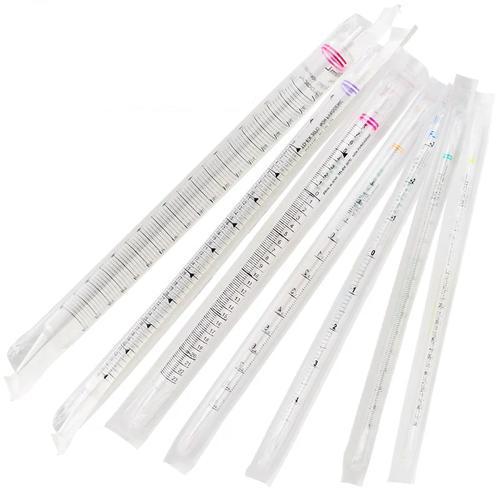
Open-end pipettes have special features like fiber filter plugs. These reduce contamination from foreign particles. They work well with thick liquids and release quickly. Each pipette is wrapped and sterilized by gamma irradiation, ensuring safety and sterility for lab work.
Advantages of Sterile Glass Over Plastic Pipettes
Scientific research needs precision and reliability in every measurement. Sterile glass serological pipettes are a top choice for labs. They offer unmatched performance in handling liquids.
Glass pipettes have big advantages over disposable ones. Their borosilicate glass construction is special. It benefits researchers in many scientific fields.
Enhanced Accuracy and Precision
Volumetric pipettes made of high-quality glass are very accurate. They have several key benefits:
- They deliver consistent volume with little variation
- They meet high calibration standards
- They have less interaction with liquid surface tension
- They stay stable in temperature during experiments
Chemical Resistance and Durability
Sterile glass pipettes are very resistant to chemicals. The ASTM E438 borosilicate glass offers:
- Great resistance to harsh chemicals
- Little material degradation
- Long-lasting structure
- Prevents cross-contamination
Researchers can count on glass serological pipettes for consistent, reproducible results. This is true across many different experimental conditions.
| Property | Glass Pipettes | Plastic Pipettes |
|---|---|---|
| Chemical Resistance | Excellent | Limited |
| Durability | High | Low |
| Measurement Precision | Superior | Moderate |
| Reusability | Yes | No |
By picking sterile glass serological pipettes, labs invest in reliable, top-notch scientific tools. These tools support strict research standards.
Applications of Sterile Glass Serological Pipettes in Laboratories
Sterile glass serological pipettes are key in today’s labs. They offer precision and reliability in many fields. These tools help keep experiments accurate and samples safe.
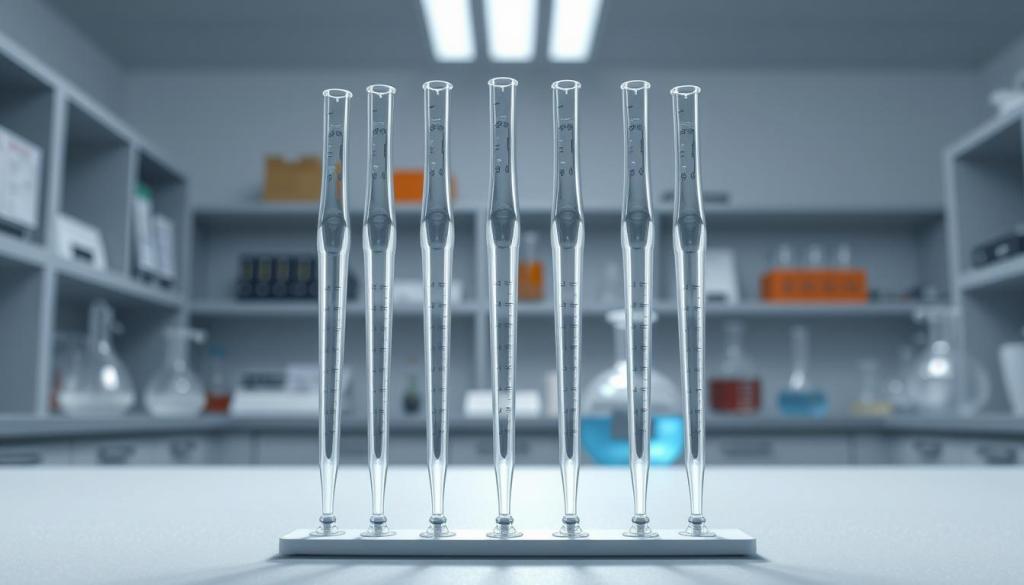
Scientists use precision pipettes for many important tasks. They make sure labs run smoothly and safely. These tools help with very precise work.
Cell Culture Studies
In cell culture, these pipettes are vital. They help in several ways:
- Evenly distributing cells in solutions
- Transferring entire cell colonies
- Creating precise density gradients
- Ensuring sterile media exchange
Sample Preparation in Analytical Procedures
Keeping pipettes in good shape is key for accurate results. They are great for preparing samples:
- Preparing liquid cultures
- Inoculating microbial samples
- Mixing chemical solutions
- Transferring precise liquid volumes
| Pipette Type | Volume Range | Primary Use |
|---|---|---|
| 5 ml Serological Pipette | 1-5 ml | Microbiology samples |
| 10 ml Serological Pipette | 1-10 ml | Cell culture media |
| 25 ml Serological Pipette | 1-25 ml | Large volume transfers |
Choosing the right pipette and handling it well boosts research quality. This makes experiments more reliable and accurate.
Standards and Regulations for Sterile Glass Pipettes
Laboratory research needs precision and reliability. This is especially true for sterile glass serological pipettes. Strict standards and regulations make sure these tools are of the highest quality for scientific studies.
Scientific integrity relies on consistent and accurate measurements. Pipette calibration is key to keeping research quality high across different fields.
Navigating FDA Guidelines for Sterile Pipettes
The Food and Drug Administration sets detailed guidelines. These ensure laboratory equipment works well and is safe. The focus is on several important areas:
- Dimensional accuracy of sterile glass serological pipettes
- Material composition and purity
- Manufacturing quality control processes
- Traceability of production standards
ISO Certification: Ensuring Global Research Standards
International Organization for Standardization (ISO) certification is a global standard for lab equipment. Pipette calibration under ISO ensures:
- Consistent measurement precision
- Reproducibility of scientific results
- Compliance with international research protocols
- Validation of experimental methodologies
Researchers count on these strict standards. They help keep scientific accuracy and credibility at the highest levels in their work.
Best Practices for Using Sterile Glass Pipettes
Accurate pipetting is key in lab research. It needs precision, detail, and the right technique. Knowing how to handle sterile glass pipettes is crucial for keeping experiments reliable and error-free.
Good pipette care can cut down on mistakes. Labs with solid training see a 40% drop in errors.
Essential Handling Techniques
- Use gentle, consistent pressure when aspirating liquids
- Avoid touching the pipette tip to prevent contamination
- Maintain vertical positioning during liquid transfer
- Select appropriate pipette size for specific volume ranges
Maintenance and Storage Recommendations
Keeping pipettes in good shape is vital for their accuracy. Glass serological pipettes need careful handling and storage to stay precise.
- Clean pipettes immediately after use
- Store in vertical position to prevent damage
- Sterilize using approved methods like autoclaving
- Inspect for chips or cracks before each use
Lab experts know that accurate pipetting is more than just technique. It’s also about pipette maintenance. Taking good care of pipettes can cut contamination by 50% and make research equipment last longer.
Comparing Sterile Glass and Disposable Plastic Pipettes
Laboratory researchers have to make important choices when picking pipettes for their work. Borosilicate glass pipettes and disposable pipettes each have their own benefits. These benefits affect research results, the environment, and how well a lab works in the long run.
Choosing between sterile glass and disposable pipettes involves several key factors. Researchers need to think about:
- Performance characteristics
- Environmental impact
- Cost-effectiveness
- Laboratory workflow requirements
Environmental Considerations
Disposable pipettes have both good and bad sides for the environment. While they add to waste, new recycling programs are finding ways to handle lab plastics better.
- Borosilicate glass pipettes are great for reusing
- Plastic disposable pipettes can be recycled
- Glass pipettes help cut down on plastic waste
Cost-Effectiveness in Long-Term Use
Researchers need to think about the total cost of owning pipettes. Disposable pipettes might seem cheaper at first, but glass pipettes are more valuable over time because they last longer.
Important things to consider include how well they can be sterilized, their resistance to chemicals, and how often they need to be replaced. Glass pipettes can handle many sterilization cycles, making them more useful than disposable ones.
- Glass pipettes support multiple sterilization processes
- Disposable pipettes eliminate cleaning needs
- Reusable options save money in the long run
Knowing these differences helps labs make better choices. These choices should match their research needs, budget, and goals for being green.
Environmental Impact of Sterile Glass Pipettes
Laboratory research is now more focused on being green. Sterile glass serological pipettes are a key part of this shift. They cut down on plastic waste a lot, compared to throwaway options.
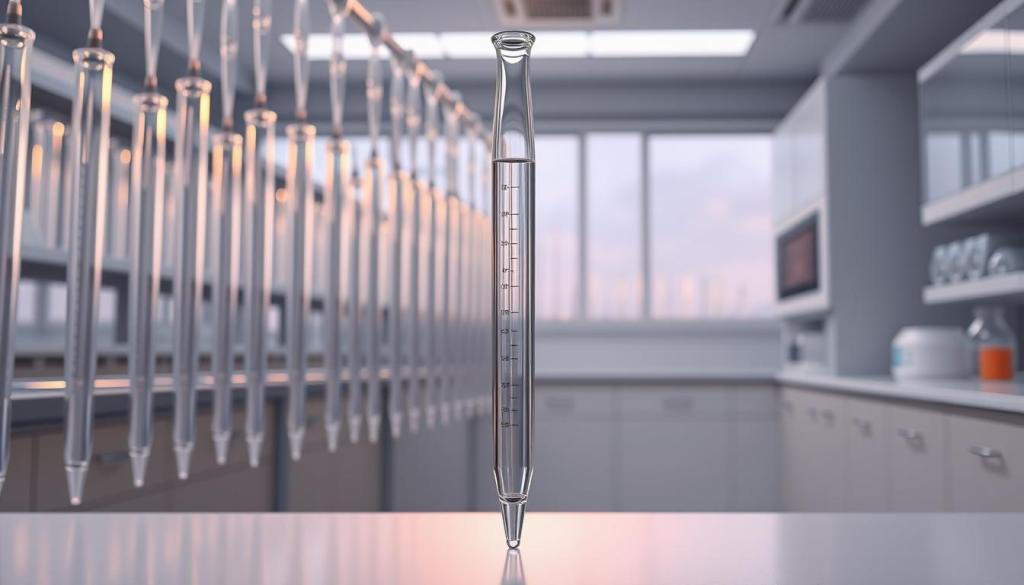
Using glass pipettes over and over again is really good for the planet. Studies show that life sciences throw away about 5.5 million tons of plastic each year. This is a big chunk of global plastic waste. Glass pipettes are a greener choice for labs.
Benefits of Reusable Glass Solutions
There are many good things about using glass pipettes again and again:
- They make a lot less plastic waste
- They’re better for the environment than single-use plastics
- They can be sterilized many times
- They don’t harm the environment much
Recycling Programs and Their Importance
It’s key to have good recycling for glass pipettes to lessen lab waste. Right now, only 9% of plastic waste is recycled. This shows how important it is to be green in labs.
Sustainable research starts with choosing the right equipment.
Labs can help the planet by starting recycling programs for glass pipettes. This reduces waste and supports eco-friendly science.
Sterilization Techniques for Glass Pipettes
Keeping pipette tips clean is key for precise work and honest research. Lab experts use many ways to keep tools safe from germs and dangers.
There are many good ways to clean glass pipettes. Each method works best for different lab needs.
Primary Sterilization Approaches
These methods kill all germs and spores, keeping results safe. The top methods are:
- Autoclaving
- Chemical disinfection
- Ultraviolet radiation
- Dry heat sterilization
Autoclaving: The Gold Standard
Autoclaving is the best way to clean glass pipettes. It uses:
- High-temperature steam
- 121°C for 20 minutes
- Guarantees no germs left
This method makes sure accurate pipetting by removing harmful germs.
Alternative Sterilization Methods
If autoclaving can’t be used, other methods are available:
- UV radiation: Good for cleaning surfaces
- Chemical treatments: Like hydrogen peroxide or ethanol
- Dry heat sterilization: For items that can handle heat
Choosing the right method depends on the research and the pipettes’ material. The right technique keeps sterile pipette tips and upholds lab standards.
How to Choose the Right Sterile Glass Pipette
Choosing the right sterile glass pipette is key for lab professionals. The right choice can greatly affect the accuracy of experiments and research results. It’s important to look at several factors to get the best performance from pipettes.
Choosing the right sterile glass serological pipette needs a careful plan. Scientists must think about several important things to meet their specific needs.
Critical Factors for Pipette Selection
- Liquid volume range requirements
- Chemical compatibility
- Experimental sensitivity
- Sterilization needs
- Potential reuse considerations
Volume Considerations for Precision Pipettes
The volume of liquid is very important when choosing a pipette. Choosing the right size pipette for the volume needed helps avoid errors. Using a pipette that’s too big for small volumes can lead to less accurate results.
| Pipette Size | Recommended Volume Range | Best Suited For |
|---|---|---|
| 1 mL | 0.1 – 1 mL | Microvolume transfers |
| 5 mL | 1 – 5 mL | Standard laboratory procedures |
| 10 mL | 5 – 10 mL | Cell culture preparations |
| 25 mL | 10 – 25 mL | Large volume experiments |
“Precision in liquid handling begins with selecting the right pipette for your specific experimental needs.” – Laboratory Research Guidelines
Knowing the specific needs of different research projects helps scientists make better choices. By carefully considering these needs, scientists can get reliable and consistent results.
Innovations in Serological Pipette Technology
The world of scientific research is changing fast. New advancements in serological transfer pipettes are making labs better. These changes bring more precision, safety, and performance to experiments.
New pipette tech is changing lab work. Makers have added cool features that boost research power:
- Innovative 2-tier step design at the plug end
- Enhanced accuracy with ±2% precision at full volume
- Maximum stability to reduce dripping and contamination risks
- Advanced sterile and non-pyrogenic characteristics
Advancements in Manufacturing Process
Today’s serological transfer pipettes use advanced computer-controlled lines. These lines make sure every pipette is the same. They ensure accuracy in research.
Emerging Features to Enhance Lab Safety
Safety is key in labs. New pipettes have important safety upgrades:
- Synthetic fibrous filter materials prevent liquid overflow
- Color-coded systems for easy size identification
- Enhanced ergonomic designs to reduce user strain
- Compatibility with multiple pipette controllers
These new features show a big push to make research tools better. Serological transfer pipettes are now safer, more reliable, and efficient.
Conclusion: The Future of Sterile Glass Serological Pipettes in Research
Scientific research is moving fast, with sterile glass serological pipettes being key. They help in many fields, like biotechnology and personalized medicine. Here, small details matter a lot.
The pharmaceutical industry is spending big on research, aiming to spend over $250 billion soon. These pipettes are leading the way, offering top precision and reliability. The COVID-19 pandemic showed how vital they are for testing and research.
Key Takeaways for Laboratory Professionals
Laboratory experts need to keep up with research changes. There’s a shift towards green and new pipetting methods. Sterile glass serological pipettes are still top-notch, used in many studies. They ensure research is done right and accurately.
The Role of Innovation in Research Advancements
The future of these pipettes is bright, thanks to new ideas. We’ll see more automated and advanced tools soon. These will make research even more precise and easy, while being kind to the environment. The drive to improve these tools will take science to new levels.
FAQ
What are sterile glass serological pipettes?
Sterile glass serological pipettes are precise tools for moving and measuring liquids in labs. They’re made from top-quality borosilicate glass. This ensures they stay clean and accurate for cell culture, microbiology, and more.
Why are glass pipettes preferred over plastic pipettes?
Glass pipettes are better because they resist chemicals well, last longer, and are more accurate. They don’t react with chemicals, can handle high sterilization temperatures, and give consistent measurements.
How do I choose the right serological pipette for my experiment?
Pick the right pipette based on the liquid volume, needed precision, and your research. Look at the pipette’s size, how well it’s calibrated, and if it works with your liquids for the best results.
What sterilization methods are recommended for glass pipettes?
Autoclaving is the top choice for sterilizing glass pipettes. It uses steam under pressure to kill all germs. Dry heat and chemical sterilants are options too, but autoclaving is the most reliable.
How can I maintain the accuracy of my glass serological pipettes?
Keep them accurate by calibrating them often, handling them carefully, and storing them right. Clean them after each use, keep them away from dust, and avoid extreme temperatures or harsh chemicals.
Are glass serological pipettes environmentally friendly?
Yes, glass pipettes are better for the planet than plastic ones. They can be used many times, cut down on waste, and are often recyclable. Many labs choose glass to help the environment.
What standards regulate sterile glass serological pipettes?
FDA rules and ISO certifications set the standards for these pipettes. These ensure they’re safe, reliable, and work well in labs and clinics. This gives researchers confidence in their tools.
Can glass serological pipettes be used in different scientific disciplines?
Absolutely. They’re key in many fields like cell biology, microbiology, and chemistry. Their precision and sterility make them vital for many experiments.
What innovations are emerging in serological pipette technology?
New advancements include better manufacturing, ergonomic designs, precise calibration, and stronger materials. These aim to make labs more efficient and research more accurate.




Leave a Comment
Your email address will not be published. Required fields are marked *