



Ever thought about how scientists get such precise results in their work? The serological pipette is a key player in labs, making measuring liquids super accurate.
Serological pipettes are vital in science, helping researchers move liquids with great care. They handle volumes from 1 mL to 50 mL. These tools are used in many fields, like molecular biology and cell culture.
Lab experts use serological pipettes for exact measurements. They’re crucial for keeping experiments reliable. These tools help in working with delicate cells and complex tests, leading to new discoveries.
Key Takeaways
- Serological pipettes handle liquid volumes between 1 mL and 50 mL with exceptional precision
- Available in both glass and plastic materials, each with unique advantages
- Critical for maintaining sterility in sensitive scientific workflows
- Essential for achieving consistent and reproducible experimental results
- Used across multiple scientific disciplines for accurate liquid transfer
Understanding the Serological Pipette
Serological pipettes are key tools in scientific labs. They help researchers move liquids with great accuracy. This is important in many fields of science.
These pipettes are great for handling liquids from 0.1 milliliters to 50 milliliters. They are used in many areas, like:
- Cell culture research
- Molecular biology experiments
- Microbial studies
- Sample dilution procedures
- Reagent preparation
Definition and Core Purpose
Serological pipettes are made for precise liquid transfers. Their graduated markings help scientists measure and pour exact amounts. This ensures reliable results in their work.
Key Features and Functionality
These tools have special features that make them better for handling liquids:
| Feature | Benefit |
|---|---|
| Graduated Markings | Enables precise volume measurement |
| Compatible with Controllers | Improves workflow efficiency |
| Volume Range | 1-50 mL for diverse applications |
| Material Options | Glass and plastic variations available |
Researchers can pick between manual pumps and advanced controllers for their work. The choice depends on what they need for their experiments.
Types of Serological Pipettes
Researchers use different pipettes for precise liquid handling in labs. Knowing the types helps scientists pick the best tool for their needs.
Glass vs. Plastic Pipettes: Material Considerations
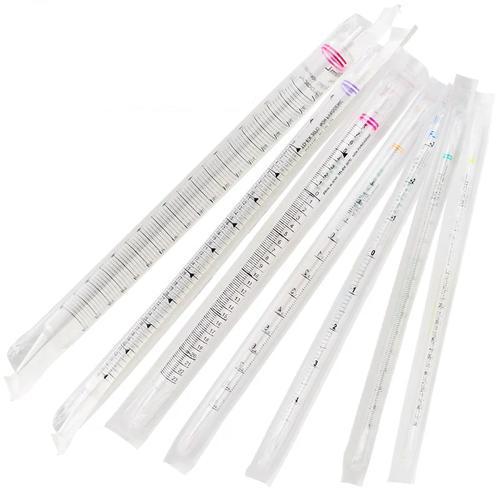
Serological pipettes are mainly made of glass or plastic:
- Glass Pipettes:
- Can be reused after sterilization
- Can be autoclaved many times
- Very durable
- Plastic Pipettes:
- Designed to be thrown away
- Made from high-quality polystyrene
- Ready to use right away
- Light and affordable
Single-Channel vs. Multi-Channel Pipettes
Pipettes differ in how many channels they have, offering flexibility:
- Single-Channel Pipettes:
- Handle volumes from 1 mL to 50 mL
- Great for precise handling of one sample at a time
- Perfect for experiments that don’t need to be done quickly
- Multi-Channel Pipettes:
- Can handle many samples at once
- Save time in fast screening tests
- Often used in microbiology and cell culture
Choosing the right pipette depends on the research, sample size, and how complex the experiment is.
Importance of Accuracy in Measurements
Precision is key in scientific research, especially with lab equipment. Serological pipettes are crucial for keeping measurements accurate. This accuracy greatly affects the results of experiments.

In the world of precision tools, small mistakes can cause big changes in research findings. Here are some important points to consider:
- A pipetting error of just 5% can lead to a 2 ng difference in DNA template.
- It’s recommended to aim for measurements within ±1% for accuracy.
- It’s wise to check the accuracy of pipettes used often every three months.
Role of Serological Pipettes in Precision
Serological pipettes are made to perform well under Good Laboratory Practices (GLP). They are built for reliable volume delivery. Most makers promise an accuracy of +/-3% at full volume for 1 and 2 mL pipettes. For bigger sizes, the accuracy is +/-2%.
Impact of Errors on Experimental Outcomes
Small mistakes in measurements can cause big problems in research. Environmental factors like temperature and humidity can affect pipetting accuracy. Researchers need to watch out for:
- How well they pipette by hand
- If the equipment is calibrated
- The type of liquid and its thickness
- The conditions of the lab
Knowing these possible error sources helps scientists keep their experiments precise and reliable.
Calibration of Serological Pipettes
Precision instruments are key in lab research. Serological pipettes need careful calibration for exact results. Good Laboratory Practices (GLP) require regular checks to keep results reliable.
Calibration methods are vital for precise scientific measurements. Labs must use systematic methods to check pipette performance and reliability.
Importance of Regular Calibration
Regular checks are essential for precise measurements. Experts suggest these calibration frequencies:
- Daily-use pipettes: Checked every three months
- Less frequently used pipettes: Checked annually
- Critical research instruments: More frequent verification
Methods for Calibration
Scientists use various calibration techniques for pipette accuracy:
- Water Weighing Technique: Precise water displacement measurement
- Volume Displacement Check: Exact liquid delivery verification
- Colorimetric Method: Volume verification with color indicators
A certificate from the National Institute of Standards and Technology (NIST) adds validation for Class A pipettes. It’s important to have smooth and uniform pipette walls to avoid liquid delivery variations.
Accurate calibration is the cornerstone of reliable scientific research.
Best Practices for Using Serological Pipettes
Learning how to use pipettes well is key for lab workers. They need to follow Good Laboratory Practices (GLP) closely. This is to make sure their work is accurate and can be repeated.
- Maintain consistent and smooth aspiration and dispensing motions
- Avoid touching pipette tips with bare hands
- Use disposable tips for each measurement
- Clean pipettes after each use
Cleaning and Maintenance Protocols
Cleaning regularly stops contamination and keeps measurements precise. Labs should have a cleaning plan that includes:
- Wiping external surfaces with 70% alcohol
- Checking for visible damage or wear
- Storing pipettes vertically in designated racks
- Calibrating equipment annually
Proper Handling Techniques
Good pipetting needs the right technique and care for your body. Workers should:
- Maintain proper wrist and arm positioning
- Use gentle, consistent pressure
- Select appropriate pipette volume ranges
- Prevent repetitive strain injuries
| Pipette Type | Volume Range | Recommended Use |
|---|---|---|
| P2 | 0.2-2 μl | Microvolume precision work |
| P10 | 1-10 μl | Small molecular biology samples |
| P200 | 20-200 μl | Standard laboratory applications |
| P1000 | 200-1000 μl | Larger volume transfers |
Following these best practices helps get reliable results. It also keeps your lab equipment in good shape.
Choosing the Right Serological Pipette
Choosing the right serological pipette is key for good lab research. The right lab tools are crucial for precise experiments, especially in measuring volumes and types of pipettes. Researchers need to think about many factors to get the best results in their work.
When picking a serological pipette, scientists should look at a few important things:
- Volume range needs
- Material that works well
- What the experiment needs
- How to sterilize it
- What kind of research it’s for
Critical Factors in Pipette Selection
Different fields need different pipettes. Cell culture experts want pipettes that don’t spread germs. Microbiologists need pipettes that handle liquids very carefully to get the same results every time.
Common Laboratory Applications
Serological pipettes are great for many types of research:
- Getting samples ready in molecular biology
- Transferring media in cell culture
- Doing chemical titrations
- Diluting samples
- Handling sterile liquids
Knowing what your research needs helps pick the best serological pipette. Thinking about volume, material, and how you’ll use it helps get accurate and reliable results.
Serological Pipette Capacity and Usage
Getting the right volume is key in science. Serological pipettes are vital for handling liquids in labs. They help scientists move precise amounts of liquid.
Scientists use pipettes in many sizes to fit their needs. They range from 1 mL to 50 mL. This lets researchers work with various sample sizes accurately.
Volume Ranges and Precision
Knowing the volume ranges is crucial for pipetting. Studies show serological pipettes are very precise:
- 1 mL pipettes: Ideal for microscale experiments
- 5-10 mL pipettes: Perfect for intermediate volume transfers
- 25-50 mL pipettes: Suitable for larger volume applications
Most pipettes are accurate to ±1% to ±2% of the total volume. This is vital for keeping experiments reliable.
Selecting the Proper Volume for Experiments
Choosing the right pipette volume is important. Consider:
- Sample size and concentration
- Experimental protocol requirements
- Desired precision level
- Potential contamination risks
Experts say to pick a pipette volume that matches your sample size. This boosts accuracy and cuts down on errors in handling liquids.
Choosing the right volume can cut measurement errors by up to 30%. It also makes experiments more reliable.
Safety Considerations with Serological Pipettes
Laboratory equipment safety is key to Good Laboratory Practices (GLP). Serological pipettes are vital for keeping research safe and protecting staff from dangers.
Scientists face many safety challenges with pipettes. The risk of ergonomic injuries is high. Studies show:
- Many pipette users get hand pain or numbness.
- Pipetting for over an hour a day raises injury risk.
- Uncomfortable work positions can cause long-term health problems.
Ensuring User Safety
To prevent injuries, a detailed approach to managing lab equipment is needed. Strategies include:
- Micro-breaks every 20-30 minutes.
- Using ergonomic pipette designs.
- Proper hand positioning techniques.
Handling Hazardous Materials
When dealing with dangerous substances, labs must focus on safety. Personal protective equipment is crucial, including:
- Chemical-resistant gloves.
- Safety goggles.
- Lab coats.
Serological pipettes tested for DNase/RNase contamination add safety. They help keep experiments safe and reduce cross-contamination risks.
Innovations in Serological Pipette Design
The world of lab tools is always changing. Serological pipettes, key in research, have seen big updates. Today’s scientists need tools that are accurate, efficient, and easy to use.

New tech in pipettes has changed how scientists handle liquids. Now, they have tools with smart features. These help make experiments smoother and cut down on mistakes.
Technological Breakthroughs in Design
Recent updates in serological pipettes have focused on a few main areas:
- Improved digital accuracy
- Ergonomic handles
- New materials
- Electronic calibration systems
User-Friendly Features Transforming Laboratory Work
Today’s pipettes are designed with the user in mind. They have intelligent design for better comfort and precision. The main upgrades are:
- Color-coded volume markers
- Light materials
- Easy-to-use digital interfaces
- Systems that catch and fix errors
These changes mark a big step in lab equipment design. They help scientists get better results and be more reliable in their work.
Comparisons with Other Liquid Handling Tools
In the lab, scientists use many tools for precise volume measurement. Serological pipettes are key for researchers in various fields.
Different pipettes have unique benefits in handling liquids. Knowing the differences between serological pipettes and others can greatly improve research accuracy.
Serological Pipette vs. Micro Pipette
Looking at volume, serological and micropipettes differ:
- Serological pipettes handle larger volumes (1 mL to 50 mL)
- Micropipettes are for smaller volumes (less than 1 mL)
- Accuracy depends on the volume needed
Advantages Over Other Liquid Handling Solutions
Serological pipettes have big advantages in labs:
- They offer precise measurements with graduated markings
- They work well in many research areas
- They match up with pipette controllers for better accuracy
Researchers in cell culture, microbiology, and biochemistry often pick serological pipettes. They’re reliable for adding media, diluting samples, and mixing reagents. Their ability to handle volumes from 0.1 to tens of milliliters makes them crucial in today’s labs.
Future Trends in Serological Pipette Development
The world of laboratory equipment is changing fast, with serological pipettes leading the way. These precision tools are getting smarter, thanks to the needs of science and medicine. The market for these pipettes is growing, from USD 0.25 billion in 2023 to USD 0.38 billion by 2032. This means we can look forward to new ways of handling liquids in labs.
Emerging Technologies in Liquid Handling
Automation is changing the game for serological pipettes. Big names like Thermo Fisher Scientific and Corning are using AI to make them more accurate. This trend is big in fields like tissue culture and bacterial research.
North America is a big player in this market, with 35% of the share. This means we can expect new tech to make lab work easier.
Addressing Research Challenges
The next step for serological pipettes is to solve current problems. We’ll see better precision, designs that are easier on the hands, and more automation. The push for better research, with over $42 billion spent in 2020, is driving this progress.
As scientists keep exploring, serological pipettes will be key. The mix of AI, advanced tools, and new designs will change how labs work. It’s an exciting time for liquid handling and accuracy in experiments.
FAQ
What is a serological pipette and how is it different from other pipettes?
A serological pipette is a special tool for precise liquid handling. It has graduated markings and allows for different dispensing methods. It’s used in research to move large amounts of liquid accurately.
What materials are serological pipettes typically made from?
They are made from plastic or glass. Plastic ones are for one-time use, while glass ones can be reused and sterilized.
How do I choose the correct serological pipette volume?
Choosing the right pipette size depends on your experiment needs. Pick one where the volume you need is in the middle 50-90% of the pipette. This ensures accuracy and avoids errors.
What are the key factors in maintaining serological pipette accuracy?
To keep pipettes accurate, calibrate them regularly and store them properly. Clean them consistently and handle them with care. Following these steps and using the right tips are key.
How often should serological pipettes be calibrated?
Calibrate them once a year or after 10,000 uses, whichever comes first. But, the exact timing depends on how often you use them and the manufacturer’s advice.
What safety precautions should be taken when using serological pipettes?
Wear protective gear like lab coats and gloves. Work in a well-ventilated area and use sterile techniques. Avoid mouth pipetting and handle dangerous materials carefully.
Can serological pipettes be used for automated liquid handling?
Yes, many modern pipettes are designed for automation. They fit with robotic systems, making research faster and reducing errors.
What is the difference between single-channel and multi-channel serological pipettes?
Single-channel pipettes handle one sample at a time. Multi-channel ones can handle many samples at once, speeding up tasks like PCR and cell culture.
How do environmental conditions affect serological pipette performance?
Temperature, humidity, and air pressure can affect accuracy. Use pipettes in stable conditions and let them adjust to room temperature before use.
What emerging technologies are improving serological pipette design?
New designs focus on comfort and precision. They include digital calibration, better tips, and integration with data platforms. These advancements ensure accurate and reproducible results.




Leave a Comment
Your email address will not be published. Required fields are marked *