



Ever wondered why some food stays fresh while others spoil quickly in the freezer? The answer is simple: the right freezer storage containers make all the difference.
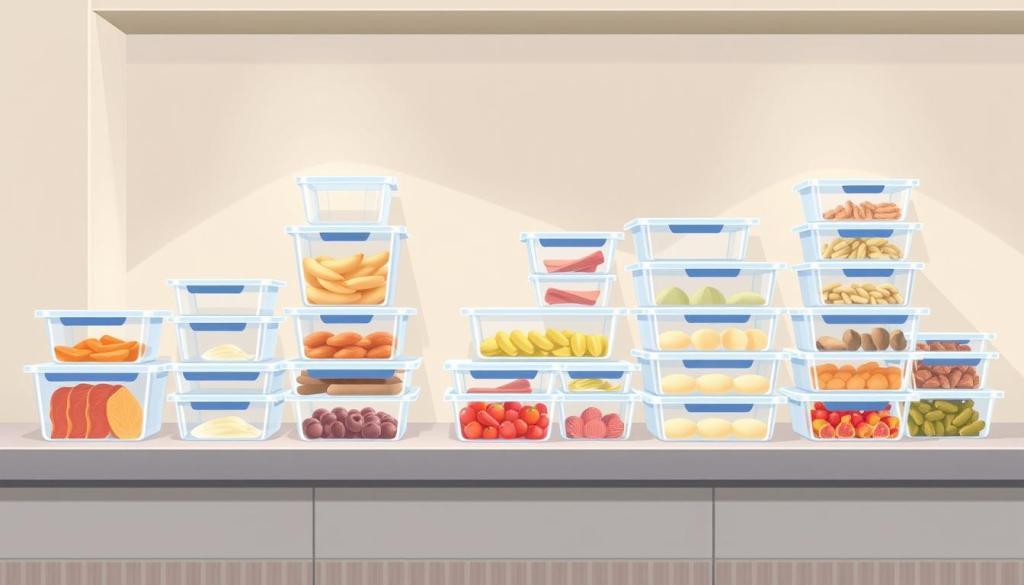
Freezer storage boxes are key to keeping food fresh and organized. They prevent freezer burn, cut down on waste, and make ingredients easy to find. Both professional kitchens and home cooks know how important these containers are for keeping meals fresh.
Today, you can find freezer storage containers made from glass, plastic, and silicone. Brands like Rubbermaid, Pyrex, and Stasher offer solutions for every need. Choosing the right container can greatly improve food preservation and make your kitchen more efficient.
Key Takeaways
- Proper freezer storage prevents food waste
- Different materials offer unique preservation benefits
- Size and seal quality are crucial for food protection
- Invest in containers that resist temperature changes
- Organized freezer storage saves time and money
Importance of Proper Freezer Storage
Storing items in the freezer right is key for keeping them safe and good to eat. Scientists and food handlers use airtight freezer boxes to keep their samples safe. These boxes help keep the quality of important materials intact.
Storing things in the freezer is more than just keeping them cold. It’s about using smart ways to keep samples safe and working well in labs. Freezer-safe boxes help manage samples better.
Preserving Sample Quality
Keeping samples in top shape needs careful storage. Airtight freezer boxes act as a shield against:
- Moisture contamination
- Freezer burn
- Potential degradation
- Cross-contamination between samples
Minimizing Contamination Risk
Contamination can ruin important research and mess up results. Freezer-safe boxes protect by:
- Creating sealed environments
- Blocking external particulates
- Preventing microbial growth
- Maintaining sample purity
Enhancing Laboratory Efficiency
Good storage makes labs run smoother. Special freezer boxes help researchers:
- Find samples fast
- Use freezer space better
- Save time looking for things
- Keep track of inventory easily
Choosing top-notch freezer storage can make labs better at keeping samples safe and research flowing.
Types of Freezer Storage Boxes
Biological labs need special storage to keep samples safe. Choosing the right plastic freezer bins and heavy-duty freezer containers is key. This helps keep research materials in top shape.
Material Considerations: Plastic vs. Glass
Biological samples can be stored in two main ways:
- Plastic Containers: They’re light, affordable, and handle temperature changes well
- Glass Containers: They’re great for keeping chemicals out and are clear
Size and Shape Variations
There are many sizes to fit different sample needs. Here are some common ones:
- Small 1-2 ml vial containers
- Medium multi-well plate storage
- Large batch sample boxes
Specialty Boxes for Biological Samples
Now, there are advanced freezer containers for specific research needs. They include cryogenic-compatible plastic bins with color-coded systems. This makes tracking and organizing samples easier.
| Container Type | Capacity | Temperature Range |
|---|---|---|
| Cryogenic Vial Rack | 81 Vials | -80°C to -196°C |
| Tissue Culture Plate Box | 4-6 Plates | -20°C to -80°C |
Choosing the Right Freezer Storage Box
Choosing the right freezer storage is important. BPA-free containers help keep samples safe and prevent contamination. Both researchers and home cooks need to think about their storage needs carefully.

- What you’re storing
- How much you need to store
- How durable the container is
- If it can keep things from leaking
Considerations for Sample Type
Materials matter for different storage needs. Rigid containers made of plastic or glass are great for liquids and delicate items. For example, OXO containers are versatile and have a 4-cup capacity.
Evaluating Storage Capacity
Stackable containers save space. Rubbermaid Brilliance containers are a good example. They have a 3.2-cup capacity and are compact. Think about what you need when picking sizes.
Importance of Leak-Proof Designs
Keeping things from getting mixed up is key. Look for containers with tight covers or use freezer tape. It’s also good to remove air from bags and keep the freezer at 0° Fahrenheit for best results.
Pro tip: Choose containers that are dishwasher safe and can handle extreme temperatures for maximum use.
Best Practices for Freezing Biological Samples
Keeping biological samples safe needs careful planning and the right freezer space. Researchers must stick to detailed steps to keep samples good for a long time in deep freezers.
Cryopreservation is all about paying attention to many important details. Scientists need to know how to keep cells safe and prevent damage.
Preparing Samples for Freezing
Getting samples ready for freezing involves a few important steps:
- Determine optimal cell concentration (1×10³ to 1×10⁶ cells/mL)
- Select appropriate freezing media
- Use controlled-rate cooling at approximately -1°C per minute
- Implement precise aliquoting techniques
Labeling and Documentation
Good documentation is key for tracking samples. Researchers should make clear, lasting labels with:
- Sample type
- Collection date
- Preservation method
- Storage location
Preventing Freezer Burn and Ice Crystal Formation
To keep samples safe, researchers use special techniques to avoid ice crystals:
| Technique | Benefit |
|---|---|
| Controlled-rate freezing | Reduces cellular damage |
| Cryoprotectant use | Prevents ice crystal formation |
| Rapid thawing | Minimizes solute exposure |
Advanced space-saving freezer organizers are key for keeping the right temperature and protecting sensitive biological samples for a long time.
Organizing the Freezer Space
Keeping your freezer organized is key to using space well and keeping samples safe. Stackable freezer organizers help a lot. They make your storage space more efficient and easier to use.
Lab workers can make their freezers better by using smart storage solutions. The right setup can turn a messy freezer into a neat place to store things.
Categorizing Sample Groups
Starting with good organization is important. Here are some tips:
- Put samples in groups by type or project
- Use colored containers for easy spotting
- Make a diagram of what’s in the freezer
Implementing Efficient Stacking Techniques
Stackable freezer organizers are great for saving space:
| Stacking Strategy | Space Saved | Benefits |
|---|---|---|
| Vertical Stacking | Up to 50% | Increases storage capacity |
| Nested Containers | 40-45% | Reduces unused space |
| Uniform Container Sizes | 35-40% | Improves overall organization |
Utilizing Vertical Space
Using space up high is crucial for more storage. Get adjustable stackable freezer organizers that fit different sizes and types of samples.
- Choose tall, thin containers for stacking
- Get adjustable shelves
- Try vacuum-sealed bags for tight storage
Pro Tip: A yearly freezer clean-up keeps things organized and samples fresh.
Benefits of Using Specialized Freezer Storage Boxes
Specialized freezer storage containers are key for keeping biological samples safe. They help researchers and labs keep valuable specimens in top shape. This is thanks to airtight freezer boxes that make storage more efficient.
Using top-notch freezer storage boxes does more than just hold things. They bring many benefits that help manage and keep samples safe.
Enhanced Sample Organization
Good organization is vital in labs. Special freezer storage boxes offer big advantages for keeping things tidy:
- Vertical storage can increase item visibility by up to 60%
- Color-coded systems help tell different sample types apart
- Modular designs make the most of freezer space
Improved Sample Retrieval Efficiency
Getting samples out quickly is important to avoid contamination and temperature changes. Airtight freezer boxes help by:
- Shortening the time it takes to get samples
- Keeping samples away from temperature changes
- Stopping cross-contamination
Long-Term Sample Preservation
Keeping samples safe for a long time is crucial in biology. Special freezer storage containers keep samples stable by:
| Storage Temperature | Sample Stability Rate |
|---|---|
| -80°C Storage | 0.077 – 0.159 (Excellent) |
| -20°C Storage | 0.088 – 0.139 (Good) |
| Room Temperature | 0.057 – 0.081 (Poor) |
Investing in quality freezer storage containers can reduce sample loss by up to 30%. It also ensures samples stay safe for a long time.
Maintenance of Freezer Storage Boxes
Keeping heavy-duty freezer containers in good shape is key to keeping samples safe and lasting longer. Lab workers need to follow a detailed care plan. This helps keep the containers working well and stops contamination.
- Follow a systematic cleaning protocol for all freezer storage containers
- Do regular checks for any damage
- Make sure to sterilize them on a set schedule
- Keep track of how often and in what condition they are used
Cleaning and Sterilization Guidelines
Cleaning freezer containers needs a special touch. Studies show that regular upkeep can stop up to 75% of small problems before they get big. Use gentle, non-damaging cleaners made for lab gear.
Preventing Contamination
Contamination can ruin sample quality. To keep freezer-safe storage boxes clean, follow these steps:
- Rinse with sterile water
- Disinfect with a 70% alcohol solution
- Let them air dry completely before using again
- Store them in clean, specific spots
Regular Inspection for Damage
Checking containers for damage often is vital. Look for:
- Cracks or weak spots
- Intact seals
- Any surface dirt
- Signs of bending or warping
By sticking to these care tips, scientists can make sure their freezer systems work best. This helps keep important biological samples safe from damage.
Sustainability in Freezer Storage
The biological research community is now focusing on sustainable practices, especially in storing samples in freezers. Sustainability is more than just caring for the environment. It’s about cutting down waste, using fewer resources, and following responsible scientific methods.
Researchers are choosing eco-friendly options for storing samples in BPA-free freezers. They know how important it is to keep samples safe and protect the environment. Plastic freezer bins have become better, offering new ways to manage samples sustainably.
Eco-Friendly Materials
Modern labs are looking for sustainable materials for storing samples:
- Recyclable polypropylene containers
- BPA-free plastic freezer bins
- Biodegradable storage solutions
- Containers made from recycled materials
Reducing Sample Waste
There are ways to cut down on sample waste:
- Keep track of your samples precisely
- Use the same storage containers
- Organize your freezer well
- Make sure labels are clear
Reusing and Recycling Boxes
Being sustainable also means managing containers wisely. Proper cleaning, sterilization, and careful inspection can make containers last longer. This helps the environment and saves money in labs.
Sustainability in scientific research is not just an option—it’s a responsibility.
By using these new methods, labs can lessen their impact on the environment. They can keep their samples safe and maintain top research quality.
Conclusion: Maximizing Sample Integrity with Freezer Boxes
Deep freezer storage solutions are key in keeping biological samples safe in labs. The way we store samples has changed a lot. Now, we can keep samples safe with great precision and speed.
Managing samples well needs a smart plan. Labs use advanced systems like the arktic and comPOUND. These systems can hold up to 140,000 tubes and make samples easy to get to. This shows how far we’ve come in keeping samples cold.
Implementing Best Practices
Teams must focus on keeping samples right with the right boxes. They need to keep samples cool, organize them well, and keep good records. By doing this, scientists can make their research more reliable and consistent.
Future Trends in Freezer Storage Solutions
New trends in freezer storage are all about being green, efficient, and tech-savvy. Labs are using energy-saving systems and joining the My Green Lab Freezer Challenge. These steps help keep samples safe and also protect the environment, marking a new chapter in lab setup.
FAQ
What are the most important factors to consider when selecting freezer storage boxes for biological samples?
When picking freezer storage boxes, focus on material compatibility and temperature resistance. Also, look for leak-proof designs and consider your sample’s specific needs. It’s key to prevent contamination and keep samples intact for long-term storage.
How do different materials impact the quality of freezer storage containers?
Plastic and glass containers have their own benefits. Plastic is light, affordable, and won’t break easily. Glass offers clear visibility and might keep temperatures stable better. Choose based on your research needs and sample types.
What are the best practices for preventing sample degradation in freezer storage?
To avoid sample damage, use airtight containers and prepare samples with cryoprotectants. Label them carefully and keep freezer temperatures steady. Aliquot samples right, reduce freeze-thaw cycles, and use special storage boxes to keep samples fresh longer.
How can laboratories optimize freezer space using storage containers?
Maximize freezer space with stackable organizers and vertical storage. Choose compact containers. Organize samples well and use modular solutions to boost storage and access.
What are the key considerations for maintaining freezer storage boxes?
Keep containers clean and sterilized regularly. Handle them carefully to avoid damage. Inspect them often for wear. Use protective gear, follow cleaning rules, and replace damaged containers to keep samples safe.
Are there eco-friendly options for freezer storage containers?
Yes, there are BPA-free and recyclable options available. Choose containers from sustainable materials and recycle them. Select boxes designed for reuse to lessen environmental impact while storing samples well.
How do different sample types require specialized freezer storage approaches?
Different samples need different storage. Cryogenic samples need special vials, and tissue cultures require specific formats. Sensitive materials need extra protection from temperature changes. Choose the right container for each sample type.
What are the risks of improper freezer storage?
Bad freezer storage can cause contamination, degradation, and cross-contamination. It can also lead to losing valuable research materials. These problems can ruin research, waste resources, and make important work invalid.
How can researchers prevent freezer burn in biological samples?
To stop freezer burn, use airtight containers and minimize air exposure. Use cryoprotectants, keep freezer temperatures steady, and avoid temperature changes. Choose high-quality, leak-proof boxes with good seals to protect samples.
What emerging technologies are improving freezer storage solutions?
New tech includes smart inventory systems, advanced materials, RFID boxes, and designs that improve thermal stability. These advancements help better preserve samples in biological research.




Leave a Comment
Your email address will not be published. Required fields are marked *