


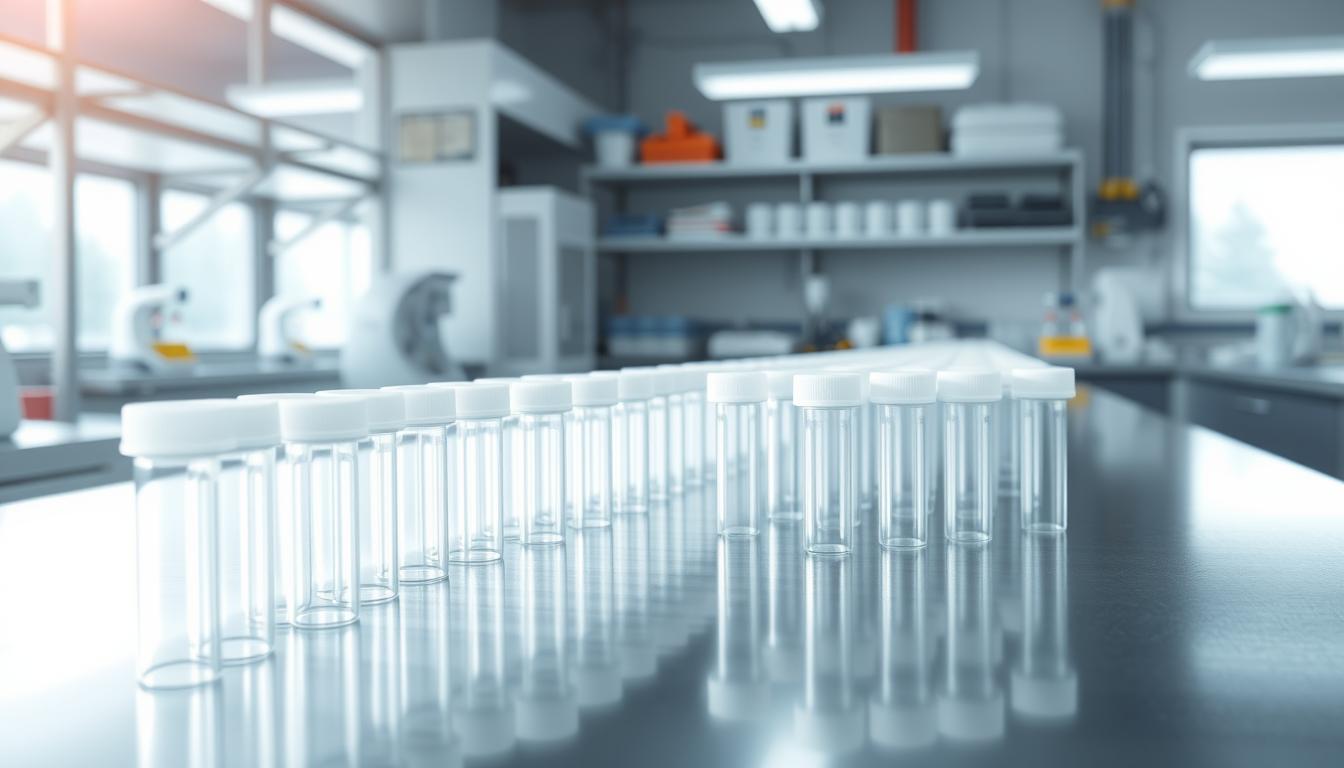
Ever thought about the tiny protectors of key scientific samples? 2ml centrifuge tubes are the unsung heroes in labs. They keep delicate biological samples safe with great care and dependability.
These tubes are more than just containers. They are made from top-quality polypropylene. They’re built to handle the tough demands of storing scientific samples. Scientists count on 2ml centrifuge tubes to keep their samples safe in many fields.
In fields like molecular biology and genetics, these tubes are a must. They create a safe space for biological materials. Their strong build keeps samples clean and helps scientists manage and study them.
Key Takeaways
- 2ml centrifuge tubes are critical for preserving biological samples
- Manufactured from high-quality polypropylene for durability
- Essential across multiple scientific research domains
- Provide superior protection against sample contamination
- Designed for precise scientific manipulation
Overview of 2ml Centrifuge Tubes
Microcentrifuge tubes are key tools in labs. They help scientists store, handle, and study small liquid samples. These containers are made with care for precise work in many fields.
There are many types of sample tubes, each for different needs. Eppendorf tubes stand out for their wide use in science.
Definition and Purpose
A 2ml centrifuge tube is a small, cylindrical container. It’s made from high-quality polypropylene. These tubes can handle fast spinning and help with precise measurements in research.
- Precise volume graduations for accurate sample measurement
- Snap-on lids ensuring secure sample containment
- Compatible with various centrifuge models
- Resistant to chemical interactions
Applications in Biological Research
Microcentrifuge tubes are vital in labs. They are used for:
- DNA and RNA sample storage
- Protein extraction and purification
- Cell culture preparation
- Molecular biology experiments
| Tube Specification | Technical Details |
|---|---|
| Volume Capacity | 2 mL |
| RCF Rating | 30,000 x g |
| Sterility Options | Sterile and Non-Sterile |
| Color Options | Clear and Amber |
| Endotoxin Level | Less than 0.1 EU |
Modern scientific research relies heavily on these precision instruments to ensure accurate and reproducible results across multiple disciplines.
Key Features of 2ml Centrifuge Tubes
Scientific supplies are key in today’s research. Plastic labware, like centrifugation vials, is crucial for precise work. The design and material of 2ml centrifuge tubes are top-notch for biological studies.
Material Composition: Polypropylene Precision
Polypropylene is the main material for 2ml centrifuge tubes. It has great qualities for scientific needs:
- Chemical resistance against various reagents
- Exceptional durability for repeated use
- Temperature stability from -80°C to 121°C
- Lightweight and robust construction
Design Specifications: Engineered for Excellence
The design of centrifugation vials is top-notch for tough research:
| Feature | Specification |
|---|---|
| Volume Capacity | 2ml standard volume |
| Graduations | Precise markings at 0.5, 1, and 1.5 ml |
| Centrifugation Speed | Up to 20,000g |
| Closure Mechanism | Secure hinged lid design |
“Precision in design translates to reliability in scientific research.” – Laboratory Engineering Quarterly
These scientific supplies are a mix of material science and biological research. They give researchers tools that meet tough experimental needs.
Importance of Sterility in Sample Storage
Keeping samples clean is key in research. Even a little bit of contamination can ruin an entire study. This can cause big delays and extra work.
Lab workers know that keeping research clean is crucial. Many things can cause contamination, which can stop important studies.
Risks of Contamination
There are many ways contamination can happen:
- Improper handling techniques
- Unclean research equipment
- Environmental exposure
- Cross-contamination between samples
“Sterility is not an option in scientific research—it’s a fundamental requirement.” – Laboratory Research Standards Institute
Best Practices for Sterile Handling
To avoid contamination, follow these steps:
- Always use certified DNase, RNase, DNA, and Pyrogen-free lab supplies
- Wear the right protective gear
- Work in clean, certified areas
- Use clean methods when working with samples
- Clean research tools often
Using advanced clean handling methods is vital for top research quality.
Types of 2ml Centrifuge Tubes Available
Researchers use special tubes for precise lab work. These tubes come in different types, each for a specific need. Choosing the right 2ml centrifuge tube is key for good results and keeping samples safe.
Scientists have many options for their research. The variety in plastic labware lets them pick the best tube for their experiments.
Standard Tubes
Standard 2ml centrifuge tubes are the most common. They have:
- A conical bottom for easy liquid collection
- Clear polypropylene for clear visibility
- Work with many centrifuges
- Strong build for safe handling
Graduated Tubes
Graduated 2ml tubes are for precise measurements. They have:
- Clear volume markers
- Stand alone for easy use
- Accurate volume reading
- Perfect for detailed experiments
Scientists can pick between standard and graduated tubes. This ensures the best sample handling and analysis for their needs.
Compatibility with Centrifuges
Choosing the right centrifugation vials is key. They must match your centrifuge model. This ensures your samples stay safe and your results are reliable.
Each centrifuge has its own needs. Lab experts must look at a few important things:
- Maximum rotational speed (RPM)
- Relative centrifugal force (RCF)
- Rotor capacity
- Tube material compatibility
Rotor Performance Variations
Centrifuges vary a lot in how well they work. For example:
| Centrifuge Model | Max Speed (RPM) | Max RCF (x g) | Tube Capacity |
|---|---|---|---|
| Hettich 1212 | 14,000 | 15,558 | 12 x 2.0 mL |
| Eppendorf F-45-24-11 | 13,200 | 16,110 | 24 x 2.0 mL |
| Thermo Electron | 15,400 | 26,250 | 6 x 85 mL |
Ensuring Optimal Performance
To get the best results, pick vials that fit your lab setup. Check:
- Tube material strength
- Right tube size
- Matches rotor design
- Speed limits
Choosing the right tubes keeps your samples safe. It also protects your equipment and ensures your research is reliable.
Usage Guidelines for 2ml Centrifuge Tubes
Working with samples needs careful handling and precision. 2ml centrifuge tubes are key in labs, requiring attention to how they’re filled and closed.
Filling Procedures for Optimal Sample Integrity
Starting with the right way to fill tubes is crucial. Here are some important tips:
- Never fill the tube more than it can hold
- Use clean pipettes to avoid contamination
- Keep your filling method consistent in all experiments
- Leave enough space at the top for centrifugation
“Precision in sample handling determines the reliability of scientific research.” – Laboratory Best Practices Manual
Securing Tube Closure
The special clasp on 2ml tubes keeps samples safe during lab work. It’s vital to close the tube tightly.
- Check the tube for damage before starting
- Line up the cap for a tight seal
- Press down gently to lock it in place
- Make sure it’s sealed by rotating it slightly
These tubes have lids that can be pierced, making it easy to access samples. Using the right method helps keep samples safe and accurate.
Storage Recommendations
Storing laboratory consumables right is key to keeping samples safe and research quality high. Scientists use special ways to keep biological samples in tubes. The way we store these samples can greatly affect the results of our research.
- Keeping the right temperature
- Shielding from light
- Reducing contamination risks
- Keeping the tube’s structure strong
Optimal Conditions for Sample Preservation
Research labs need to follow specific storage rules for sample tubes. Each type of sample needs its own special environment to stay stable for a long time.
| Sample Type | Recommended Storage Temperature | Maximum Storage Duration |
|---|---|---|
| Protein Samples | -20°C to -80°C | 6-12 months |
| DNA Extracts | -20°C | 1-5 years |
| RNA Samples | -80°C | 3-5 years |
Labeling and Identification Practices
It’s very important to identify laboratory items clearly. Etched writing surfaces on sample tubes make labeling easy and clear. Researchers should write down:
- Sample name
- When it was collected
- Who collected it
- Where it’s stored
“Accurate labeling prevents sample mix-ups and ensures research reproducibility.” – Laboratory Best Practices Guide
Good storage practices help keep our research safe and of high quality.
Environmental Impact of 2ml Centrifuge Tubes
Scientific research is now focusing more on being green with plastic labware and supplies. The environmental effect of lab tools is a big deal for today’s research places and scientists.
Researchers are looking for new ways to lessen the harm to the environment from lab stuff, especially 2ml centrifuge tubes made from polypropylene.
Biodegradable Options
New biodegradable options are changing the world of scientific supplies. These new materials are great for labs that care about the planet:
- Plant-based polypropylene alternatives
- Compostable polymer compositions
- Tubes made from recycled scientific plastics
“Sustainability in research is not just an option—it’s a responsibility.” – Environmental Science Research Consortium
Recycling Practices
Recycling plastic labware well needs smart plans. Here are some good ideas:
- Separate polypropylene tubes from other trash
- Work with special lab recycling services
- Have detailed recycling training for everyone
About 50% of packaging can be recycled, which is a big chance to cut down on harm to the environment in science.
Trends in 2ml Centrifuge Tube Manufacturing
The world of microcentrifuge tubes is changing fast. New technologies and research needs are leading the way. Scientists and makers are working together to make better tools for biology.
Market trends show a big jump in microcentrifuge tubes. The value was USD 0.45 Billion in 2022. It’s expected to hit USD 0.75 Billion by 2030, growing at 6.8% each year.
Innovations in Materials
Material science is changing how tubes are made. Researchers are looking into new polymers. These offer:
- Enhanced durability
- Improved chemical resistance
- Reduced environmental impact
- Better thermal stability
Customization Features
Today’s research needs precision and flexibility. Makers are making tubes that meet these needs. They have:
- Color-coded identification systems
- Graduated markings for accurate measurements
- Self-standing designs
- Ultra-thin wall construction
The global market shows interesting trends. North America leads with 35% market share. Asia Pacific follows with 30%.
| Market Segment | Percentage Share (2023) | Growth Rate |
|---|---|---|
| Life Science Labs | 45% | 5% Annually |
| Biological Labs | 35% | 4.5% Annually |
| Other Applications | 20% | 3.5% Annually |
The future of microcentrifuge tubes looks bright. Demand from personalized medicine and biotech is driving innovation.
Regulatory Standards for Laboratory Equipment
Scientific research needs strict standards for top-quality laboratory supplies. The rules for 2ml centrifuge tubes are detailed to keep research safe.
Labs face many rules to keep research high. The Food and Drug Administration (FDA) sets key guidelines for makers of scientific supplies.
FDA Compliance Requirements
Following FDA rules is key for labs. It involves:
- Strict material quality control
- Comprehensive contamination prevention protocols
- Rigorous testing for chemical and biological safety
- Detailed documentation of manufacturing processes
Quality Control Importance
Quality control is vital for reliable science. Centrifuge tubes go through many checks to ensure:
- Consistent dimensional accuracy
- Chemical resistance
- Sterility certification
- Performance reliability
Certified 2ml centrifuge tubes are often checked as DNase, RNase, DNA, and Pyrogen free. These checks help keep samples clean and research reliable.
Precision in laboratory equipment is not an option—it’s a requirement for scientific advancement.
Research places a big focus on meeting or beating these standards. They know that the quality of supplies affects their results.
Common Misconceptions
Scientists often face many myths about Eppendorf tubes and how to store samples. These myths can really affect the results of their research. Knowing these misconceptions helps researchers make better choices when working with important lab samples.
Laboratory experts often get things wrong about 2ml centrifuge tubes. These tubes are key in biological research, but many myths still exist.
Debunking Critical Myths
- Myth: All 2ml centrifuge tubes are identical in performance
- Myth: Temperature resistance is universal across tube brands
- Myth: Chemical compatibility is guaranteed for all samples
Key Clarifications on Sample Storage
Eppendorf tubes are made with special features for different research needs. They can be autoclaved to 121°C and are used for many lab tasks, unlike what some think.
| Misconception | Actual Fact |
|---|---|
| Tubes are universally interchangeable | Specific tubes designed for unique research needs |
| All tubes withstand identical temperatures | Temperature tolerance varies by material composition |
| Chemical resistance is absolute | Different tubes have specific chemical compatibility ranges |
Choosing the right centrifuge tubes for research-grade sample storage is crucial. It’s important to understand the detailed features of these essential lab tools to keep samples safe and research quality high.
Future of 2ml Centrifuge Tubes in Research
The world of scientific research is always changing. Centrifugation vials are leading this change. New technologies are making 2ml centrifuge tubes better than ever before.
New materials are changing what laboratory tubes can do. Scientists are making smart polymers that work in very cold or hot temperatures. These tubes now have biosensors and better seals to keep samples safe and precise.
Automation is changing how we handle samples in labs. Soon, 2ml centrifuge tubes will have special codes and work well with robots. They will be designed to make research easier and less prone to mistakes.
As biotechnology grows, so will the role of these small but important tools. The future holds tubes that are more than just containers. They will be smart tools that help scientists discover new things.
FAQ
What are 2ml centrifuge tubes used for in biological research?
2ml centrifuge tubes are key in labs for storing and analyzing samples. They’re used for DNA, RNA, proteins, and cell cultures. These tubes help in preparing and handling small samples.
What materials are typically used to manufacture 2ml centrifuge tubes?
Most tubes are made from polypropylene. This material is strong, resistant to chemicals, and keeps samples safe. It’s perfect for lab use.
How do I prevent contamination when using 2ml centrifuge tubes?
Use clean gloves and work in a clean area. Make sure tubes are new or sterilized. Always close tubes properly. Autoclaving is best when you can.
What types of 2ml centrifuge tubes are available?
You can find standard, graduated, conical, and self-standing tubes. Each type meets different research needs. They’re designed for specific lab tasks.
Are 2ml centrifuge tubes compatible with all centrifuge models?
Not all tubes fit every centrifuge. Check the tube’s specs, like size and material, to match your centrifuge. This ensures safe use.
What are the best practices for filling 2ml centrifuge tubes?
Leave space at the top and avoid overfilling. Use clean pipettes and balance tubes. Always close caps tightly. Follow volume limits to avoid spills.
How should I store samples in 2ml centrifuge tubes?
Store tubes at the right temperature for your sample. Use clear labels and etched surfaces for identification. Choose freezer-safe tubes for long storage. Follow specific preservation methods for each sample type.
Are there environmentally friendly options for 2ml centrifuge tubes?
Yes, there are biodegradable options and sustainable materials being developed. You can also recycle polypropylene tubes. Choose eco-friendly manufacturers.
What recent innovations exist in 2ml centrifuge tube design?
New designs include durable materials, color-coded tubes, and special graduations. There are also better closures and customization options. These meet various research needs.
How do regulatory standards impact 2ml centrifuge tube production?
Manufacturers follow FDA guidelines and other standards. This ensures quality, performance, and safety. It makes lab supplies reliable and trustworthy.






Leave a Comment
Your email address will not be published. Required fields are marked *