


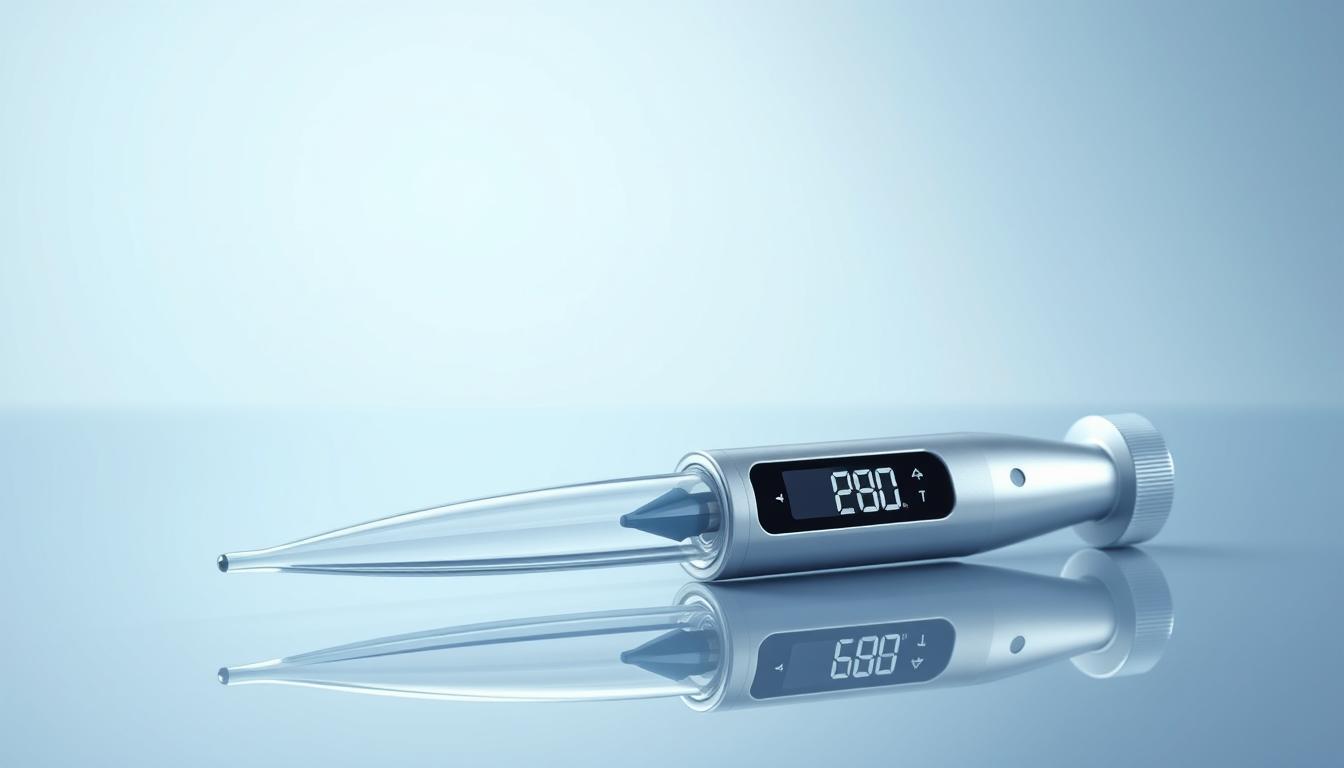
Ever wonder how scientists get so precise in their research? The 200ul pipette is a key tool, helping them work with tiny amounts of liquid.
Lab work needs to be super precise, and the 200ul pipette is vital for this. It helps scientists move exact amounts of liquid in fields like molecular biology and clinical diagnostics.
This tool lets researchers handle volumes from 20 to 200 microliters. It gives them great control and cuts down on mistakes. The design ensures errors are kept low, making it a top choice for scientific measurements.
Key Takeaways
- 200ul pipettes are essential for precise liquid handling in scientific research
- Accuracy is crucial for reproducible experimental results
- Modern pipettes offer exceptional volume control and measurement precision
- Proper technique impacts overall research reliability
- Laboratory equipment technology continues to advance scientific capabilities
Overview of 200ul Pipette Features
Precision instruments are key in scientific research. 200ul pipettes lead in accurate liquid handling. They meet tough lab needs, allowing for precise experiments.
Modern 200ul pipettes are engineering marvels. They excel in precision and reliability.
Precision and Accuracy
These pipettes shine in measurement:
- Systematic error at 200ul: ± 1.2 µL (0.6%)
- Random error at 200ul: ± 0.3 µL (0.15%)
- Volume range: 20 to 200 µL
- Volume increments: 1 µL
“Precision is the heart of scientific discovery” – Laboratory Research Principles
Ergonomic Design
Ergonomic features make handling liquids easier:
- Adjustable grip for right and left-handed users
- Lightweight design (0.44 lbs)
- Finger-style operation to reduce user fatigue
Material and Durability
These tools are made for tough lab use:
- Fully autoclavable without disassembly
- Compatible with multiple tip types
- 3-year manufacturer’s warranty
Researchers count on these 200ul pipettes for reliable results in many fields.
Importance of Pipette Calibration
Precision is key in scientific research, especially in biochemistry and sample transfer. Accurate pipette calibration is crucial. It helps researchers get reliable results, avoiding errors that could ruin important studies.
Calibration is vital for lab equipment reliability. A small mistake can greatly affect results. For example, a 5% pipetting error can lead to a 2 ng difference in DNA during qPCR tests.
Ensuring Consistency in Results
To keep pipettes accurate, consider these points:
- Regular checks on performance
- Following the maker’s guidelines
- Knowing how the environment affects it
Frequency of Calibration
Experts suggest specific times for calibration based on how often you use it:
- Frequently used pipettes: Check every three months
- Less frequently used equipment: Annual check is enough
Methods for Calibration
Gravimetric calibration is the most precise way to check pipette performance. It measures the liquid’s weight. Here are some standards:
- Use a 5-place balance for pipettes with a max volume of ≥10 µL
- For volumes <10 µL, a 6 or 7-place balance is better
- Keep the room at 20°C for best measurements
By focusing on regular calibration, researchers can keep their biochemistry tools in top shape. This ensures the highest level of scientific precision.
Types of 200ul Pipettes Available
Laboratory professionals use different pipettes to measure microliter volumes accurately. Lab automation has changed pipetting, offering many options for better accuracy and efficiency.
There are various pipette types for different research needs. This lets researchers pick the best tool for their experiments.
Manual Pipettes
Manual pipettes are the traditional choice for labs. They need direct user interaction and skill for accuracy. Key features include:
- Precise volume control
- Cost-effective design
- Suitable for low-throughput applications
- Require consistent user technique
Electronic Pipettes
Electronic pipettes use advanced tech for better precision and less user fatigue. They have features like:
- Automated volume dispensing
- Programmable settings
- Reduced repetitive strain injury risks
- Enhanced accuracy for critical experiments
Multi-Channel Pipettes
Multi-channel pipettes change high-throughput research by allowing simultaneous transfers. They offer big benefits like:
- Productivity increases by 8-, 12-, or 64-fold
- Compatible with 96- and 384-well plate formats
- Volume ranges from 0.5 to 1200 µL
- Ideal for molecular biology and clinical diagnostics
| Pipette Type | Volume Range | Key Advantages |
|---|---|---|
| Single Channel Manual | 0.2 – 10 mL | Cost-effective, precise |
| Single Channel Electronic | 0.2 – 10 mL | Automated, ergonomic |
| Multi-Channel Manual | 0.5 – 1200 µL | High-throughput capability |
| Multi-Channel Electronic | 0.5 – 1200 µL | Maximum precision, reduced fatigue |
Best Practices for Using a 200ul Pipette
200ul pipettes are key for precise work in labs. Learning the right ways to use them is vital for getting accurate results. This is true for many scientific fields.
Good pipetting needs focus and practice. Lab workers must know the small details that make sure samples are handled right.
Proper Technique for Aspiration and Dispensing
Doing microplate pipetting well means handling liquids with care. Important steps include:
- Wait 1 second after pressing the plunger to feel resistance
- Put the pipette tip 3-4 mm into the liquid
- Keep the angle and speed the same when moving liquid
- Choose the right tip size for your pipette
Tips for Avoiding Contamination
Keeping samples clean is very important with 200ul pipettes. Here’s how to avoid contamination:
- Use filter tips for sensitive tests like PCR
- Change tips between samples
- Work in clean, special lab areas
- Wear the right protective gear
Maintenance and Care
Keeping your pipette in good shape is important. Here’s how to do it:
| Maintenance Task | Frequency |
|---|---|
| Calibration check | Every 3-6 months |
| External cleaning | After each use |
| Lubrication | Annually |
| Recalibration threshold | >5% error detected |
Looking after your 200ul pipette well means it will work right and give you good results.
Applications of 200ul Pipettes in Laboratories
Precision biochemistry tools are key in today’s science. The 200ul pipette is a versatile tool for accurate sample transfer. It’s used in many lab areas.
Laboratory experts use 200ul pipettes in various fields. Each field needs careful handling and exact liquid control.
Molecular Biology Applications
In molecular biology, 200ul pipettes are vital. They’re used for:
- Polymerase Chain Reaction (PCR) preparation
- DNA sequencing sample handling
- Gene expression analysis
- Protein purification processes
Clinical Diagnostics
Clinical labs rely on 200ul pipettes for precise sample handling. They help with:
- Blood analysis
- Pathogen detection
- Genetic screening
- Immunological testing
Environmental Testing
Environmental scientists use 200ul pipettes for detailed analysis. They work on:
- Water quality assessment
- Soil contamination testing
- Air particulate analysis
- Pollutant concentration measurements
Performance Characteristics
| Application Domain | Precision Level | Sample Volume Range |
|---|---|---|
| Molecular Biology | ±0.80% | 20-200 µL |
| Clinical Diagnostics | ≤0.15% CV | 20-200 µL |
| Environmental Testing | ±1.60 µL | 20-200 µL |
Modern 200ul pipettes work with epT.I.P.S.® and other products. They’re crucial for scientists due to their accuracy and dependability.
Choosing the Right 200ul Pipette
Choosing the right 200ul pipette is key for precise and reliable lab work. It’s important for researchers to know what they need. This ensures their tools work best.
Choosing a pipette involves many important factors. These factors can greatly affect the results of experiments.
Essential Factors for Pipette Selection
When picking a 200ul pipette, consider these key points:
- What kind of research you’re doing and your lab’s needs
- How often you’ll be using the pipette
- The level of precision your experiments require
- How comfortable the pipette is to use
Assessing Laboratory Needs
Different labs need different pipettes. Think about these things when looking at your lab equipment:
| Pipette Type | Best Suited For | Key Advantages |
|---|---|---|
| Manual Single-Channel | Low-volume precise work | Cost-effective, simple to use |
| Electronic Multi-Channel | High-throughput screening | Increased efficiency, reduced user fatigue |
| Fixed Volume | Repetitive standard volume transfers | Consistent dispensing, minimal calibration |
Evaluating User Preferences
The way a pipette feels in your hand matters a lot. Ergonomic design helps avoid injuries and boosts lab work.
It’s not just about the tech specs. The right pipette makes your work space better and more efficient.
Try out different pipettes to find the one that feels right for you. This makes your lab work smoother and more comfortable.
Troubleshooting Common Issues with Pipettes
Pipettes are key for precise liquid handling in labs. Researchers often face problems that can affect their work’s accuracy. It’s crucial to know and fix these issues to keep equipment working well.
Problems with Accuracy
Several factors can impact pipette accuracy. Main issues include:
- Worn seals reducing precision
- Improper calibration
- Temperature variations
- Liquid viscosity differences
Understanding Liquid Dispensing Errors
Errors in liquid dispensing can harm research results. Important things to check include:
- Checking for air tightness
- Verifying tip seal integrity
- Assessing potential leakage points
Maintenance Solutions
Keeping liquid handling equipment in good shape is key. Researchers should follow these steps:
- Replace seals every 12 months
- Perform routine leak tests
- Clean pipette components regularly
- Lubricate moving parts as recommended
Getting help from experts can solve complex problems. This ensures your lab equipment stays reliable and efficient.
Impact of Temperature and Viscosity on Pipetting
In biological research, knowing how temperature and viscosity affect pipetting is key. These factors are crucial for accurate microliter volume transfers. Scientists face unique challenges because of them.
Temperature greatly changes liquid properties. When temperature goes up, most liquids get less viscous. This affects how they flow during pipetting.
Performance Variations with Temperature
Temperature changes can greatly affect pipetting precision:
- Low room temperatures can cause air expansion, affecting solution aspiration
- Thermal variations may introduce measurement errors
- Rapid temperature shifts can impact liquid density
Adjusting Techniques for Different Fluids
Different fluids need different pipetting methods. Researchers must adapt their techniques to maintain accuracy across various liquid types.
Precise liquid handling demands understanding the unique physical properties of each solution.
| Liquid Type | Viscosity Impact | Recommended Technique |
|---|---|---|
| Water | Low viscosity | Standard pipetting method |
| Glycerol (10%) | Moderate viscosity | Slower aspiration rate |
| Glycerol (90%) | High viscosity | Specialized pipetting protocol |
To manage viscosity, adjust aspiration rates and use the right pipette tips. Also, use careful withdrawal techniques for accurate microliter volume transfers.
Safety Considerations When Using Pipettes
Laboratory equipment needs careful safety rules, especially for sample transfers. Researchers must focus on personal safety and handling to avoid risks in biological research.
Keeping lab workers safe involves more than just basic steps. Knowing and using strict safety rules can greatly lower risks in science.
Personal Protective Equipment (PPE)
Researchers need to wear the right protective gear when pipetting:
- Disposable laboratory gloves
- Safety goggles or face shields
- Lab coat with long sleeves
- Closed-toe protective footwear
Safe Handling of Biological Samples
Right sample transfer methods are key to avoid contamination and exposure:
- Always work in a designated biosafety cabinet
- Use sterile, manufacturer-specific pipette tips
- Minimize aerosol generation during pipetting
- Maintain vertical pipette positioning
Waste Disposal Guidelines
Good waste management is key for lab safety. Used pipette tips and biological materials must be thrown away as per rules.
| Item | Replacement Frequency | Safety Recommendation |
|---|---|---|
| Pipette Seals | Every 12 months | Inspect for wear and damage |
| Rubber O-rings | Every 12-24 months | Check for integrity |
| Pipette Shaft | Every 24-36 months | Verify alignment and functionality |
“Safety in the laboratory is not an option, but a fundamental requirement for scientific research.”
By sticking to these detailed safety rules, researchers can do accurate sample transfers safely. They also protect their lab equipment and themselves.
Future Trends in Pipetting Technology
The world of lab research is changing fast with new lab automation tech. Microplate pipetting is getting better to handle complex science needs. Electronic pipettes are making things more precise and efficient.
New pipetting tech is bringing big changes in automation. Labs are now doing 96 samples in minutes, down from hours before. This lets scientists work on genomic sequences faster, from 1,000 genomes in 2012 to over 1 million by 2020.
Now, making lab equipment more eco-friendly is key. New ideas are cutting down on plastic and energy use. Some makers are even making reusable tips and recycling programs. Digital tools are also making data tracking easier, helping with more detailed research in many fields.
The future of lab automation looks bright with smarter pipetting systems. These will adapt to different research needs, reduce mistakes, and help with complex studies. As tech keeps improving, we’ll see better, greener ways to handle liquids in labs.
FAQ
What is a 200ul pipette and why is it important in laboratory research?
A 200ul pipette is a tool for moving small amounts of liquid in labs. It’s used for precise work in biology and chemistry. It’s key for getting accurate results in experiments, making sure they can be repeated.
How do I ensure accurate pipetting results?
To get accurate results, focus on a few things. Make sure your pipette is calibrated right. Use good-quality tips and keep your technique steady. Avoid changes in temperature and clean your pipette often.
Learning the right way to use it and following best practices is also important.
What types of 200ul pipettes are available?
There are three main types of 200ul pipettes. Manual ones need skill, electronic ones do the work for you, and multi-channel ones can handle lots of samples at once. Each type is made for different lab needs.
How often should a 200ul pipette be calibrated?
How often you calibrate depends on how much you use it and where you work. Labs usually calibrate every 3-6 months or after 5,000 uses. Regular checks keep your results reliable.
What are the most common applications for 200ul pipettes?
200ul pipettes are used a lot in labs. They’re key for PCR, DNA sequencing, and clinical tests. They’re also used in environmental and biochemical studies. Their flexibility makes them a must-have in many fields.
How do temperature and viscosity affect pipetting?
Temperature and viscosity can mess with pipetting accuracy. Changes in temperature can change the liquid’s volume. Thick liquids need special handling. Adjust your methods to keep your work precise.
What safety considerations are important when using 200ul pipettes?
When using pipettes, safety is crucial. Wear protective gear and handle samples carefully. Follow rules to avoid contamination and dispose of waste properly. Using autoclave-safe pipettes adds extra safety.
What factors should I consider when selecting a 200ul pipette?
Choosing the right pipette involves a few things. Think about your research, how often you’ll use it, and how precise you need to be. Consider ergonomics, compatibility, and how it fits into your workflow. Look at manual, electronic, and multi-channel options to find the best one for you.
What emerging trends are shaping pipetting technology?
New trends in pipetting include better automation and digital lab systems. There’s also a push for greener manufacturing and lab practices. These changes aim to make pipetting more efficient and sustainable.
How can I troubleshoot common pipetting issues?
To fix common problems, first check for worn-out seals and make sure it’s calibrated. Look out for errors in liquid dispensing and keep your pipette in good shape. Use tools to adjust it, check tips for damage, and remember that temperature and fluid properties can affect it.




Leave a Comment
Your email address will not be published. Required fields are marked *