


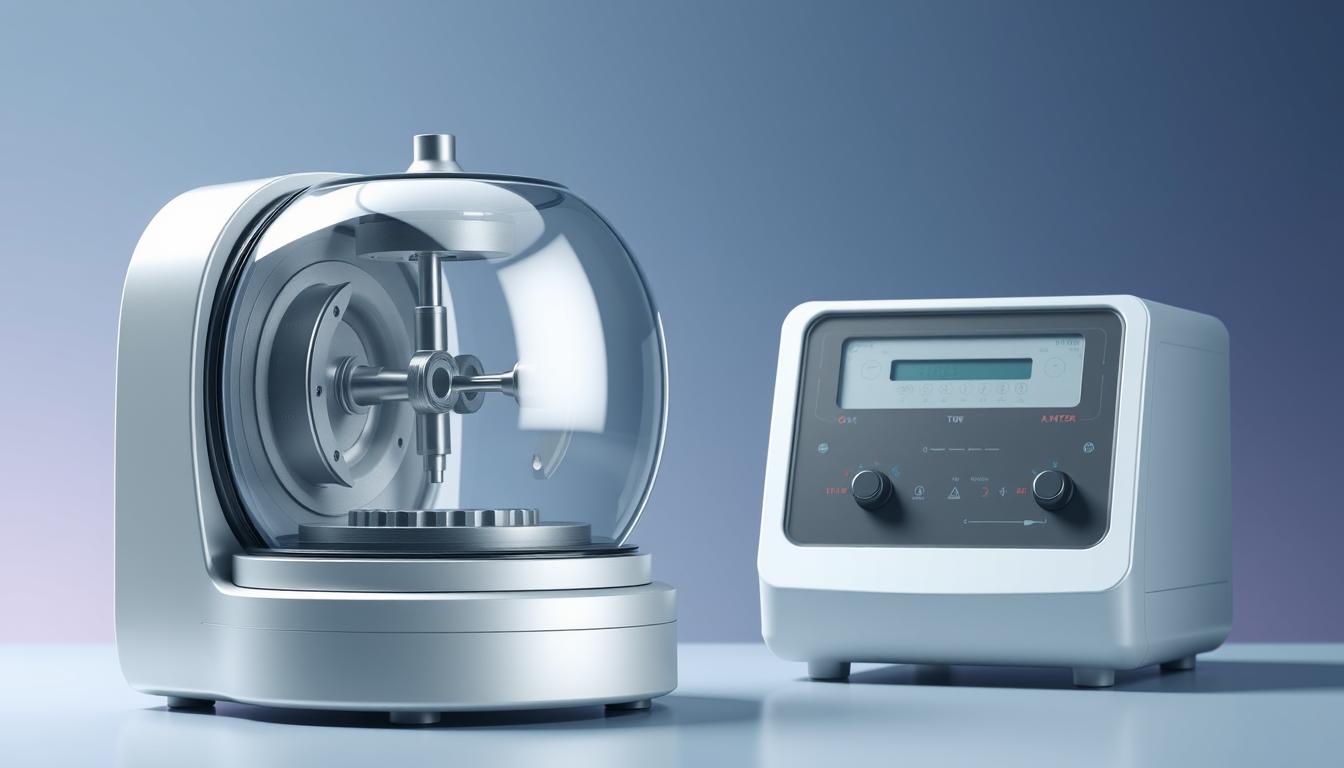
Imagine a single device that changes how scientists separate complex biological samples. The spike centrifuge is a game-changer in lab techniques. It’s making research better in many fields.
Centrifugal separation is key in today’s science. It helps researchers find and study tiny particles well. The spike centrifuge is a must-have in labs. It helps with many kinds of samples.
The spike centrifuge tackles tough scientific problems. It uses special spinning to sort things out by density. This tool lets scientists get important biological stuff with little mess and lots of results.
Key Takeaways
- Spike centrifuges provide advanced separation techniques for biological samples
- Centrifugal separation technology continues to evolve rapidly
- Precision and efficiency are critical in modern laboratory equipment
- Versatility makes spike centrifuges essential across research disciplines
- Technological innovations are driving improvements in separation processes
Overview of Spike Centrifuges
Spike centrifuges are key tools in labs for separating biological materials with high precision. They help scientists study complex molecules with great accuracy.
Today’s labs use advanced centrifuges for crucial analyses. Cell culture research greatly benefits from these methods.
Definition and Functionality
Spike centrifuges work by spinning particles at high speeds. This separates them based on density and size. They use two main methods:
- Density gradient centrifugation: Uses layers of different densities to separate mixtures
- Analytical centrifugation: Gives detailed info on particles during separation
Key Features
Lab experts love spike centrifuges for their top-notch features:
| Feature | Benefit |
|---|---|
| High-speed rotation | Rapid particle separation |
| Precise temperature control | Maintains sample integrity |
| Multiple rotor configurations | Versatile sample processing |
Applications in the Laboratory
Researchers use spike centrifuges in many fields, including:
- Protein purification
- Subcellular fractionation
- Virus isolation
- Cellular component analysis
The precision of spike centrifuges revolutionizes our understanding of complex biological systems.
Cutting-edge density gradient centrifugation techniques enable researchers to explore molecular interactions with unprecedented detail. These advanced methods help scientists expand our knowledge of biology.
Types of Spike Centrifuges
Laboratory researchers use special centrifuges for precise sample separation. There are many designs, from benchtop units to high-speed systems. Each is made for different scientific needs.
Modern labs use various centrifuges for important research. Special deep well plates help these systems manage samples better.
Benchtop Spike Centrifuges
Benchtop spike centrifuges are great for everyday lab tasks. They handle:
- Small volume samples
- Rapid processing needs
- Standard molecular biology tasks
High-Performance Spike Centrifuges
High-performance spike centrifuges are top for ultracentrifugation. They offer amazing separation. They support advanced research with great specs:
| Feature | Specification |
|---|---|
| Maximum Speed | 120,000 RPM |
| Maximum RCF | 657,000 x g |
| Sample Capacity | Multiple Rotor Options |
Refrigerated Spike Centrifuges
Refrigerated spike centrifuges keep samples cool. This is key for sensitive biological samples. They keep temperatures low during centrifugation, protecting samples from damage.
Researchers can pick from many centrifuge types to fit their needs. This ensures samples stay safe during centrifugation.
Mechanisms of Action
Spike centrifuges are key in scientific research, especially for breaking down complex biological samples. They use advanced physical principles to separate these samples with great precision.
The main way a spike centrifuge works is through centrifugal force. This force is a powerful method to quickly and efficiently separate specific molecular parts.
Centrifugal Force Explained
Centrifugal force is based on a simple yet effective principle. The faster and larger an object spins, the better it separates. Researchers adjust this force to get precise biomolecular fractionation by tweaking a few key factors:
- Rotation speed
- Particle density
- Sample volume
- Liquid viscosity
Rotor Types and Their Applications
There are different rotor designs for various purification needs. Each rotor has its own strengths for specific research goals:
| Rotor Type | Primary Application | Key Characteristics |
|---|---|---|
| Fixed-Angle Rotor | Protein separation | Consistent particle pellet formation |
| Swinging-Bucket Rotor | Density gradient separation | Allows horizontal sample positioning |
| Vertical Rotor | Large volume processing | Minimal sample path length |
Knowing these mechanisms helps researchers pick the best centrifugation methods for their studies.
Advantages of Using Spike Centrifuges
Spike centrifuges are a big step forward in lab tools. They let scientists process samples with great precision in many fields.
Lab teams count on spike centrifuges for top-notch separation. These machines bring many benefits that boost research results.
Enhanced Separation Efficiency
Spike centrifuges are known for their top-notch separation skills. They have impressive specs:
- Can handle about 10 x 10^9 cells per chamber
- Efficiency in clarifying samples is 88% to 93%
- Removes cells with 95.7% to 98.7% success
Improved Sample Integrity
These centrifuges are precise, keeping samples intact. Scientists can keep biological materials in top shape. This is thanks to controlled forces and temperature control.
Versatility in Sample Types
Spike centrifuges are great for many types of research. They work well in protein studies, cell biology, and virology. They can handle different samples consistently.
Here are some key points about their versatility:
- Can process cell densities from 2.3 x 10^6 to 5.4 x 10^6 cells/mL
- Reduces turbidity from 33.3-63.7 NTU to 2.47-6.91 NTU
- Keeps sample quality high in various research settings
Maintenance and Care
Keeping centrifuges in top shape is key for great results in lab work. Lab experts need to follow care steps to keep their gear working well.
Essential Routine Maintenance Practices
Looking after spike centrifuges needs regular checks. Here are the main steps to follow:
- Clean internal chambers after each use
- Inspect rotor and bucket surfaces monthly
- Lubricate moving mechanical parts quarterly
- Check electrical connections and seals
- Verify temperature control systems
Comprehensive Cleaning Protocol
Cleaning well is crucial to avoid contamination in lab tests. Use special cleaners made for lab gear.
| Component | Cleaning Frequency | Recommended Method |
|---|---|---|
| Rotor Chamber | After Each Use | 70% Ethanol Solution |
| Bucket Adapters | Monthly | Mild Detergent Wash |
| External Surfaces | Weekly | Microfiber Cloth |
Troubleshooting Common Operational Issues
Lab workers often face problems with centrifuges. Fixing these issues quickly helps avoid damage:
- Unusual vibration: Check rotor balance
- Temperature inconsistencies: Verify calibration
- Decreased performance: Inspect seal integrity
- Error messages: Consult manufacturer documentation
“Preventative maintenance is the key to long-term centrifuge reliability and experimental success.” – Laboratory Equipment Experts
With strict maintenance, labs can keep their centrifuges running smoothly. This ensures reliable and consistent results in their work.
Safety Considerations
Laboratory safety is key in scientific research, especially with advanced tools like ultracentrifugation and high-speed centrifugation. It’s important to follow safety rules to keep everyone safe and ensure the research is accurate.
Personal Protective Equipment (PPE)
Wearing the right protective gear is crucial during centrifugation. Researchers need to wear safety equipment to lower the risk of injury:
- Safety glasses with side shields
- Laboratory coat with long sleeves
- Disposable gloves resistant to chemical exposure
- Closed-toe protective footwear
Sample Handling Protocols
Handling samples safely during high-speed centrifugation needs careful attention. Important steps include:
- Carefully balance sample tubes to prevent rotor imbalance
- Inspect tubes for cracks or damage before use
- Use appropriate centrifuge tubes matched to specific ultracentrifugation requirements
- Maintain clean work surfaces to prevent contamination
Modern spike centrifuges have safety features like automatic lid locks and imbalance detection. These features stop the centrifuge from starting by accident and keep researchers safe during experiments.
Safety is not an option—it’s a fundamental requirement in scientific research.
By sticking to strict safety rules and knowing the risks of ultracentrifugation, researchers can make a safe lab. This supports new scientific discoveries.
Innovations in Spike Centrifuge Technology
Laboratory equipment is always getting better, with spike centrifuges leading the way. These advanced tools are changing how we separate and purify biomolecules. They bring new ideas to the table.
Advancements in Automation
Today’s spike centrifuges have cool automation features. These make research work much faster. Here’s what’s new:
- Programmable spin cycles with precision control
- Digital interfaces for easy use
- Remote monitoring options
- Integrated microprocessor systems
The microprocessor is key. It handles many tasks, like:
- Speed control
- Lid lock mechanism
- Imbalance detection
- Timer functions
- Power control for motors and brakes
Eco-friendly Design Features
Now, spike centrifuges are also good for the planet. They have eco-friendly design elements. These help reduce harm to the environment during purification.
| Eco-Design Feature | Environmental Benefit |
|---|---|
| Energy-efficient motors | Less power used |
| Recyclable materials | Less waste made |
| Low noise operation | Less sound pollution |
| Optimized cooling systems | Better energy use |
These changes show how spike centrifuge tech is advancing. It offers scientists better, greener tools for their work.
Regulatory Compliance
Understanding regulatory compliance is key for labs using spike centrifuges. Following strict rules keeps research honest and upholds scientific excellence.
FDA Guidelines for Laboratory Equipment
The Food and Drug Administration (FDA) sets rules for spike centrifuges. These rules cover important areas like:
- Equipment performance and reliability
- Documentation of experimental procedures
- Validation of separation techniques
- Quality control mechanisms
International Laboratory Standards
Researchers must follow global standards for lab equipment. The calibration of centrifuges is crucial to meet these standards.
Important global standards include:
- ISO 9001 quality management
- ISO 17025 testing and calibration laboratory competence
- Good Laboratory Practice (GLP) regulations
Implementing Compliance Strategies
To follow rules for spike centrifuges, labs need a detailed plan. They must create detailed records, check equipment often, and keep accurate separation process records.
Precision in documentation is the cornerstone of regulatory compliance in scientific research.
By following these guidelines, research places can make sure their spike centrifuges are safe, reliable, and accurate.
Future Trends in Laboratory Separation Equipment
The world of analytical centrifugation is changing fast. New technologies and more research needs are driving these changes. Labs are moving towards better high-speed centrifuges that are more precise and efficient.
Automation is key in today’s lab equipment. Scientists want centrifuges that work well with Laboratory Information Management Systems (LIMS). This lets them track data in real-time and make their work flow better.
New trends include smaller and smarter centrifuges. These will use advanced algorithms and AI to improve how samples are separated. This will help scientists do their work faster and more accurately.
The global market for lab centrifuges is growing fast. It’s expected to go from $1.53 billion in 2023 to $2.02 billion by 2028. This growth shows how much scientists need better tools for their work in genomics, proteomics, and more.
FAQ
What is a spike centrifuge and how does it differ from standard centrifuges?
A spike centrifuge is a special tool for scientists. It’s used for separating complex biological samples. Unlike regular centrifuges, it can do this with great accuracy and detail.
What are the primary applications of spike centrifuges in biological research?
Spike centrifuges are key in many areas of science. They help purify proteins, separate cells, and isolate viruses. They’re used in cell biology, virology, and more to study different parts of cells and molecules.
What types of spike centrifuges are available for laboratory use?
There are several types of spike centrifuges. You can find benchtop models for everyday use, high-performance ones for fast separations, and refrigerated ones for keeping samples cool.
How do spike centrifuges achieve precise molecular separation?
Spike centrifuges use spinning to separate molecules. They have different rotors for different speeds and types of separation. This lets scientists get very specific about what they’re studying.
What are the key advantages of using spike centrifuges?
Using spike centrifuges offers many benefits. They separate samples better, keep them intact, and control temperature well. This makes experiments more reliable and versatile.
How should spike centrifuges be maintained?
To keep spike centrifuges in good shape, clean them often and lubricate parts. Check them regularly and follow the maker’s instructions. Also, make sure to decontaminate and follow safety rules.
What safety considerations are important when using spike centrifuges?
When using spike centrifuges, safety is key. Wear the right protective gear, handle samples carefully, and use safety features. Keep your lab clean and organized too.
What recent technological innovations have improved spike centrifuges?
New tech has made spike centrifuges better. They now have automated features, digital controls, and are easier on the environment. These changes make labs more efficient and experiments more reliable.
How do regulatory standards impact spike centrifuge use?
Spike centrifuges must meet FDA and ISO standards. Labs need to keep records, validate their equipment, and ensure it’s safe and works well.
What are the emerging trends in spike centrifuge technology?
Future spike centrifuges will be even more automated and connected to lab systems. They might use AI, be smaller for mobile use, and have better rotors for faster, more precise separations.





Leave a Comment
Your email address will not be published. Required fields are marked *