


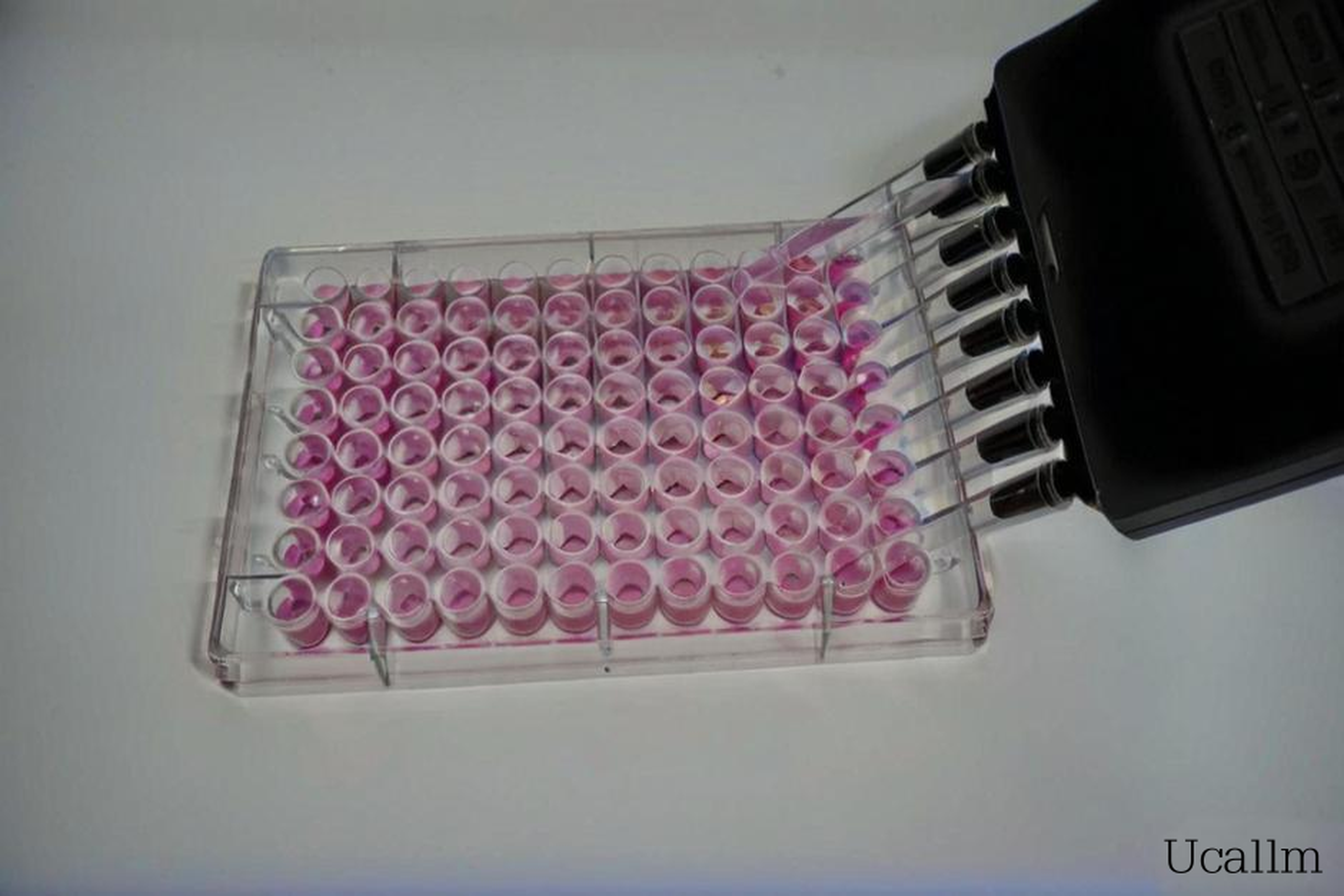
Bacterial colonies are key to understanding microbial growth and research. Now, scientists use advanced tech to handle up to 96 samples at once. This is a big change from the methods developed by Robert Koch 140 years ago.
Today, we have automated CFU quantification platforms. They use advanced photography and ImageJ plugins for fast and accurate counting. These tools make counting colonies easy and reliable, giving us solid results in many experiments.
Key Takeaways
- Bacterial colony counting is crucial for microbiological research
- 96-well plate templates can process multiple samples simultaneously
- Automated technologies significantly improve counting efficiency
- Precise colony quantification supports robust scientific investigations
- Advanced imaging techniques replace traditional manual counting methods
Understanding Bacterial Colonies and Their Importance
Bacterial colonies are tiny worlds that help us learn about microbes. They start with one cell and grow into groups that scientists study on agar plates. These groups are all the same genetically.
Looking at how colonies grow tells us a lot about bacteria. Scientists can see many things that make each group different:
- Shape and size of colonies
- Color variations
- Surface texture
- Edge and margin characteristics
- Opacity and elevation
Defining Bacterial Colonies
A bacterial colony is a visible aggregation of microorganisms on agar plates. It’s a group of bacteria that are almost the same. These groups can be small or big and complex.
Significance in Microbiology Research
Scientists use colonies to study important things about microbes. They look at:
- How microbes grow
- How microbes resist antibiotics
- How microbes adapt to their environment
- Genetic changes in microbes
Diverse Applications in Scientific Fields
Colony morphology is key in many fields. It helps in identifying and studying microbes in health, environment, and food safety. By studying colonies, scientists can understand how microbes work together and find new ways to solve problems.
Preparing the 96-Well Plate for Culturing
Starting successful bacterial research needs careful 96-well plate preparation. Microbiological techniques are key for accurate and reliable results, especially in studying antimicrobial resistance. The right preparation can greatly affect the quality of your research.
Selecting Appropriate Media
Choosing the right growth media is vital for bacterial culture. Each bacteria needs specific nutrients to grow well. Researchers must think about several things when picking media:
- Bacterial species requirements
- Research objectives
- Nutritional composition
- Potential antimicrobial resistance characteristics
Sterilization Techniques
Keeping a sterile environment is crucial in microbiology. Proper sterilization stops contamination and ensures good results. Important sterilization methods include:
- Autoclave treatment at 121°C for 15 minutes
- 70% ethanol surface disinfection
- HEPA filtration of work areas
- Use of laminar flow hoods
Proper Inoculation Methods
Accurate inoculation is key for successful bacterial culturing. Researchers must follow precise steps to ensure consistent growth in all wells.
| Parameter | Recommended Setting |
|---|---|
| Growth Temperature | 37°C |
| Incubation Time | 16 hours |
| Media Volume per Well | 200 µL |
| Shaking Speed | 200 RPM |
Careful attention to these details ensures reproducible results in bacterial research, particularly when investigating antimicrobial resistance.
Incubation Conditions for Optimal Growth
Bacterial growth in clinical diagnostics and environmental monitoring needs precise incubation conditions. Researchers must manage temperature, time, and environmental factors carefully. This ensures accurate and reliable results.
Creating the right environment for bacterial growth is key. It involves understanding the unique needs of different bacterial species. This approach supports robust bacterial growth.
Temperature Requirements
Temperature is crucial for bacterial colony development. Research shows specific temperature ranges for different microorganisms:
- Human pathogens grow best between 35°C and 37°C
- Biochemical identification tests suggest 36°C ± 2°C
- Drug susceptibility testing needs 35°C ± 1°C
- Mycobacterium species prefer 37°C
Time Considerations
Incubation time varies by bacterial species and research goals. Precise timing is essential for accurate colony formation. Laboratory studies highlight:
- Most bacteria grow best in 2-5 days
- E. coli grows well in 14-18 hours at 37°C
- Some microorganisms need up to 15 days
Environmental Factors
Many environmental factors affect bacterial growth in clinical diagnostics and environmental monitoring:
- Humidity levels
- Oxygen concentration
- pH balance
- Nutrient availability
Researchers must control these variables for consistent and reliable results. This is true for different bacterial species and research applications.
Methods for Counting Bacterial Colonies
Scientists use precise methods to count bacterial colonies. This is key for food safety and studying biofilm. Accurate counts help us understand microbial populations in many fields.
Visual Counting Techniques
Manual counting is a basic method in microbiology. Scientists use it to:
- Count colonies on agar plates
- Mark each colony with a pen or digital marker
- Check if cells are alive and how many there are
The best range for counting is 30-300 colonies per plate. It’s important to pick plates with the right dilution for accurate results.
Automated Colony Counter Technology
Modern labs use automated counters for better accuracy and speed. These tools are great for food safety and biofilm studies.
- Can process over 1000 Petri plates a day
- Reduce paperwork by 95%
- Prevent counting mistakes
Systems like the ipvMicrobe use smart algorithms for complex samples. They give quick, precise results important for quality checks in many industries.
Comparative Analysis of Counting Methods
Each method has its own benefits and drawbacks. Manual counting lets you see details but can be inconsistent. Automated counters are fast and accurate but cost more and need setup.
Choosing the right method depends on the research, sample type, and resources available.
Ensuring Accuracy in Colony Counting
Getting precise results in microbiology is key for good clinical tests and research. Counting bacterial colonies accurately needs careful work and advanced methods to avoid mistakes.
Avoiding Common Counting Errors
Counting bacterial colonies can be tricky. To avoid mistakes, lab workers should:
- Keep the lighting and background the same
- Use the same dilution methods every time
- Have clear rules for identifying colonies
- Count colonies in a methodical way
Calibration of Counting Instruments
New automated colony counters have changed microbiology. The BC-1000 Series, for example, spots colonies as small as 50 microns. It uses smart algorithms for exact results.
- Shape analysis algorithm
- Core detection mechanism
- Separation and extraction techniques
Validation of Counting Results
Checking colony counts involves several steps. Labs use digital imaging for detailed records and tracking, which is vital in medical tests and regulated fields.
Automated systems make counting faster and more accurate. They handle many plates at once, cutting down on human mistakes. Studies show these systems can be as good as manual counting, especially with tough or dense samples.
Utilizing Statistical Analysis for Data Interpretation
Statistical analysis is key in turning raw bacterial data into useful scientific insights. Experts in fighting antimicrobial resistance and monitoring the environment use strong statistical methods. These methods help them make accurate conclusions from complex experiments.
Knowing how to interpret statistics well lets scientists confirm their findings with more certainty.
Importance of Statistical Precision
Good statistical analysis gives researchers powerful tools. They can:
- Measure how much experiments vary
- Check if their research hypotheses are right
- Reduce mistakes in understanding data
- Make microbiological studies more reliable
Common Statistical Tests for Bacterial Research
Researchers often use several statistical methods to study bacterial colonies:
| Statistical Test | Primary Application | Key Benefit |
|---|---|---|
| ANOVA | Comparing multiple group means | Finds big differences between groups |
| T-test | Comparing two group means | Sees if two samples are different |
| Regression Analysis | Predicting bacterial growth patterns | Finds links between variables |
Interpreting Results Effectively
When looking at bacterial colony data, researchers must think about statistical significance and biological relevance. A new method for classifying bacteria showed over 98% accuracy. This shows how advanced stats can help in microbiology.
“Precision in statistical analysis transforms raw data into actionable scientific knowledge.” – Microbiology Research Consortium
By picking the right statistical methods and knowing their limits, scientists can get reliable insights. These insights help us understand bacteria better in different settings.
Recording and Reporting Bacterial Colony Counts
Keeping accurate records is key in studying microbial growth and ensuring food safety. Scientists need to have a clear plan for recording and reporting bacterial counts. This ensures their data is reliable and can be repeated.
Good documentation involves several important steps for solid scientific research:
- Maintaining detailed laboratory notebooks
- Standardizing data recording formats
- Implementing transparent reporting methods
- Utilizing advanced data management software
Best Practices for Documentation
Good documentation needs to be precise and consistent. Scientists should write down every detail of their bacterial counting process. This includes:
- Culture preparation methods
- Dilution factors
- Incubation conditions
- Counting techniques used
Importance of Transparency in Reporting
Being open about research helps others check and maybe redo the study. Scientists must share all methodological details. This includes any changes or omissions in their microbial studies.
Software Tools for Data Management
Today’s research uses advanced software to manage data better in food safety and microbial studies. These tools offer:
- Automated data entry
- Statistical analysis capabilities
- Visual data representation
- Long-term data storage
| Software Feature | Benefit for Colony Counting |
|---|---|
| Automated Counting | Reduces human error |
| Statistical Analysis | Provides comprehensive data interpretation |
| Cloud Storage | Ensures data preservation |
By using strong documentation methods and the latest software, researchers can make their microbial growth studies more reliable and impactful.
Troubleshooting Common Issues in Colony Counting
Bacterial colony counting has its own set of challenges. Knowing these challenges can make microbiological experiments more accurate. This is especially true when using bacterial culture techniques.
Identifying Contamination Risks
Contamination can ruin all your hard work. It’s important to follow strict rules to keep your work clean:
- Use sterile techniques during agar plates preparation
- Flame metal loops between inoculations
- Maintain clean workspace environments
- Verify antibiotic concentration to prevent unwanted growth
Managing Inconsistent Growth Patterns
Biofilm formation can make it hard to get uniform colonies. Careful monitoring of environmental conditions is key. Things like temperature, nutrients, and pH affect how colonies grow.
Addressing Overlapping Colonies
Too many colonies on a plate can mess up your count. Here’s what to do:
- Dilute samples to achieve optimal colony separation
- Limit plate population between 30-300 colony-forming units
- Use automated counting technologies for precision
- Implement statistical validation methods
By knowing these common problems, microbiologists can improve their work. This is especially true when dealing with bacterial cultures.
Future Trends in Bacterial Colony Counting Techniques
The world of microbiology is changing fast, thanks to new tech. Scientists are working on new ways to count bacteria, with a big help from artificial intelligence. This is changing how we do bacterial colony counting for the better.
Emerging Technologies Reshaping Bacterial Analysis
New tech is changing how we count bacteria. Things like microfluidic devices and high-throughput imaging are making a big difference. They help us get more accurate and faster results in studying bacteria.
- High-resolution imaging systems
- Automated detection algorithms
- Miniaturized microfluidic platforms
Artificial Intelligence in Microbiological Techniques
Machine learning is making clinical diagnostics better. It’s helping us detect bacteria more accurately. Studies show big improvements in how well we can spot bacteria:
| AI Performance Metrics | Before AI | After AI Implementation |
|---|---|---|
| Detection Accuracy | 64.3% | 97.4% |
| False Negative Rate | 32.1% | 1.5% |
| Data Collection Cost | 100% | Reduced by 80% |
Expectations for Future Research
The future of counting bacteria is bright. Scientists hope to make big leaps in real-time monitoring and deep learning. They want to make counting bacteria cheaper, more precise, and faster. This will change research and diagnosis for the better.
Conclusion: Streamlining the Process for Better Outcomes
Understanding bacterial colonies is key to moving forward in microbiology. New ways to count colonies are important for studying how microbes grow. This is especially true in 96-well plate templates that change how labs work.
When studying how microbes resist antibiotics, accuracy is crucial. Today’s labs use machines that can count over 2500 colonies in an hour. This cuts down on mistakes and makes data more reliable. Counting between 30 to 300 colonies helps scientists get a true picture of microbial populations.
Best Practices in Colony Analysis
Counting colonies is just the start. To get real insights, researchers need to fine-tune nutrients, control the environment, and use the latest tracking tools. These steps are vital for making scientific discoveries.
Future Research Directions
New methods for counting colonies will lead to big breakthroughs in microbiology. By using automation and sticking to high standards, scientists can learn more about microbes. This knowledge is essential for scientific progress.
FAQ
What are bacterial colonies and why are they important in microbiological research?
Bacterial colonies are groups of microorganisms that grow on agar plates. They start from a single cell. In microbiology, they help scientists study how microbes grow and how they resist antibiotics.
They also help understand how microbes behave. This is important for diagnosing diseases, monitoring the environment, and ensuring food safety.
How do I prepare a 96-well plate for bacterial culturing?
To prepare a 96-well plate, first choose the right growth media for your microbes. Make sure the plate and area are sterilized to avoid contamination.
Use aseptic techniques when adding the microbes. Keep the amount of microbes the same in each well. Check the purity and amount of your sample before adding it to the plate.
What are the optimal conditions for bacterial growth in 96-well plates?
For bacterial growth, consider several factors. The temperature should match the type of bacteria (usually 35-37°C). The incubation time varies by type, often 18-24 hours.
Controlled humidity and oxygen levels are also key. The growth media must be consistent. Each type of bacteria has its own needs for growth.
What methods can be used to count bacterial colonies?
You can count colonies manually or automatically. Manual counting uses a counter or microscope and is precise but slow. Automated counting uses advanced imaging for fast and accurate results.
Automated methods are great for large-scale research and offer consistent results.
How can I ensure accuracy when counting bacterial colonies?
For accurate counting, use proper dilution and clear criteria for identifying colonies. Calibrate automated tools regularly. Use control samples for validation.
Apply the right statistics to your data. Keep the environment consistent during the experiment.
What statistical methods are important in interpreting colony counting data?
Important statistics include mean counts, standard deviation, and confidence intervals. Choose the right statistical tests based on your study. Consider both the statistical and biological significance of your findings.
This is especially important in studies on antibiotic resistance and environmental monitoring.
What are some emerging technologies in bacterial colony counting?
New technologies include microfluidic devices, high-throughput imaging, and AI-driven counting. These advancements improve accuracy and speed up data collection. They also offer deeper insights into bacterial growth.
Machine learning is being used to automate colony identification and analysis.
What common challenges might I encounter when counting bacterial colonies?
Challenges include contamination, inconsistent growth, overlapping colonies, and different colony shapes. Use sterile techniques and optimize growth conditions to overcome these.
Employ advanced imaging and develop standard protocols for identifying and counting colonies.





Leave a Comment
Your email address will not be published. Required fields are marked *