


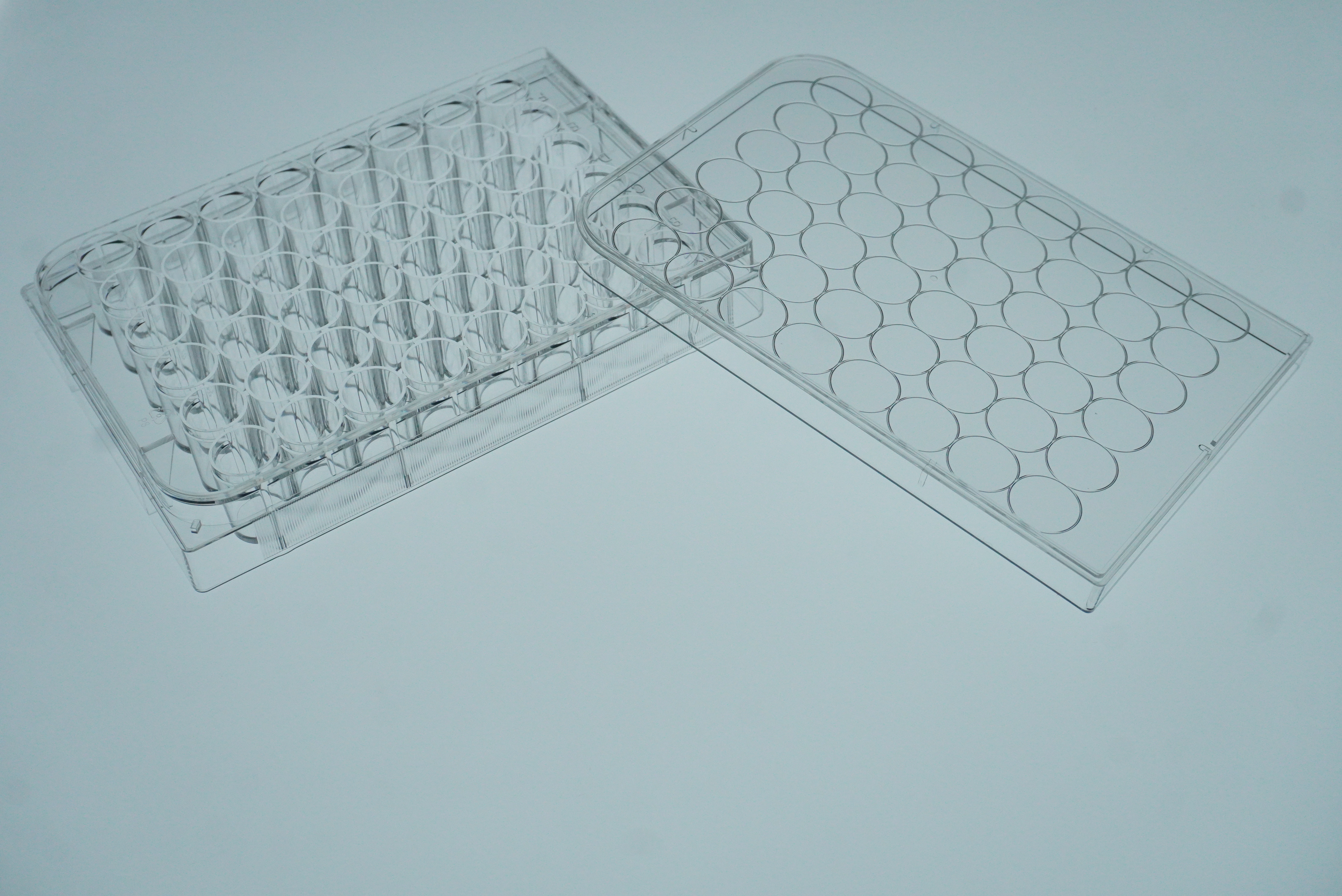
Can transparent well plates change the game in scientific research? The world of microplate optics is complex. It shows how optical features are key to top-notch research.
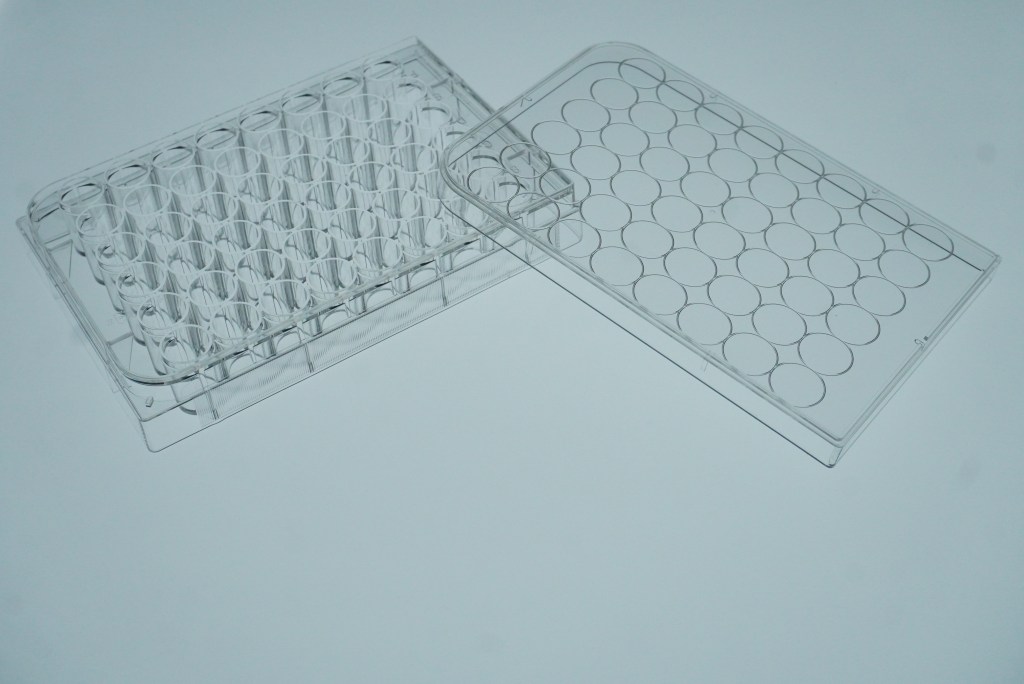
Transparent well plates are essential in today’s science. They give researchers top-notch optical performance in many fields. These tools help with detailed molecular studies, crucial for biology, chemistry, and medicine.
These plates come in various sizes like 96-well, 384-well, and 1536-well. They’re made to fit different needs, allowing scientists to make precise measurements. The volumes they hold range from 10µl to 360µl, depending on the study.
Key Takeaways
- Transparent well plates offer exceptional optical performance across research disciplines
- Multiple formats enable flexible scientific investigations
- Volume capacities range from 10µl to 360µl
- Materials like polystyrene and cyclic olefin copolymer enhance optical capabilities
- Critical for advanced molecular biology techniques
Introduction to Transparent Well Plates
Transparent well plates are key tools in today’s biology labs. They help scientists do precise and efficient tests in many fields. These tools offer a clear way to study biological samples.
These plates are made to be clear, allowing for very accurate lab work. They support many scientific studies because of their special light properties.
Definition and Core Purpose
A transparent well plate is a special container for many samples. It’s made to let light through well. It has many wells in a set pattern:
- 96-well format (most common)
- 384-well configuration
- 1536-well advanced format
Importance in Biological Research
Scientists use these plates for many important tasks. They are key for:
- Cell culture experiments
- Colorimetric assays
- Enzyme-linked immunosorbent assays (ELISA)
- Protein crystallization studies
“Transparent well plates are fundamental instruments that transform complex biological research into manageable, precise investigations.”
| Well Plate Configuration | Typical Volume Range | Primary Applications |
|---|---|---|
| 96-well plate | 100-300 µL | High-throughput screening |
| 384-well plate | 20-100 µL | Advanced molecular research |
| 1536-well plate | 2-10 µL | Ultra-high-throughput screening |
The clear nature of these plates is crucial. It makes them essential in fields like drug discovery and genetics.
Key Optical Properties of Transparent Well Plates
Transparent well plates are key in biological research. Their optical features are crucial for many experiments. Polystyrene well plate optics are essential in today’s labs, helping scientists measure with great precision.
Well plates’ success depends on several optical properties. These properties are vital for the success of experiments. Scientists check these carefully to get the best results.
Light Transmission Capabilities
Polystyrene is great for light transmission, making it perfect for optical studies. Its clear nature helps researchers:
- Capture clear microscopic images
- Perform accurate spectrophotometric measurements
- Minimize light interference during experiments
Transparency and Refractive Index
Knowing how transparent well plates are is key for accurate science. The refractive index affects how light moves through the material.
| Optical Property | Typical Value for Polystyrene | Significance |
|---|---|---|
| Light Transmission | 90-95% | Enables precise optical measurements |
| Refractive Index | 1.59 | Allows minimal light distortion |
| Wavelength Range | 400-800 nm | Supports visible light spectrum analysis |
Researchers depend on these precise optical features for reliable results. Choosing the right well plate material is crucial for quality research in many fields.
Impact of Material on Optical Characteristics
The choice of materials is key in making transparent well plates. Researchers need to pick the right material for the best results in microplate assays and optical tests.
Common Materials in Well Plate Manufacturing
Transparent well plates are made from two main materials:
- Polystyrene (PS)
- Polypropylene (PP)
Polystyrene vs Polypropylene Comparison
BRANDplates® microplates often use polystyrene. It has better optical qualities. The benefits include:
- Higher light transmission
- Enhanced optical clarity
- Better surface interactions for cell culture
Surface Coatings and Treatments
Surface changes can greatly improve well plates. Special coatings make them better for assays by:
- Improving cell adhesion
- Reducing background fluorescence
- Optimizing light transmission
Choosing the right materials and treatments helps get accurate and reliable results in optical experiments.
Influence of Well Plate Design on Optics
The design of well plates is key to their optical performance. Researchers must think about several factors. These include Well Plate Transparency and Plate Reader Compatibility when picking microplates for biological studies.
Shape and Depth Considerations
Well plate geometry greatly affects light transmission and measurement accuracy. The design parameters can greatly impact experimental results:
- Precise well depth impacts optical path length
- Uniform wall thickness ensures consistent light transmission
- Smooth interior surfaces minimize light scattering
Microplate Formats and Optical Performance
Different microplate formats have unique optical characteristics. BRANDplates offer options in 96-, 384-, and 1536-well configurations. Each has specific optical advantages.
| Microplate Format | Well Transparency | Plate Reader Compatibility |
|---|---|---|
| 96-well | High transparency | Excellent universal compatibility |
| 384-well | Moderate transparency | Specialized reader requirements |
| 1536-well | Limited transparency | Advanced reader needed |
Light Scattering Mitigation
Researchers can reduce light scattering with strategic design. Precision manufacturing techniques help cut down optical interference and boost data quality. Key strategies include:
- Smooth surface treatments
- Optimized material selection
- Controlled wall thickness
Understanding these optical design nuances helps scientists pick the right well plates. This ensures reliable and reproducible results.
Spectral Range and Its Significance
Understanding the spectral range is key for researchers using microplate optics. Light passing through well plates is vital in many scientific fields. This includes basic research and advanced analytical techniques.
The optical properties of well plates greatly affect experimental results. Scientists must pick the right microplates based on light transmission. This is crucial for their research.
Visible Light Spectrum
In the visible light spectrum, researchers focus on several key aspects of microplate optics:
- Transparency levels for accurate colorimetric measurements
- Light transmission percentage
- Minimizing optical interference
UV-Visible Range
The UV-visible range has its own challenges and opportunities for light transmission in well plates. Different materials show different optical characteristics:
| Material | Transmission Range | Key Characteristics |
|---|---|---|
| BK7 Glass | 380-2100 nm | Standard optical material |
| UV Fused Silica | 195-2100 nm | Excellent broad-spectrum transmission |
| CaF2 | 250-7000 nm | High transmission above 90% |
Fluorescence Applications
Fluorescence techniques need special microplate optics with precise spectral properties. Researchers often use three main well plate colors:
- Transparent: Best for colorimetry
- White: Ideal for luminescence
- Black: Best for fluorescence assays
Choosing the right well plate materials and designs is crucial. It helps researchers get accurate and reproducible results in various spectral applications.
Measuring Optical Characteristics
Researchers use precise methods to check the optical qualities of transparent well plates. These measurements are key for the best results in scientific tests and for working well with plate readers.
Accurate optical analysis needs several important methods. These help scientists understand the quality and how well transparent well plates work.
Standard Optical Measurement Techniques
Measuring optical qualities needs special techniques. These capture different aspects of how well plates perform:
- Spectrophotometric analysis
- Haze value determination
- Light transmission measurements
- Clarity value calculation
Tools and Equipment Required
Many precise tools are needed for detailed optical tests:
- Spectrophotometers with integrating spheres
- High-resolution plate readers
- Specialized optical measurement apparatus
Precision in measurement is key to understanding the optical performance of transparent well plates.
Data Interpretation
Understanding optical measurement data is crucial. It involves looking at important metrics:
- Haze values (ideally
- Total transmittance calculations
- Clarity value assessments
Scientists must think about things like sample thickness, temperature, and how the sample is prepared. This ensures accurate and reliable results in their optical analysis.
Applications of Transparent Well Plates
Transparent well plates are key in today’s biology labs. They are versatile and help scientists in many fields. Their special design lets researchers do precise and quick tests.
These plates are vital in many areas of study. They work well with different tests and studies.
Cell Culture and Assays
Transparent well plates are crucial for growing cells. They help scientists:
- Watch how cells grow and look
- Do detailed cell studies
- Run cell tests with great accuracy
Drug Testing and Screening
In drug research, these plates help a lot. They let scientists:
- Quickly check drug effects
- Measure how cells react to drugs
- Test many drugs at once
Molecular Biology Techniques
Scientists use these plates for important tests like:
- ELISA (Enzyme-Linked Immunosorbent Assay)
- PCR (Polymerase Chain Reaction)
- Studying protein interactions
| Application | Key Advantages |
|---|---|
| Cell Culture | Real-time cell observation |
| Drug Screening | High-throughput analysis |
| Molecular Biology | Precise quantitative measurements |
The special optical features of these plates are vital in today’s biology labs. They help scientists do their work more accurately and efficiently.
Factors Affecting Optical Performance
Transparent well plates are key in science, with their performance affected by many things. Knowing these factors helps get reliable results and keeps science honest.
Temperature Sensitivity
Polystyrene well plates are very sensitive to temperature. Big changes in temperature can mess with how light goes through. It’s important to keep the environment steady to keep the plates clear.
- Keeping the temperature between 4°C and 37°C is key for clear plates
- Changes in temperature can cause tiny distortions on the surface
- Keeping the temperature just right helps the plates work well
Surface Contamination
Contamination is a big problem for clear well plates. Small particles, leftover chemicals, or biological stuff can block light. This makes it hard to get accurate results.
| Contamination Type | Potential Impact | Mitigation Strategy |
|---|---|---|
| Protein Residues | Light Scatter Increase | Thorough Cleaning Protocols |
| Dust Particles | Optical Interference | Sterile Handling Procedures |
| Chemical Residues | Refractive Index Alteration | Specialized Cleaning Solutions |
Aging and Durability
How long a well plate lasts affects its performance. Using them a lot or storing them for a long time can wear them down. This can make them less clear and less strong.
- Watch how they look over time
- Change them out regularly
- Keep them in a stable place
By knowing these important points, scientists can do better experiments. They can keep their measurements accurate and reliable.
Innovations in Well Plate Technology
The world of transparent well plates is changing fast. New discoveries in material science and imaging are leading the way. These breakthroughs are making transparent well plates better, opening new doors in microplate optics research.
Recently, well plate technology has seen big improvements in a few key areas:
- Enhanced material composition for superior optical transparency
- Advanced surface treatments reducing autofluorescence
- Improved integration with high-resolution imaging systems
Advancements in Material Science
Scientists are working on new polymers for transparent well plates. These materials are making plates better in several ways:
- Increased light transmission
- Reduced background noise
- Better compatibility with advanced microscopy techniques
Integration with Imaging Systems
Now, microplate optics and advanced imaging are changing biology research. Modern transparent well plates have special designs. They work well with:
- Seamless compatibility with high-content screening platforms
- Enhanced signal detection capabilities
- Precision imaging across multiple wavelengths
These new developments are making transparent well plates more powerful. They give researchers deeper insights into cells and experiments.
Conclusion and Future Directions
The world of biological research relies heavily on microplate optical characteristics. Light transmission in well plates is key to precise experiments. Researchers need to pick the right materials like polystyrene, cyclic olefin copolymer (COC), or quartz for the best results.
New technologies are changing well plate design. Different materials affect how light passes through, showing the need for better choices. For example, COC microplates have low background absorbance, especially at important wavelengths for molecular studies.
Future studies will aim to improve light transmission in well plates. Scientists hope to reduce background absorbance, especially in the ultraviolet range. The goal is to make well plates that support more sensitive and complex biological tests while keeping their optical quality high.
Advances in making well plates will keep changing biological research. By focusing on clear light, less scattering, and precise wavelength transmission, researchers can explore new areas in cell studies, drug testing, and molecular research.
FAQ
What are transparent well plates and why are they important in biological research?
Transparent well plates are tools used in labs for many biological tasks. They have clear wells for precise optical measurements. This makes them key in cell culture, drug screening, and molecular biology, helping researchers see and analyze samples accurately.
How do the optical properties of well plates affect experimental results?
The optical features of well plates greatly affect how accurate experiments are. Things like material, design, and surface treatment can change the quality of data in scientific tests.
What materials are commonly used in manufacturing transparent well plates?
Polystyrene and polypropylene are top choices for making well plates. Polystyrene is loved for its clearness and fit with most biological uses. Polypropylene is valued for its toughness and chemical resistance.
How do different well plate formats impact optical performance?
Different microplate sizes (96-, 384-, and 1536-well) have unique optical traits. The shape, depth, and design of wells can affect how well light is transmitted and detected, impacting compatibility with readers.
What spectral ranges are important for transparent well plates?
Transparent well plates work with various light ranges, including visible and UV. This makes them useful for many tests, like colorimetric assays and fluorescence experiments, in many fields.
How can researchers ensure the quality of transparent well plates?
To keep well plates in top shape, researchers use spectrophotometers and special readers. They should regularly check light transmission, look for surface dirt, and watch for temperature effects to get reliable results.
What recent innovations are improving transparent well plate technology?
New advancements include better polymers and surface treatments. These improvements help reduce background light and enhance imaging capabilities, making well plates more versatile in research.
How do temperature and aging affect well plate optical performance?
Extreme temperatures and long storage can change well plates’ optical qualities. This can impact how well they transmit light and measure things accurately. It’s important to store them correctly to keep their performance steady.
What applications benefit most from transparent well plates?
Transparent well plates are vital in cell culture, drug screening, and molecular biology. They help monitor cell processes, drug effects, and molecular reactions, aiding in many research areas.
How do surface coatings impact well plate optical characteristics?
Surface coatings can improve well plates’ optical qualities. They can make light transmission better, cut down background noise, and help cells stick. Special coatings are designed for specific uses, like fluorescence or cell culture.





Leave a Comment
Your email address will not be published. Required fields are marked *