


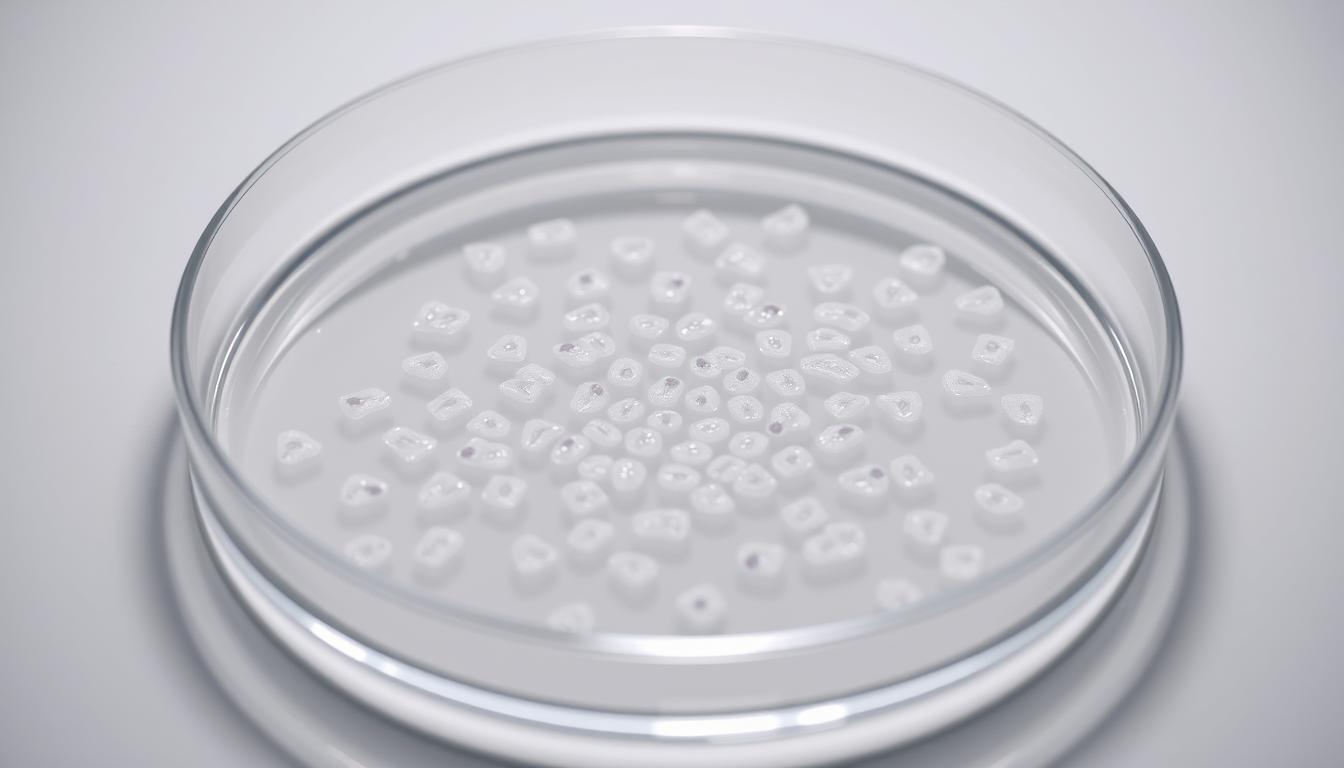
What if the success of groundbreaking scientific research hinges on something as simple as a 10cm cell culture dish? Researchers in biological laboratories rely on precise surface area measurements to unlock critical insights into cellular behavior and experimental outcomes.
The 10cm cell culture dish represents a fundamental tool in scientific research, offering an impressive growth surface area of 58.8 cm² that enables detailed cellular studies. These specialized polystyrene containers provide researchers with a standardized platform for cultivating adherent cells with exceptional precision.
Scientists recognize that understanding the cell culture surface area calculation is crucial for designing experiments that yield reliable and reproducible results. The carefully engineered surface of these dishes supports optimal cell attachment and growth, making them indispensable in modern biological research.
Key Takeaways
- 10cm cell culture dishes provide a standardized 58.8 cm² growth area
- Polystyrene material ensures consistent cell attachment
- Surface area directly impacts cellular growth and experimental outcomes
- Precise measurements are critical for scientific research
- TC-treated surfaces enhance cell culture performance
Understanding the 10cm Cell Culture Dish Surface Area
Cell culture research depends critically on specialized laboratory equipment that supports precise cell growth and experimental conditions. The 10cm cell culture dish represents a fundamental tool for scientists investigating cellular behaviors across multiple disciplines.
A cell culture dish is a specialized container designed to provide an optimal environment for growing and maintaining cellular populations. Constructed from polystyrene surface area materials, these dishes enable researchers to cultivate cells with exceptional precision and control.
What Defines a Cell Culture Dish?
Cell culture dishes are engineered with specific characteristics that support cellular growth:
- Tissue culture treated surface for enhanced cell attachment
- Sterile manufacturing processes
- Consistent dimensional specifications
- Transparent material for microscopic observation
Importance of Surface Area in Cell Culture
Surface area plays a crucial role in cell culture experiments. The 10cm dish provides approximately 56.7 cm² of growth space, accommodating up to 8.8 x 10^6 cells at full confluency. This specific surface area allows researchers to:
- Maintain uniform cell distribution
- Control nutrient availability
- Facilitate consistent experimental conditions
Standard Sizes and Dimensions
Precise dimensional specifications are critical for reproducible research. A standard 10cm dish typically features:
| Dimension | Measurement |
|---|---|
| Diameter | 100mm (10cm) |
| Inner Growth Surface | 83.8mm – 86.65mm |
| Height | 20mm |
| Total Surface Area | 56.7 cm² |
Understanding these specifications ensures researchers can select the most appropriate tissue culture treated surface for their specific experimental requirements.
Calculating the Surface Area of a 10cm Dish
Understanding the surface area for adherent cells is crucial in biological research. Cell culture dishes play a critical role in providing the right environment for cell growth surface area, making precise measurements essential for successful experiments.
Researchers rely on accurate surface area measurements to optimize cell culture conditions. The standard 10cm cell culture dish offers specific dimensional characteristics that are vital for experimental success.
Mathematical Formula for Surface Area
Calculating the surface area involves a straightforward mathematical approach:
- Formula: Surface Area = π × r²
- Radius for a 10cm dish: 5 cm
- Calculation: π × (5 cm)² = 78.54 cm²
Application of Surface Area in Experiments
The precise surface area for adherent cells directly impacts experimental outcomes. Key considerations include:
- Determining optimal cell seeding density
- Ensuring uniform nutrient distribution
- Predicting cell proliferation rates
For most research applications, the usable growth surface area is approximately 59 cm², which provides an ideal environment for cell culture experiments. Researchers must account for these specific measurements to ensure reproducible and reliable results.
Factors Influencing Cell Growth on Dish Surfaces
Cell culture dishes play a critical role in scientific research, with surface characteristics directly impacting cell growth and experimental outcomes. The interaction between cell monolayers and dish surfaces determines the success of cellular studies across multiple disciplines.
Researchers must carefully consider multiple factors that influence cell growth on culture dish surfaces. The material composition and surface treatments are crucial elements in creating optimal environments for cell attachment and proliferation.
Material Composition of Cell Culture Dishes
Polystyrene remains the primary material for cell culture dishes due to its unique properties. The surface area for cell monolayers directly impacts cell seeding density and overall experimental success.
- Virgin polystyrene provides optimal optical clarity
- Material allows consistent cell attachment
- Supports uniform cell monolayer formation
Surface Treatments for Enhanced Cell Attachment
Advanced surface treatments modify polystyrene to improve cell adhesion and growth potential. These modifications significantly impact cell seeding density surface area, enabling more precise experimental control.
| Treatment Type | Cell Attachment Improvement | Typical Application |
|---|---|---|
| Plasma Treatment | Increases hydrophilicity | Mammalian cell cultures |
| Collagen Coating | Enhances cellular adhesion | Specialized tissue studies |
| Extracellular Matrix Proteins | Mimics natural cellular environment | Complex cellular research |
Selecting the appropriate surface treatment can dramatically improve cell growth and experimental reproducibility.
Understanding these intricate surface characteristics allows researchers to optimize cell culture conditions, ensuring reliable and consistent experimental results across various scientific disciplines.
Advantages of Using 10cm Cell Culture Dishes
Cell culture research demands precision and optimal growth conditions. The 10cm cell culture dish emerges as a critical tool for scientists seeking reliable experimental outcomes. With approximately 59 cm² of cell harvesting surface area, these dishes provide researchers with an ideal platform for multiple cellular studies.
The versatility of 10cm dishes makes them indispensable in laboratory settings. Researchers can leverage the expansive cell imaging surface area to observe intricate cellular behaviors and morphological changes with remarkable clarity.
Optimal Space for Cell Proliferation
Key advantages of 10cm dishes include:
- Consistent growth conditions through opto-mechanical activation
- Safe stacking capabilities with integrated rim design
- Enhanced gas exchange through specialized lid cams
- Precise numerical orientation for documentation
Versatility in Experimental Applications
These dishes from Fisher Scientific offer researchers unprecedented flexibility. The 100 mm diameter enables multiple experimental approaches, from cell harvesting to advanced microscopic imaging techniques. Scientists can confidently conduct experiments knowing they have a standardized, reliable cell culture platform.
The comprehensive design of 10cm dishes supports various research requirements, making them an essential component in biological and pharmaceutical investigations.
Best Practices for Cell Culture in 10cm Dishes
Cell culture research demands precision and careful technique. Successful experiments rely on maintaining optimal conditions for cell growth, particularly when working with 10cm cell culture dishes. Understanding the nuanced approaches to sterilization, handling, and maintenance can significantly impact research outcomes.
Researchers must follow rigorous protocols to ensure the integrity of their cell culture surface area calculations and experimental results. The 10cm cell culture dish surface area of 56.7 cm² requires meticulous attention to detail.
Critical Sterilization Techniques
Effective sterilization is paramount in cell culture work. Key strategies include:
- Autoclave equipment at 121°C for 15-20 minutes
- Use 70% ethanol for surface disinfection
- Implement laminar flow hood practices
- Utilize sterile disposable materials when possible
Handling and Maintenance Guidelines
Proper handling of 10cm cell culture dishes requires specific techniques:
- Always use sterile gloves
- Utilize stacking beads for safe dish manipulation
- Maintain consistent media volume of 12 mL
- Monitor cell density carefully
| Parameter | Recommended Value |
|---|---|
| Surface Area | 56.7 cm² |
| Seeding Density | 2.2 x 10⁶ cells |
| Confluency | 8.8 x 10⁶ cells |
| Growth Medium Volume | 12 mL |
“Precision in cell culture is not an option, it’s a requirement.” – Dr. Sarah Rodriguez, Cell Biology Research Institute
Careful adherence to these best practices ensures reproducible results and maintains the highest standards of cell culture research.
Choosing the Right Medium for 10cm Dishes
Cell culture research demands precision in medium selection and application. The polystyrene surface area of 10cm dishes plays a critical role in determining optimal growth conditions for various cell types.
Researchers must carefully consider multiple factors when selecting growth media for tissue culture treated surface environments. The specific requirements of different cell lines demand tailored approaches to medium preparation and volume management.
Common Growth Media for Cell Types
Different cell types require specialized media formulations to support optimal growth. Key considerations include:
- Mammalian cell lines need nutrient-rich media
- Stem cells require specific growth factors
- Primary cell cultures demand precise nutritional support
Effects of Medium Volume on Cell Growth
The interaction between medium volume and polystyrene surface area critically impacts cell proliferation. For a standard 10cm dish with 56.7 cm² surface area, researchers typically use specific volume parameters:
| Cell Type | Medium Volume | Seeding Density |
|---|---|---|
| Standard Mammalian Cells | 12 mL | 2.2 x 10⁶ cells |
| Sensitive Cell Lines | 10-15 mL | Adjusted accordingly |
Maintaining the correct medium volume ensures optimal nutrient distribution and supports consistent cell growth across the tissue culture treated surface.
Importance of Surface Area in Experimental Design
Cell culture research demands precise considerations of surface area to ensure reliable experimental outcomes. The cell growth surface area plays a critical role in determining the success of biological investigations, particularly when working with adherent cells.
Scientific researchers must carefully evaluate surface area parameters to optimize experimental conditions. The surface area for adherent cells directly impacts cell proliferation, interaction, and overall experimental results.
Designing Experiments with Surface Area Considerations
Key factors to consider when designing cell culture experiments include:
- Precise cell seeding density
- Optimal nutrient distribution
- Consistent cell-to-cell interactions
- Monolayer formation dynamics
Impact on Data Reliability and Reproducibility
Experimental consistency depends on understanding surface area constraints. For a standard 10cm cell culture dish with 56.7 cm² surface area, researchers should consider specific cell density metrics:
| Parameter | Value |
|---|---|
| Initial Seeding Density | 2.2 x 10⁶ cells |
| Confluency Density | 8.8 x 10⁶ cells |
| Surface Area | 56.7 cm² |
Precise surface area management ensures statistically significant and reproducible research outcomes across biological investigations.
Innovations in Cell Culture Dish Technology
The landscape of cell culture technology continues to evolve, bringing groundbreaking innovations that transform research capabilities. Researchers now explore advanced materials and design strategies to optimize surface area for cell monolayers, enhancing experimental precision and cellular growth potential.
Cell culture dishes are experiencing remarkable technological transformations. Manufacturers are developing sophisticated surfaces that dramatically improve cell seeding density surface area characteristics. These innovations address critical research challenges by creating more responsive and adaptable culturing environments.
Emerging Material Advancements
Modern cell culture dishes are manufactured from optically-clear virgin polystyrene with sophisticated surface treatments. Key developments include:
- Nano-textured surface modifications
- Enhanced cellular attachment mechanisms
- Improved biocompatibility
- Precision-engineered surface topographies
Future Trends in Cell Culture Practices
Cutting-edge research is pushing boundaries beyond traditional 2D culture methods. Scientists are exploring:
- Three-dimensional culture systems
- Biomimetic surface designs
- Intelligent material interfaces
- Integrated sensor technologies
With a standard 10cm cell culture dish offering 56.7 cm² surface area, researchers can now leverage advanced technologies to maximize cellular research potential. These innovations promise more nuanced, accurate, and reproducible experimental outcomes.
Troubleshooting Common Issues with 10cm Dishes
Researchers working with cell culture dishes frequently encounter challenges that can impact experimental outcomes. Understanding how to manage these issues is crucial for maintaining cell harvesting surface area integrity and ensuring reliable results.
Maintaining consistent cell growth across the entire cell imaging surface area requires careful attention to several critical factors. Successful cell culture management depends on proactive problem prevention and strategic intervention.
Contamination Control Strategies
Preventing contamination remains a primary concern for laboratory researchers. Effective strategies include:
- Using sterile technique during all manipulations
- Working in certified biosafety cabinets
- Regularly inspecting dishes for microbial growth
- Implementing strict protocol for medium changes
Resolving Growth Challenges
Cell culture dishes with 56.7 cm² surface area require specific attention to optimize cell growth. Key considerations include:
- Monitoring seeding density (2.2 x 10⁶ cells)
- Tracking cell confluence (8.8 x 10⁶ cells)
- Using appropriate volumes of Versene (5 mL) and trypsin (5 mL)
By understanding potential pitfalls and implementing robust techniques, researchers can maximize the performance of their 10cm cell culture dishes and ensure reproducible experimental results.
The Role of 10cm Cell Culture Dishes in Research
Cell culture dishes with a surface area of 56.7 cm² have become fundamental tools in modern biological research. Scientists rely on these 10cm cell culture dish surfaces to conduct precise experiments across multiple disciplines, from pharmaceutical development to advanced cell biology studies. The standardized surface area enables researchers to create consistent and reproducible experimental conditions.
Pharmaceutical researchers leverage the cell culture surface area calculation to screen potential drug candidates and assess cellular responses. These 10cm dishes provide optimal space for growing diverse cell populations, allowing scientists to explore complex biological interactions with remarkable precision. The consistent surface area supports critical investigations into cellular mechanisms, drug toxicity, and potential therapeutic interventions.
Biotechnological advancements increasingly depend on the controlled environment provided by these specialized culture dishes. Researchers can carefully monitor cell growth, proliferation, and response patterns using the reliable 56.7 cm² surface area. This standardization ensures that experimental results can be compared and validated across different research laboratories, driving scientific understanding forward.
Contributions to Cell Biology Studies
Modern cell biology research critically depends on these versatile 10cm cell culture dishes. They enable scientists to study intricate cellular processes, genetic interactions, and metabolic pathways with unprecedented detail. The precise surface area allows for consistent cell seeding, growth, and experimental manipulation across numerous research protocols.
Applications in Pharmaceutical and Biotechnological Research
Pharmaceutical companies and biotechnology firms rely extensively on these culture dishes for drug discovery and development. The standardized surface area supports high-throughput screening, toxicology studies, and advanced cellular research techniques that drive medical innovation and scientific understanding.
FAQ
What is a 10cm cell culture dish?
A 10cm cell culture dish is a standard laboratory tool made of polystyrene designed for growing and maintaining cell cultures. It typically features a surface area of approximately 59 cm² and is specifically treated to promote cell attachment and growth in biological research experiments.
How do I calculate the surface area of a 10cm cell culture dish?
The surface area is calculated using the mathematical formula πr², where r is the radius of the dish. For a standard 10cm dish, this typically results in a surface area of approximately 59 cm². This calculation is crucial for determining cell seeding density and experimental parameters.
Why is surface area important in cell culture experiments?
Surface area is critical because it directly impacts cell growth, nutrient distribution, cell-to-cell interactions, and overall experimental outcomes. The proper surface area ensures optimal cell proliferation, uniform cell distribution, and consistent experimental results.
What are the key considerations when choosing a cell culture dish?
Researchers should consider surface area, material composition (typically tissue culture-treated polystyrene), surface treatment, sterility, and compatibility with specific cell types and experimental requirements.
How does surface treatment affect cell growth?
Surface treatments modify the polystyrene to enhance cell attachment by introducing hydrophilic groups and modifying surface chemistry. This improves cell adhesion, spreading, and overall growth characteristics, making it easier for cells to attach and proliferate.
What is the recommended cell seeding density for a 10cm dish?
Cell seeding density varies depending on the specific cell type and experimental goals. Typically, researchers seed between 1-5 × 10^6 cells per 10cm dish, but the exact number should be optimized based on the cell type, growth characteristics, and experimental requirements.
How do I maintain sterility when using cell culture dishes?
Maintain sterility by using aseptic techniques, working in a laminar flow hood, using sterile tools, wearing appropriate personal protective equipment, and carefully handling dishes to prevent contamination of the surface area.
What are the common challenges in cell culture dish usage?
Common challenges include uneven cell distribution, contamination, poor cell attachment, inappropriate media volume, and maintaining consistent growth conditions across the entire dish surface.
How do different media volumes affect cell growth?
Media volume is crucial for nutrient availability, gas exchange, and waste product removal. The optimal volume depends on the dish’s surface area, typically ranging from 5-10 mL for a 10cm dish, ensuring complete coverage without overwhelming the cells.
What future innovations are emerging in cell culture dish technology?
Emerging innovations include advanced surface treatments, 3D culture systems, biomimetic surfaces, and smart materials that can provide more precise control over cell growth and interaction, potentially revolutionizing cell culture research techniques.




Leave a Comment
Your email address will not be published. Required fields are marked *