



Ever wondered if heating an Erlenmeyer flask could turn your scientific experiment into a potential disaster? Scientists and researchers often face the question of whether Erlenmeyer flasks can be heated safely. It’s key to know how heat-resistant these flasks are to avoid accidents and ensure experiments succeed.
Erlenmeyer flasks are essential tools in labs, known for their unique conical shape. Whether you can heat them depends on several factors. These include the material, thickness of the flask, and the heating method used. Not all Erlenmeyer flasks can handle heat equally well.
When flasks are heated too quickly, there’s a 10% chance of failure. It’s important for researchers to know which flasks can be heated safely. This knowledge helps prevent accidents during experiments.
Key Takeaways
- Heat resistance varies depending on Erlenmeyer flask material
- Borosilicate glass offers superior thermal shock resistance
- Proper heating techniques are critical for flask safety
- Always inspect flasks for damage before heating
- Different flask designs have varying temperature tolerances
- Indirect heating methods are often safer than direct heat
Understanding Erlenmeyer Flasks
Invented in the 1860s by Emil Erlenmeyer, these distinctive laboratory vessels have revolutionized scientific research. The Erlenmeyer flask is a key tool in chemistry and biology labs. Its unique shape boosts scientific precision.
Design Features That Define Scientific Excellence
The Erlenmeyer flask has remarkable design features that make it essential in science. Its standout features include:
- Flat, stable base for optimal balance
- Cone-shaped body for efficient mixing
- Narrow tubular neck to reduce liquid evaporation
- Wide range of sizes from milliliters to liters
The flask’s heat capacity is crucial for research. It allows for precise temperature control, vital for scientific studies.
Versatile Laboratory Applications
Scientists use Erlenmeyer flasks in many fields because of their versatility. They are key in:
- Microbial culture experiments
- Chemical solution preparation
- Titration procedures
- Heating and mixing solutions
The flask’s design reduces spillage risks and ensures even heat distribution. It supports complex scientific processes efficiently.
The Erlenmeyer flask represents a pinnacle of scientific glassware design, bridging functionality and precision in laboratory environments.
Knowing the thermal properties of the Erlenmeyer flask helps scientists choose the right vessel. This ensures accurate and reliable results.
Materials Used in Erlenmeyer Flasks
Laboratory experts use special materials for Erlenmeyer flasks. These materials help the flasks handle different conditions. The right material makes the flask last longer and handle heat better.
Glass vs. Plastic: Comparative Analysis
Choosing Erlenmeyer flasks means looking at glass and plastic options. Each has its own benefits:
- Glass Flasks:
- Superior chemical resistance
- Higher temperature tolerance
- More durable for long-term use
- Plastic Flasks:
- Lightweight
- Less expensive
- Shatter-resistant
Borosilicate Glass: The Gold Standard for Heating
Borosilicate erlenmeyer flasks are top-notch for heating. They can handle temperatures up to 500°C (932°F) without breaking.
“The thermal shock resistance of borosilicate glass makes it an indispensable material in precision scientific research.” – Laboratory Engineering Review
Alternative Materials for Specialized Applications
While borosilicate glass is the best, other materials work for certain needs:
- Polypropylene: Ideal for autoclavable applications
- Polycarbonate: Offers excellent clarity for culture experiments
- Fluoropolymer: Provides ultimate chemical resistance
Knowing about different materials helps scientists pick the right Erlenmeyer flask for their work.
Heating Methods for Erlenmeyer Flasks
Laboratory researchers need to pick the right heating methods for Erlenmeyer flasks. Each method has its own benefits and risks. It’s important to think about these carefully.
Direct Heating: Understanding the Risks
Direct heating of Erlenmeyer flasks can be risky. Bunsen burners heat liquids fast but can be dangerous if not used right. They can cause thermal shock and uneven heating.
- Avoid direct flame contact with glass
- Use flame spreaders to distribute heat evenly
- Monitor temperature constantly
Indirect Heating: Safer Alternatives
Using a hot plate for heating is safer. It heats evenly and doesn’t risk breaking the glass. This method is safer and more precise.
Heating Mantles vs. Bunsen Burners
Heating mantles are better than Bunsen burners for heating Erlenmeyer flasks. They keep the temperature steady and protect the glass from thermal stress.
| Heating Method | Temperature Control | Safety Rating |
|---|---|---|
| Bunsen Burner | Low | Medium |
| Hot Plate | High | High |
| Heating Mantle | Very High | Very High |
Choosing the right heating method for Erlenmeyer flasks is key. Each method has its own advantages. It’s important to pick the best one for your experiment.
Factors Influencing Temperature Tolerance
Knowing the temperature limits of Erlenmeyer flasks is key for lab safety and success. Several factors affect their heat resistance. Thermal characteristics are especially important.
When scientists plan experiments, they must think about a few important things. The type of glass and how strong it is are crucial for heat resistance.
Thermal Shock and Its Mechanisms
Thermal shock happens when glass expands too fast due to temperature changes. This can cause stress in the flask. It might lead to:
- Microscopic cracks
- Structural weakening
- Complete glass failure
An Erlenmeyer flask’s heat resistance depends on its ability to handle sudden temperature changes. Borosilicate glass, for example, is better at handling thermal shock than regular lab glass.
Flask Thickness and Heat Resistance Relationship
The thickness of the flask is also key for temperature tolerance. Thicker glass spreads heat better and reduces cracking risk. Lab workers should think about these points when choosing glassware for heating:
- Glass wall thickness
- Material composition
- Intended temperature range
- Heating method
Choosing the right glassware and handling it well can make Erlenmeyer flasks last longer during heating.
Proper Handling Techniques
Laboratory experts need to know key safety rules when heating erlenmeyer flasks. Can erlenmeyer flasks be heated safely? It’s all about careful handling and precise methods to avoid risks.
Heating erlenmeyer flasks safely means following a set of rules. Researchers must stick to these guidelines to avoid damage and keep experiments reliable.
Prevention of Cracks During Heating
Thermal shock is the main danger when heating glass lab tools. To avoid breaks, follow these important steps:
- Always check flasks for cracks or chips before heating
- Use gradual temperature increases
- Avoid direct flame contact
- Choose heat-resistant glassware
Recommended Heating Procedures
Heating flasks right means knowing their limits and using safe methods. Borosilicate glass is better at handling heat than regular glass.
| Heating Method | Safety Recommendation |
|---|---|
| Direct Flame | Use wire gauze, low heat setting |
| Hot Plate | Maintain consistent temperature |
| Heating Mantle | Preferred for precise temperature control |
Laboratory experts should never heat sealed flasks. Pressure buildup can lead to serious damage. Always have good air flow and wear protective gear when heating.
Benefits of Proper Heating Techniques
Laboratory experts know how vital it is to master heating techniques with Erlenmeyer flasks. The right method boosts experimental results and keeps valuable equipment safe.

Knowing the thermal properties of Erlenmeyer flasks is key to getting consistent results. Good heating techniques do more than just control temperature.
Enhanced Experiment Accuracy
Accurate heating is crucial for precise experiments. The heat capacity of the flask helps keep temperatures stable during science work.
- Minimizes temperature fluctuations
- Reduces potential contamination from damaged glassware
- Ensures reproducible experimental conditions
Reducing Risks of Breakage
Using careful heating methods lowers the risk of breaking the flask. Scientists can keep their gear safe by knowing thermal properties and using the right heating methods.
- Prevents thermal shock
- Extends flask lifespan
- Maintains experimental integrity
By learning these techniques, researchers make their labs safer and more efficient. Investing in proper heating methods leads to better results and longer-lasting equipment.
Signs of Damage in Heated Flasks
It’s important to know how Erlenmeyer flasks can be damaged by heat. This is key for keeping labs safe and experiments reliable. Checking flasks carefully and keeping them in good shape is essential.
Lab workers need to be good at spotting small signs of trouble in glassware. By checking flasks often, they can avoid big problems during important tests.
Visual Inspection Techniques
When looking for damage in Erlenmeyer flasks, researchers should watch for a few things:
- Surface irregularities or microcracks
- Discoloration or cloudiness in the glass
- Unusual deformations or warping
- Chips along the rim or body of the flask
Functional Integrity Checks
To make sure Erlenmeyer flasks can be heated safely, do these important tests:
- Check if the flask stays steady on a flat surface
- Look for any signs of leaks
- Turn the flask to see if it’s structurally sound
- Make sure the markings and graduations are clear
“A moment of careful inspection can prevent hours of experimental setbacks.”
Flasks that are damaged can mess up experiments and are dangerous. Any flask that looks weak should be taken out of use right away.
Best Practices for Storage and Maintenance
Keeping Erlenmeyer flasks in good shape is key. It helps them last longer in the lab. Knowing how to care for them is important.
Ideal Storage Conditions
Start by storing flasks right. Here’s what to do:
- Store flasks in a cool, dry place away from sunlight
- Keep them upright to avoid contamination
- Avoid places with big temperature changes
- Use special cabinets or shelves for glassware
Maintenance Strategies for Longevity
To keep flasks in top shape, follow these steps:
- Clean them right after use with a mild soap
- Rinse well with distilled water to get rid of chemicals
- Let them air dry upside down to avoid water spots
- Check for chips or cracks regularly
Regular care stops damage before it starts. Look closely at the rims and bases. If you see damage, throw it away to keep the lab safe.
Long-Term Care Recommendations
Good storage and care make Erlenmeyer flasks last longer. This saves money and keeps your lab running smoothly.
Alternatives to Heating Erlenmeyer Flasks
Laboratories often need special glassware for high-temperature tasks. Scientists must pick the right equipment for success and safety.
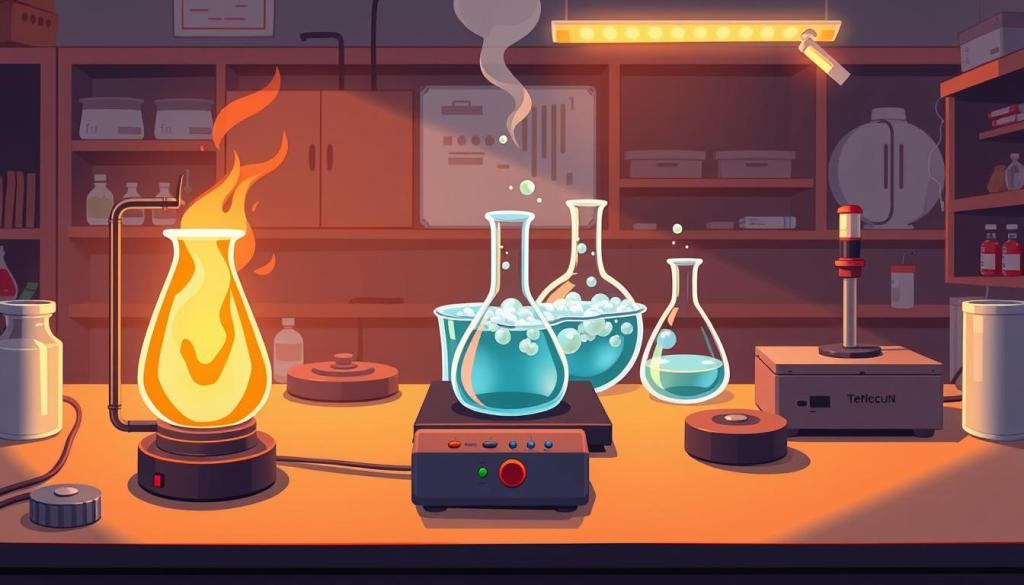
Different labs need different heating solutions. While erlenmeyer flask hot plates are common, there are other options to consider.
Laboratory Glassware for High-Temperature Work
Researchers have many heating alternatives for special experiments:
- Round-bottom flasks for distillation
- Beakers that can handle heat
- Special reaction vessels
- Custom glassware for high temperatures
Recommended Equipment for Specific Heating Needs
There are several effective heating alternatives:
- Heating Mantles: For precise temperature control
- Steam Baths: Uniform heat for many containers
- Sand Baths: Even temperature distribution
- Heat Guns: Flexible, directed heating
Each option has its own benefits for different lab needs. Researchers should think about their experiment’s needs, temperature, and chemical safety when choosing a heating method.
Frequently Asked Questions
Laboratory experts and researchers often wonder about using Erlenmeyer flasks safely. It’s key to know if they can be heated for successful experiments.
Can All Erlenmeyer Flasks Be Heated?
Not every Erlenmeyer flask can handle heat. Whether it can depends on a few important things:
- Material composition
- Glass thickness
- Manufacturing quality
- Intended laboratory application
What Temperature Range Is Safe for Heating?
The safe heating range for Erlenmeyer flasks varies by material. Borosilicate glass is usually the safest. Standard laboratory-grade borosilicate Erlenmeyer flasks can usually handle temperatures from 25°C to 230°C.
For safe heating, remember these tips:
- Choose flasks made for heating
- Check for cracks or damage
- Use indirect heating when you can
- Avoid sudden temperature changes
Always check your Erlenmeyer flask’s heat tolerance before heating it.
Conclusion: Safe Heating of Erlenmeyer Flasks
Heating Erlenmeyer flasks safely needs a deep understanding of their heat handling and careful use. Researchers must pick the right materials and use smart heating methods. This ensures their experiments work well and their equipment lasts long.
Borosilicate glass is the best for lab work because it withstands heat and chemicals well. Erlenmeyer flasks are great for many science tasks, like mixing and growing crystals. It’s important to choose the right flask for each experiment, based on what it needs.
Keeping the lab safe is key to avoiding accidents. Use indirect heat, avoid flames, and check flasks for damage. Following these steps helps keep experiments safe and reliable.
Doing well in the lab depends on knowing your stuff, being ready, and paying close attention. Knowing how Erlenmeyer flasks work helps scientists do precise work and keep their gear and results safe.
FAQ
Can all Erlenmeyer flasks be heated?
Not all Erlenmeyer flasks can handle heat. Borosilicate glass flasks are made for heat, but others might break. Always check the maker’s specs and use flasks meant for lab heating.
What is the safe temperature range for heating Erlenmeyer flasks?
Safe heating temps range from 100°C to 500°C, based on the flask material. Borosilicate glass can go up to 500°C. Always follow the maker’s guidelines and use indirect heat.
What are the best methods for heating an Erlenmeyer flask?
Safe heating methods include heating mantles, controlled hot plates, and water baths. Avoid direct flames and use slow heating to prevent shock. Place the flask on a stable surface and wear heat-resistant gloves.
How can I prevent cracking when heating an Erlenmeyer flask?
To avoid cracking, use only heat-resistant glass, heat slowly and evenly, and avoid sudden temperature changes. Inspect the flask before heating and use indirect methods like heating mantles.
What signs indicate damage to a heated Erlenmeyer flask?
Look for cracks, cloudiness, deformations, chips, scratches, or uneven texture. If you see these signs, stop using it and replace it for safety.
Can plastic Erlenmeyer flasks be used for heating?
No, most plastic flasks melt or deform at high temperatures. Use only heat-resistant glass, like borosilicate, for heating. Plastic is for room temperature or cold storage.
How should I store Erlenmeyer flasks to maintain their heat resistance?
Store them in a cool, dry place, away from sunlight and extreme temps. Use padded racks, keep them clean, and avoid stacking too much. Check for damage before storing. Proper storage keeps the glassware intact.
What alternatives exist for high-temperature laboratory work?
For extreme temps, use quartz, ceramic, or metal vessels. These are made for high heat and specific chemicals.






Leave a Comment
Your email address will not be published. Required fields are marked *