


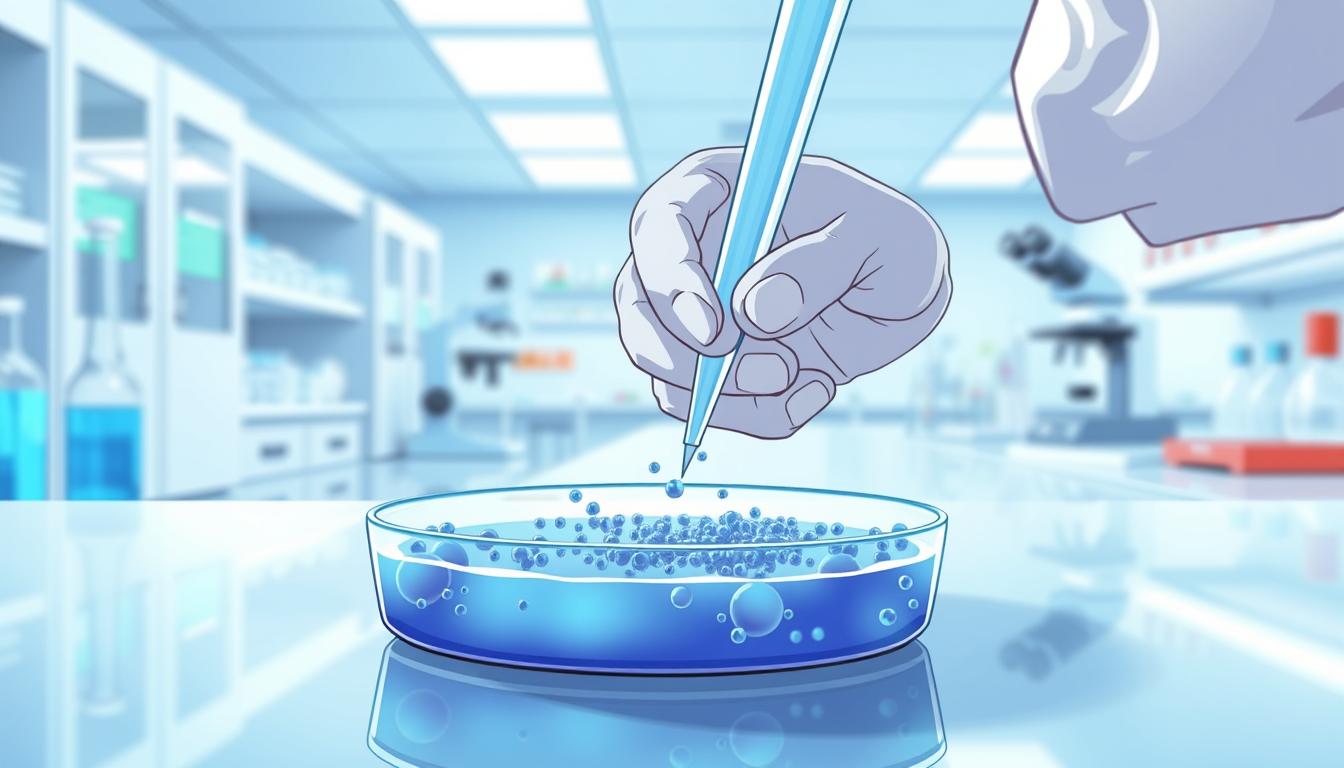
Ever curious about how scientists make cells grow well in labs? Cell seeding is the key step that turns a simple container into a powerful tool for research.
So, what is cell seeding? It’s a basic yet crucial technique where scientists put cells into a special place for them to grow. This careful process is vital for making new discoveries in biotech, medicine, and drug development.
Cell seeding is more than just putting cells in a container. Scientists must think about things like how many cells to use, the surface they’re on, and the environment around them. This ensures the cells grow well and helps with successful experiments.
Knowing how to seed cells helps scientists create places where cells can grow, work together, and give us important information. This is key for things like fixing damaged tissues and finding new medicines. It’s a big part of today’s scientific work.
Key Takeaways
- Cell seeding is a critical first step in cell culture experiments
- Precise cell distribution impacts research outcomes
- Different cell types require specific seeding strategies
- Environmental conditions significantly influence cell growth
- Advanced cell seeding techniques enable breakthrough scientific research
What is Cell Seeding?
Cell seeding is a key method in cell culture research. It involves adding a specific number of cells to a culture vessel. This process is vital for many cellular experiments in different fields.
The cell seeding protocol is very detailed. It helps researchers keep cell cultures healthy and get the same results every time. Scientists use it to create consistent and predictable environments for their studies.
Defining Cell Seeding
Cell seeding includes several important steps:
- Isolating cells from tissue using methods like explant culture or enzymatic techniques
- Diluting cell suspensions to achieve target seeding density
- Distributing cells evenly across culture vessels
- Monitoring cell viability and growth characteristics
Research Importance of Cell Seeding
Researchers see cell seeding as a crucial process. Proper cell seeding techniques are key for:
- Ensuring experimental reproducibility
- Maintaining consistent cell populations
- Supporting advanced research in biotechnology
- Facilitating drug discovery processes
“Cell seeding is not just a technique, it’s the foundation of cellular research” – Scientific Research Quarterly
The success of cell seeding depends on many factors. These include the type of cell, the culture vessel, and the environment. Researchers must choose the right seeding density, usually 70-80% confluency, for the best growth and results.
The Cell Seeding Process
Cell seeding is a key part of cell culture research. It needs precision and careful planning. Researchers must follow a detailed protocol to get the best results.

The cell seeding process has several important steps. These steps are crucial for a successful cell culture:
- Prepare a uniform cell suspension
- Determine appropriate cell seeding density
- Count and verify cell viability
- Transfer cells to culture vessels
- Ensure even cell distribution
Cell Preparation Techniques
To get the best cell seeding density, careful preparation is needed. Researchers use a few key techniques:
- Single-cell suspension method for uniform distribution
- Precise cell counting using automated devices
- Gentle resuspension to maintain cell integrity
Factors Influencing Successful Seeding
Many factors affect how well cell seeding works:
- Cell viability
- Suspension homogeneity
- Culture vessel characteristics
- Environmental conditions
Optimal cell seeding density is crucial for maintaining healthy cell cultures and ensuring reproducible experimental results.
Different cell types need different seeding methods. Researchers must adjust their seeding density and protocols for each type. This ensures the most accurate and reliable results.
Types of Cell Culture Systems
Cell seeding in tissue engineering uses many ways to grow cells. These methods help scientists learn about cells and find new medical treatments.
Each cell culture method offers a special place for cells to grow and be studied. Knowing these systems helps researchers pick the best one for their goals.
Adherent Cell Culture Systems
Adherent cell cultures need cells to stick to a surface to grow. They use:
- Cell seeding scaffold materials like plastic or glass surfaces
- Special coatings to help cells stick
- Exact seeding methods for even cell spread
Suspension Cell Culture Systems
Suspension cultures let cells float in liquid without sticking. They’re great for:
- Hematopoietic cell lines
- Studying bacteria and yeast
- Making lots of cells
3D Cell Culture Systems
3D cell cultures are a big step forward in growing cells. They create environments like real tissues, letting cells act naturally.
3D cultures give deep insights into how cells behave and tissues grow.
About 16.1% of studies might use bad cell lines. This shows how key it is to choose the right culture systems and follow strict cell seeding steps.
Factors Affecting Cell Seeding Efficiency
Cell seeding density is key in cell culture experiments. Researchers must think about many factors to get the best results in regenerative medicine and biotechnology.
Cell Density Considerations
Knowing about cell seeding density is crucial. Different studies need different cell amounts:
- Each cell type and goal has its own best cell density
- Wrong seeding can cause cells to spread unevenly
- Transfection works best at certain cell densities
Environmental Conditions Impact
Environmental factors greatly affect cell seeding in regenerative medicine. Important ones include:
| Parameter | Impact on Cell Seeding |
|---|---|
| Temperature | Affects cell metabolism and attachment rates |
| CO2 Levels | Regulates cell growth and medium pH |
| Humidity | Prevents cell dehydration during seeding |
“Precision in cell seeding is the foundation of successful cell culture research.” – Cell Biology Research Group
Advanced methods like CRIS seeding show how hard it is to get cells to spread evenly. To improve cell seeding, researchers can:
- Use mastermix dilution techniques
- Try cross-movement seeding strategies
- Control environmental factors carefully
Using the same cell seeding method can lower standard deviations. This improves the reliability and reproducibility of results.
Applications of Cell Seeding
Cell seeding is a key technique with big potential in many fields. It helps scientists find new ways to work in biotechnology, drug making, and fixing damaged tissues.
Biotechnology Research Innovations
Using cell seeding in 3D bioprinting leads to new discoveries. Scientists can make detailed models of cells. This lets them study how cells work together and create new technologies.
- Advanced cellular process mapping
- Development of sophisticated research models
- Exploration of intricate cellular mechanisms
Pharmaceutical Development Strategies
Cell seeding has changed how drugs are tested. It lets researchers make better models for testing drugs. This means they can see how drugs work and if they are safe.
| Research Area | Cell Seeding Impact |
|---|---|
| Drug Screening | Enhanced predictive accuracy |
| Toxicity Assessment | Improved cellular response evaluation |
| Personalized Medicine | Patient-specific model development |
Regenerative Medicine Breakthroughs
New cell seeding methods are changing regenerative medicine. Precise cellular placement lets scientists make detailed tissue models. This is a big step forward.
“Cell seeding is not just a technique, it’s a gateway to understanding and recreating biological systems.” – Research Insights
By using advanced cell seeding, scientists are making big strides. They are finding new ways to work in many areas of science.
Common Challenges in Cell Seeding
Cell seeding for stem cell research faces many challenges. These challenges are crucial for successful cell culture techniques. The accuracy of cell seeding greatly affects the results of experiments and scientific findings.
Contamination Risks in Cell Culture
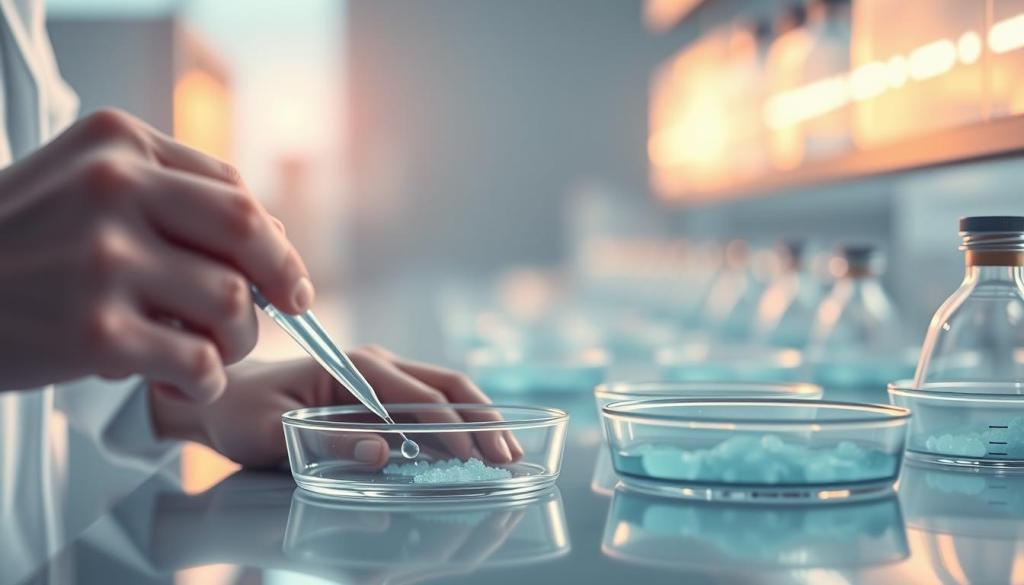
Contamination is a big problem in cell culture. Researchers find many sources of microbial interference:
- Bacterial contamination detected through cloudy medium
- Fungal growth appearing as filamentous mycelium
- Mycoplasma infections that subtly impact cell health
“Maintaining sterility is not just a protocol, it’s a critical scientific imperative.”
Cell Viability Challenges
Getting the best cell viability is tough. Cell culture techniques need careful attention to several important factors:
- Precise cell density management
- Appropriate media selection
- Careful handling during trypsinization
Automation is a big help in overcoming cell seeding challenges. Advanced robotic systems can cut contamination risks by up to 70%. They also improve seeding consistency within a 2% margin of error.
Critical research demands precision, and cell seeding techniques continue to evolve to meet these demanding scientific standards.
Future Directions in Cell Seeding Techniques
The world of cell seeding is changing fast. New technologies are making big waves in research and medicine. These innovations are changing how scientists work with cells and tissues.
New developments in cell seeding are making a big difference in two key areas:
Advances in Technology
3D bioprinting is getting a lot better. Scientists are finding ways to place cells more accurately and efficiently. Some of the big steps include:
- Automated systems that seed cells with high precision
- Microfluidic tools for better cell control
- Tools to watch cell growth in real-time
- Computational models for better cell placement
Potential Improvements in Protocols
Drug discovery with cell seeding is getting smarter. Teams are working on making cell cultures more reliable and healthy. New methods are coming up that aim to fix current cell culture problems.
“The future of cell seeding lies in our ability to create more intelligent, adaptive systems that understand cellular behavior at a fundamental level.” – Regenerative Medicine Research Team
Big changes are on the horizon in:
- Methods for seeding specific cells
- Protocols for more consistent results
- AI in cell placement
- Better biomaterials
These updates will greatly help in biotech, pharma, and regenerative medicine. They will open up new ways to study cells and find new treatments.
Best Practices for Effective Cell Seeding
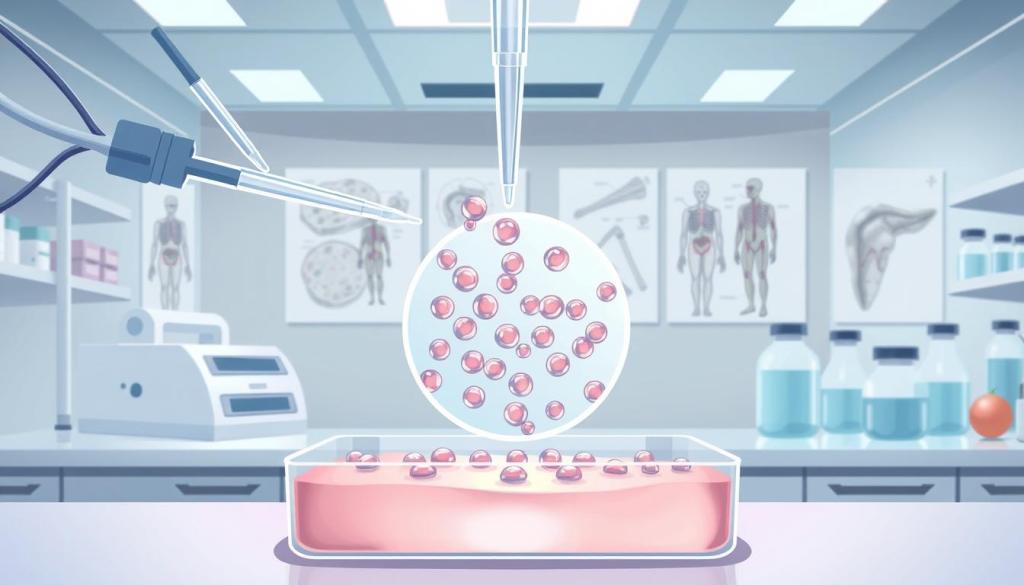
Successful cell seeding needs careful cell culture techniques and detailed protocols. Researchers must use smart strategies to ensure the best cell growth and reliable results.
Sterility Maintenance Strategies
Keeping a sterile environment is key in cell seeding protocols. Important steps include:
- Using laminar flow hoods for all cell handling
- Wearing sterile personal protective equipment
- Decontaminating work surfaces with 70% ethanol
- Using only sterile consumables and media
Monitoring and Optimization Techniques
Advanced cell culture methods require strong monitoring strategies. To improve cell seeding, researchers can:
- Calculate cell density accurately
- Check cell viability regularly
- Analyze images quantitatively
- Document seeding parameters thoroughly
“Consistent methodology is the cornerstone of reproducible cell culture research.” – Cell Biology Research Institute
When seeding cells, keeping the right cell concentration is vital. Studies show that seeding around 5.0 × 10^5 cells per unit can greatly affect results.
By following these best practices, researchers can make their cell culture experiments more reliable and reproducible. This helps advance science in biotechnology and regenerative medicine.
Conclusion: The Significance of Cell Seeding
Cell seeding is a key method in today’s biomedical research. It has big impacts on tissue engineering and new discoveries. By improving cell seeding, scientists can get better results, especially in fixing bones and regrowing tissues.
Researchers have found many ways to make cell seeding better. For example, shaking cells in a special way can help them grow and spread more. Studies show that using fewer cells can lead to better results. Most growth happens in the first week after seeding.
Key Findings in Cell Seeding Research
Studies have shown how important cell seeding is in making new tissues. Using special machines to seed cells can cover more area than old methods. This shows how important it is to follow exact seeding steps for good results.
Future Perspectives
As cell seeding gets better, scientists hope for big steps in personalized medicine and fixing damaged tissues. They will keep working on making seeding methods better. They also want to learn more about how to control cells in complex systems.
FAQ
What is cell seeding?
Cell seeding is a key step in cell culture. It involves placing cells on a surface or in a culture system. This process helps set up consistent conditions for research.
Why is cell seeding important in scientific research?
It’s vital for many studies. Proper seeding ensures cells grow well and stay alive. This makes experiments reliable in fields like drug discovery and tissue engineering.
How do researchers determine the appropriate cell seeding density?
They consider many factors like cell type and culture system. They use devices to count cells and calculate the right amount for each area or volume.
What are the different types of cell culture systems for seeding?
There are several systems. These include adherent cultures, suspension cultures, and 3D systems like scaffolds. Each needs its own seeding method.
What challenges do researchers face during cell seeding?
They face issues like keeping everything clean and cells alive. They must control conditions and use precise techniques to avoid harming cells.
How is cell seeding used in regenerative medicine?
It’s key for making tissue-engineered constructs. Cells are seeded onto scaffolds or in 3D structures. This helps create new tissue to repair damaged areas.
What technologies are emerging in cell seeding techniques?
New tech includes automated systems and microfluidic devices. These aim to make seeding more efficient and precise, especially in 3D bioprinting.
How can researchers optimize their cell seeding protocol?
They should keep everything clean and use the right tools. Tailoring protocols to cell types and monitoring closely is also important. Staying updated on new methods is crucial.
What role does cell seeding play in drug discovery?
It’s vital for creating reliable in vitro models. This allows for testing drug efficacy and studying toxicity. It helps understand how cells react to drugs.
What future developments are expected in cell seeding techniques?
Expect more advanced automated systems and real-time monitoring. There will also be better 3D culture techniques and cell-specific seeding methods. These will improve research in many areas.




Pingback: How to Ensure Uniform Cell Seeding in 96 - Well Plate Templates?