


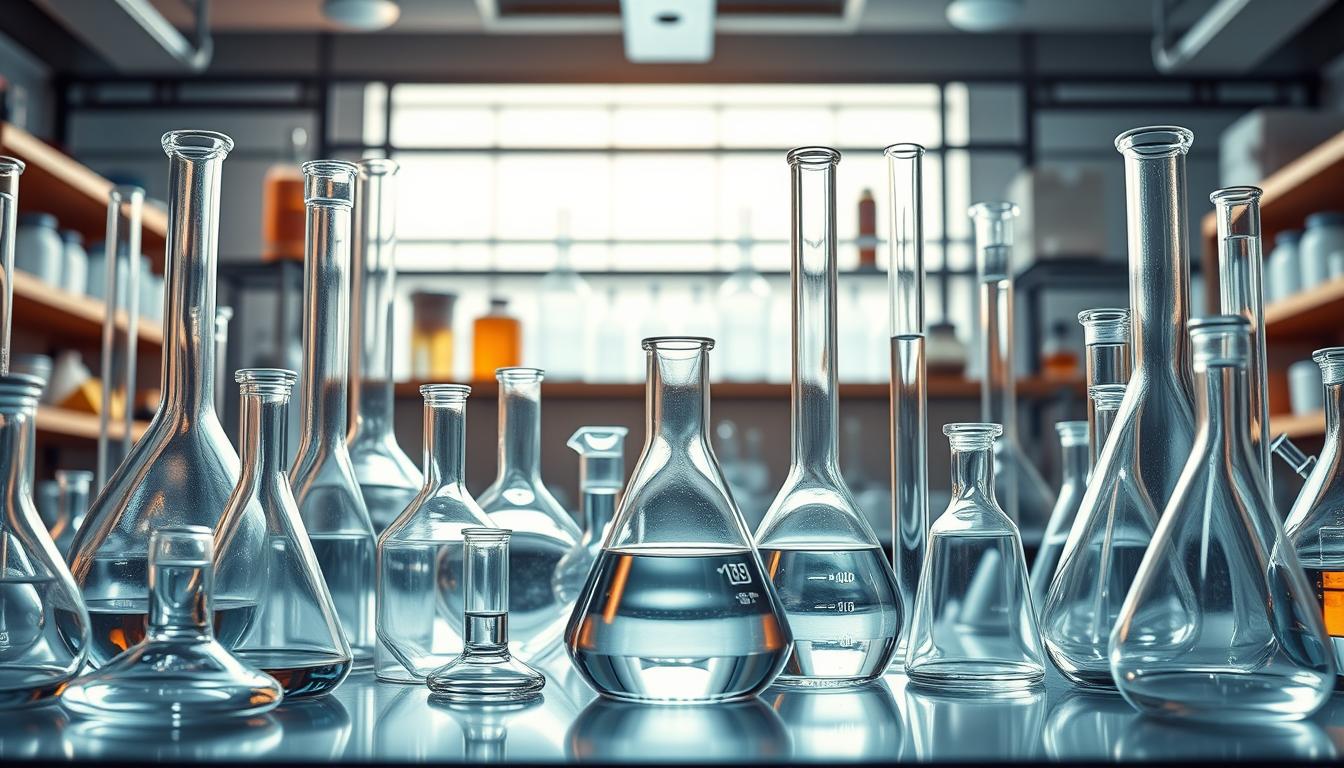
Modern science needs precision and safety in labs. Chemical glassware is key to this, showing the heart of scientific discovery and safety. Every piece of equipment is important.
Working with flask chemical lab equipment requires careful attention. Researchers learn that simple glassware can greatly affect results, safety, and honesty in science.
Labs in the U.S. use top-notch chemical glassware for important research. Places like hospitals and research centers rely on the right equipment for success.
Key Takeaways
- Chemical glassware is essential for precise scientific research
- Safety standards are crucial in laboratory equipment selection
- Proper flask handling reduces experimental risks
- Different flask types serve specialized research purposes
- Continuous training enhances laboratory safety protocols
Overview of Chemical Lab Flask Equipment
Chemical labs use many scientific tools and supplies for precise research. They range from simple test tubes to complex analytical tools. Glassware is key in these investigations.
Laboratory glassware is vital for many tasks. It helps researchers measure, mix, heat, and store chemicals accurately.
Importance of Quality Flasks
The quality of lab flasks is crucial for research results. Precision engineering makes sure these tools meet high standards:
- Accurate volume measurements within 10%
- Resistance to temperature changes
- Durability under stress
- Little chemical interaction with substances
Types of Flasks Used in Laboratories
Different flask designs meet various research needs:
- Erlenmeyer Flasks: Conical shape reduces evaporation by 30%
- Round-bottom Flasks: Great for heating and reactions
- Volumetric Flasks: Offer precise volume measurements
- Florence Flasks: Come in 500 mL and 1-liter sizes
Applications in Biological Research
These tools are vital in many sciences. Biological researchers use them for detailed experiments, cell culture, and studying complex molecules.
Precision in laboratory equipment is not a luxury, but a necessity for groundbreaking scientific discovery.
Understanding Flask Safety Standards
Chemical labs need strict safety rules to keep people and equipment safe. These rules are key to avoiding dangers during experiments, especially with chemicals.
Good safety plans include many important steps. Lab workers must know and follow these steps to lower risks in chemical tests.
Importance of Compliance
Following safety rules is crucial in labs. Researchers must stick to guidelines to avoid accidents and protect everyone and things.
- Implement strict fume hoods protocols
- Utilize appropriate safety gear at all times
- Maintain organized chemical storage systems
- Conduct regular safety equipment inspections
Key Safety Regulations in the U.S.
“Safety is not an accident, but a deliberate and continuous process of risk management.” – Laboratory Safety Expert
The U.S. has strict safety rules for labs. These rules, made by groups like OSHA and NFPA, help keep work areas safe.
Assessing Lab Safety Risks
Good risk checks look at possible dangers. Researchers must check equipment, chemical reactions, and safety gear to make labs safe.
- Identify potential chemical interaction risks
- Evaluate equipment structural integrity
- Assess personal protective equipment effectiveness
- Document and review safety protocols regularly
Keeping safety up means always learning, training, and updating for new science and risks.
Essential Types of Flasks for Chemical Labs
Chemical labs use special glassware for precise research. Each piece of lab equipment is made for a specific task. This helps in conducting experiments accurately.
Knowing about different flasks is key for scientists. The right flask can greatly affect the results of experiments. It helps in making research more accurate.
Erlenmeyer Flasks: Versatile Laboratory Workhorses
German chemist Emil Erlenmeyer created these flasks in 1860. They have a unique shape with a tapered bottom and narrow neck. Key characteristics include:
- Minimize liquid spillage during swirling
- Ideal for titrations and mixing solutions
- Made from heat-resistant borosilicate glass
Volumetric Flasks: Precision Measurement Tools
Volumetric flasks are vital for making standard solutions in labs. They are known for their precise liquid measurement.
| Flask Type | Precision Level | Primary Use |
|---|---|---|
| Class A Volumetric Flask | High Precision | Analytical Research |
| Class B Volumetric Flask | Standard Precision | General Laboratory Work |
Beakers: Multipurpose Laboratory Containers
Beakers are basic lab tools for mixing, stirring, and heating. They have graduated markings for volume.
- Available in various sizes
- Made from durable borosilicate glass
- Suitable for multiple experimental procedures
Choosing the right flask is crucial for safe and accurate research. It depends on the specific needs of each experiment.
Materials Used in Flask Manufacturing
Scientific labs need special chemistry supplies that are safe, durable, and work well. The choice of flask material is key. It helps get accurate results and keeps researchers safe while using various scientific tools and lab accessories.
Glass vs. Plastic Flasks: A Comprehensive Analysis
There are mainly two types of flasks: glass and plastic. Each has its own benefits for science:
- Glass flasks, especially borosilicate, can handle high heat well.
- Plastic flasks are light and won’t break easily.
- They handle temperature differently.
Safety Implications of Flask Materials
The type of flask used affects lab safety. Borosilicate glass is great because it doesn’t break down easily and can handle high temperatures.
| Material | Temperature Range | Chemical Resistance | Durability |
|---|---|---|---|
| Borosilicate Glass | -20°C to 500°C | Excellent | High |
| Polypropylene | -10°C to 135°C | Moderate | Medium |
Environmental Considerations
Today, labs focus more on being green. They use flasks that can be recycled and make products in ways that are better for the planet. This helps cut down on waste in science.
Sustainable lab design starts with selecting the right materials for scientific instruments and equipment.
Best Practices for Flask Handling
Laboratory experts know that keeping chemicals and lab tools safe is key. They focus on managing scientific glassware carefully. This includes following strict safety rules.
Researchers must always wear the right safety gear. They also need to plan how to handle flasks in different lab settings.
Proper Cleaning Techniques
Cleaning flasks well is vital to avoid contamination and get accurate results. Here are some cleaning tips:
- Rinse glassware immediately after use to prevent residue buildup
- Use mild detergents specifically designed for laboratory glassware
- Thoroughly rinse with distilled water to eliminate chemical traces
- Air dry flasks upside down to prevent moisture accumulation
Safe Storage Solutions
Storing chemicals and lab tools right keeps them safe from damage and contamination. Here are some storage tips:
- Store flasks in cool, dry environments away from direct sunlight
- Use padded racks to minimize movement and prevent breakage
- Keep flasks upright to reduce tipping risks
- Implement protective coatings for hazardous substance containers
Transporting Flasks Safely
When moving flasks, safety is a top priority. Lab workers should:
- Use specialized carrier trays with compartments
- Wear appropriate personal protective equipment
- Move slowly and deliberately
- Inspect flasks for cracks or damage before transport
By sticking to these detailed guidelines, labs can lower risks with flask handling. This helps keep the work area safe.
Conducting Risk Assessments in Chemical Labs
Risk assessment is key to keeping biological research labs safe. Scientists must look at possible dangers to keep people safe and experiments running right. The RAMP concept helps by focusing on recognizing, assessing, minimizing, and preparing for risks.
Labs use detailed risk evaluation plans that cover many safety areas. These plans check equipment, tools, and the environment to stop accidents.
Identifying Common Hazards
Researchers need to find and understand the dangers of chemical tests. Important steps include:
- Checking equipment carefully
- Looking at how chemicals react
- Testing if fume hoods work right
- Seeing if safety gear fits
Evaluating Flask Integrity
Checking glassware is vital to avoid lab accidents. Inspections should cover:
- Looking for tiny cracks
- Finding any surface flaws
- Checking if it’s strong
- Seeing if it could get contaminated
Reporting and Documentation
Keeping accurate records helps improve safety. Labs must keep detailed logs of risk assessments, including reports of incidents, checks on equipment, and actions taken.
Good risk management means always watching and being ready with safety steps.
Groups like OSHA require detailed records to make sure labs follow safety rules. Chemical Hygiene Plans and Material Safety Data Sheets are important for these records.
Training and Protocols for Laboratory Staff
Creating a safe lab is key. Good training is the base for managing equipment and reducing risks.
Importance of Proper Training
Good training keeps lab workers safe and stops accidents. The Department of Chemistry and Chemical Biology (CCB) makes sure everyone knows how to use safety gear and handle chemicals.
- 100% of personnel must complete Laboratory Safety Training
- Monthly training sessions are offered
- Annual refresher training for hazardous waste management
- Specialized safety training for specific chemical risks
Creating a Safety Culture
Building a safety-first culture takes effort from everyone. Important steps include:
- Picking a Group Safety Officer for each team
- Having safety talks for new people
- Keeping an eye on who follows the rules
Regular Review of Safety Procedures
Keeping safety plans up-to-date is vital. The CCB Safety Committee meets every month to check and update safety rules.
| Training Violation Consequences | Action Taken |
|---|---|
| First Violation | Written warning, required additional training |
| Second Violation | Potential suspension of research privileges |
By focusing on detailed training, labs can lower risks with chemicals and equipment. Safety steps protect researchers and keep science safe.
Environmental Considerations in Flask Usage
Today’s chemical labs focus on being green with their tools and supplies. The effect of glassware on the environment is now a big deal for labs everywhere.
Labs are working hard to cut down their environmental harm. They’re finding new ways to use flasks and manage waste better.
Disposal of Chemical Waste
Getting rid of chemical waste the right way is key to keeping our planet safe. Scientists must follow strict rules to dispose of dangerous stuff safely:
- Sort chemical waste by type
- Use special containers for disposal
- Stick to local and national environmental laws
- Have backup plans for spills
Recycling Opportunities for Laboratory Equipment
There are many chances to recycle glassware in labs. Many tools can be reused or recycled through special programs:
- Join manufacturer recycling programs
- Look for local recycling for glass and plastic flasks
- Try bioplastic options for greener supplies
Minimizing Environmental Impact
Labs can lessen their environmental harm in several ways:
- Use cleaning methods that save energy
- Buy long-lasting, top-notch scientific tools
- Do Lifecycle Analysis (LCA) to see environmental effects
- Choose suppliers who make things in a green way
By caring about the environment, labs can lower their ecological impact. They can still do great research without harming the planet.
The Future of Flask Technology in Labs
The world of scientific tools is changing fast, thanks to flask chemical lab tech. New analytical tools are changing how scientists design and run experiments. Now, instruments have advanced sensors and smart materials, making them more precise and powerful.
New flask tech is also making labs safer. There’s now glassware that can handle high heat and won’t break easily. This is a big step forward in lab equipment.
Conical flasks, used in 75% of chemical research, have been improved. They now spill less during mixing, thanks to their new design. This not only helps experiments but also makes labs safer for everyone.
Lab work is getting smarter with new tech. Smart flasks can track data in real time, helping scientists be more accurate. They also come with digital certificates and precise measurements, meeting strict research standards.
Looking ahead, flask tech will focus on being green, safer, and more connected. We’ll see better materials that last longer and are better for the planet. These advances will give scientists the tools they need to tackle tough experiments.
FAQ
What are the most critical safety considerations when working with chemical lab flasks?
Safety first means wearing the right gear and following the rules. Always use personal protective equipment (PPE) and handle flasks carefully. Make sure you know which chemicals go together and that your flasks are in good shape. A clean and organized workspace is also key.
Always check flasks for damage before you start. Wear lab coats, safety glasses, and gloves to protect yourself.
How do I choose the right type of flask for my biological research?
The right flask depends on your research needs. Erlenmeyer flasks are great for mixing and heating. Volumetric flasks help with precise measurements. Round-bottom flasks are perfect for distillation and reactions.
Think about the material, how much you need, and what you’re doing in your research.
What are the key differences between glass and plastic laboratory flasks?
Glass flasks are better for high-temperature and corrosive experiments. They’re more resistant to chemicals. Plastic flasks are lighter, easier to handle, and good for simpler tasks.
Glass is best for precise work. Plastic is better for everyday, low-risk tasks.
How often should laboratory flasks be replaced or inspected?
Check flasks before each use for damage. Glass flasks need replacing every 2-3 years or sooner if damaged. Regular checks prevent contamination and safety risks.
What are the best practices for cleaning chemical lab flasks?
Clean flasks right away with the right solution. Use lab-grade detergents and rinse well. Dry them completely before storing or using again.
Follow a cleaning plan and use special techniques for tough stains.
How can laboratories minimize environmental impact when using chemical flasks?
Use waste management, recyclable materials, and green chemistry. Dispose of chemicals properly and choose eco-friendly flasks. Recycle and adopt sustainable practices.
What emerging technologies are improving flask safety in chemical laboratories?
New tech includes smart flasks with sensors and break-resistant designs. AI monitoring systems also help. These innovations improve safety by reducing errors and enhancing standards.
What training is essential for laboratory staff working with chemical flasks?
Training covers safety rules, handling, and emergency procedures. It’s important to know about chemicals and how to use PPE. Stay updated with safety regulations through workshops and training.




Leave a Comment
Your email address will not be published. Required fields are marked *