


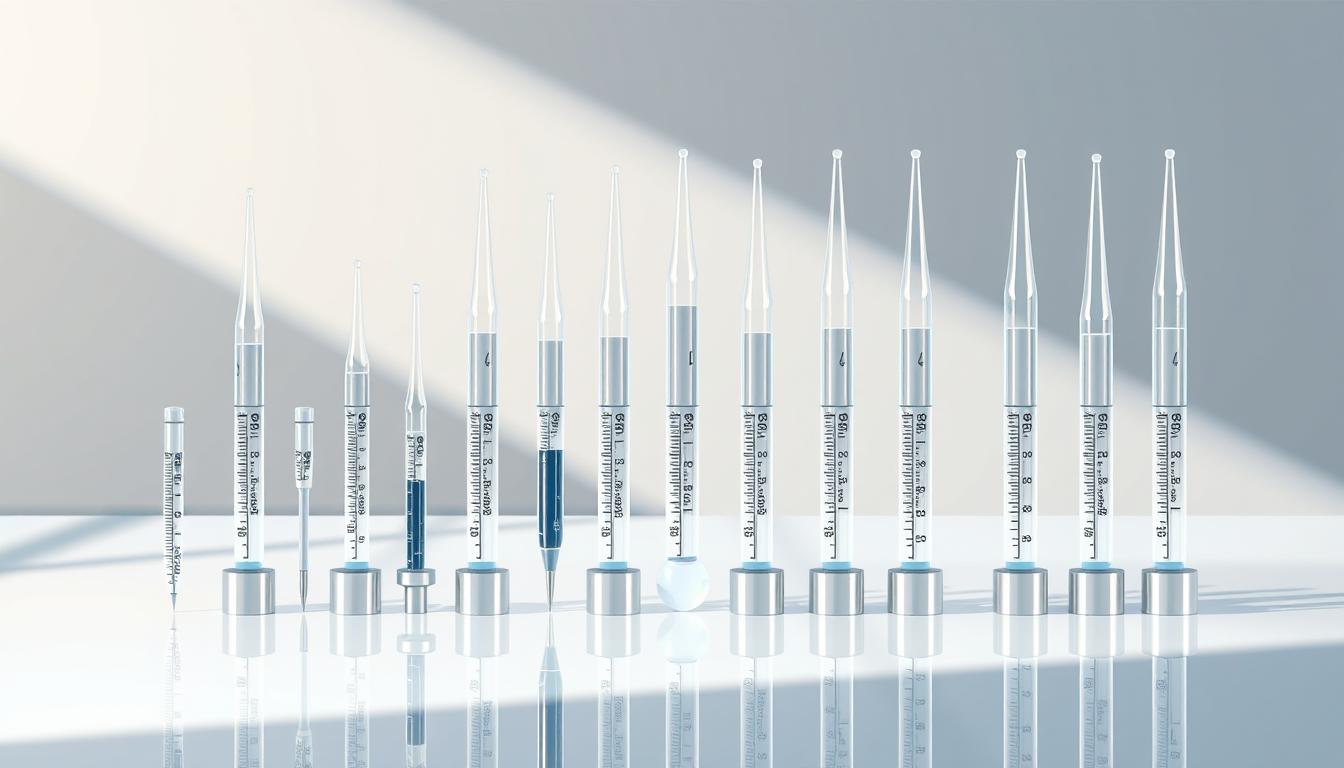
Ever wondered how scientists move tiny liquid amounts with such precision? Pipette sizes are key in science, letting researchers work with tiny amounts accurately.
Laboratory pipettes are vital for groundbreaking research in many fields. They come in different sizes and volumes. This helps scientists move liquids quickly and accurately in their work.
Today’s labs use a wide range of pipette sizes for reliable experiments. From tiny micropipettes that handle 1 µl to big multi-channel systems, these tools are crucial for science.
Knowing about pipette sizes can really help improve research. It can cut down on mistakes and make experiments more reliable.
Key Takeaways
- Pipette sizes range from 1 µl to 10,000 µl
- Different pipette types support various research applications
- Precision and accuracy are critical in liquid handling
- Ergonomic design reduces potential sampling errors
- Regular calibration maintains pipette performance
Understanding Pipette Sizes and Types
Laboratory precision starts with knowing the key tools for accurate liquid handling. Pipettes are essential in scientific research, allowing for precise liquid transfers. Each type of pipette is designed for specific needs in experiments.
Pipettes vary in design to tackle different challenges. Scientists use them to handle liquids from tiny 0.1 microliters to large milliliter amounts.
What Are Pipettes?
Pipettes are tools made for precise liquid transfers. They have:
- Adjustable volume controls
- Interchangeable tips for various uses
- Calibrated scales
- Ergonomic designs to reduce hand strain
Importance of Pipette Sizes in Laboratories
Choosing the right pipette size is key for reliable experiments. Different studies need specific volume ranges:
- Microbiological research: Needs micropipettes for 1-1000 microliters
- Molecular biology: Uses electronic pipettes for 0.5-10 microliters
- Clinical diagnostics: Uses serological pipettes for bigger volumes
Researchers must pick the right pipette tips and capacity for reliable results. This ensures accurate liquid handling and reduces errors.
Standard Sizes of Pipettes in Research
Precision pipetting is key in scientific research. It lets researchers move tiny liquid amounts with great accuracy. Lab workers use different pipette sizes for various needs in many fields.
Research labs have a wide range of pipette sizes for specific tasks. These tools help scientists get precise measurements in fields like molecular biology and biochemistry.
Micro Pipettes: Ultra-Precise Liquid Transfer
Micropipettes are the top in precision pipetting. They are great at moving tiny liquid amounts with high accuracy. Here are some volume ranges:
- P10: 0.5–10 μL
- P20: 2–20 μL
- P200: 20–200 μL
- P1000: 200–1000 μL
- P5000: 1000–5000 μL
Mini Pipette Sizes: Versatile Laboratory Tools
Mini pipettes are between micro and macro sizes. They offer flexible handling for volumes from 1 μL to 5 mL. They’re perfect for many experiments.
Macro Pipette Variations: Large Volume Transfers
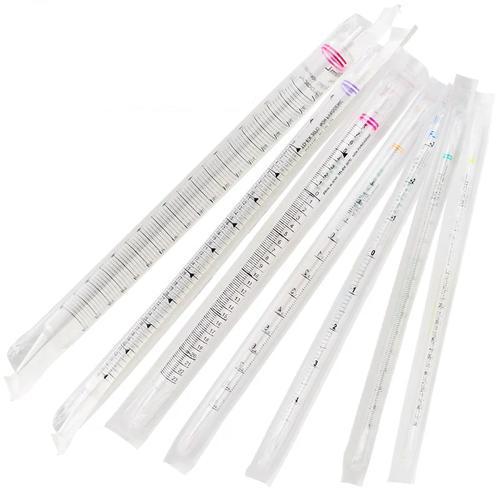
Macro pipettes move big liquid amounts. They’re needed for big sample experiments. Serological pipettes can handle 0.1 ml to 50 ml, helping with big tasks.
Precision is not just about measurement, but about understanding the intricate details of scientific exploration.
Choosing the right pipette size is important. It depends on the experiment’s needs. This ensures the best liquid handling and research results.
Choosing the Right Pipette Size for Your Needs
Choosing the right pipette is key for accurate volume in labs. Researchers need to look at several factors. This ensures precise liquid handling for various scientific tasks.
Scientists should think about a few important things when picking a pipette. These factors affect the results of their experiments:
- Volume range needs
- How precise the experiment must be
- If the sample is sensitive
- How often the pipette will be used
Critical Factors in Pipette Selection
Knowing the volume ranges needed is crucial for lab success. Different experiments need specific pipettes for accurate results.
| Volume Range | Recommended Pipette Type | Accuracy |
|---|---|---|
| 1-20 μL | Precision Micro Pipette | ±0.8% |
| 20-200 μL | Standard Single Channel | ±1.1% |
| 200-1000 μL | Variable Volume Pipette | ±1.6% |
Application-Specific Considerations
Researchers must choose pipettes that fit their specific needs. Molecular biology techniques need more precision than general lab work.
- PCR needs ultra-precise micropipettes
- Cell culture requires variable volumes
- Microbiology experiments need flexible handling
Spending time to pick the right lab equipment is worth it. It boosts experiment reliability and cuts down on errors in research.
Calibration and Maintenance of Pipettes
Precision is key in scientific research, especially with tools like pipettes. Keeping them calibrated and maintained is vital for accurate results and tool longevity.
Laboratory experts know pipettes need regular care to work well. This care stops errors and keeps data reliable.
Importance of Calibration
Calibration keeps scientific tools precise. It’s important to calibrate pipettes:
- Every 3-6 months
- After big impacts
- When changing protocols
Maintenance Tips for Longevity
Good pipette care includes several steps:
- Regular visual checks
- Cleaning after each use
- Storing properly
- Following the maker’s advice
| Calibration Frequency | Recommended Action |
|---|---|
| Every 3-6 months | Full calibration and functional test |
| Annually | Professional service and certification |
| After heavy use | Immediate performance check |
Professional labs focus on regular maintenance. This ensures their tools and sample transfer processes are reliable.
High-Precision Pipette Sizes for Molecular Biology
Molecular biology needs precise liquid handling. The size of micropipettes is key for accurate genetic experiments. Scientists use special pipettes to manage tiny volumes with great accuracy.
Researchers working with DNA and RNA need pipettes that handle small volumes well. The right micropipette is crucial for precise measurements in complex molecular techniques.
Specialized Pipettes for Nucleic Acid Research
Advanced pipettes for molecular biology have special features for genetic research:
- Volume ranges from 0.2 μL to 10 mL
- Accuracy levels exceeding ISO 8655 standards
- Ergonomic designs to reduce user fatigue
- Low-retention tip options for critical assays
Choosing Pipettes for PCR Applications
Choosing the right pipette for PCR is important. Low-volume tips between 0.1 – 10 µL are needed for precise DNA and RNA measurements. Researchers should look for:
- Precise volume control
- Minimal sample loss
- Contamination prevention
- Consistent performance
Modern labs use automated systems for liquid handling. These systems can handle up to 2,000 RT-qPCR reactions weekly. They ensure precision and efficiency in genetic research.
Liquid Handling Techniques in Biotech
Precision pipetting is key in biotech labs. It’s about getting the liquid handling right to get good results. Scientists use special methods to make sure their work is reliable and error-free.
It’s important to know how to handle liquids well for top-notch research. Scientists need to learn different methods to work well with different amounts of liquid.
Critical Techniques for Optimal Liquid Handling
- Reverse pipetting for viscous or challenging liquids
- Repetitive dispensing for multiple aliquots
- Pre-wetting pipette tips to improve accuracy
- Maintaining proper immersion angle (45-60 degrees)
Strategies to Enhance Precision Pipetting
To get better at liquid handling, biotech pros can use a few strategies. Rinsing pipette tips before use and keeping samples at 21.5°C can really help.
Here are some important tips for handling liquids well:
- Choose the right pipette volume range
- Use filter tips to avoid contamination
- Take short breaks during long pipetting sessions
- Keep your equipment in good shape and calibrated
Advanced Liquid Handling Approaches
Today’s labs are using automated systems to make things more efficient. These systems can handle a lot of work, like drug discovery and sequencing.
Precision is not an accident, but a result of careful technique and continuous improvement.
By learning these techniques, scientists can get reliable results in biotech.
The Role of Electronic Pipettes
Electronic pipettes have changed how we handle liquids in labs. They bring new levels of precision and speed to scientific work. These tools make old ways of pipetting seem outdated, offering new ways to tackle tough experiments.
Advantages of Electronic Pipettes
Modern electronic pipettes offer big benefits to lab work:
- They make dispensing liquids more accurate.
- They help avoid tiredness from doing the same thing over and over.
- They can be set up for complex tasks.
- They cut down on mistakes made by people.
These pipettes solve many problems with manual handling of liquids. They help scientists get the same results every time, which is key for precise experiments.
Ideal Applications for Electronic Pipettes
Electronic pipettes are perfect for many lab areas, especially where precision is key:
- Molecular biology research
- High-throughput screening
- Serial dilution experiments
- Genomic and proteomic studies
Using electronic pipettes can make labs more efficient and reliable. They ensure the right amount of liquid is used and help avoid contamination.
| Feature | Electronic Pipette Benefit |
|---|---|
| Precision | ±0.5-1% volume accuracy |
| Programmability | Multiple dispensing modes |
| Ergonomics | Reduced physical strain |
| Battery Life | Extended continuous operation |
Scientists can adjust electronic pipettes to fit their needs. This makes them a crucial part of today’s research labs.
Pipette Size Recommendations for Different Experiments
Choosing the right pipette size is key for accurate volume and smooth sample transfer in biology labs. Lab experts need to think about their experiment’s needs for precise liquid handling.
Different experiments need different pipette sizes. It’s important for researchers to know the specific needs of their protocols to keep their work reliable.
General Laboratory Practices
Labs use various micropipette sizes for different research tasks. Common sizes include:
- P10: 1-10 µL range
- P20: 2-20 µL range
- P100: 10-100 µL range
- P200: 20-200 µL range
- P1000: 100-1000 µL range
In biology classes, the P100 micropipette is often used. It’s important for researchers to handle it correctly to avoid mistakes.
Specialized Testing Environments
Some experiments need special pipette choices. Scientists must think about the sample’s thickness, the container, and how much liquid is needed.
| Experimental Type | Recommended Pipette | Key Considerations |
|---|---|---|
| Gel Electrophoresis | P20 or P100 | Use first stop position for sample expulsion |
| Molecular Biology | P10 or P20 | Precise volume accuracy critical |
| Cell Culture | P200 or P1000 | Larger volume transfers required |
Important tips include using tips from the same maker as the pipette, changing tips between samples, and knowing the three plunger positions for best sample transfer.
Environmental Considerations for Pipette Use
Scientific tools like pipettes are very sensitive to their environment. This can greatly affect how well they work and how accurate they are. Researchers need to know how things outside can change how they handle liquids in labs.
Many environmental factors are key to keeping pipette tips reliable and experiments successful. Labs must manage these factors well to get consistent results.
Understanding Temperature and Pressure Effects
Temperature and pressure have big effects on pipettes:
- Changes in temperature can make liquids change volume
- Changes in pressure can affect how accurately liquids are dispensed
- Humidity can change how fast liquids evaporate
Studies show that temperature changes can lead to big differences in measurements. Keeping the environment just right is very important for good results.
Cleaning and Decontamination Practices
Keeping scientific tools clean is very important:
- Regular cleaning stops contamination from spreading
- Use special cleaners for pipette tips
- Follow strict cleaning steps
Labs can lower the risk of contamination by using thorough cleaning methods. This helps keep samples safe and experiments accurate.
Environmental Impact Considerations
| Environmental Factor | Potential Accuracy Impact |
|---|---|
| Temperature Variations | Up to 2% accuracy deviation |
| Humidity Levels | Increased evaporation risk |
| Pressure Changes | Liquid volume fluctuations |
Knowing about these environmental factors helps researchers keep their work at high standards. It also protects important data from experiments.
Innovations in Pipette Design and Size
The world of liquid handling technology is changing fast. New innovations are coming that will change how scientists work. Pipette sizes and designs are getting better, making labs more efficient.
- Enhanced ergonomic designs reducing user fatigue
- Precision liquid handling mechanisms
- Integration of smart digital technologies
- Advanced calibration techniques
Emerging Technological Breakthroughs
Modern pipette designs are making big strides in accuracy and user experience. Scientists now have better tools that help reduce mistakes and improve results.
Future Trends in Development
The future of pipette tech looks bright, with new trends on the horizon:
- Artificial intelligence-assisted pipetting protocols
- Miniaturized electronic pipette systems
- Enhanced contamination prevention mechanisms
- Integration with laboratory information management systems
These advancements are key in fields needing ultra-precise liquid handling. This includes molecular biology, genetics, and pharmaceutical research. The ongoing improvement in pipette sizes and digital features means scientists can work more accurately and efficiently.
The evolution of pipette technology represents a quantum leap in scientific instrumentation, bridging the gap between human precision and technological innovation.
Training for Proper Pipette Handling
Precision pipetting is key in labs and needs a lot of training. People working in labs must learn how to use equipment well. This is to get accurate and reliable results in their research.
Good training for pipetting covers many important parts. It helps people get better at using lab tools:
- Understanding how pipettes work
- Learning by doing
- Knowing how to fix mistakes
- Using tools in a way that’s easy on the body
Essential Training Components for Laboratory Staff
Lab workers need more than just how-to instructions. They should learn the fine details of pipette use. This includes picking the right tips, knowing how deep to dip, and keeping the motion steady.
Important parts of training are:
- Learning to adjust temperatures
- How to calibrate pipettes
- Finding and fixing mistakes
- Best ways to handle samples
Resources for Learning Advanced Pipette Techniques
Today, researchers have many ways to learn better pipetting. They can find online courses, training from makers, scientific papers, and workshops. These are all about getting good at lab tools.
Professional tip: Take regular breaks during long pipetting tasks. It helps keep your work accurate and prevents tiredness.
Investing in good training makes research better and cuts down on mistakes.
Conclusion: Selecting Pipette Sizes Effectively
Choosing the right pipette sizes is key for researchers in biological labs. The precision of pipettes, from P2 (0.2 µL) to P1000 (1000 µL), greatly affects results. Knowing what each size is best for helps get accurate measurements and reliable results.
When picking pipette sizes, researchers must think about several things. These include the volume needed for experiments, the risk of contamination, and the needs of molecular biology. Using electronic pipettes and new tech can make measurements more accurate and track data better.
Recap of Key Considerations
Choosing the right scientific tools is essential for good research. Things like how easy they are to use, how well they handle many samples at once, and how well they control volume are important. By picking the right pipette sizes and following best practices, researchers can cut down on mistakes and make their findings more reliable.
Final Thoughts on Pipette Selection
Seeing pipette selection as an investment in quality research is important. Keeping them calibrated, well-maintained, and training regularly can make them powerful tools for discovery. The right pipette sizes can make experiments more precise and lead to major scientific breakthroughs.
FAQ
What are the most common laboratory pipette sizes?
Pipettes come in various sizes. They range from micro (0.1-10 µL) to macro (1-50 mL). Common sizes include 10 µL, 20 µL, 200 µL, and 1000 µL (1 mL). The size needed depends on the experiment and the liquid volume.
How do I choose the right pipette size for my experiment?
Think about your sample volume, needed accuracy, and the experiment type. Pick a pipette that can measure within 10-100% of its max capacity for best results. Different experiments need different pipette sizes, like small volumes for molecular biology or larger for cell culture.
Why is pipette calibration important?
Calibration is key for accurate liquid handling. It prevents errors and keeps results reliable. Labs should calibrate pipettes yearly or after 5,000 uses to keep them precise.
What are the key differences between manual and electronic pipettes?
Electronic pipettes reduce fatigue and improve accuracy. They’re great for complex tasks. Manual pipettes are cheaper and work well for simpler tasks.
How can environmental factors affect pipette performance?
Temperature and pressure changes can affect volume and accuracy. Extreme conditions can lead to errors. Labs should keep conditions stable and use temperature-calibrated pipettes for precise handling.
What are some best practices for pipette maintenance?
Clean regularly, store properly, avoid contamination, and use the right tips. Calibrate often, clean after use, and store vertically to prevent damage.
What specialized pipettes are used in molecular biology?
Molecular biology needs precise pipettes for DNA and RNA work. Special micropipettes (0.1-10 µL) are vital for PCR and genetic research.
How do I prevent errors during liquid handling?
Use proper techniques like reverse pipetting and avoid air bubbles. Train well, use quality tips, and keep the area clean for better results.
What training is essential for effective pipette use?
Training should cover theory, practical skills, and maintenance. Include workshops, online courses, and mentoring for precision in biological research.
What are the future trends in pipette technology?
Future trends include better designs, accuracy, and integration with LIMS. Artificial intelligence might also improve pipetting protocols in research.





Leave a Comment
Your email address will not be published. Required fields are marked *