


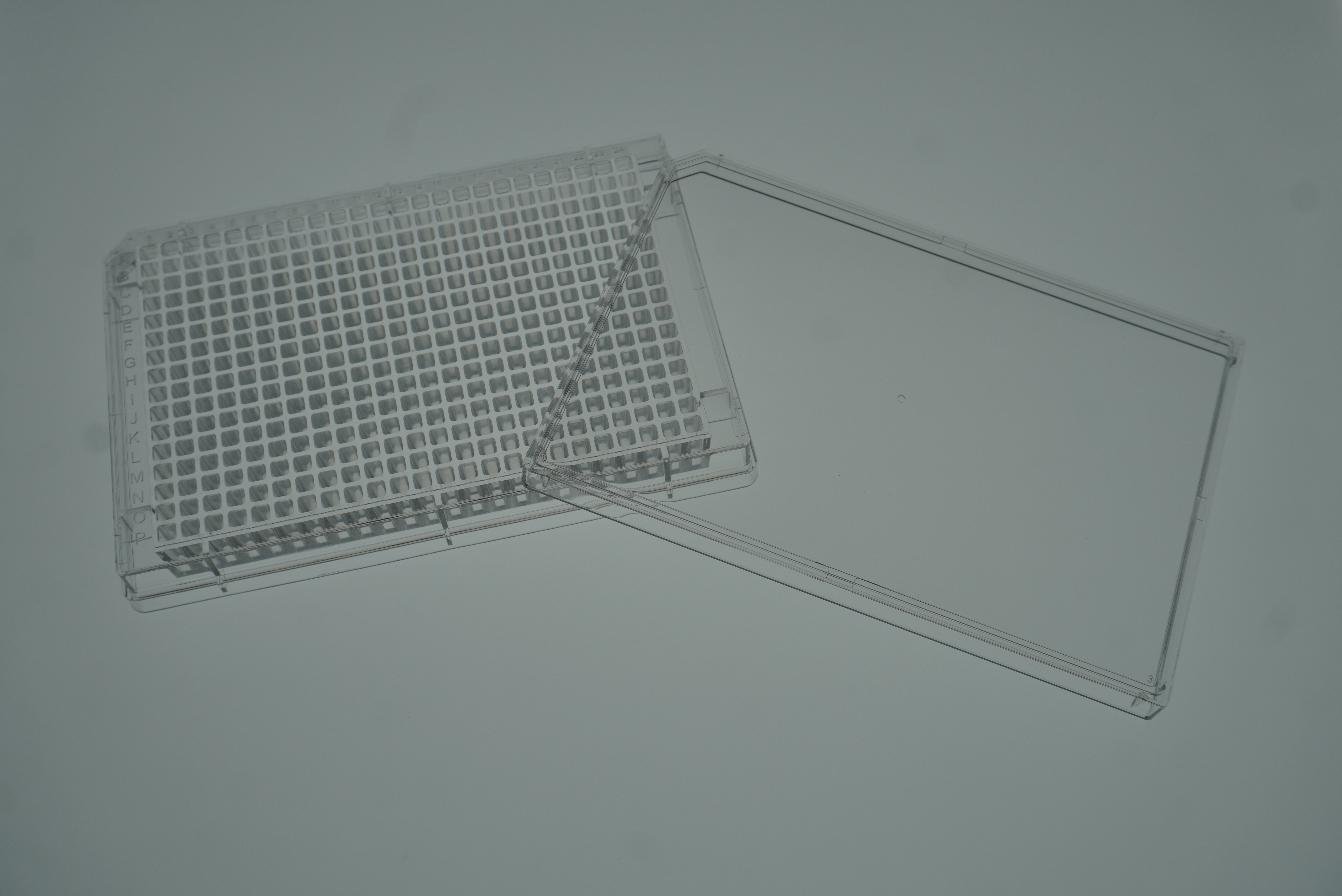
These plates are a big leap in lab work. They have 384 wells in one small space. This lets scientists do more research with less material. They can run complex tests fast and accurately.
Today’s labs use these tools to make discoveries faster. They help in drug making and genetic studies. High-throughput screening with 384 microwell plates is key for new scientific insights.
Key Takeaways
- 384 microwell plates enable up to 4 times increased assay throughput
- Reduces reagent usage by approximately 75% compared to traditional methods
- Critical tool for drug discovery and biological research
- Supports advanced high-throughput screening techniques
- Enhances experimental efficiency and precision
Introduction to 384 Microwell Plates
The 384 microwell plate is a big step forward in lab work, especially for finding new medicines. These plates are made with care to help scientists do lots of tests at once. This makes their work much faster and more efficient.
Today’s lab work needs advanced tools for complex studies. The 384 microwell plate offers a small, yet powerful, setup for many tests. It’s a key tool for scientists.
Defining the 384 Microwell Plate
A 384 microwell plate has 16 rows and 24 columns of wells. This setup lets scientists work with lots of samples at once. Each well can hold between 0.03 and 0.1 mL of liquid. This makes the plates great for:
- Compound library screening
- Drug discovery research
- Genetic analysis
- Protein interaction studies
Importance in Scientific Research
These plates are made to make lab work smoother. Their design fits well with robots and other lab tools. This makes it easier to do tests and get results.
“The 384 microwell plate has revolutionized scientific research by enabling rapid, precise, and scalable experimental methodologies.” – Laboratory Research Insights
| Characteristic | Specification |
|---|---|
| Well Configuration | 16 × 24 (384 wells) |
| Well Volume Range | 0.03 – 0.1 mL |
| Standard Footprint | 127.76 mm × 85.48 mm |
| Well-to-Well Spacing | 4.5 mm |
384 microwell plates are a big help for scientists looking for new medicines. They keep pushing the limits of what’s possible in lab research.
Features of 384 Microwell Plates
384 microwell plates are key in today’s labs, especially for testing and cell studies. They let scientists run many tests at once in a small space.
These plates are made to help scientists work more efficiently and accurately. They make it easier to study complex biological issues.
Standard Specifications
Standard 384 microwell plates have specific features for advanced research:
- Well diameter: 2.15-2.25 mm
- Well volume range: 10-100 µL
- Center-to-center spacing: 4.5 mm
- Total wells per plate: 384
Common Materials Used
The choice of material is important for successful tests. Clear polystyrene is often chosen because it’s great for seeing things clearly.
| Material | Key Properties | Best Suited For |
|---|---|---|
| Clear Polystyrene | High optical transparency | Fluorescence and luminescence cell-based assays |
| Black Polystyrene | Reduced background interference | High-sensitivity detection techniques |
| White Polystyrene | Enhanced signal reflection | Chemiluminescent assays |
Each material has its own benefits for different tests. This lets researchers pick the best plate for their needs.
Applications in Biological Research
The 384-well microplate has changed biological research a lot. It makes advanced miniaturization techniques possible. This helps scientists do complex biochemical assays with great precision and speed.
Drug Discovery Innovations
In drug research, 384-well microplates are very important. They help scientists test thousands of chemicals at once. This makes finding new drugs faster.
The small size of the plate means:
- Quick testing of compounds
- Less use of chemicals
- Better results every time
Genetic Studies Advancement
Genetic researchers use 384-well microplates for detailed molecular biology tests. Miniaturization lets them do more with less sample. This leads to big discoveries in genetics.
Assay Development Strategies
Biochemical assays get a big boost from 384-well plates. Scientists can make their tests better by using less sample. The plate works with many ways to detect things, like:
| Assay Type | Key Application |
|---|---|
| Enzyme Kinetics | Measuring reaction rates |
| Protein Interaction | Analyzing molecular binding |
| Cell Viability | Assessing metabolic activity |
The 384-well microplate is a big step forward in lab work. It lets scientists do detailed biological studies very efficiently and accurately.
Advantages of Using 384 Microwell Plates
Laboratory researchers are always looking for new ways to work more efficiently. 384 microwell plates are a big step forward in handling small amounts of liquid and automating tasks. They bring many benefits to today’s scientific studies.
The design of 384 microwell plates changes how research is done. It offers two main advantages:
Maximizing Research Throughput
384 microwell plates make research much more productive. They allow for many experiments to happen at the same time. This saves a lot of time and resources.
- Supports rapid screening of multiple sample conditions
- Enables parallel testing of diverse experimental parameters
- Reduces overall research timeline
Precision in Experimental Execution
These plates are known for their accuracy thanks to automation and handling small amounts of liquid. Their design helps keep samples consistent. This makes results more reliable.
| Parameter | Performance Metric |
|---|---|
| Working Volume | 10-100 μL per well |
| Sample Consistency | Exceptional uniformity |
| Experimental Precision | Reduced variability |
*”The 384 microwell plate represents a quantum leap in experimental design and execution.”* – Research Innovations Journal
384 microwell plates combine advanced liquid handling with automation. This lets researchers do more detailed and thorough studies.
Selecting the Right 384 Microwell Plate
Choosing the right 384 microwell plate is key for successful high-throughput screening and research. Researchers need to look at many factors for the best results.
Understanding your research needs and the plate’s features is important. These details can greatly affect your results.
Critical Factors in Plate Selection
- Material composition (polystyrene, polypropylene, cycloolefin)
- Surface treatment (treated vs. non-treated)
- Well geometry (F-bottom, V-bottom, Small Volume)
- Optical properties
- Sterility requirements
Assay Compatibility Considerations
Different 384 microwell plates are better for different screening tasks. Untreated polystyrene plates are great for cell cultures that don’t need to stick to the plate.
| Plate Characteristic | Best Suited Application |
|---|---|
| Clear Polystyrene | Optical density measurements |
| Black/White Plates | Fluorescence and luminescence assays |
| Small Volume Plates | Minimizing reagent consumption |
It’s important to check the plate’s details carefully. Plates with cycloolefin film bottoms are good for measuring nucleic acids because they let light through to 230 nm.
Cost and Performance Considerations
Higher-density 384 microwell plates use less reagent and save time. But, they might need special tools. Prices vary, from about $4 for standard plates to $50 for coated ones.
Choosing the right 384 microwell plate means knowing what you need, what the plate offers, and how it performs.
Preparatory Steps for Using 384 Microwell Plates
Preparing 384 microwell plates needs careful attention. This is especially true in compound library screening and drug discovery. Advanced laboratory techniques require precise handling to keep experiments accurate.
Researchers must follow specific protocols. This ensures the best results and prevents contamination during important scientific steps.
Cleaning and Sterilization Protocols
Cleaning and sterilizing plates is key to success. The process includes several important steps:
- Use sterile, lint-free wipes for surface cleaning
- Apply 70% ethanol for surface disinfection
- Utilize UV radiation for additional sterilization
- Implement strict environmental controls
Proper Handling Techniques
Handling 384 microwell plates needs precision and care. Researchers should:
- Wear clean, powder-free gloves
- Minimize direct plate contact
- Store plates in controlled temperature environments
- Use specialized pipetting techniques
| Handling Step | Best Practice |
|---|---|
| Transport | Use secure plate carriers |
| Storage | Maintain consistent 4°C temperature |
| Surface Treatment | Use Nunclon Delta cell culture treated surface |
Proper preparation is crucial for maintaining experimental reliability in drug discovery and compound library screening processes.
Troubleshooting Common Issues
Researchers often face challenges when working with 384 microwell plates. These issues can affect cell-based assays and assay development. It’s important to know how to solve these problems to keep experiments accurate and reliable.
Identifying Contamination Risks
Contamination is a big problem in microplate research. It’s key to watch out for:
- Bacterial infiltration
- Fungal growth
- Cross-contamination between wells
- Environmental microorganism introduction
Strategies for Addressing Assay Failures
To succeed in assay development, you need to avoid failures. Here are some ways to do it:
- Use strict sterile techniques
- Calibrate equipment regularly
- Choose high-quality reagents
- Do quality control checks often
When fixing cell-based assays, look at things like:
- Cell confluence
- Media composition
- Plate surface treatment
- Incubation conditions
Precision in experimental design minimizes potential sources of error in microplate research.
Knowing common problems and using systematic troubleshooting can make 384 microwell plate experiments more reliable and consistent.
Innovations in 384 Microwell Plate Design
The world of biological research is changing fast with new 384 microwell plate tech. Scientists are making these plates smaller and smarter. This makes biochemical tests better and easier to do.
Recently, there have been big steps in microwell plate design. These steps focus on two main areas:
Advanced Material Developments
Scientists have found new materials that make plates better and last longer. These new coatings offer big benefits:
- They make biochemical tests more consistent
- They protect against chemical damage
- They help keep samples from being lost, making tests more reliable
Automation Compatibility Breakthroughs
New automation tech has changed how microwell plates work. The big changes include:
- Customized bar coding for tracking samples better
- Wells that work better for high-speed tests
- They work well with systems that can pipette many samples at once
The Three Position Stage is a big step up. It goes from 2 to 3 positions. This lets researchers use 96-channel pipetting heads with 384-well plates. It makes tests much faster.
The future of microwell plate design lies in continuous miniaturization and enhanced automation capabilities.
Best Practices for Data Management
Effective data management is key in scientific research, especially with small volume liquid handling and automation. Researchers need to have a plan for recording and keeping experimental data. This ensures that results can be repeated and are trustworthy.
- Implement standardized digital recording protocols
- Use robust laboratory information management systems (LIMS)
- Maintain comprehensive digital and physical documentation
- Adhere to ANSI standards for consistency
Recording Experimentation Data
When working with 384 microwell plates, capturing data accurately is crucial. Modern automation systems help by reducing errors and making data more reliable.
- Digital documentation of each experimental step
- Real-time data logging during automation processes
- Comprehensive metadata collection
- Secure backup of experimental records
Ensuring Reproducibility
Reproducibility is a big challenge in science. Labs can make experiments more consistent by standardizing small volume liquid handling and using advanced automation.
Precise documentation and systematic approaches are the foundations of reliable scientific research.
To improve reproducibility, labs should keep detailed protocols, calibrate equipment often, and follow quality control measures. These should meet ANSI/SBS 1-2004 standards.
Environmental Considerations
Scientific research now focuses more on being green, especially in labs. The use of 384 microwell plates can really affect the environment. So, scientists and makers are finding new ways to cut down on waste and be kinder to our planet in their work.
Sustainable Manufacturing Strategies
Today’s 384 microwell plate making includes many green steps:
- They use plastic that can be recycled.
- They make the plates in ways that save energy.
- They cut down on carbon emissions when making them.
- They design plates that use less material.
Responsible Disposal Methods
It’s important to dispose of used 384 microwell plates the right way. Lab workers can follow these steps:
- Sort plates by what they’re made of.
- Clean them well before recycling.
- Work with services that handle medical waste.
- Use detailed plans to reduce waste.
Using 384 microwell plates in high-throughput screening helps save resources. Labs can do more with less, which means they can help the environment. They can still do great science without harming the planet.
Future Trends in Microwell Plate Technology
The world of microwell plate technology is changing fast. Big steps are being made in compound library screening and drug discovery. The global microplates market is set to grow from USD 1.09 billion in 2024 to USD 1.72 billion by 2034. This shows a lot of new technology is coming.
Artificial intelligence and machine learning are changing 384-well plate use. Now, digital tools help make drug discovery faster. With about 3,400 drug molecules being studied in the U.S., these new tools will speed up finding new treatments.
The Asia Pacific region is leading the growth in microwell plate technology. More biotech and pharma companies are using these advanced tools. The drug discovery area will be the biggest part of the market. This shows how important these tools are for finding new medical solutions.
Integration with Digital Technologies
New digital tools are changing how scientists screen compounds. Better algorithms and high-throughput screening will help analyze samples better. This will make finding new discoveries in life sciences faster.
Expanding Applications in Life Sciences
Microwell plate technology is going beyond just research. With the global elderly population set to hit 2.1 billion by 2050, these tools will be key. They will help in making targeted treatments and personalized healthcare.
FAQ
What is a 384 microwell plate?
A 384 microwell plate is a tool for high-throughput screening. It has 384 wells in a 16×24 grid. This design lets researchers do many experiments at once, saving time and resources.
What are the primary applications of 384 microwell plates?
These plates are key in drug discovery and genetic studies. They’re used in cell-based assays and biochemical research. They help in screening compounds and molecular biology experiments.
What materials are typically used in manufacturing 384 microwell plates?
Common materials are medical-grade polystyrene and specialized polymers. They’re chosen for their clarity, chemical resistance, and thermal stability. This ensures they work well with different experiments and detection methods.
How do 384 microwell plates improve research efficiency?
They boost research speed by letting researchers test many things at once. They make experiments smaller, use less material, and support automated systems. This speeds up data collection in biology.
What factors should researchers consider when selecting a 384 microwell plate?
Consider well shape, surface treatment, material, and sterility. Also, think about the bottom type, optical properties, and what you need for your experiment. This ensures the plate fits your research needs.
Are 384 microwell plates compatible with automated systems?
Yes, they fit well with robots and automated readers. Their standard size and design make them easy to use in today’s labs.
How should 384 microwell plates be stored and handled?
Store them in sealed, sterile packaging to keep them clean. Use clean techniques and wear protective gear when handling. Follow strict sterilization to avoid contamination.
What are the emerging trends in 384 microwell plate technology?
New trends include better surface coatings and digital tech like machine learning. There’s also improved automation and better optical properties. These advancements support more complex research.
How do 384 microwell plates contribute to sustainability in research?
They help by using less material and making experiments more efficient. This reduces waste and lets researchers do more with less, promoting sustainability.
What industries primarily use 384 microwell plates?
Pharmaceutical research and biotechnology lead the way. Academic and contract research organizations also use them. So do medical diagnostics, agricultural, and environmental science labs for high-throughput screening.




Leave a Comment
Your email address will not be published. Required fields are marked *