


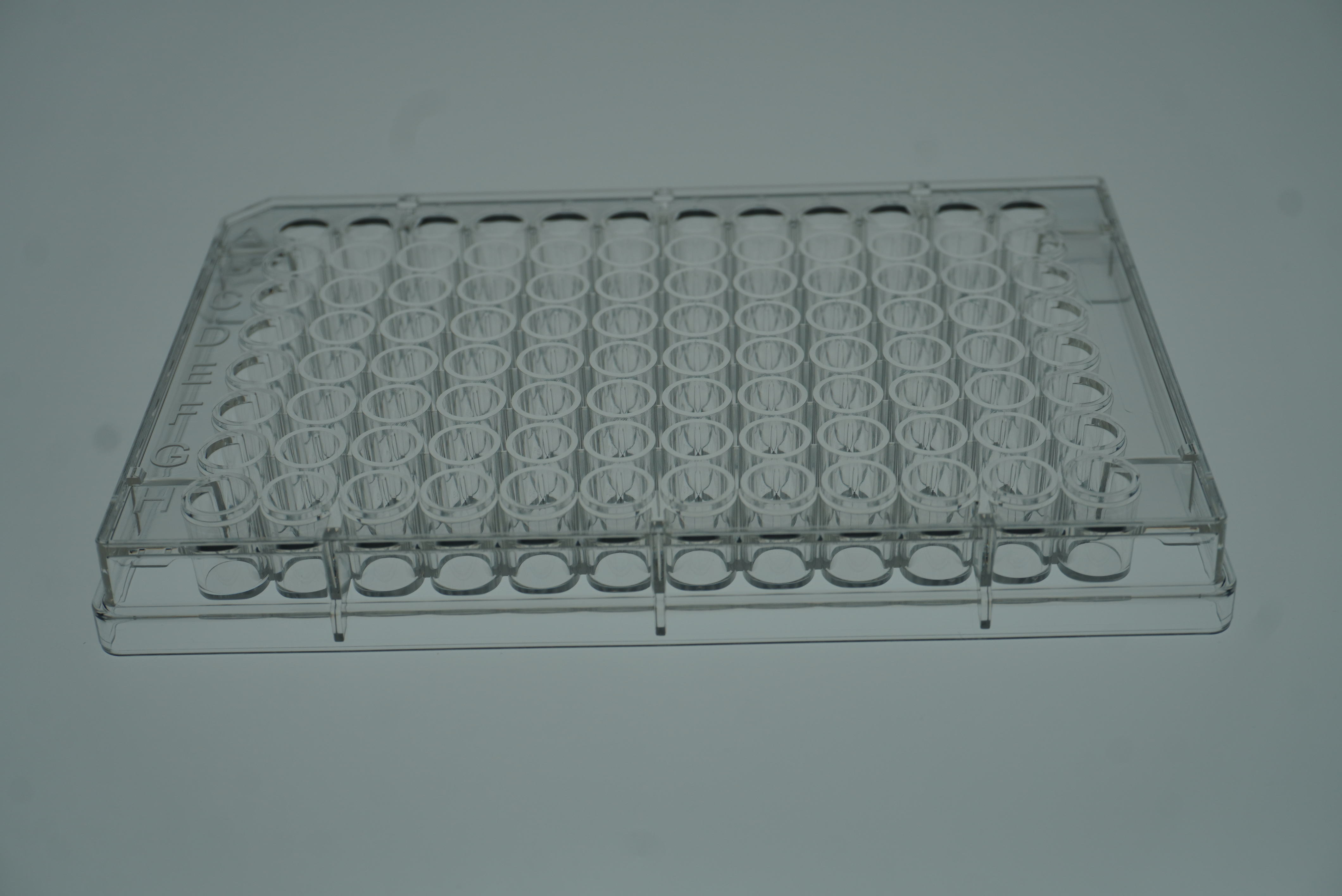
What if the height of a laboratory plate could change scientific research? Deep well 96 well plates are a big step forward in microplate sizes. They change how researchers work with and study biological samples.
Modern science needs to be precise, and the height of deep well 96 well plates is key. These plates let scientists store, process, and study complex biological samples with great accuracy.
Laboratory experts use these plates for high-throughput screening, genomic research, and advanced biotechnology. The standard height of 43.60 mm makes them work well with top liquid handling systems from Hamilton, Tecan, and Eppendorf.
Key Takeaways
- Deep well 96 well plates are crucial for advanced scientific research
- Precise microplate dimensions enable accurate sample handling
- Standard plate height supports multiple laboratory automation systems
- Plates accommodate various working volumes from 350µl to 2ml
- Manufactured under strict DNase/RNase free environments
Understanding Deep Well Plates and Their Purpose
Deep well plates are key tools in today’s biology labs. They help with complex sample handling and screening. These devices offer precise spaces for managing biological samples well.
Deep well plates are special containers for complex lab work. They are crucial for genomics and molecular biology research. Their design supports detailed scientific tasks.
What Are Deep Well Plates?
Deep well plates are rectangular containers with many wells. They have deep and large volumes. They are made from high-quality polypropylene.
- Standardized 96-well configuration
- Enhanced sample volume capacity
- Compatible with automated liquid handling systems
- Manufactured from high-quality polypropylene
Applications in Biological Research
Scientists use deep well plates in many areas of research. They are key for screening processes. Main uses include:
- Nucleic acid purification workflows
- Cell culture investigations
- Protein research and analysis
- Genomic and proteomic studies
Importance of Height in Deep Well Plates
The height of deep well plates affects sample handling and precision. They come in different heights, from 27mm to 45mm. Each height supports various research needs.
| Plate Type | Height (mm) | Maximum Volume (mL) |
|---|---|---|
| Standard Deep Well Plate | 45 | 2.075 |
| Low Profile Plate | 27 | 1.1 |
Choosing the right deep well plates is crucial. They ensure the best sample handling and support advanced screening methods in science today.
Key Dimensions of 96 Well Plates
Microplate dimensions are key in biological research. They affect how well experiments work. Deep well plates are a special tool for labs. They help with handling and storing samples.
The standard 96-well microplate has specific sizes. These sizes make sure it fits with lab equipment. The main measurements are:
- Length: 127.71 mm
- Width: 85.43 mm
- Height: 14.10 mm
Standard Measurements of Deep Well Plates
Deep well plates are very versatile. They can hold different amounts of samples. Their height is usually between 14.5 mm and 44.3 mm. There are different shapes for the wells, like:
- Round (U-Bottom)
- Conical (V-Bottom)
- Flat (F-Bottom)
- Cylindrical (C-Bottom)
Depth vs. Volume Capacity
The depth of a plate affects how much sample it can hold. Plates can hold from 0.36 mL to 2.3 mL of sample. This range is very useful for different experiments.
Comparisons with Other Well Plate Types
There are many types of well plates, each with its own benefits. For example, U-bottom wells can hold 323 µL but work best with 40-280 µL. V-bottom wells can hold 382 µL and work best with 25-340 µL.
Precise microplate dimensions are essential for maintaining experimental consistency and reproducibility.
Significance of Height in Laboratory Settings
Deep well plate height is key in today’s labs, especially for automated tasks and mixing samples. Scientists need to pick the right plate size for the best results in their work.
- It affects how well samples are handled.
- It impacts how efficient automated systems are.
- It helps make sure experiments can be repeated.
- It ensures that equipment works well together.
Influence on Sample Handling
Plate height is crucial for managing samples. Standard heights help plates work smoothly with robots, reducing mistakes when moving liquids.
Precision in plate height can make the difference between successful and failed experiments.
Effects on Experimentation Efficiency
Systems that handle liquids fast need plates of the same size. If the height is off, it can mess up the robots. This can ruin the results of tests and studies.
Importance for Liquid Handling Systems
Today’s lab tools need plates that fit exactly. The standard 96-well plate height of 44.4mm works well with many machines. This helps scientists do advanced research in many fields.
- Standard plate height: 44.4mm
- Works with most liquid handling robots
- Supports different well sizes (350µl to 2ml)
Scientists must choose deep well plates that fit their exact needs. This ensures the best results in automated labs.
Material Considerations for Deep Well Plates
Choosing the right material for deep well plates is key in scientific research. The material affects the results, keeps samples safe, and boosts research efficiency. Deep well plates need to meet many needs in the lab.
Polypropylene is the top choice for deep well plates today. It’s great because it can handle extreme temperatures. This lets researchers work with samples from -86°C to 100°C.
Common Manufacturing Materials
- Polypropylene: Primary material with superior durability
- Polystyrene: Alternative for specific applications
- High-density polyethylene: Specialized research needs
Material Performance Characteristics
Chemical inertness is very important for deep well plates. They must not harm or mix with sensitive biological samples. Polypropylene is excellent because it:
- Has little interaction with samples
- Keeps molecular structure intact
- Resists chemical damage
Material Selection Strategies
Choosing the best material requires careful thought. You need to think about the temperature, chemicals, and stress your samples will face. Scientists must match the material to their specific needs for the best results.
Choosing the Right Deep Well Plate Height
Choosing the right deep well plate height is key for lab success. Researchers need to think about many things. This ensures the best results in automated liquid handling and assay compatibility.
Guidelines for Selecting Plate Height
When picking deep well plates, labs should look at a few important things:
- Sample volume needs
- What the experiment requires
- If it works with the lab equipment
- How to store and keep the samples
Laboratory Equipment Compatibility
Automated liquid handling systems need specific plate sizes. It’s important to make sure the plates fit with the lab’s equipment. This avoids any problems in the workflow.
| Plate Type | Volume Range | Typical Applications |
|---|---|---|
| Square-well V-bottom | 1 ml | High recovery protocols |
| Round-well | 350 μl | Bead-beating experiments |
| Low-profile | 200 μl | Minimal reagent consumption |
Factors Influencing Height Selection
Several important factors affect deep well plate height choices:
- Assay compatibility with specific research protocols
- Maximum supported volume for automated liquid handling
- Temperature and sterilization needs
- Risks of cross-contamination
By carefully looking at these factors, researchers can set up their experiments better. This leads to more reliable results in biological research.
Analyzing the Benefits of Various Heights
Deep well plates are key in lab research. The height of these plates affects how much sample you can hold and how well assays work. It’s important for researchers to pick the right height to get the best results.
Choosing the right plate height is a big decision. It can make a big difference in how well your research works. Each height has its own benefits for different kinds of research.
Short vs. Tall Deep Well Plates
There are different heights for deep well plates:
- Short plates save space and are easy to store
- Tall plates hold more sample, up to 2.0 mL per well
- The right height depends on what you need for your research
Influence on Sample Preservation
Plate height is very important for keeping samples safe. Taller plates help keep samples from drying out and losing volatile compounds. By choosing the right height, researchers can keep their samples in better condition.
Implications on Assay Sensitivity
Plate height affects how well assays work. The right height can help detect signals better and reduce background noise. Researchers need to match the plate height to their specific research needs for the best results.
Precise plate height selection is fundamental to achieving reproducible and reliable scientific results.
Regulatory Compliance and Standards
Biotechnological research needs strict rules for microplate sizes and liquid handling. It’s key to follow these rules to keep experiments reliable and the same.
The American National Standards Institute (ANSI) and Society for Laboratory Automation and Screening (SLAS) have set clear guidelines. These ensure all lab equipment and research methods are consistent.
Key Industry Standards for Deep Well Plates
- ANSI/SLAS Standards 1-4 (2004) give detailed rules for microplate design
- Standardizing microplate sizes helps them work well with automated systems
- They also cover well shape, material, and how well they perform
Importance of Compliance in Biotechnological Research
Following these standards helps researchers:
- Get the same results in different labs
- Work better with automated systems
- Keep their data accurate and reliable
Critical Certifications for Laboratory Equipment
When picking deep well plates, look for these certifications:
- CE marking for the European market
- TUV for quality and safety
- RoHS for the environment and health
By focusing on compliance, labs can make their research more trustworthy. They can also use the latest in microplate technology.
Maintenance and Care of Deep Well Plates
Keeping deep well plates in good shape is key for lab work. It’s important to follow care steps to keep them working well. This includes keeping them safe from chemicals and extreme temperatures.
Good care means looking after the plates well. This helps keep lab work and equipment safe.
Cleaning Protocols for Longevity
Cleaning deep well plates right is crucial:
- Use special cleaning solutions made for labs
- Stay away from strong chemicals that can harm them
- Rinse well with clean water
- Let them air dry in a clean spot
Storage Considerations
How you store plates is also important:
- Keep them in places with a steady temperature
- Use protective covers to stop dirt
- Make sure they don’t get too hot or cold
- Stack them carefully to avoid damage
Troubleshooting Common Issues
| Issue | Solution |
|---|---|
| Well-to-well contamination | Use chimney-style wells and handle them carefully |
| Surface damage | Replace any plates that are worn or scratched |
| Uneven sample distribution | Check if the plates are flat and use the right tools |
Looking after your plates well means they last longer. This helps get accurate results in your science work. Always check your plates for damage. Make sure they stay safe from chemicals and extreme temperatures.
Innovations in Deep Well Plate Design
Laboratory research is always pushing the limits of science, especially with deep well plates. Scientists are coming up with smarter ways to handle samples and improve experiments.
New deep well plate designs are changing biological research. They bring better optical clarity and stackability. This makes experiments more efficient and advanced.
Recent Advances in Height Adjustments
Now, deep well plates offer more flexibility in height. Scientists can pick plates that fit their research needs exactly:
- Customizable well depths for different sample sizes
- Works better with magnetic bead nucleic acid purification products
- Designed for better lab workflow
Technologies Impacting Plate Functionality
New technologies are changing what deep well plates can do. Researchers get to use:
- Superior optical clarity for better imaging
- Chemical resistance
- Thermal stability
Future Trends in Well Plate Development
The future of deep well plates is exciting. We can expect:
- Automation compatibility
- Nanotechnology for better surfaces
- Advanced stackability for easy storage
These changes are big steps forward in lab equipment. They promise more efficient and accurate scientific research.
Conclusion: The Right Height for Optimal Results
Deep well 96 well plates height is key in scientific research and high-throughput screening. Their precise design greatly affects results, showing high efficiency in biological studies.
Choosing the right deep well 96 well plates is crucial for success. Studies show great performance, like over 99.4% magnetic particle collection and RNA yields of 119 ng/µl. This highlights the need for careful plate selection.
New plate technologies allow for precise biological experiments. The 96-deep-well microtiter plates have changed research. They reduce sample volumes and improve experiment reproducibility at various scales.
Key Research Insights
Innovations in plate design keep advancing high-throughput screening. Researchers need to stay updated with new technologies. These improve sample handling, reduce variability, and increase experiment reliability.
Encouraging Responsible Selection
Choosing the right deep well plate is important. It depends on the experiment’s goals, sample volumes, and equipment. Scientists should look for plates that offer consistent results, little sample loss, and the best conditions for experiments.
FAQ
What are deep well 96 well plates?
Deep well 96 well plates are special containers for labs. They have 96 wells in an 8×12 grid. This design holds more sample than regular plates.
They’re key for DNA/RNA work, cell culture, and storing samples.
How do plate height and depth impact laboratory research?
Plate height affects how much sample you can hold and how you handle it. It also matters for working with machines. Different heights help with keeping samples in place and working with lab tools better.
This makes research more efficient and reduces sample loss.
What materials are typically used for deep well plates?
Polypropylene is the main material for these plates. It’s good because it doesn’t react with chemicals, stays clear, and can handle different temperatures. It’s strong, works well with many samples, and stands up to various conditions.
How do I choose the right deep well plate height?
Choosing the right height depends on several things. You need to think about how much sample you need, what kind of test you’re doing, and how you store it. Also, it should fit with your lab’s equipment.
Look at standards, your specific needs, and what your machines can do.
What are the standard dimensions of a 96 well deep plate?
Standard plates are 127.76 mm x 85.48 mm. They can be 14.4 mm to 25.4 mm deep. This lets them hold 1 mL to 2 mL of sample, depending on your needs.
How do deep well plates support high-throughput screening?
They help by making sample handling consistent and easy. Their design lets them work well with machines. This makes research faster and more productive.
What maintenance is required for deep well plates?
Clean them with gentle lab cleaners. Avoid harsh chemicals. Store them in a clean, dry place.
Keep them away from extreme temperatures. Check for damage or contamination before using.
Are there recent innovations in deep well plate design?
Yes, there are new things like clearer plates for imaging and plates that stack better. There are also plates with more precise heights. New materials are being made for better chemical and heat resistance.





Leave a Comment
Your email address will not be published. Required fields are marked *