


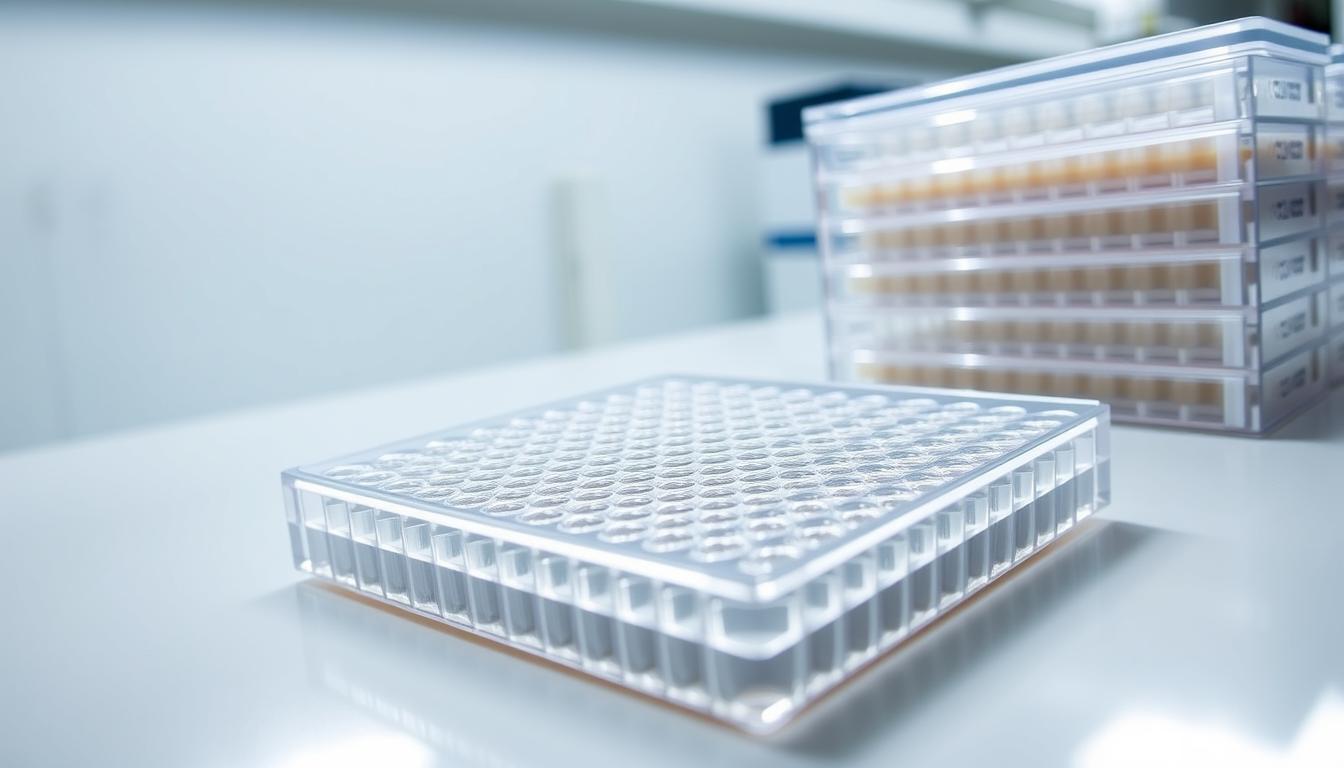
What if a single tool could revolutionize how labs process samples while maintaining rigorous scientific standards? Modern research demands precision, speed, and adaptability—qualities that define high-performance filtration systems. These products are engineered to handle complex workflows, from preparing samples for LCMS analysis to filtering protein solutions or tissue culture media.
Laboratories require solutions that integrate seamlessly with existing protocols. The versatile 96-well filter plate supports critical applications like “Dilute & Shoot” procedures and antibiotic purification. Its design prioritizes ease of use, enabling researchers to focus on data accuracy rather than technical hurdles.
With membrane options such as Hydrophilic PP and Glass Fiber, these tools adapt to diverse biological needs. They ensure minimal sample loss and maximal compatibility with automated workflows—key for high-throughput environments. Whether managing serial dilutions or nucleic acid extractions, reliability remains non-negotiable.
Key Takeaways
- Optimized for pre-LCMS workflows and tissue culture media filtration
- Multiple membrane types enhance application flexibility
- Seamless integration with automated lab equipment
- Robust design minimizes cross-contamination risks
- Supports high-throughput screening for accelerated research
Comprehensive Overview and Key Technologies
Modern laboratories thrive when tools adapt to both biological complexity and workflow demands. Filter plates rely on advanced engineering to meet these challenges, combining material science with precision design.
Materials and Membrane Options
Polystyrene frames paired with hydrophilic PVDF membranes dominate high-performance models. These materials balance chemical resistance with rapid flow rates, critical for protein purification or nucleic acid workflows. Hydrophilic treatments ensure uniform wetting, while glass fiber alternatives excel in particulate retention.
Membrane pore sizes—ranging from 0.01 to 300 μm—allow customization for cell lysates or small-molecule studies. Rigorous testing confirms no cross-contamination between wells, even with viscous samples like HEK293T cell suspensions.
Design Considerations for Enhanced Lab Efficiency
Filter plate architecture directly impacts automation compatibility. Reinforced polyester mesh prevents deformation during centrifugation, while standardized formats (24 to 384 wells) integrate with robotic handlers. Barcode-ready surfaces streamline sample tracking across large-scale experiments.
Engineers prioritize low-dead-volume designs to maximize recovery rates. Silicone-sealed edges eliminate leakage risks, ensuring data consistency in sensitive applications like chromatography prep. Such innovations reduce manual intervention, letting researchers scale throughput without compromising accuracy.
Selecting the Right 96 well filtration plates for Your Research
How do leading laboratories ensure precise results across diverse experiments? Choosing optimal tools requires evaluating technical specifications against specific workflow demands. Three critical factors determine success: material compatibility, sample handling capacity, and integration with analytical systems.
Quality and Performance Metrics
Membrane integrity directly impacts data reliability. Hydrophilic PVDF options prevent protein adsorption, while glass fiber variants excel in particulate retention. Researchers should verify chemical resistance to alcohols and biological buffers used in drug development.
Flow rate consistency matters for time-sensitive workflows. Devices with 0.2µm pores maintain sterility during media preparation, while larger 300µm sizes handle cell lysates. Check certification for absence of extractables that could skew LCMS results.
| Membrane Type | Protein Compatibility | Retention Rate |
|---|---|---|
| GHP | High | 99.9% @ 0.2µm |
| wwPTFE | Moderate | 98.5% @ 1µm |
| Glass Fiber | Low | 99.2% @ 5µm |
Filter Options and Membrane Types
GHP membranes outperform standard materials in aqueous solutions, reducing false positives in pharmaceutical testing. For nucleic acid collection, hydrophilic PP ensures minimal binding loss. Always match pore size to target analytes—0.45µm works best for antibiotic purification.
Automation-ready designs with barcode labels prevent sample mix-ups in high-throughput systems. Silicone-free models eliminate interference in sensitive protein assays. Proper selection prevents costly re-runs and maintains chain-of-custody documentation.
Optimizing Laboratory Workflow with Filtration Solutions
Modern laboratories face increasing pressure to deliver accurate results faster. Advanced filtration tools address this challenge by streamlining repetitive tasks while protecting sample quality. Vacuum-assisted processing emerges as a game-changer, cutting processing time by 40% compared to manual methods in high-volume settings.
Effective Sample Handling Techniques
Three strategies redefine efficiency in sample preparation. First, standardized protocols using silicone-free inserts prevent cross-contamination during nucleic acid isolation. Second, automated systems with barcode tracking maintain chain-of-custody for regulated environments.
Vacuum technology ensures uniform flow rates across all wells, critical for drug discovery workflows. Labs using Water-Glo™-compatible devices report 98% consistency in luminescence assays. Pre-assembled 5-pack configurations support uninterrupted throughput during marathon testing sessions.
Specialized service packages prove essential for maintaining peak performance. One core facility reduced equipment downtime by 67% after adopting manufacturer-calibrated replacement parts. “Custom support plans adapt to our evolving needs,” notes a lead researcher at a Boston biotech firm.
These solutions shine in volume-intensive scenarios. A recent study showed labs processing 500+ daily samples achieved 99.2% recovery rates using low-binding membranes. By integrating these tools, teams reclaim hours previously lost to manual troubleshooting.
Applications and Use Cases in Scientific Research
In cutting-edge research, efficiency often hinges on tools that adapt to complex biological challenges. These solutions streamline workflows while maintaining rigorous standards, particularly in fields requiring precision at scale.
Biomedical and Pharmaceutical Applications
High-throughput drug screening relies on devices that process hundreds of compounds daily. For example, cytotoxicity testing identifies harmful chemicals by analyzing cell viability shifts. Automation-compatible designs accelerate these processes, reducing manual errors in culture-based experiments.
Cell behavior studies benefit from uniform flow rates during media preparation. A recent project using HEK293T cells achieved 98% viability by optimizing filtration parameters. Compliance with regulatory consent standards ensures data validity for FDA submissions.
Chromatography and Protein Analysis Techniques
Advanced purification methods demand membranes that minimize protein loss. Hydrophilic PVDF options excel here, delivering 99.9% retention in antibody isolation workflows. “These tools transformed our LCMS prep time,” notes a lead scientist at a Boston biotech firm.
Chromatography workflows gain flexibility with customizable pore sizes. Researchers screening nucleic acid conditions report 40% faster optimization using 0.45µm membranes. Silicone-free product options further prevent interference in sensitive assays, aligning with ethical consent protocols.
Conclusion
Advanced laboratory tools reshape how researchers achieve precision in high-stakes environments. These systems combine robust membrane engineering with automation-ready designs, accelerating discoveries across drug development and proteomic studies. Proper selection ensures minimal sample loss while maintaining compatibility with sensitive analytical instruments.
Technological strengths lie in customizable pore configurations and chemically resistant materials. Such features enable consistent results in chromatography workflows and cell culture applications. By prioritizing low-binding surfaces and standardized formats, labs reduce variability during large-scale screenings.
Exploring detailed product specifications on our website helps researchers match tools to specific protocols. The site offers intuitive navigation—including accessibility menus and preference settings—to streamline access to technical documents. Cookies enhance user experience by remembering frequently visited pages and filter preferences.
For teams handling 500+ daily samples, these solutions prove indispensable. Visit our online platform to discover how optimized designs elevate throughput without compromising data integrity. Smooth website interactions and transparent cookie policies ensure effortless access to critical resources for modern scientific challenges.
FAQ
What membrane materials are commonly used in filtration plates?
Polyvinylidene fluoride (PVDF), polyethersulfone (PES), and glass fiber are widely used due to their chemical compatibility and protein-binding efficiency. PVDF membranes, for example, excel in hydrophobic interactions for sensitive assays.
How do plate designs improve laboratory workflows?
Features like low-dead-volume wells, compatibility with automated systems, and secure sealing mechanisms reduce cross-contamination risks. These designs streamline processes such as high-throughput screening or sample preparation for chromatography.
What factors ensure reliable performance in drug discovery applications?
Consistency in membrane pore size, minimal nonspecific binding, and compatibility with vacuum or centrifugation systems are critical. Products validated for use in ligand-binding assays or cell culture filtrations often meet stringent quality benchmarks.
Which membrane type suits protein analysis workflows?
Hydrophilic PVDF or regenerated cellulose membranes are ideal for retaining proteins during ultrafiltration. They minimize adsorption losses, ensuring accurate quantification in techniques like HPLC or mass spectrometry.
How do filtration solutions enhance sample handling in pharmaceuticals?
They enable rapid clarification of cell lysates, removal of particulates from drug formulations, and preparation of sterile samples. This supports compliance with regulatory standards while accelerating critical steps in biologics development.
Can these products integrate with automated liquid handling systems?
Yes. Many devices are designed with standardized footprints and height specifications to align with robotic platforms. This ensures seamless integration for large-scale studies or multiplexed assays requiring precision.






Leave a Comment
Your email address will not be published. Required fields are marked *