



Ever thought about how scientists count tiny bacteria that we can’t see? It’s a big challenge that needs special tools and methods.
Measuring bacteria is key in many fields, like medicine and environmental studies. Scientists use different advanced ways to figure out how many bacteria there are. Each method has its own strengths and uses.
To measure bacteria, scientists learn many techniques. The standard plate count and spectrophotometry are two main methods they use. These help them get accurate counts of bacteria.
By using methods like colony-forming unit (CFU) counting, scientists can find out how many live bacteria are in a sample. This helps them understand how bacteria grow in different places.
Key Takeaways
- Bacterial measurement requires specialized scientific techniques
- Multiple methods exist for quantifying bacterial populations
- Accurate measurement is crucial for research and industry
- Techniques vary based on specific research requirements
- Advanced technologies continue to improve bacterial detection
Understanding Bacteria Measurement
Measuring bacterial loads is key in science and many industries. Scientists count bacterial cells to learn about microbes and their traits.
Bacteria grow fast. They can double in 15 to 20 minutes when conditions are right. This makes it important to measure them accurately.
Defining Bacterial Measurement
Measuring bacteria means counting and studying microbes. The main goal is to find out:
- Total number of bacterial cells
- Viable (living) bacterial cells
- Bacterial growth rates
- Population characteristics
Importance Across Different Fields
Testing microbes is vital in many areas:
- Healthcare: Watching for infectious agents
- Food Production: Keeping food safe and good
- Environmental Science: Studying microbial worlds
- Industrial Research: Learning about bacterial behavior
Scientists use advanced ways to count bacteria. They use light absorption and count colonies. These methods help them understand how bacteria grow and change.
| Measurement Method | Key Characteristics | Typical Applications |
|---|---|---|
| Optical Density | Measures light absorption | Quick population estimation |
| Colony Counting | Counts viable bacterial cells | Precise population quantification |
| Flow Cytometry | Analyzes individual cell properties | Detailed cellular characterization |
Knowing how to measure bacterial loads is crucial. It helps researchers and experts in many fields. They can then monitor and study microbes more accurately.
Common Techniques for Measuring Bacteria
Researchers and microbiologists use many ways to count bacteria. They look at colony counting and turbidity measurements. These methods help them understand how bacteria grow and how many there are.
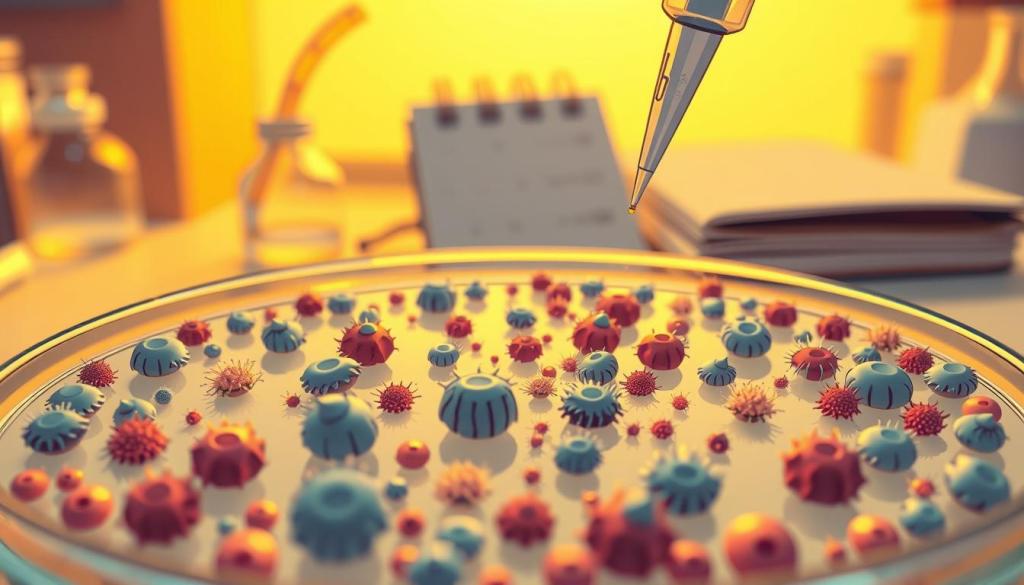
Plate Count Method: A Classic Approach
The plate count method is a key way to measure bacteria. It involves a few steps:
- Preparing serial dilutions of bacterial samples
- Spreading diluted samples on agar plates
- Incubating plates under controlled conditions
- Counting visible bacterial colonies
Scientists usually count between 30-300 colonies for accurate results. The number of living cells is called colony-forming units (CFUs).
Turbidity Measurements: Spectrophotometric Analysis
Turbidity measurements are a fast way to guess how many bacteria there are. By using spectrophotometry, scientists can quickly see how dense the bacteria are. They do this by measuring how much light a sample absorbs.
| Measurement Technique | Advantages | Limitations |
|---|---|---|
| Plate Count Method | Precise colony enumeration | Time-consuming |
| Turbidity Measurements | Quick results | Less precise quantification |
For turbidity measurements, researchers use dilutions from 10^-2 to 10^-8. This helps them get a good estimate of bacterial concentration.
Accurate bacterial measurement requires careful technique and understanding of different quantification methods.
Advanced Methods in Bacteria Quantification
Science has made big strides in finding bacteria with new, fast, and precise methods. Today, scientists use advanced ways to study bacteria with great accuracy.
Scientists have come up with strong ways to study bacterial samples in detail. Two key methods are now used a lot in studying microbes:
Quantitative PCR: Precise Bacterial Detection
Quantitative PCR is a big leap in finding bacteria. It lets scientists:
- Find bacterial DNA very sensitively
- Count specific bacteria quickly
- Study complex microbial samples
This method can spot fewer than 20 bacteria per milliliter of sample. It can identify many bacteria, like Borrelia burgdorferi and Staphylococcus aureus, with an accuracy of ± 5%.
Flow Cytometry Analysis: Rapid Cellular Examination
Flow cytometry analysis is another advanced way to count bacteria. It has special benefits:
- Looks at thousands of bacterial cells at once
- Checks physical and chemical cell traits
- Gives quick, detailed insights into cells
The ability to quickly check bacterial populations changes how we see microbes.
By using both quantitative PCR and flow cytometry, scientists can measure bacteria with unmatched precision. This opens up new areas in microbiology and medical testing.
Utilizing Optical Density in Measurement
Bacterial quantification methods have changed science a lot. They give us precise ways to count microbes. Optical density (OD) is key for knowing how bacteria grow and how many are in liquid cultures.
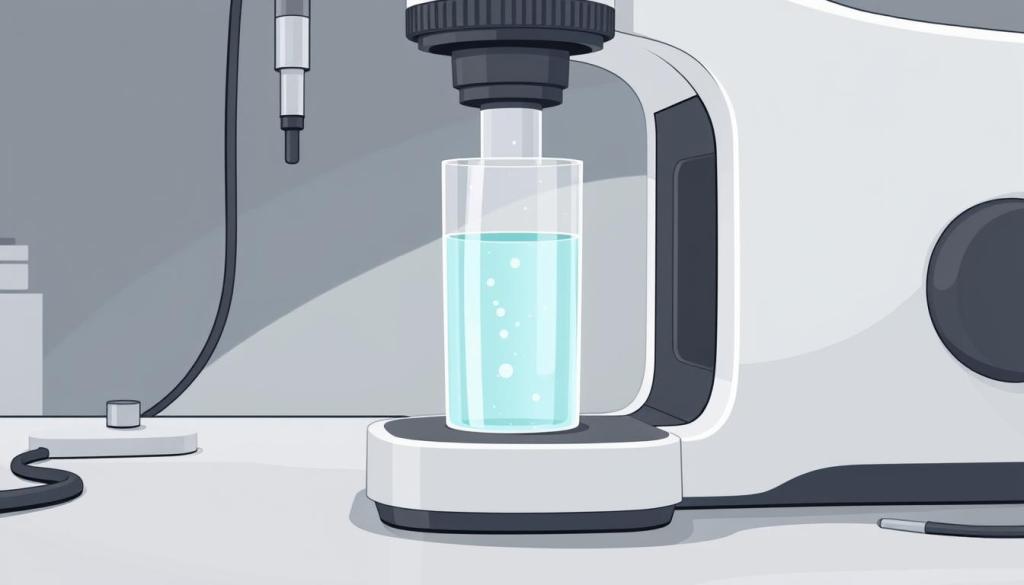
Turbidity measurements let scientists watch bacterial populations without harming them. They figure out how many cells there are by seeing how light scatters off them.
Principles of Optical Density
Optical density works by measuring how much light bacteria absorb or scatter. The main points are:
- Measuring light that goes through bacterial cultures
- Using light around 600 nm to check on bacterial growth
- Using the Beer-Lambert law to find out how many cells there are
Applications of OD Measurements
OD is used in many fields of science. It’s especially useful for:
- Watching how microbes grow in labs
- Keeping track of fermentation
- Testing how well antibiotics work
- Looking at how well proteins are made
| Measurement Parameter | Recommended Range |
|---|---|
| Optimal Absorbance Values | 0.1 – 1.0 |
| Wavelength for Bacterial Cultures | 600 nm |
| Recommended Path Length | 1 cm |
Optical density is a quick and non-destructive way to track bacteria. By learning about these methods, scientists can understand more about how microbes grow and behave.
Viable Plate Count vs. Total Count
Bacterial quantification is key in microbiology. It needs precise methods. Scientists use viable plate count and total count for this. Knowing the difference is crucial for accurate counts.
Researchers use viable and total count methods. The viable plate count looks at living bacteria that can grow. Total count includes both living and dead cells.
Key Differences in Bacterial Counting Methods
- Viable plate count measures only living, reproducing cells
- Total count includes all cellular material, regardless of viability
- Viable counting provides more meaningful population insights
When to Use Each Method
Choosing the right method depends on the research goals. Microbiologists pick based on their needs.
| Method | Best Used For | Limitations |
|---|---|---|
| Viable Plate Count | Living cell population | Labor-intensive, time-consuming |
| Total Count | Comprehensive cellular assessment | Cannot distinguish living from dead cells |
“Accurate bacterial quantification is the cornerstone of microbiological research and diagnostic processes.” – Microbiology Research Institute
The best colony count range is 30 to 300 colonies. Microbiologists use specific dilutions for accurate counts. Dilutions of 1:10, 1:100, and 1:1000 are common.
CFU/mL (Colony Forming Units per milliliter) measures living bacterial cells. For example, 150 colonies on a 1:100 dilution plate means 15,000 CFU/mL.
Importance of Calibration in Bacteria Measurement
Calibration is key in microbiological testing. It makes sure bacterial counts are accurate and reliable. Scientists need precise calibration for consistent results in labs.
Calibration helps set a standard for counting microbes. Researchers use advanced methods to make these standards. This way, they can compare results from different tests.
Understanding Calibration Fundamentals
Calibration has several important steps:
- Creating precise standard curves
- Using reference materials for comparison
- Establishing measurement baselines
- Verifying instrument accuracy
Advanced Calibration Techniques
Today’s microbiology uses new calibration methods. These methods improve how we measure bacteria:
- Spectrophotometric calibration using optical density measurements
- Polynomial regression analysis for cell concentration
- Statistical validation of measurement accuracy
Studies show how crucial calibration is. For example, some bacterial counts have R² values of 0.99999. This shows how important careful calibration is for accurate results.
Best Practices in Calibration
Good calibration needs regular checks and attention to details. Researchers must think about things like cell size and growth media. They also need to consider the instruments they use to keep measurements right.
Environmental Factors Affecting Measurement
When we measure bacterial loads, we must think about the environment. Things like temperature and pH are key because they affect how bacteria grow and how we measure them.
It’s important for researchers to know how the environment changes how we count bacteria. These factors can really change how bacteria act and how we measure them.
Temperature’s Impact on Bacterial Growth
Temperature is very important when we talk about bacterial loads. Different types of bacteria grow best at different temperatures:
- Psychrophilic bacteria thrive in cold environments
- Mesophilic bacteria grow best at moderate temperatures
- Thermophilic bacteria prefer high-temperature conditions
Getting the temperature just right is crucial for accurate tests. Even small changes in temperature can affect how bacteria grow and change.
pH Levels and Measurement Precision
The pH level also matters a lot for bacteria. Most bacteria like a pH between 6.5 and 7.5. But very high or low pH can hurt bacteria or stop them from growing.
- Acidophilic bacteria survive in low pH environments
- Alkaliphilic bacteria tolerate high pH conditions
- Neutrophilic bacteria require balanced pH levels
To get accurate results, researchers need to understand these environmental details. They must keep a close eye on temperature and pH to get reliable results.
Safety Precautions When Measuring Bacteria
Keeping safe during microbiological tests is key for lab workers and accurate results. Working with bacteria means following strict safety rules. This helps avoid infections and keeps things clean.

Lab safety is about protecting people and the work area. Knowing and using these safety steps is vital for good microbiological research.
Personal Protective Equipment (PPE)
Wearing the right PPE is crucial when dealing with bacteria. Here are the must-haves:
- Laboratory coat with long sleeves
- Disposable gloves
- Safety goggles or face shield
- Closed-toe shoes
- Mask (when necessary)
Handling Cultures Safely
Handling bacteria safely needs careful attention and strict rules. Important steps include:
- Always work in a designated clean area
- Disinfect work surfaces before and after use
- Use proper sterilization techniques
- Avoid creating aerosols during manipulation
- Dispose of contaminated materials properly
Researchers should always treat all microorganisms as potential pathogens. This way, they stay safe and do thorough tests.
Remember: Safety is not an option, it’s a requirement in bacterial research.
It’s important to report any accidents or spills right away. By sticking to these rules, researchers can work safely and get accurate results.
Quality Control in Bacterial Measurement
Keeping quality control tight is key to getting accurate results in microbiology. Labs need to have solid plans to check bacterial loads and cut down on errors.
Good quality control means several important things for exact science:
- Setting up clear testing steps
- Having strong control systems
- Keeping detailed records
- Calibrating tools often
Procedures for Ensuring Accuracy
Scientists must find ways to make sure their measurements are right. They can do this by:
- Using control samples
- Doing the same test over and over
- Testing their skills with proficiency tests
- Using stats to check their work
Documentation and Record-Keeping
Keeping good records is a big part of quality control in microbiology. Labs should keep detailed logs that show:
| Documentation Category | Key Elements |
|---|---|
| Experimental Protocols | How they did it, what they used |
| Instrument Calibration | When they last checked it, what it measures |
| Sample Tracking | Where it came from, how it was handled, stored |
With strict quality control, scientists can make sure their bacterial load tests are reliable. This is true for all kinds of experiments and labs.
Exploring Emerging Technologies
The world of measuring bacteria is changing fast. New technologies are bringing us closer to understanding bacteria better than ever. These innovations are making it easier to count and study bacteria.
New ways to count bacteria are changing science and medicine. ATP bioluminescence assays are a key tool. They quickly tell us how many bacteria there are by checking their activity.
Innovative Detection Approaches
Today’s bacterial counting uses advanced tech:
- Microfluidic channels for electrical characterization of bacteria
- Molecular screening techniques with high sensitivity
- Digital PCR for precise organism quantification
- Nanotechnology-based detection systems
Breakthrough Measurement Techniques
Scientists have come up with amazing ways to study bacteria. For example, special microfluidic channels can:
- Process microliter bacterial samples
- Measure bacterial polarizability
- Assess electrochemical activity
- Track bacterial characteristics non-destructively
Now, we can find bacteria even when there’s just 0.01% of them. This is changing research in many fields, from the environment to medicine.
Future Outlook
New tech is leading to faster, more detailed bacterial analysis. By combining artificial intelligence with advanced molecular methods, we’re getting closer to understanding bacteria fully. This will give us a deeper look into the world of microbes.
Conclusion: The Significance of Accurate Bacteria Measurement
Learning how to measure bacteria is key in science and tech. New ways to count bacteria have made research more precise. Scientists now have better tools to study microbes in different places.
Today’s methods use advanced tech like ddPCR and FLIM. These tools help find live bacteria more accurately than old methods. This is important for health, the environment, and industry.
Key Measurement Techniques
Scientists use many ways to count bacteria, including looking at DNA and cell health. ddPCR is one tool that shows how well cells are working. It helps us understand bacteria better.
Future Implications
As tech gets better, we’ll learn more about microbes. New ways to measure bacteria will lead to big discoveries. This will help us in health care and science, making us better at dealing with bacteria.
FAQ
What is bacterial quantification?
Bacterial quantification is about counting bacteria in a sample. It’s used in healthcare, food, and science. This helps us understand bacteria and their effects.
What are the most common methods for measuring bacteria?
Common methods include counting on plates, measuring turbidity, and using optical density. There’s also quantitative PCR and flow cytometry. Each method has its own benefits.
How accurate are bacterial measurement techniques?
Accuracy depends on the method, calibration, and the person doing the test. Good calibration and following protocols can make results more accurate.
What safety precautions are necessary when measuring bacteria?
Wear protective gear, use sterile techniques, and work in a clean lab. Handle cultures safely and follow biosafety rules.
Can bacteria be measured in real-time?
New tech like ATP assays and biosensors can measure bacteria as they grow. This makes detection and counting faster and more precise.
What factors can affect bacterial measurement?
Temperature, pH, culture medium, and growth stage matter. So does how you prepare the sample and the method used. Keeping these factors controlled is key.
How do viable plate counts differ from total counts?
Viable counts only count living bacteria. Total counts include dead ones too. The choice depends on what you’re studying.
What is the importance of calibration in bacterial measurement?
Calibration makes sure your equipment is accurate. It sets a standard for comparisons. Regular calibration keeps research reliable.
Are there advanced techniques for specific bacterial identification?
Yes, techniques like quantitative PCR and flow cytometry can identify specific bacteria. They give more detailed info than traditional methods.
How do environmental conditions impact bacterial measurements?
Temperature and pH affect bacterial growth and survival. These factors can change the accuracy of your counts. So, it’s important to control them.





Pingback: How to Efficiently Count Bacterial Colonies After Bacterial Culture in 96 - Well Plate Templates?