



Ever thought about how tiny bacteria like Lactobacillus grow and thrive? Learning about their reproduction shows us how they adapt and survive.
Lactobacillus grows by splitting into two cells, a process called binary fission. These bacteria can quickly multiply, reaching huge numbers in the right conditions. In just 6 hours, they can grow to 10^8 CFU/ml in experiments.
The growth rate of Lactobacillus casei shows how well it can adapt. In certain environments, it can grow at about 67% of its top speed. This shows how tough these microbes are in different situations.
Key Takeaways
- Lactobacillus reproduces through binary fission
- Can reach high cell densities within 6 hours
- Adaptable to different environmental conditions
- Plays crucial roles in human health and food production
- Demonstrates remarkable growth potential
Understanding Lactobacillus Bacteria
Lactobacillus bacteria are fascinating and play big roles in food and health. They can turn carbs into lactic acid. This makes them key in many biological processes.
Characteristics of Lactobacillus
The life cycle of lactobacillus is unique. These rod-shaped bacteria are very adaptable. They have several key traits:
- They can live in acidic conditions
- They have a gram-positive cell structure
- They can ferment many sugars
- They are found everywhere in nature
Importance in Fermentation
Lactobacillus growth is crucial in fermentation. They turn carbs into lactic acid. This is important for making foods like yogurt, cheese, and pickles.
Their work adds flavor and keeps food fresh.
Role in Human Health
Lactobacillus is also important for human health. Research shows they can:
- Help the digestive system
- Boost the immune system
- Lower cholesterol levels
- Help with irritable bowel syndrome symptoms
Studies show eating lactobacillus can help a lot. It can lower cholesterol by up to 7% and improve gut health.
Overview of Bacterial Reproduction
Bacterial reproduction is a complex process that lets microbes grow fast. Lactobacillus bacterial division is especially interesting. It allows these microbes to make genetic copies quickly and efficiently.
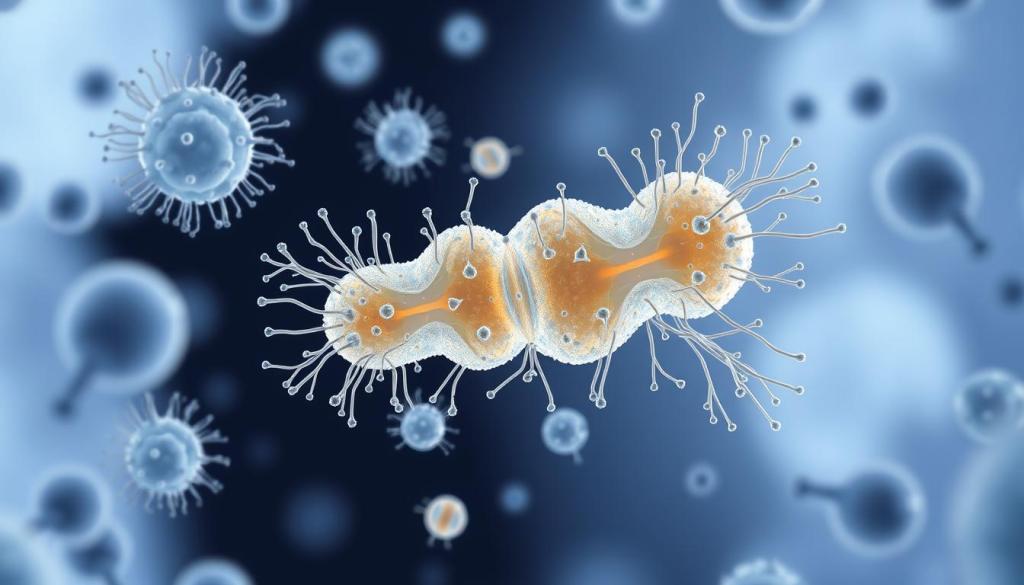
The main way bacteria reproduce is through binary fission. This method is a form of asexual reproduction. It helps bacteria to quickly make genetic copies.
During binary fission, lactobacillus multiplication goes through several key steps:
- DNA chromosome replication
- Chromosome segregation
- Cell membrane elongation
- Cytoplasmic division
- Formation of two identical daughter cells
Understanding Binary Fission
Binary fission lets bacterial cells split into two identical organisms quickly. Different bacteria grow at different rates:
| Bacterial Species | Generation Time |
|---|---|
| Escherichia coli | 20 minutes |
| Clostridium perfringens | 10 minutes |
| Mycobacterium tuberculosis | 12-16 hours |
Comparison of Bacterial Reproduction Methods
While binary fission is common, some bacteria use other methods. How well lactobacillus multiplies depends on things like temperature and nutrients.
Learning about these methods helps us understand how bacteria grow and adapt. It’s important for knowing how they survive in different places.
The Process of Lactobacillus Reproduction
Lactobacillus bacteria are fascinating microorganisms that reproduce through binary fission. This process lets them multiply quickly when conditions are right.
To understand how lactobacillus reproduce, we look at their unique way of dividing cells. They use binary fission to make identical daughter cells efficiently.
Specifics of Binary Fission in Lactobacillus
The binary fission process in lactobacillus includes several key steps:
- DNA replication starts in the bacterial cell
- Chromosomal material duplicates and separates
- Cell membrane begins to constrict
- Cytoplasm divides into two equal parts
- New cell walls form between the separated genetic materials
Environmental Requirements for Reproduction
Lactobacillus reproduction needs specific environmental conditions. They must have the right temperature, pH, nutrients, and oxygen levels to grow and divide well.
| Environmental Factor | Optimal Range |
|---|---|
| Temperature | 30-40°C |
| pH Level | 5.5-6.5 |
| Nutrient Availability | Rich in carbohydrates and proteins |
| Oxygen Exposure | Microaerophilic conditions |
Lactobacillus binary fission works best when these conditions are just right. Scientists are still learning about how these bacteria reproduce and thrive in different places.
Factors Influencing Reproduction Rates
Lactobacillus growth depends on many environmental factors. These factors greatly affect how fast it reproduces. Knowing these elements helps scientists improve bacterial growth in various places.
The growth of lactobacillus is complex. It involves several important factors. These factors help the bacteria grow and thrive in different places.
Critical Temperature Conditions
Temperature is key for lactobacillus growth. Studies show the best temperature for growth is between 30–40 °C. At this range, bacteria can divide well and grow their numbers.
- Optimal growth temperature: 30–40 °C
- Potential growth temperature range: 2–53 °C
- Reproduction rate directly correlates with temperature stability
pH Level Dynamics
Lactobacillus growth is also affected by pH levels. The bacteria are very adaptable, thriving in slightly acidic conditions. The best pH range for growth is usually 5.5–6.2.
Nutrient Availability Factors
Nutrients are crucial for lactobacillus growth. The bacteria need specific nutrients for cell division and growth. Important nutrients include proteins, carbs, and minerals for metabolism.
Research shows that more water, from a 1:1.0 to 1:1.5 ratio, can increase cell productivity by 7.5 times. This highlights the complex link between environment and bacterial growth rates.
The Role of Habitat in Lactobacillus Growth
Lactobacillus bacteria are very adaptable and can live in many places. Their growth and reproduction depend on the right conditions in their habitat. Scientists have studied 1,020 Lactobacillus genomes, finding interesting facts about where they live.
- Vertebrate digestive systems
- Dairy products
- Vegetables
- Insect microbiomes
- Free-living environments
Optimal Growth Conditions
Lactobacillus needs certain things to grow well. Temperature, pH levels, and nutrients are key. Most of them do best in slightly acidic places with temperatures between 30-40°C.
Natural Habitats of Lactobacillus
Each Lactobacillus species has its own special place to live. For example, L. apis and L. bombicola live in insect homes. Humans also have Lactobacillus in their gut, mouth, and vagina.
The majority of Lactobacillus strains come from animals, showing they are closely tied to animal life.
Knowing where Lactobacillus lives helps scientists learn more about them. This knowledge can lead to new ways to improve health and food.
Effects of External Stressors on Reproduction
Lactobacillus bacteria face many challenges in their environment. These challenges can greatly affect their ability to multiply and divide. External stressors are key in determining if these microorganisms can survive and reproduce.

- Antibiotic exposure
- Competitive microorganism interactions
- Environmental pH changes
- Nutrient availability
Antibiotics and Lactobacillus Growth
Antibiotics can greatly harm lactobacillus multiplication. When exposed to these chemical compounds, some Lactobacillus strains see a big drop in population. Yet, some strains show amazing resilience, adapting to survive antibiotic challenges.
Impact of Competitive Microorganisms
Microbial ecosystems are complex battlegrounds. Lactobacillus must compete for resources. Competitive microorganisms can affect lactobacillus division by:
- Consuming available nutrients
- Producing antimicrobial compounds
- Occupying critical ecological niches
Research shows Lactobacillus has developed smart strategies to keep its population. These strategies help it survive and reproduce despite tough interactions. Understanding these mechanisms is key to grasping bacterial survival and reproduction dynamics.
Applications of Lactobacillus in Food Production
Lactobacillus is key in changing food production in many ways. These bacteria help make tasty and healthy fermented foods all over the world. They can live and grow in many different food-making settings.
Food makers use lactobacillus to make lots of products. They add great taste and health benefits to many foods.
Yogurt and Fermented Dairy Production
The dairy industry uses special Lactobacillus strains for fermented products. Important species include:
- Lb. lactis
- Lb. casei
- Lb. rhamnosus
- Lb. helveticus
Diverse Food Fermentation Applications
Lactobacillus bacteria are very useful in food making. They can ferment more than just dairy. They can also ferment:
| Food Category | Lactobacillus Species |
|---|---|
| Sourdough Bread | Lb. plantarum |
| Pickles | Lb. plantarum |
| Sauerkraut | Lb. plantarum |
| Korean Kimchi | Lb. plantarum |
Benefits for Food Preservation
Lactobacillus helps keep food fresh longer. They make food last longer without needing artificial preservatives. They also add health benefits to what we eat.
The U.S. Food and Drug Administration says many Lactobacillus species are safe for food. This shows how important they are in making food today.
Lactobacillus in Probiotic Supplements
Probiotic supplements have changed how we think about gut health. Lactobacillus is key to their success. It helps us understand how these beneficial bacteria support our overall health.
Using Lactobacillus in probiotics requires careful thought. It involves:
- Keeping the bacteria alive and healthy
- Ensuring they reproduce well
- Keeping them stable during making
Probiotic Mechanisms in Gut Health
Knowing how lactobacillus reproduces is important. These microbes work well with our digestive system. They offer many health benefits:
- Boosting the immune system
- Lowering inflammation
- Keeping the digestive system balanced
Scientific Insights into Effectiveness
Research shows Lactobacillus probiotics have great potential. Some studies suggest they can:
- Reduce body-wide inflammation
- Help with irritable bowel syndrome symptoms
- Support metabolic health
Rules say probiotic supplements must have at least 10^9 colony-forming units. This ensures the bacteria are strong enough to settle in the gut.
Future Research Directions for Lactobacillus
The scientific world is always looking for new ways to study lactobacillus. They want to learn more about its life cycle and growth. They’re using advanced genetic studies and exploring new health uses.
- Genetic manipulation techniques for enhanced probiotic strains
- Advanced genomic sequencing of Lactobacillus species
- Exploring novel health therapeutic applications
- Developing targeted probiotic interventions
Genetic Studies and Potential Breakthroughs
Scientists are working on new ways to understand Lactobacillus genetics. Precision genetic editing might help make better probiotics for our health.
“The future of Lactobacillus research lies in our ability to decode and manipulate its genetic potential” – Microbiome Research Institute
Health Application Developments
Researchers are looking into how to use modified Lactobacillus for health. They’re working on treatments for inflammation, boosting the immune system, and creating personalized treatments.
| Research Focus | Potential Applications |
|---|---|
| Genetic Modification | Enhanced Probiotic Strains |
| Genomic Sequencing | Personalized Microbiome Therapies |
| Immunomodulation | Inflammatory Disease Management |
This research is leading to exciting discoveries in using Lactobacillus for our health.
Summary and Conclusion
Learning about lactobacillus bacterial division is key for moving forward in microbiology and health sciences. The complex process of lactobacillus binary fission shows us how bacteria reproduce. With over 540 identified species, these microbes are very adaptable, found in everything from fermented foods to our digestive systems.
Studies have shown that Lactobacillus growth patterns vary a lot. Strains like L. paracasei and L. plantarum can survive well in tough conditions. They can even handle simulated stomach acid and show promise as probiotics, revealing the complex ways bacteria adapt and reproduce.
Studying Lactobacillus reproduction is more than just academic interest. These microbes are crucial for making food, keeping us healthy, and could even help in new treatments. By understanding how they reproduce, scientists can find new ways to use microbes, changing how we see probiotics and bacterial interactions in our bodies.
Key Takeaways
Lactobacillus species are a fascinating part of the microbial world. They have amazing reproductive skills and can thrive in many places. Their wide presence in different ecosystems makes it vital to keep studying them and their uses.
FAQ
What is Lactobacillus and how does it reproduce?
Lactobacillus is a type of good bacteria. It grows by splitting into two cells, a process called binary fission. This helps it grow fast and play important roles in food and health.
What are the key environmental factors that affect Lactobacillus reproduction?
Temperature, pH levels, and nutrients are key for Lactobacillus growth. It likes warm temperatures, slightly acidic environments, and certain nutrients. These help it grow well.
How quickly can Lactobacillus reproduce?
Lactobacillus grows fast, with a generation time of 30 minutes to 2 hours. In the best conditions, one cell can turn into millions in hours.
Where are Lactobacillus bacteria commonly found?
You can find Lactobacillus in the human gut, mouth, and reproductive tract. It’s also in fermented foods like yogurt and sauerkraut. Plus, it’s in soil, plants, and animals.
How do antibiotics impact Lactobacillus reproduction?
Antibiotics harm both good and bad bacteria, including Lactobacillus. This can lower its numbers and affect health. Some Lactobacillus strains can resist antibiotics.
What role do Lactobacillus play in probiotic supplements?
In probiotics, Lactobacillus helps with digestion, boosts immunity, and keeps the gut healthy. Different strains are chosen for their health benefits.
Can Lactobacillus reproduction be controlled or enhanced?
Yes, by managing temperature, pH, nutrients, and oxygen, you can control Lactobacillus growth. This is useful in food, research, and probiotics.
Are there differences in reproduction between various Lactobacillus species?
While they all split into two cells, different Lactobacillus species grow at different rates and in various conditions. This makes them useful for different uses in food and health.






Leave a Comment
Your email address will not be published. Required fields are marked *