


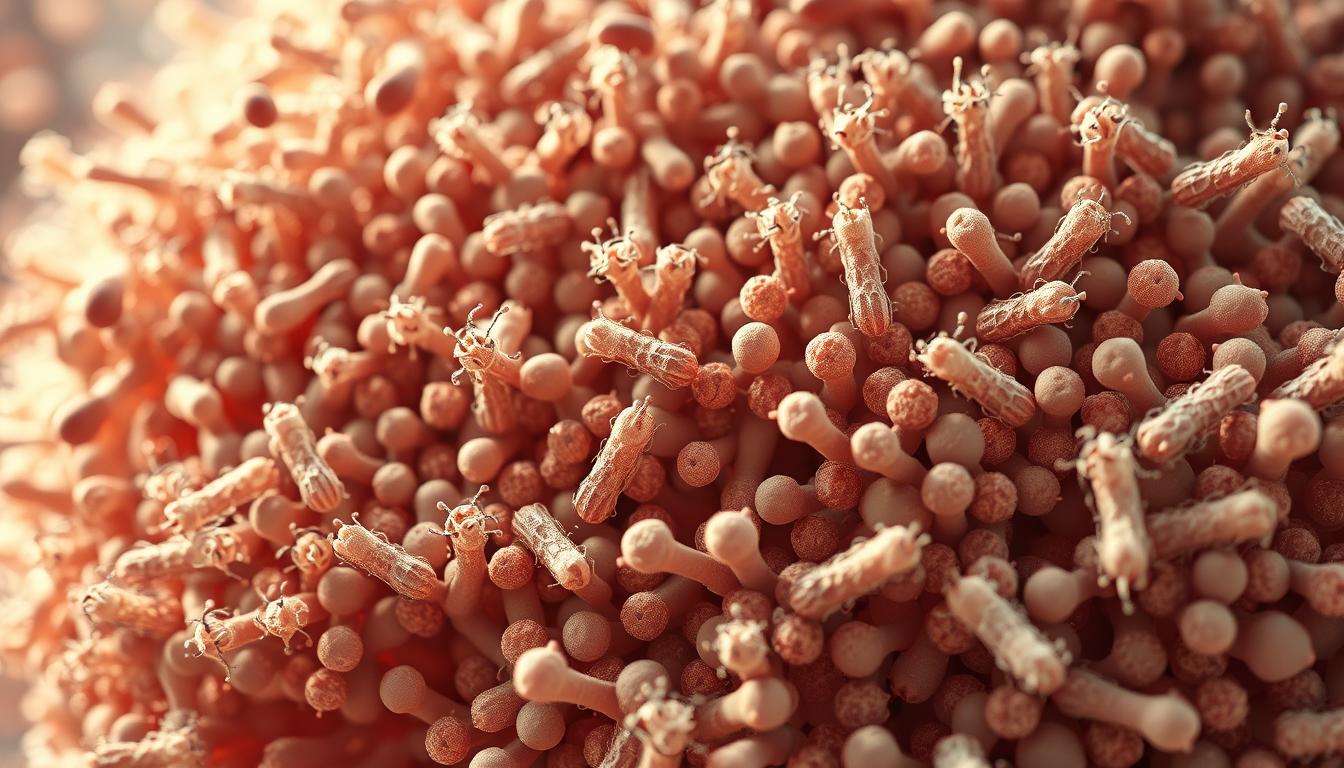
Did you know your body has more bacterial cells than human cells? Recent studies have changed how we see the human microbiome. They show a complex world that challenges old views of human biology.
Research has found a surprising fact: about 39 trillion bacterial cells live in our bodies. This is just a bit more than the 30 trillion human cells. This microbial world is full of tiny creatures that are key to our health.
The number of bacterial cells is just the start of an amazing story. These tiny beings do much more than their size suggests. They have 500 times more genes than human cells and cover every part of our bodies.
Key Takeaways
- Bacterial cells outnumber human cells approximately 39 trillion to 30 trillion
- Microbial cells comprise 1-3% of total body mass
- The human microbiome contains over 10,000 microbial species
- Approximately 500-1,000 bacterial species inhabit the human gut
- Three-quarters of the microbiome can be traced back to maternal origins
Understanding the Human Microbiome
The human microbiome is a fascinating world of tiny organisms living inside and on us. Scientists have found a wide variety of microbes that are key to our health and how our bodies work.
Recent studies from the Human Microbiome Project have given us new insights. It shows that our bodies host about 500-1000 types of bacteria. This creates a complex and ever-changing biological world.
Defining the Microbiome
The human microbiome includes all the tiny life forms in our bodies. This includes:
- Bacteria
- Fungi
- Viruses
- Microscopic archaea
Types of Microorganisms
Each part of our body has its own special group of microbes. For example, the gut is home to about 160 common types of bacteria in each person.
Interactions with the Human Body
Microbes and human cells work together in complex ways. Our skin’s microbes help keep out bad germs. Meanwhile, gut bacteria help with digestion and our immune system.
The human microbiome contains approximately 2-20 million genes, compared to just 20,000 human genes.
Learning about these tiny life forms gives us deep insights into our health. It shows how closely our bodies are connected to the microbial world around us.
Estimating Bacterial Cell Counts
Understanding how many bacterial cells are in our bodies is a fascinating journey. Scientists have worked hard to understand the diversity of bacteria in us.
Recent studies have changed how we see bacterial cells in our bodies. They have shown us that our assumptions about microbes were wrong.
Current Research Insights
Modern studies have given us amazing insights into bacteria. Key findings include:
- Estimated total bacterial cells: 38 trillion
- Approximately equal number of bacterial and human cells
- Total bacterial mass: around 0.2 kg
Statistical Estimation Methods
Scientists use advanced methods to count bacterial cells. These include complex computer science and microscopic tools.
| Estimation Parameter | Value |
|---|---|
| Total Human Cells | 30 trillion |
| Total Bacterial Cells | 38 trillion |
| Bacterial Mass Percentage | 0.3% of body weight |
Factors Influencing Bacterial Populations
Many things affect the diversity of bacteria in us:
- Diet greatly changes the types of microbes
- Age is important for the balance of bacteria
- Our health affects the bacteria in our body
The world of bacterial cells is still a mystery to scientists. They keep finding out more about the complex world of microbes in us.
Role of Bacteria in Human Health
The human body is home to a complex mix of microorganisms. These microbes play key roles in keeping us healthy. Gut bacteria, in particular, do more than just help with digestion. They affect many parts of our body’s functions.

Our bodies host thousands of microbial species. These tiny creatures work together with our body’s systems. They help us stay healthy in many ways.
Digestive System Contributions
Gut bacteria are vital for good digestion. They help break down tough nutrients and support important metabolic processes. Their main jobs include:
- Helping absorb nutrients
- Making digestive enzymes
- Keeping the intestinal barrier strong
- Stopping harmful bacteria from growing too much
Immune System Support
Probiotics are key in boosting the immune system. These good microbes help control immune reactions and fight off harmful pathogens. Studies show that gut bacteria talk to immune cells, making our body’s defense stronger.
Metabolic Functions
Gut bacteria help with important metabolic tasks. They convert nutrients, manage metabolism, and make vital compounds for cell health. Their work affects many health conditions.
With about 40 trillion bacteria in us, these tiny beings are crucial for our health and happiness.
Differences in Bacterial Populations
The human microbiome is a complex and changing ecosystem. It varies a lot between people. The Human Microbiome Project found big differences in bacterial diversity among groups. This shows how unique each person’s microbial world is.
- Genetic background
- Geographic location
- Dietary habits
- Environmental exposures
- Lifestyle choices
Individual Variations in Microbial Communities
Every person’s bacterial diversity is different. Studies show that some people have half as many bacteria, while others have twice as many. The types of bacteria can change with age, health, and environment.
Geographic and Cultural Influences
Culture and location shape our microbiome. What we eat, the climate, and our surroundings affect our bacteria. For example, people who eat traditional foods often have more diverse bacteria than those who eat processed foods.
The human body hosts approximately 39 trillion bacteria, with variations spanning individual microbiomes.
Learning about these differences helps us understand how to keep ourselves healthy. It also guides medical treatments that fit each person’s unique microbiome.
The Importance of Gut Bacteria
Gut bacteria are key to our health, working quietly in our body’s ecosystem. They do more than just sit there; they actively help our body work right, especially in the gut-brain axis.
These tiny helpers do more than just help us digest food. They keep us healthy in many ways:
- They talk to our brain through special paths
- They help our immune system fight off sickness
- They make vitamins and nutrients we need
- They control how our body uses energy
The Gut-Brain Connection
Studies show gut bacteria and our brain are closely linked. The gut-brain axis is a complex network. It lets gut bacteria affect our mental health, mood, and brain functions.
| Gut Bacteria Impact | Neurological Influence |
|---|---|
| Neurotransmitter Production | Mood Regulation |
| Inflammation Reduction | Stress Response |
| Microbiome Diversity | Cognitive Performance |
Role in Nutrient Absorption
Probiotics help us absorb nutrients better. They break down food our bodies can’t digest on their own. Bacteroides thetaiotaomicron, for example, has over 260 enzymes for digesting carbs.
Learning about gut bacteria shows us how vital they are for our health. They help keep our body in balance and working well.
Implications of Imbalanced Bacterial Levels
The balance of gut bacteria is key to our health. When this balance is off, it can lead to health problems.

Dysbiosis is when the bacteria in our bodies get out of balance. This can cause many health issues.
Health Conditions Linked to Bacterial Imbalance
- Inflammatory Bowel Disease (IBD)
- Obesity
- Diabetes
- Autoimmune disorders
- Mental health challenges
Antibiotics can change the balance of gut bacteria. Taking too many can lead to long-term health problems.
Symptoms of Microbial Imbalance
| System | Potential Symptoms |
|---|---|
| Digestive | Bloating, gas, irregular bowel movements |
| Immune | Frequent infections, slow healing |
| Metabolic | Weight fluctuations, insulin resistance |
Probiotics can fix the balance by adding good bacteria. Eating probiotic foods or taking supplements can help keep the microbiome healthy.
Learning about these bacterial interactions helps us prevent and treat diseases. It’s a key part of staying healthy.
The Future of Microbiome Research
The world of microbiome research is changing fast. New discoveries are changing how we see bacteria and their role in our bodies. New technologies are leading to big breakthroughs in understanding health.
Emerging Innovations in Microbiome Studies
New ways to read DNA are changing microbiome research. Scientists can now study bacteria in our bodies in detail. This lets them understand complex ecosystems better.
- Full-length 16s rRNA gene sequencing enabling higher species-level resolution
- Shotgun metagenomic approaches for comprehensive microbial community characterization
- Machine learning algorithms for advanced data interpretation
Personalized Medicine Potential
The human microbiome is a new area in medicine. Scientists are working on treatments based on each person’s bacteria. This could lead to better health for everyone.
| Research Focus | Potential Applications |
|---|---|
| Microbiome Mapping | Customized Probiotic Therapies |
| Genetic Sequencing | Disease Risk Assessment |
| Microbial Interaction Studies | Targeted Treatment Strategies |
As research goes on, scientists hope to create precision interventions. These could greatly improve health by understanding each person’s unique bacteria.
Maintaining a Healthy Microbiome
Keeping a balanced microbiome is key for good health. The mix of gut bacteria and skin microbiome helps our body fight off sickness and work right.
To keep your microbiome healthy, you need to look at your whole life and what you eat.
Essential Dietary Recommendations
What you eat affects your gut bacteria and microbiome variety. Here are some important tips:
- Eat high-fiber foods like veggies, fruits, and whole grains
- Add fermented foods full of natural probiotics
- Lower your intake of processed sugar and saturated fats
- Drink plenty of water and herbal teas
Lifestyle Factors for Microbiome Support
There are also lifestyle choices that help your probiotics and microbiome:
- Use meditation and regular exercise to manage stress
- Get enough sleep every night
- Try to avoid harmful environmental toxins
- Think about taking probiotic supplements with a doctor’s advice
Knowing how diet, lifestyle, and microbes are connected can help you improve your skin and gut health.
Conclusion: The Complexity of Human Bacteria
Exploring the number of bacterial cells in our bodies shows a complex world inside us. Studies say we have between 10 trillion and 100 trillion microbial cells. This changes how we see human biology.
These microorganisms do more than just exist in us. They affect our health, how we metabolize food, and how our bodies work.
Research into our microbiome is giving us new insights. It shows how our cells and bacteria work together. The number of bacterial cells to human cells can be 10:1 or even 1:1, showing how our bodies are connected.
Scientists have found over 1,000 different types of microorganisms. Each one has its own role in keeping our bodies healthy.
Key Research Perspectives
New methods like metagenomics and meta-transcriptomics are changing how we see these tiny communities. They show that the types and amounts of bacteria in us can vary a lot. This depends on what we eat, how we live, and where we are from.
The Human Microbiome Project is working hard to learn more. They aim to understand how these microbes affect our health and find new treatments.
Future Exploration
As we learn more, scientists think we’ll make big discoveries that could change medicine. The way bacteria work together in our bodies is still a mystery. But we’re just starting to see how important these connections are for our health.
FAQ
How many bacterial cells are actually in the human body?
Studies now say the human body has about 38 trillion bacterial cells. This number can change based on diet, age, health, and environment.
What is the human microbiome?
The human microbiome is a mix of tiny living things like bacteria and viruses. They live in our body and help with digestion, immunity, and health.
Where are bacterial cells most concentrated in the human body?
Most bacterial cells live in the gut, especially the large intestine. But, they also live on our skin, in our mouth, and other membranes.
How do bacteria contribute to human health?
Bacteria help us digest food, break down nutrients, and make vitamins. They also keep our immune system strong and protect us from harm. They even affect our mood through the gut-brain connection.
Can diet affect the bacterial composition in the body?
Yes, what we eat greatly affects our microbiome. Eating a variety of foods, especially fiber-rich ones, helps. But, processed foods can harm our bacterial balance.
What is dysbiosis?
Dysbiosis is when our body’s bacterial balance is off. It can happen due to antibiotics, bad diet, stress, or illness. It’s linked to health issues like digestive problems and weak immunity.
Are all bacteria in the human body beneficial?
Not all bacteria are good for us, but most are. Some are neutral, and a few can be harmful. A healthy mix of bacteria keeps us well and prevents harm.
How can I support my microbiome?
To keep your microbiome healthy, eat a variety of foods, especially fiber-rich ones. Try fermented foods, manage stress, sleep well, exercise, and avoid antibiotics. Probiotics can also help, but talk to a doctor first.
Can antibiotics permanently damage the microbiome?
Antibiotics can mess up our microbiome by killing good and bad bacteria. But, our microbiome can usually recover. Long-term or repeated use of antibiotics can cause more damage. Eating well and taking probiotics can help fix it.
What is the future of microbiome research?
Future research will use advanced tools to study our microbiome. It will focus on personalized treatments and how to change bacterial populations. Scientists aim to find new ways to treat diseases based on our microbiome.






Leave a Comment
Your email address will not be published. Required fields are marked *