


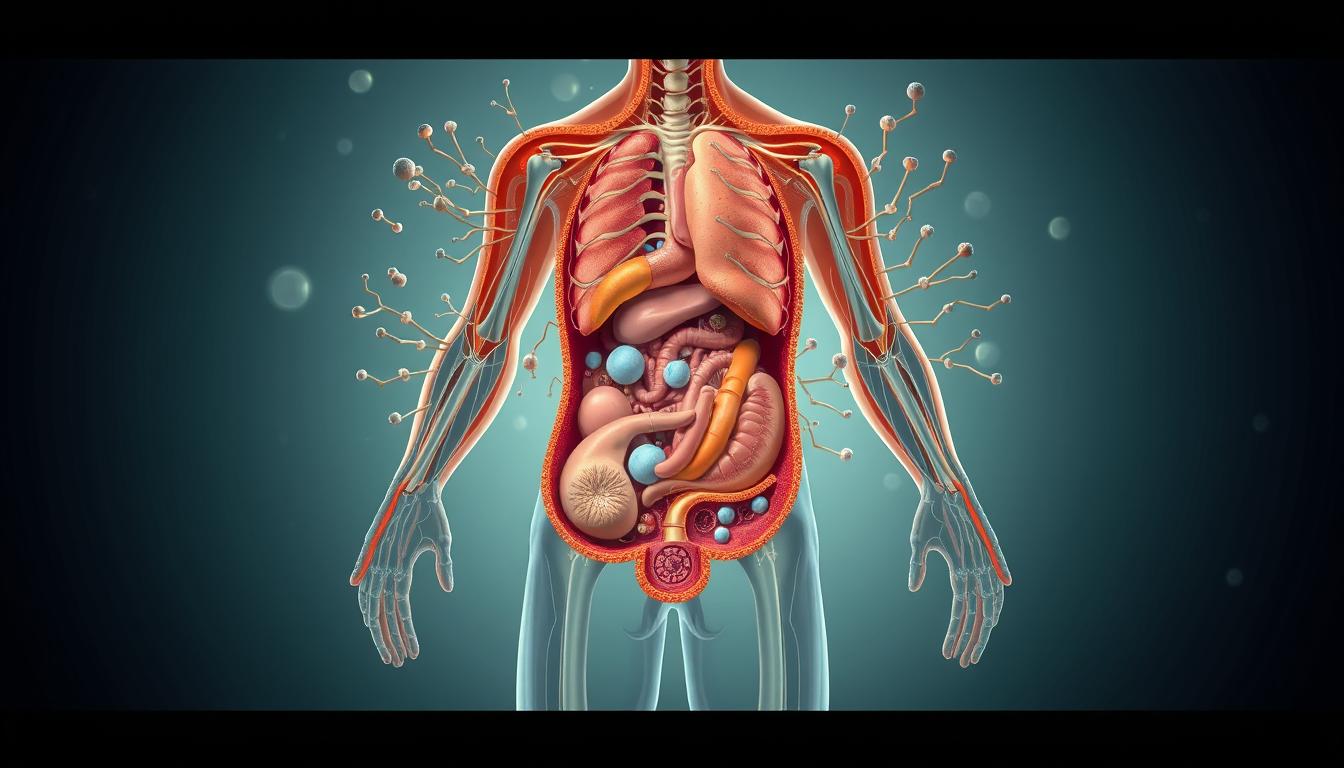
Ever thought about the cells in your body? They work quietly to keep you alive. The number of cells in a human is a fascinating mystery.
Recent studies show an amazing fact: there are about 30 trillion cells in the human body. This number shows how complex and intricate our bodies are.
Knowing how many cells we have is more than just a number. Each cell is a tiny wonder, doing important jobs to keep us alive. From carrying oxygen to thinking complex thoughts, our cells are incredibly diverse.
Key Takeaways
- The human body contains around 30 trillion cells
- Cell count varies between males, females, and children
- Over 400 known cell types exist across 60 different tissues
- Bacterial cells are almost as numerous as human cells
- Each cell type has a unique lifespan and function
Understanding Human Cell Count
The human body is a complex marvel made up of trillions of tiny units working together. Cells are the basic building blocks of life. They are essential for all biological processes in our bodies.
Exploring the number of cells in a person is a fascinating scientific journey. The human body is like a complex ecosystem. Scientists believe an average adult has about 30 to 40 trillion cells. Each cell plays a vital role in our survival.
Definition of a Cell
A cell is the smallest unit of life, working like a tiny factory. These tiny structures are like building blocks. They form tissues, organs, and biological systems.
- Cells range from 1-100 micrometers in size
- Each cell contains genetic information
- Cells can reproduce and specialize
Importance of Cell Count in Health
“Cells are the basic units of life, and understanding their count is crucial for diagnosing and monitoring health conditions.” – Medical Research Institute
Knowing the number of cells in a person is key to understanding health. Abnormal cell counts can signal health issues. This helps doctors detect and treat problems early.
Medical researchers use advanced methods to study cells. This helps them understand diseases, create treatments, and track patient health with great accuracy.
Total Number of Cells in the Human Body
The human body’s cell count is a fascinating topic for scientists around the world. They have been trying to figure out how many cells make up our bodies. This has shown us a complex and ever-changing world of cells.
Scientists have come up with better ways to guess how many cells are in a human. They think an average adult has about 37.2 trillion cells. But, this number can change a lot depending on who you are.
Estimated Range of Cells
The number of cells in our bodies shows how diverse we are. Here are some key numbers:
- Minimum estimate: 15 trillion cells
- Average estimate: 37.2 trillion cells
- Maximum estimate: 70 trillion cells
Factors Influencing Cell Count
Many things can change how many cells we have:
- Age: Our cell count changes as we get older
- Body Size: Bigger people usually have more cells
- Health Status: Our health and how we metabolize things affect our cells
- Genetic Variations: Our genes can also play a part in how many cells we have
Learning about the cells in our bodies helps us understand ourselves better. It shows how complex and intricate our bodies are.
Types of Cells in the Human Body
The human body is made up of over 200 different cell types. This shows how complex and diverse our biology is. Each cell has a special role in keeping us healthy and working well.

Learning about the different cell types is fascinating. They are grouped into main categories. Each group has its own job in our body’s complex systems.
Major Cell Categories
- Blood Cells: Make up most of our cells
- Red blood cells (erythrocytes): 84% of total cell count
- White blood cells: Key for fighting off infections
- Platelets: Important for blood to clot
- Nerve Cells: Carry messages and signals
- Neurons: Send electrical signals
- Neuroglial cells: Support and protect neurons
- Muscle Cells: Help us move and function
- Skeletal muscle cells
- Cardiac muscle cells
- Smooth muscle cells
Specialized Cell Functions
Every cell type has its own job. Skin cells protect us, and stem cells can become many types of cells. Neurons send signals, muscle cells help us move, and blood cells carry oxygen and fight infections.
The diversity of human cells shows how complex our biology is.
Scientists are still learning about our cells. Projects like the Human Cell Atlas aim to understand our cellular diversity better.
The Role of Cells in Human Functionality
Understanding how many cells are in the human body shows how complex we are. Cells are the basic units that make up our bodies. They range from 30 to 37 trillion, each playing a key role in keeping us alive.
Cells are the base of every organ system, working together to keep us alive. Their different roles show the amazing precision of our bodies.
Cells and Organ Systems
Different cell types work together to form complex organ systems:
- Muscle cells help us move and keep our body working
- Nerve cells help us communicate
- Blood cells carry oxygen and help fight off infections
Cells in Metabolism
Metabolic processes rely on cells working together. Mitochondria in cells make energy. Special cells like liver cells process nutrients and get rid of toxins. The average cell cycle is about 24 hours, keeping our bodies running smoothly.
Key metabolic functions include:
- Energy production
- Nutrient processing
- Waste elimination
- Hormone regulation
Each cell is a tiny wonder, working quietly to keep our bodies in perfect harmony.
Why Cell Count Matters in Medicine
Medical experts need exact human cell counts to diagnose and treat health issues. Knowing the total cells in the human body helps them spot problems with great accuracy.
Cell count analysis is key in finding health risks and planning treatments. Medical tests look closely at different cell types and their numbers.
Relevance in Disease Diagnosis
Doctors use cell count data to find many medical conditions. Certain cell count changes can show serious health problems:
- Anemia detection through red blood cell count analysis
- Leukemia identification by examining white blood cell patterns
- Infection monitoring through comprehensive cell count evaluation
Impact on Treatment Plans
Accurate cell count measurements help in many medical areas:
| Cell Type | Normal Range | Treatment Implications |
|---|---|---|
| Red Blood Cells | 4.35-5.65 trillion cells/L | Guides oxygen transport treatment |
| White Blood Cells | 3.4-9.6 billion cells/L | Indicates immune system response |
| Platelets | 135-371 billion/L | Manages bleeding and clotting risks |
Cell count analysis lets doctors create specific treatment plans. This ensures care that meets each patient’s unique needs.
The Process of Cell Renewal
The human body is constantly changing. Millions of cells are replaced every moment. This process is key to understanding how many cells we have.
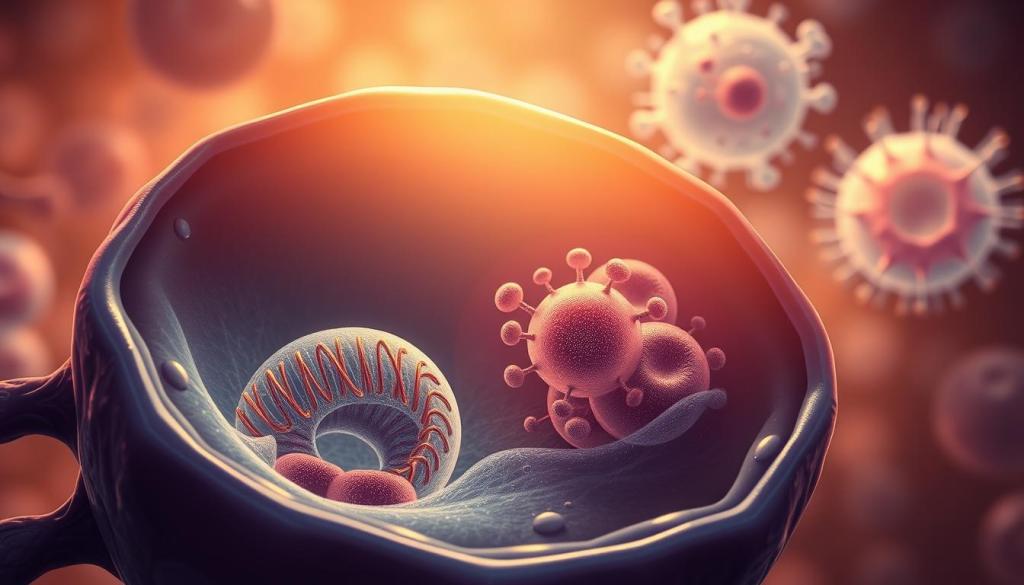
Our bodies keep cells healthy through a complex renewal process. This process is different for each type of cell. Some important facts about cell renewal include:
- Cells can reproduce up to 50-60 times before dying
- The cell cycle has four main phases: G1, Synthesis, G2, and Mitosis
- Daily cellular mass turnover is about 80 ± 20 grams
- Almost 90% of daily cell turnover is in blood cells
Cell Life Cycle Dynamics
Cell renewal isn’t the same everywhere in the body. Highly active tissues like blood and gut lining replace cells more often. Organs like the brain and heart don’t replace cells much. Cells talk to each other through chemical signals to grow right and not too much.
Factors Affecting Cell Renewal Rates
Many things can change how fast cells are replaced. Age, what we eat, our environment, and health all play a part. Adult stem cells help keep tissues healthy, but they don’t work as well as we get older.
- Stem cells help fix and keep tissues healthy
- They don’t work as well with age
- Programmed cell death (apoptosis) stops cancer from growing
Advances in Cell Count Research
Recently, scientists have made huge strides in studying human body cells. They are learning more about the cells in our bodies thanks to new technologies and global research efforts.
The Human Cell Atlas project is a big step forward. It aims to map 100 million cells from all over the world. This will give us a detailed look at the human body’s cells.
Recent Breakthrough Studies
- The Tabula Sapiens project found over 400 cell types from 500,000 cells across 24 tissues and organs
- Scientists found a new cell type in the trachea, making up about 1% of airway cells
- They also found eight different types of natural killer cells
Implications for Health Sciences
These new research methods are changing how we understand medicine. By studying cell variations, scientists can:
- Find disease causes more accurately
- Make treatments that target specific problems
- Learn about genetic risks for certain diseases
Research keeps showing how complex and changing our cells are. This is leading to exciting discoveries in medicine.
Myths and Misconceptions about Cell Count
The study of human cells has faced many misunderstandings and false claims. New research keeps challenging old beliefs about our cells. It shows us surprising facts that change how we see human biology.
Debunking Popular Cellular Myths
Scientists have found many wrong ideas about human cells that lasted for years. These myths come from old research and not knowing enough about science.
- Bacterial Cell Myth: Many thought bacterial cells were 10 times more than human cells
- New studies show a much closer 1:1 ratio of bacterial to human cells
- This means our bodies are more balanced than we thought
Clarifying Scientific Facts
Today’s research has changed how we see cells. Scientists have broken down old ideas about cell numbers and where they are.
| Myth | Actual Scientific Finding |
|---|---|
| 10:1 Glia-Neuron Ratio | Actual ratio is about 0.7:1 |
| Massive Neuron Loss with Aging | Only 2-4% neuron decrease with normal aging |
| Trillion of Glial Cells | There are about 40-50 billion glial cells |
Learning about human cells needs ongoing research. Every myth we clear up brings us closer to understanding human biology better.
Conclusion: The Significance of Knowing Cell Count
Understanding how many cells are in the human body is a key area in medical science. Scientists found that we have about 50 to 100 trillion cells. Each cell has a special role in keeping our bodies working right.
Learning about the number of cells in our bodies helps us understand health and disease. There are almost 200 different types of cells in us. The International Human Cell Atlas Initiative started in 2017 to study these cells more.
Key Research Discoveries
New studies show that knowing about cell counts can change medicine. Doctors can make treatments that work better for each person. This could lead to new ways to fight diseases and understand our bodies better.
Future Directions in Cell Research
As technology gets better, scientists expect to find even more about human cells. They hope to learn more about genetic problems and find new ways to heal. This could help us stay healthy for longer.
FAQ
How many cells are actually in the human body?
Scientists think there are about 37.2 trillion cells in the human body. But this number can change a lot. It depends on things like age, size, and health. It’s hard to get an exact count because of how complex cells are.
What is the most common type of cell in the human body?
Red blood cells are the most common. They make up a big part of our cells. They help carry oxygen all over our body.
Do cell counts change as we age?
Yes, cell counts change a lot as we get older. Things like how fast we metabolize and our environment affect our cells. As we age, how fast our cells replace each other can change. This affects how well our body works.
How often do human cells regenerate?
Cells regenerate at different rates. Skin cells replace themselves every 2-4 weeks. But nerve cells take much longer. Our body keeps a balance of making and losing cells to stay healthy.
Why are cell counts important in medical diagnostics?
Cell counts help doctors understand our health. If there are too many or too few cells, it can mean we have a problem. Doctors use cell counts to find and treat diseases.
Can external factors affect total cell count?
Yes, many things outside of us can affect our cells. Things like what we eat, how much we exercise, and how much stress we have can change our cells. Taking care of ourselves helps our cells stay healthy.
How do scientists accurately count human cells?
Scientists use new methods like flow cytometry and molecular imaging. They also use computers to help count cells. But it’s still hard to get an exact count because our cells are always changing.
Are all human cells the same size?
No, cells come in all shapes and sizes. Some cells, like nerve cells, can be really long. Others, like red blood cells, are tiny. This shows how different cells have different jobs in our body.
What percentage of human cells are actually human?
Actually, most of the cells in us are not human. There are about 39 trillion bacteria in us, compared to 37.2 trillion human cells. This shows how important it is to understand the mix of cells in our body.
Can cell count indicate overall health?
Yes, cell counts can tell us a lot about our health. If there are too many or too few cells, it can mean we have a problem. Doctors check our cells to see if we’re healthy or if we need help.






Leave a Comment
Your email address will not be published. Required fields are marked *