



Choosing the right filter tips is key for successful lab experiments. It’s important for getting accurate and reliable results. The right tips reduce contamination risks and prevent sample loss.
They also make sure your lab equipment works well together. Knowing what your equipment needs is crucial for good lab work. This article will help you pick the best filter tips for your needs.
Key Takeaways
- Selecting the correct filter tips enhances experimental accuracy.
- Filter tips minimize contamination risks and sample loss.
- Proper integration with pipettes is crucial for effective lab operations.
- Understanding specifications is key to optimal lab equipment selection.
- Expert guidance assists in choosing the right filter tips for your needs.
Match Filter Tips to Experiment Type
Choosing the right filter tips for your experiment is key. It ensures accurate results and keeps your samples safe. Each type of assay—biological, chemical, or analytical—has its own needs. This determines the best filter tips to use.
Align tip features with biological, chemical, or analytical assay requirements.
For biological assays, pick filter tips with contamination barriers. They stop particles from getting in and ruining your sample. In chemical assays, choose tips that can handle tough and corrosive stuff. These are crucial for keeping your experiments reliable.
In analytical assays, precision is everything. Use high-quality filter tips that reduce sample variation. This ensures your results are consistent and reliable. Matching these features with your assay needs is essential. It protects your samples and gives you dependable data.
| Experiment Type | Filter Tip Features | Recommended Use |
|---|---|---|
| Biological Assays | Contamination barriers | Prevents sample contamination |
| Chemical Assays | Corrosion-resistant materials | Handles harsh substances safely |
| Analytical Assays | High precision, low variability | Ensures reliable and consistent results |
Evaluate Filter Efficiency and Purity
In laboratory filtration, checking filter efficiency and material purity is key. This ensures the success of your work. High-purity materials are crucial for sensitive tasks.
Quality filter tips, like those made from DNase/RNase-free materials, help prevent contamination. It’s important to check the physical properties of these tips. Some materials, like polycarbonate, PET, or polystyrene, might contain harmful chemicals, as shown by California Proposition 65 Warning.
- Use high-purity materials to keep your samples true.
- Check how well the filter works for your needs.
- Know about any contaminants in the materials you use.
Being strict about filter choice makes your lab work reliable. It also ensures your experiments are successful.
Ensure Pipette Compatibility
In labs, making sure pipette tips fit right is key. The right fit means better accuracy and reliable results. When tips fit well, there’s no air leak, so you get the exact amount you need.
While universal tips are handy, custom-made tips often work better. It’s important to check if your tips match your pipettes. Doing this helps avoid mistakes and makes your work more successful.
Consider Low-Retention Characteristics
In labs, using low-retention tips is key for accurate results. These tips help prevent liquid from sticking, which is vital for avoiding sample loss. This is especially true when you need to transfer liquids with great precision.
Minimize sample loss due to adhesion for accurate volume transfer.
Low-retention tips make your pipette work better. They help keep less liquid stuck inside, making your volume transfers more precise. Even a small amount of leftover liquid can mess up your data. So, using these tips is crucial for reliable and repeatable results.
Assess Ergonomic Design
In labs, comfort is key. Ergonomic filter tips are vital for a better lab experience. They help reduce fatigue and keep workers productive.
Choose tips that reduce operator fatigue during repetitive pipetting tasks.
Good design makes pipetting less tiring. Key features include:
- Low insertion and ejection forces to ease handling
- Comfortable grip and shape that aligns with natural hand positions
- Lightweight materials to reduce strain on the wrist and fingers
These features make lab work more comfortable. They also lower the chance of injuries. By focusing on ergonomics, we create a healthier lab. This leads to better research results.
Factor in Cost-Effectiveness
When picking filter tips for labs, cost matters a lot. You want to find a good balance between tip quality, how well they work, and their price. Knowing about filter tips pricing helps you choose wisely. This way, you can meet your lab’s needs without spending too much.
Every lab is different, so the right filter tips vary. It’s key to think about:
- How well they perform: Better tips usually give you more accurate results.
- Extra features: Things like special designs or low-retention properties might be worth it for your work.
- Prices: Look at different brands and models to see which fit your budget best.
Choosing wisely based on cost helps you get the most value for your research. You don’t have to give up on quality.
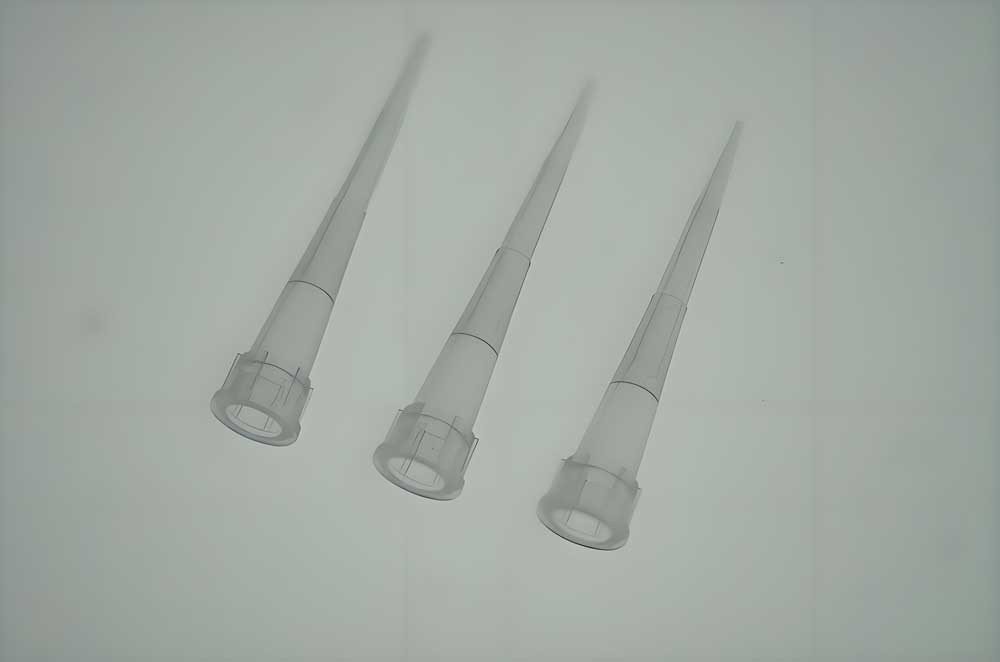
serological pipette tip
Understand Universal vs. Pipette-Specific Tips
Choosing the right filter tips is key for top results in lab work. It’s important to know the difference between universal and pipette-specific tips. This knowledge helps you pick the best for your lab needs and experiments.
Universal tips work with many pipette brands, making them flexible. This is great in labs with different pipettes. But, they might not be as precise as pipette-specific tips. These tips fit perfectly, improving accuracy and reducing errors.
In short, picking between universal and pipette-specific tips depends on your lab needs. A detailed comparison helps find the best fit for your goals. This ensures consistent and precise results in your work.
References and further readings:
1.Weiß, N. (Eppendorf AG). (2021). Routine Challenges and Solutions in Cell Biology.
This white paper discusses contamination risks, the necessity of dual-filter tips, and compatibility with different pipettes—critical for accurate sample transfer.
Fisher Scientific.
https://www.fishersci.se/content/dam/fishersci/en_EU/suppliers/eppendorf/14321_Yearly_Maintenance_May/White_paper/White-Paper_042_Cell-Biology.pdf2.Lichty, M. G., Janowitz, I. L., & Rempel, D. M. (2011). Ergonomic Evaluation of Ten Single-Channel Pipettes.
This comparative study evaluates the ergonomic features of pipettes, aiding tip choice that reduces strain.
Work, 40(Suppl 1), 101–109.
https://journals.sagepub.com/doi/10.3233/WOR-2011-11643.Miller, J. M., Astles, R., Baszler, T., Chapin, K., Carey, R., et al. (2012). Guidelines for Safe Work Practices in Human and Animal Medical Diagnostic Laboratories.
Outlines best practices for laboratory tool usage including filter tips, addressing contamination control and pipette compatibility.
MMWR Supplements, 61(1), 1–102.
https://www.cdc.gov/MMWR/preview/mmwrhtml/su6101a1.htm
FAQ
What are filter tips and why are they important in laboratory experiments?
Filter tips are special pipette tips that help keep samples clean and safe. They prevent contamination and loss of sample. This makes lab experiments more accurate and reliable.
How do I select the right filter tips for my specific assay?
When picking filter tips, think about the type of assay you’re doing. For biological tests, choose tips that block contaminants. For chemical tests, pick tips that can handle harsh substances. Analytical tests need high-quality tips to reduce errors.
What materials should filter tips be made from for optimal performance?
For the best results, filter tips should be made from materials like DNase/RNase-free options. They keep samples pure. Also, make sure tips are made from safe materials to avoid harmful chemicals.
Why is pipette compatibility important when selecting filter tips?
It’s key to pick filter tips that fit well with your pipette. A good fit means better accuracy and less chance of air getting in. This makes your results more reliable.
What are low-retention filter tips and their benefits?
Low-retention filter tips are made to hold less liquid. This helps prevent losing samples during transfers. It’s great for experiments that need exact measurements and accurate data.
How can ergonomic filter tips improve laboratory efficiency?
Ergonomic filter tips make pipetting easier and less tiring. They have features like easy insertion and ejection. This makes work more comfortable and helps avoid injuries.
How should I balance cost and quality when selecting filter tips?
Think about what your experiments need to find the right balance between cost and quality. Premium tips offer better performance but might cost more. Make sure they fit your lab’s budget.
What is the difference between universal and pipette-specific filter tips?
Universal filter tips work with many pipettes, while specific tips fit only certain models. Each has its own benefits and drawbacks. Choose based on what your experiment needs, like volume and sensitivity.
Leo Bios
Hello, I’m Leo Bios. As an assistant lecturer, I teach cellular and
molecular biology to undergraduates at a regional US Midwest university. I started as a research tech in
a biotech startup over a decade ago, working on molecular diagnostic tools. This practical experience
fuels my teaching and writing, keeping me engaged in biology’s evolution.




我是内容