



Ever thought about how clean a buret is key to a successful science experiment? Learning to clean a buret is more than just a task. It’s a skill that helps get accurate results in science.
Cleaning burets needs careful attention and special methods. Lab experts know that keeping burets clean is key for good results. Every step in cleaning helps make science experiments more precise.
But cleaning a buret is more than just a quick wash. It’s about removing all residue, avoiding contamination, and keeping the tool in top shape. Those who learn these cleaning methods can greatly improve their science work.
Key Takeaways
- Effective buret cleaning requires multiple rinses with deionized water
- Proper cleaning prevents cross-contamination in scientific experiments
- Systematic cleaning techniques ensure measurement accuracy
- Laboratory glassware should be cleaned immediately after use
- Different chemical solutions require specific cleaning approaches
Importance of Cleaning a Buret
Cleaning laboratory glassware is key to scientific accuracy, especially with buret care. Cleaning volumetric glassware is more than just a routine. It’s essential for the accuracy and reliability of experiments.
Keeping a buret in good condition is crucial. It ensures measurements are precise and results are valid. Even tiny residues can ruin scientific studies.
Ensuring Accurate Measurements
Accurate measurements need careful cleaning. Here are some important points:
- A 50 mL buret can be read to a precision of ±0.01 mL
- Errors in buret readings can produce variability of several hundredths of a milliliter
- Remaining water traces can dilute titrant concentrations
Avoiding Contamination Risks
Contamination can ruin experiment results. Impurities from shared equipment can mess up titrant concentrations. This can lead to wrong results.
- Shared equipment introduces potential cross-contamination
- Bubbles in the nozzle can cause inaccurate volume readings
- Improper cleaning may require experiment repetition
Vigilant cleaning protocols are the cornerstone of reliable scientific research.
Essential Cleaning Supplies
Choosing the right cleaning supplies is key for lab equipment. Burets need special care to keep measurements accurate and prevent contamination.
Cleaning volumetric analysis equipment requires careful steps. These steps keep the equipment precise and reliable.
Recommended Cleaning Agents
Choosing the right cleaning agents is vital. Different solutions tackle different types of contamination:
- Warm soapy water for initial general cleaning
- Organic solvents like acetone for removing organic residues
- Ethanol for sanitization and quick drying
- Specialized laboratory detergents designed for glassware
Necessary Cleaning Tools
Lab equipment cleaning needs specific tools to handle delicate glassware:
| Tool | Purpose | Recommended Usage |
|---|---|---|
| Long-handled burette brush | Interior surface cleaning | Gentle scrubbing without scratching |
| Rinse bottles | Precise rinsing | Distilled water application |
| Drying rack | Equipment air drying | Preventing water spots |
Choosing the right cleaning supplies is crucial. Precision in cleaning directly impacts the reliability of laboratory measurements.
Step-by-Step Cleaning Process
Keeping burets accurate needs a careful cleaning method. Lab experts know cleaning well is key for exact measurements and to stop contamination. This guide will show you how to clean a buret right.
Preparation Before Cleaning
First, get all the cleaning supplies ready. Good prep makes cleaning a buret quick and effective. Always put safety first when working with lab gear.
- Wear the right protective gear
- Get distilled water
- Prepare your cleaning solutions
- Check the buret for any damage
Rinsing the Buret
The first rinse is key to clean a buret well. Use careful steps to get rid of dirt and get ready for deeper cleaning.
- Fill the buret with 5 milliliters of distilled water
- Rinse it 3 times with distilled water
- Let 3 milliliters drain out
- Make sure water flows smoothly
Using Cleaning Agents
Choosing the right cleaners is vital for keeping burets accurate. You need different cleaners for different types of dirt.
| Contamination Type | Recommended Cleaning Agent | Cleaning Method |
|---|---|---|
| Organic residues | Acetone | Gentle rinse |
| Mineral deposits | 1% Hydrochloric acid | Soak for 30 minutes |
| Grease | Hexane | Wipe with kimwipe |
Final Rinsing Steps
The last rinse is crucial for full cleanliness and to avoid mixing up samples. Use deionized water for the best results.
- Rinse 3-4 times with deionized water
- Check for smooth water flow
- Look for any leftover water drops
- Let it dry completely in the air

“A clean buret is the foundation of accurate laboratory measurements.” – Laboratory Safety Expert
Special Considerations for Different Chemicals
Cleaning burets needs a careful approach for different chemicals. Each chemical requires its own cleaning method to keep results accurate and clean.
Understanding the challenges of various chemicals is key. Researchers must adjust their cleaning methods to ensure the best results and avoid contamination.
Acids and Bases: Neutralization Strategies
When dealing with acids and bases, neutralizing is essential. Here’s what to do:
- Rinse thoroughly with distilled water
- Use the right neutralizing solutions
- Make sure all corrosive residues are gone
- Check the pH levels after cleaning
Organic Solvents: Specialized Cleaning Techniques
Organic solvents need careful cleaning to avoid contamination. Careful solvent compatibility is crucial for effective cleaning:
- Choose the right cleaning solvents
- Use multiple rinses with compatible solutions
- Check that all non-polar residues are gone
- Dry well to prevent contamination
Biological Solutions: Sterilization Approach
Cleaning burets for biological solutions requires strict sterilization. It’s important to stop biofilm growth for accurate results:
- Use autoclave sterilization when you can
- Apply special enzymatic cleaners
- Do multiple rinsing steps
- Check for any biological residues left
Using the right cleaning methods keeps scientific measurements precise. It also helps your lab equipment last longer.
Handling Difficult Stains and Residues
Cleaning chemistry lab equipment can be tough, especially when dealing with hard-to-remove residues. Cleaning volumetric glassware needs special methods to get rid of tough contaminants that regular washing can’t handle.
Scientists face many tough stains in lab glassware that need advanced cleaning methods. Getting rid of stubborn residues can affect the accuracy of experiments.
Tips for Stubborn Deposits
Here are some effective ways to tackle tough stains:
- Soak glassware in special cleaning solutions
- Use mild abrasive cleaning powders
- Make targeted chemical cleaning mixes
- Try mechanical cleaning methods
Utilizing Ultrasonic Cleaners
Ultrasonic cleaning technology is a game-changer for cleaning volumetric glassware. It uses high-frequency sound waves to remove tiny contaminants from hard-to-clean lab equipment surfaces.
Ultrasonic cleaners have many benefits:
- Reach deep into hard-to-access areas
- Get rid of tiny particles
- Lessen the need for manual scrubbing
- Protect glass surfaces from damage
Researchers can improve lab equipment cleaning by choosing the right cleaning solutions and using modern tech like ultrasonic cleaners.
Regular Maintenance Tips
Maintaining volumetric analysis equipment is key. Lab experts know that regular care makes these tools last longer and work better. It’s not just about cleaning—it’s about keeping them in top shape.
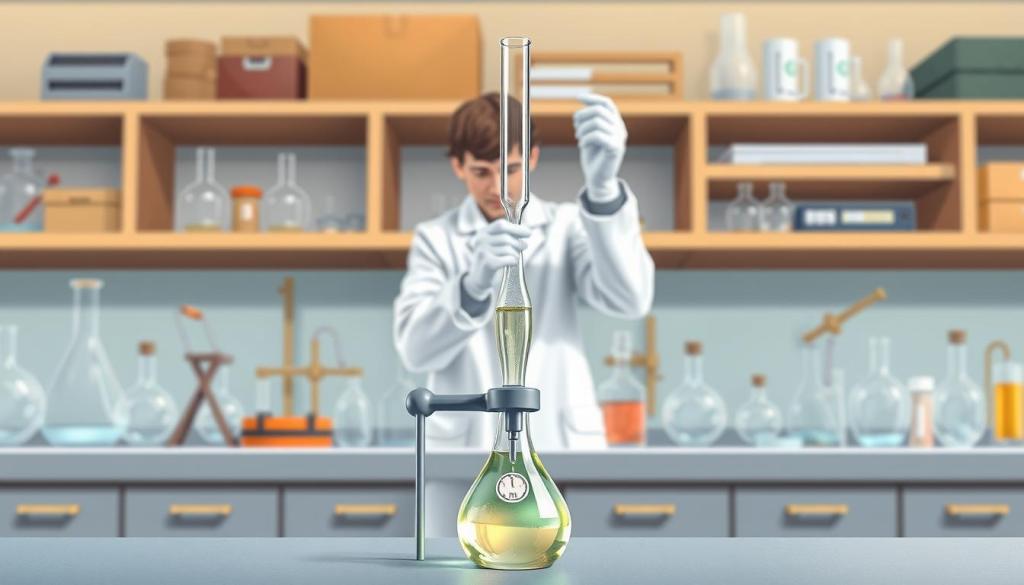
Good buret care means having a solid maintenance plan. This plan should cover both everyday and deep cleaning tasks. The aim is to stop contamination, keep measurements accurate, and protect the equipment from harm.
Creating a Cleaning Schedule
Having a cleaning schedule is essential. Here’s a routine to follow:
- Daily quick rinse after each use
- Weekly detailed cleaning inspection
- Monthly comprehensive deep cleaning
- Quarterly thorough equipment evaluation
Inspecting for Potential Damage
Regular checks are vital for buret upkeep. Lab techs should look for:
- Scratches or etching on glass surfaces
- Stopcock functionality and smoothness
- Graduation mark clarity
- Signs of chemical corrosion
By sticking to these maintenance tips, labs can make their equipment last longer. This approach helps avoid sudden failures and keeps measurements precise.
Proper Storage Techniques
After cleaning a buret, it’s important to store it right. This keeps it precise and extends its life. Cleaning lab glassware needs careful drying and storage to avoid damage or contamination.
Drying Techniques for Burets
Drying a buret well is key for its upkeep. Labs use different methods to dry it completely:
- Air drying in a clean, dust-free spot
- Using acetone for quick drying
- Letting gentle air circulate around the buret
Safe Storage Practices
Storing a buret safely is more than just putting it on a shelf. Careful handling and strategic placement help avoid damage. This keeps the buret calibrated and ready for use.
- Remove stoppers and stopcocks to prevent seizing
- Store vertically in dedicated glassware racks
- Keep away from high-traffic areas to minimize breakage risk
- Ensure storage area is clean, dry, and free from chemical fumes
By following these drying and storage tips, researchers can keep their burets in top shape. This ensures accurate measurements in future lab work.
Safety Precautions During Cleaning
When cleaning chemistry lab equipment, especially burets, safety is key. It’s important to protect yourself and keep the work area safe. This means following several safety steps carefully.
Cleaning lab glassware needs a lot of safety steps. These steps help avoid dangers and keep people safe from chemicals.
Personal Protective Equipment (PPE)
Wearing the right PPE is vital for cleaning burets. Scientists need to wear the right gear to stay safe:
- Chemical-resistant safety goggles
- Long-sleeve laboratory coat
- Thick nitrile or neoprene gloves
- Closed-toe protective footwear
Handling Chemicals Safely
Here are key tips for safely cleaning lab equipment:
- Always read safety data sheets before using any cleaning solution
- Work in a well-ventilated area
- Use chemical-resistant surfaces
- Never mix cleaning agents without understanding their compatibility
| Chemical Type | Handling Precaution | Recommended PPE |
|---|---|---|
| Acids | Use in fume hood | Face shield, double gloves |
| Bases | Dilute carefully | Splash goggles, apron |
| Organic Solvents | Minimize exposure | Chemical-resistant gloves |
Being ready for emergencies is very important. Always know where safety showers, eyewash stations, and fire extinguishers are before starting any cleaning.
Troubleshooting Common Cleaning Issues
Laboratory experts know that keeping burets accurate is all about careful cleaning and knowing what to look for. If water doesn’t flow smoothly, it means something’s off and needs fixing fast. Spotting these signs early helps avoid big problems later.
When cleaning isn’t thorough, it’s often because of leftover chemicals or bad rinsing. To get precise readings, all contaminants must be gone. Researchers should check for smooth water flow, even surfaces, and tiny particles that could mess up results.
To stop problems before they start, keep burets clean and dry. Use the right cleaning products and keep them away from dust. Lab workers should stick to a cleaning plan that works for all kinds of chemicals to keep burets in top shape.
Fixing issues right away keeps science accurate. By knowing how to clean glassware well, scientists can avoid mistakes and keep their work reliable.
FAQ
Why is cleaning a buret so important in laboratory work?
Cleaning a buret is key because small amounts of residue can mess up measurements. It’s important for accurate volume measurements and to avoid contamination. This keeps experiments reliable and trustworthy.
How often should a buret be cleaned?
Lab workers should clean burets after each use and do a deep clean now and then. Daily quick cleanings are good for busy burets, with a full clean once a week or after changing chemicals. Cleaning frequency depends on the chemicals used and lab activity.
What are the essential supplies needed for cleaning a buret?
You’ll need lab-grade cleaners, deionized water, and soft brushes. Also, rinse bottles, acetone for drying, and wipes are essential. Don’t forget PPE like gloves and safety glasses. Special cleaners might be needed for certain residues.
What is the correct technique for rinsing a buret?
First, drain any leftover solution. Then, rinse with a bit of the solution you’re using, turning the buret to cover it all. Do this a few times. Finish with deionized water to check for cleanliness.
How do I handle burets used with different types of chemicals?
Acids and bases need neutralizing before rinsing with water. Organic solvents might need special rinses, and biological solutions might need sterilizing. Always use the right cleaning agents to avoid contamination and reactions.
What safety precautions should be taken when cleaning burets?
Wear protective gear like gloves, goggles, and a lab coat. Clean in a well-ventilated area, especially with volatile cleaners. Know the safety data sheets for your cleaners and how to dispose of them properly.
How can I address stubborn stains or residues in a buret?
For hard stains, try soaking in specialized cleaners. Ultrasonic cleaning works well too. For really tough cases, ask a lab expert or use professional cleaning services. Choose the right cleaning method based on the residue type.
What is the proper way to store a cleaned buret?
After cleaning and drying, store burets upright in a clean cabinet. Remove stopcocks to prevent sticking. Make sure they’re dry to avoid water spots. Use covers if you have them, and keep them away from dust and damage.





Leave a Comment
Your email address will not be published. Required fields are marked *