



Can a single drop change the entire trajectory of scientific research? In the intricate world of laboratory science, an automatic pipette stands as a critical instrument. It transforms microscopic liquid handling into a precise art of measurement.
The automatic pipette is a technological marvel in precision pipetting. It enables researchers to transfer minute liquid volumes with unprecedented accuracy. These sophisticated instruments deliver consistent, reliable results across diverse scientific disciplines, from biotechnology to pharmaceutical research.
Advanced models like the E4™ XLS electronic single-channel pipettes show remarkable technological sophistication. They have volume ranges from 1-10 mL and feature autoclavable components. These devices ensure sterility and meet rigorous laboratory standards.
Key Takeaways
- Automatic pipettes enable ultra-precise liquid measurements
- Volume ranges can span from 0.2 µL to 10 mL
- Micropipettes offer accuracy within 3% of desired measurement
- Modern pipettes include advanced features like password protection
- Precision is critical in scientific research and experiments
What is an Automatic Pipette?
An automatic pipette is a precise tool for handling liquids in labs. It helps scientists move tiny amounts of liquid with great accuracy. This makes research more reliable and consistent.
Automatic micropipettes are key in biological studies. They let scientists work with liquid samples very precisely. These tools can measure as little as 0.1 microliters (μL). They can handle volumes from 1 to 1000 microliters.
Definition and Core Purpose
A micropipette is a special device for handling liquids. It helps researchers measure and move tiny amounts of liquid with little error. Its main jobs are:
- Precise measurement of microscopic liquid volumes
- Consistent sample preparation in biological research
- Reduction of manual handling errors
- Enhanced experimental reproducibility
Key Features and Advantages
Electronic pipettes have features that set them apart from manual tools:
| Feature | Advantage |
|---|---|
| Digital Display | Provides real-time volume tracking |
| Programmable Modes | Allows complex liquid handling protocols |
| Ergonomic Design | Reduces user fatigue during extended use |
| Electronic Control | Ensures consistent dispensing accuracy |
These advanced tools can handle volumes from 0.5 μL to 10 mL. They are useful in many fields like molecular biology and clinical research.
The Importance of Precision in Laboratory Work
Precision pipetting is key in scientific research. Even small errors can greatly affect results. Lab experts know that accuracy is crucial for reliable science.
Scientific research needs careful attention to detail. In biological labs, precision is vital for success. Mistakes in pipetting can ruin important experiments, wasting years of work.
Implications of Measurement Errors
Measurement errors in pipetting can cause big problems. Here are some key issues:
- Inconsistent liquid volume transfers
- Compromised experimental reproducibility
- Potential loss of research funding
- Decreased credibility of scientific findings
Impact on Research Outcomes
Researchers do up to 500 pipetting actions a day. This increases the risk of errors and injuries. Precision pipetting is essential for quality science.
| Error Type | Potential Consequences |
|---|---|
| Volume Inaccuracy | Skewed experimental data |
| Technique Inconsistency | Reduced experimental reproducibility |
| Calibration Drift | Compromised measurement reliability |
Using strict calibration and advanced pipetting tech can help. Labs that focus on precision save time and resources, keeping science standards high.
Types of Automatic Pipettes
Automatic pipettes are key in biological research. They help with precise liquid handling in many scientific areas. There are many types of micropipettes, each designed for different needs.
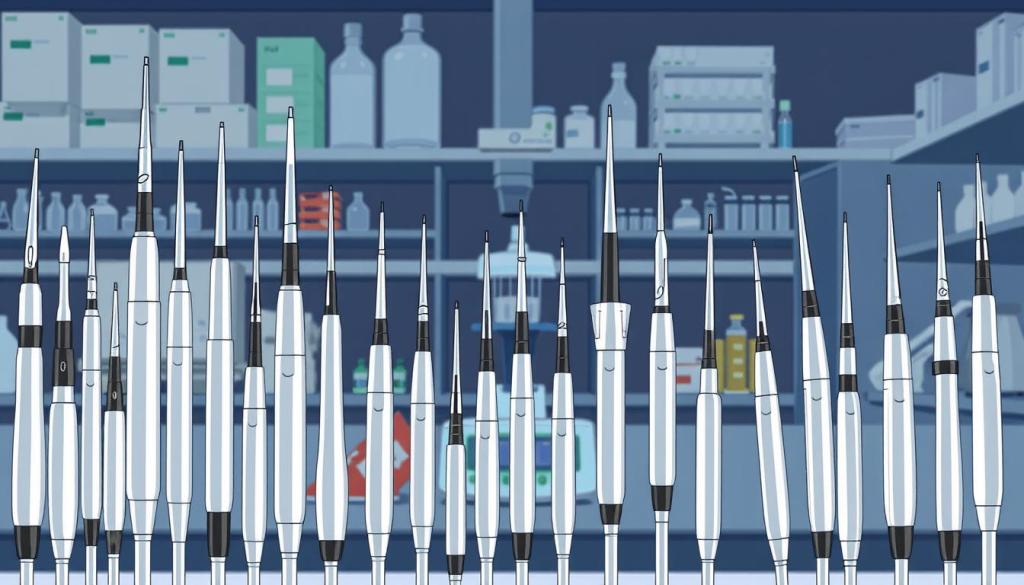
Scientists use different automatic pipettes for various research tasks. Each type is made for specific needs:
Repetitive Pipettes
Repetitive pipettes are great for dispensing the same amount of liquid many times. They are perfect for tasks like:
- Adding the same amount of buffer solutions
- Creating serial dilutions
- Distributing reagents to many sample containers
Multichannel Pipettes
Multichannel automatic pipettes change the game in high-throughput research. They can transfer liquids at the same time. These pipettes usually have 8 or 12 channels, helping researchers:
- Quickly do microplate experiments
- Save time
- Lower the chance of human mistakes
Adjustable Volume Pipettes
Adjustable volume micropipettes offer a lot of flexibility. They can change volume settings within certain ranges, usually between 10-100 μl. This makes them useful for many experiments.
Choosing the right automatic pipette depends on the research needs, sample types, and desired accuracy. Labs keep investing in better pipetting tech to improve their work.
How Automatic Pipettes Work
Automatic pipettes are key tools in labs, making liquid handling easier. They help scientists move tiny amounts of liquid with great accuracy and consistency.
The heart of an automatic pipette is its piston-stroke mechanism. This design lets it suck up and spit out liquids with precision, thanks to a special piston-cylinder system.
Mechanism of Operation
Here’s how automatic pipettes work:
- The piston creates a vacuum when pressed and then slowly lets go.
- Liquid is pulled into the pipette tip by controlled suction.
- The handle’s mechanism measures the exact volume of liquid.
These pipettes can move as little as 8 nL with amazing precision. They can handle over 100 samples per hour, speeding up lab work.
Calibration and Maintenance
Keeping pipettes accurate is crucial. They need regular calibration to stay precise:
| Pipette Size | Systematic Error Limit | Random Error Limit |
|---|---|---|
| 1000 μL Micropipette | ±8.0 μL | ±3.0 μL |
Top-notch liquid handling systems have built-in quality checks. Regular upkeep stops contamination and keeps the tool working well, vital for precise research.
Applications of Automatic Pipettes in the Biological Sector
Automatic pipettes have changed the game in bioscience, offering unmatched precision and speed. They are key in many lab tasks, helping scientists get accurate results.
DNA and RNA Sample Preparation
In molecular biology, automatic pipettes are vital for working with sensitive genetic materials. They help researchers:
- Measure volumes accurately for PCR setup
- Count DNA and RNA samples precisely
- Reduce loss during complex extractions
Mistakes in pipetting can ruin experiments. So, these tools are essential for keeping research reliable.
Cell Culture Techniques
Cell culture needs careful handling of samples. Automatic pipettes make it easier by:
- Dispensing sterile media
- Preparing cell suspensions consistently
- Adding nutrients and growth factors precisely
The multichannel capabilities of modern pipettes cut down on manual work and contamination risks.
Enzyme-linked Immunosorbent Assay (ELISA)
ELISA techniques need high precision, which automatic pipettes deliver by:
| ELISA Stage | Pipette Application |
|---|---|
| Antibody Coating | Precise volume dispensing |
| Sample Addition | Consistent sample transfer |
| Substrate Reaction | Accurate reagent measurement |
Automated pipetting ensures consistent results and reduces human mistakes in these crucial tests.
Benefits of Using Automatic Pipettes
Lab automation has changed scientific research a lot. Automatic pipettes are key for precise work. They bring many benefits that change how labs work and what they find.
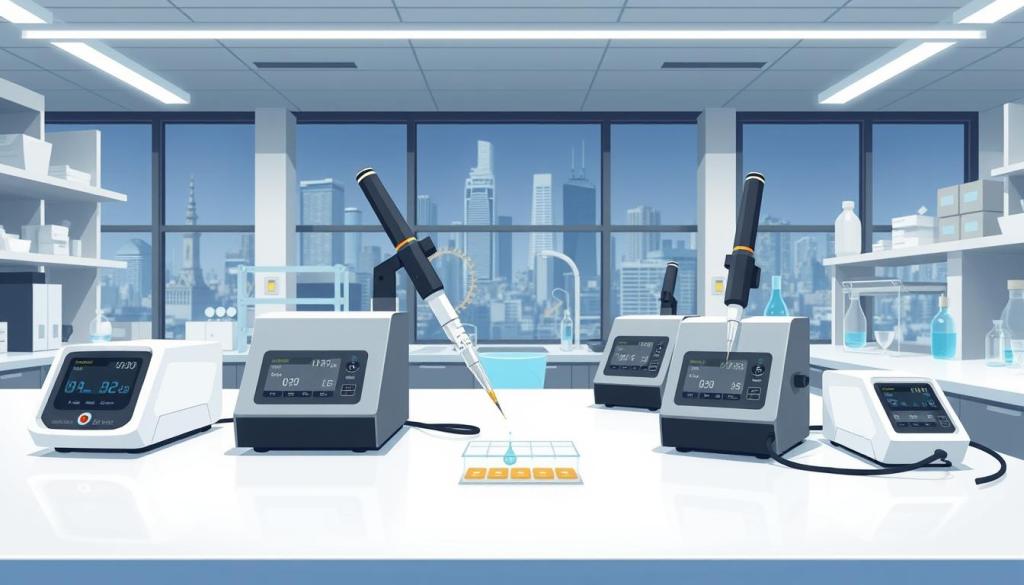
Researchers see how automatic pipettes can change biological research. This technology makes labs work better in many ways.
Increased Efficiency and Speed
Automatic pipettes make labs work faster. They save time by doing tasks that used to take a lot of effort. This means labs can do more in less time.
- Processing up to 40% faster research activities
- Reducing operational time through streamlined workflows
- Enabling unattended equipment operation
- Allowing researchers to focus on complex analytical tasks
Reduced Risk of Contamination
Using automatic pipettes for dispensing reduces the chance of contamination. This is because they don’t need human touch. It’s a big advantage for keeping samples safe.
- Minimizing direct human contact with sensitive specimens
- Reducing potential cross-contamination risks
- Maintaining sample integrity throughout research processes
Consistency in Measurements
Electronic pipettes give precise measurements every time. They avoid mistakes that come from human error. This makes research more reliable.
- Eliminating variations caused by hand strength differences
- Providing reproducible results across different users
- Storing multiple pipetting programs for standardized protocols
- Reducing experimental errors by approximately 50%
By using automatic pipettes, labs can improve their work. They get better results, work more efficiently, and are more reliable.
Considerations When Choosing an Automatic Pipette
Choosing the right automatic pipette is key for precise work in biological research. It’s all about finding the right fit for your needs. This affects how well and fast your experiments can be done.
When picking an automatic pipette, researchers need to think about a few important things. They must understand what their research needs and find the right technology to match.
Volume Range Requirements
Biological studies need different volumes for their work. Here are some key points to consider:
- Liquid viscosity characteristics
- Sample volume specifications
- Experimental protocol demands
Air displacement automatic pipettes work well for most volumes. But, for very small or thick samples, positive displacement pipettes might be better.
Ergonomic Design Features
The design of an automatic pipette affects how well it works for you. Look for these ergonomic features:
- Lightweight construction
- Comfortable grip design
- Reduced hand strain mechanisms
- Adjustable settings for individual user preferences
Today’s automatic pipettes have features to reduce hand strain. It’s important to choose one that’s easy to use but still precise.
Choosing the right automatic pipette is not just about technical specifications, but also about ensuring user comfort and experimental reliability.
Proper Usage Techniques for Automatic Pipettes
Precision in liquid handling is key for lab success. Learning pipetting techniques boosts experiment accuracy and reliability. It’s important to develop a method that reduces errors and ensures consistent results.
Accurate pipetting needs focus and knowledge of basic techniques. Scientists can improve their liquid handling by using strategies that cut down on measurement errors.
Tips for Accurate Pipetting
- Maintain a vertical position during pipetting to ensure precise volume control
- Release the plunger slowly and consistently to prevent liquid splashing
- Pre-wet pipette tips to enhance volume accuracy
- Use clockwise volume adjustment for improved precision
- Select the appropriate pipette for specific volume ranges
Common Mistakes to Avoid
Pipetting errors can ruin experiment results. It’s crucial to know common pitfalls in liquid handling:
- Pipetting too quickly, which can introduce air bubbles
- Failing to equilibrate tip temperatures
- Using incorrect pipette types for specific liquids
- Neglecting to check tip seating properly
- Ignoring ergonomic considerations during extended pipetting sessions
Knowing these techniques can cut pipetting errors by up to 50%. Electronic and multichannel pipettes also help, making lab work faster and more efficient.
Maintaining and Servicing Automatic Pipettes
Keeping bioscience instruments in good shape is key for accurate lab work and reliable results. Automatic pipettes need regular care to stay precise and work well in labs.
Lab automation equipment needs proper care to work right. Researchers must follow important steps to keep their work reliable and accurate.
Routine Calibration Practices
Calibration is vital for pipette upkeep. Labs should follow these essential steps:
- Calibrate every 3-12 months
- Use precise test tools for checks
- Compare against set standards
- Keep detailed records of calibrations
Storage Recommendations
Storing instruments right is important for their long life. Researchers should:
- Place pipettes upright
- Shield from harsh temperatures
- Keep areas clean and free of dust
- Use protective cases when idle
Regular upkeep stops mistakes and keeps experiments trustworthy. By sticking to these steps, researchers can get the most out of their automatic pipettes in lab work.
Future Trends in Automatic Pipetting Technology
Lab automation is changing how we do science. Pipetting technology is getting smarter, making research more precise. Soon, we’ll see big changes in how we handle liquids in labs.
Digital tools are leading the way in pipetting. Cloud-based software lets researchers manage tasks better. New lab tools track data well, making research more reliable.
New designs are making pipetting safer and more precise. Microfluidic techniques avoid touching liquids, reducing contamination. These systems use AI and sensors, making complex tasks easier.
Artificial intelligence and machine learning will shape future lab tools. We’ll see pipetting that’s more accurate and flexible. This will speed up scientific breakthroughs and open new doors in lab research.
FAQ
What is an automatic pipette and how does it differ from a manual pipette?
An automatic pipette is a high-tech tool for precise liquid handling. It uses electronic controls and digital displays. Unlike manual pipettes, it offers better accuracy and less fatigue for users. It’s key in labs for complex tasks.
Why is precision important when using automatic pipettes in biological research?
Precision is key because small errors can affect results. In DNA work, protein studies, and cell culture, accuracy is crucial. Automatic pipettes help ensure reliable results across experiments.
What are the different types of automatic pipettes used in laboratories?
There are several types of automatic pipettes. Repetitive pipettes are for the same volume tasks. Multichannel pipettes are for high-throughput work. Adjustable volume pipettes are versatile for many procedures.
How do automatic pipettes contribute to reducing contamination risks?
Automatic pipettes reduce contamination risks. They use electronic dispensing and sealed tips. This keeps samples clean and sterile, vital for sensitive research.
What factors should researchers consider when selecting an automatic pipette?
Researchers should look at volume range, design, and liquid type compatibility. Consider accuracy, multichannel options, and ease of use. It should fit their specific research needs.
How often should automatic pipettes be calibrated?
Calibration frequency depends on usage and application sensitivity. Labs should calibrate annually or after 10,000 cycles. More often for critical research.
What are some emerging trends in automatic pipetting technology?
Trends include integration with digital systems and advanced interfaces. There’s also focus on precision and future tech like AI-assisted pipetting. These aim to improve efficiency and data tracking.
Can automatic pipettes be used with different types of liquids?
Yes, modern pipettes handle various liquids. Choose based on liquid type and research needs. Ensure the right tip and seal for your samples.






Leave a Comment
Your email address will not be published. Required fields are marked *