


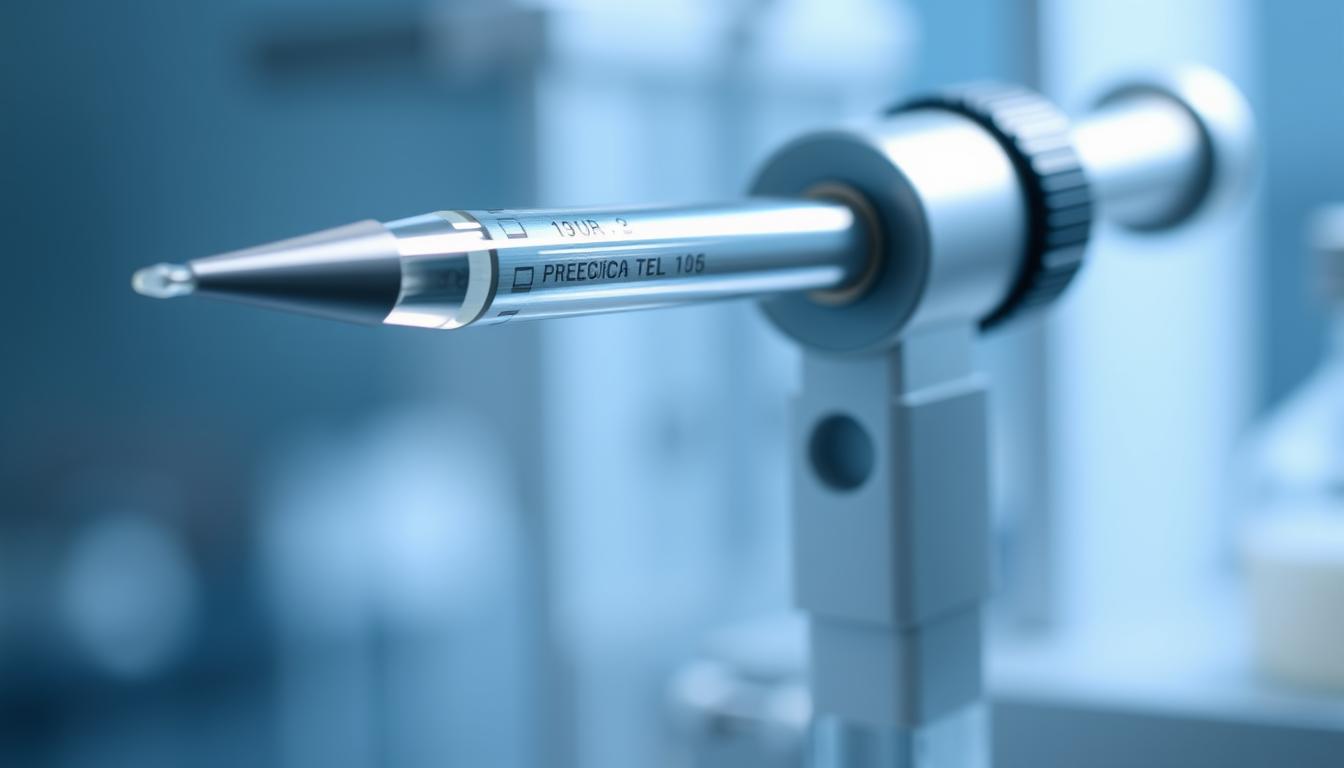
Ever wondered how scientists get so precise in their research? It’s all thanks to the lab pipette. This tool is key to their success.
Laboratory pipettes are advanced tools for handling tiny liquid amounts. They’re used in many fields, from medicine to biology. These tools help scientists make new discoveries.
The demand for pipettes is growing fast. It’s expected to reach US$3.0 Billion by 2030. This shows how important they are in science. Even the smallest amounts, like 0.2 μL, can be measured with these tools.
Lab pipettes are essential for any research. They help make sure experiments are reliable and can be repeated. The right way to use a pipette can lead to big discoveries.
Key Takeaways
- Lab pipettes enable precise liquid transfer in scientific research
- Micropipettes can measure volumes as small as 0.2 μL
- Global pipette market shows significant growth potential
- Accurate pipetting is crucial for experimental reliability
- Different pipette types serve specialized research needs
Understanding Lab Pipettes: Definition and Purpose
Laboratory pipettes are key tools for precise liquid handling in science. They help researchers move tiny amounts of liquid accurately. This is vital for many scientific fields.
Scientists use pipettes for precise liquid handling in labs. These tools use advanced volume transfer methods. This lets researchers measure and move liquids with great precision.
What Defines a Lab Pipette?
A lab pipette is a device for accurately taking and pouring liquids. It has important features:
- Measures liquid volumes from 0.1 to 1000 microliters
- Has an accuracy of 3% or better
- Supports various liquid handling methods
- Reduces contamination risks
Comprehensive Pipette Types
There are many pipette types for different research needs:
| Pipette Type | Key Features | Typical Applications |
|---|---|---|
| Air Displacement | Most common laboratory model | General research techniques |
| Electronic | Battery-powered motor | High-throughput screening |
| Multichannel | 8-12 simultaneous channels | Microplate experiments |
| Positive Displacement | Direct liquid contact | Viscous or volatile liquids |
Research Field Applications
Pipettes are essential in many scientific areas, including:
- Molecular Biology
- Biochemistry
- Clinical Diagnostics
- Pharmaceutical Research
- Environmental Science
Each type of pipette has its own benefits for research. This ensures scientists can handle liquids with the best precision for their work.
The Importance of Precision in Research
Precision is key in science, especially in areas needing careful sample prep and top-notch biochemistry tools. Molecular biology gear must be super accurate for trustworthy results.
Scientists know that small mistakes can mess up big results. Getting liquid handling right is crucial in today’s labs.
The Role of Pipettes in Experimentation
Pipettes are vital in science, helping to move exact amounts of liquid. They’re used in many fields:
- Genetic research
- Clinical diagnostics
- Pharmaceutical development
- Environmental studies
Consequences of Poor Measurement
Bad pipetting can cause big problems. These include:
- Bad research data
- Less reliable results
- Higher costs
- Rejected papers
Enhancing Results with Accurate Pipetting
To get the best results, you need to handle liquids well. Here’s how to improve:
| Strategy | Impact |
|---|---|
| Regular Calibration | Guarantees the right amount every time |
| Proper Training | Less chance of mistakes |
| Quality Equipment | Less variation in measurements |
Precision in pipetting is not just a technical need—it’s a core part of science. It makes the difference between great research and just okay work.
Choosing the Right Pipette for Your Needs
Choosing the right micropipette is key for precise liquid handling in lab research. The right tools can greatly affect your results. So, picking the right one is very important for scientists and researchers.
- Volume range capabilities
- Type of liquid being handled
- Required accuracy levels
- Frequency of use
- Ergonomic considerations
Manual vs. Electronic Pipettes: Understanding the Differences
In labs, you’ll find two main types of pipettes: manual and electronic. Manual pipettes are simple and affordable. Electronic pipettes have more features for tricky liquid tasks.
Selecting the Optimal Volume Range
Getting the right volume is crucial. Pipettes range from 1 μL to 5 mL. Pick one that fits your experiment’s needs for accuracy.
- Fixed volume pipettes: Ideal for consistent volume tasks
- Variable volume pipettes: Offer greater flexibility
- Single-channel models: Best for individual sample handling
- Multichannel options: Efficient for high-throughput experiments
The best pipette balances precision, ease of use, and fits your research. Knowing how to use it well is key for great lab results.
Proper Pipetting Techniques for Optimal Results
Precision is key in lab work. Small mistakes can change the whole outcome. Learning to pipette well is crucial for accurate results.
Good pipetting needs both skill and practice. It’s important to be consistent to avoid mistakes. This keeps the experiment reliable.
Step-by-Step Guide to Efficient Pipetting
- Select the right pipette for your needs
- Make sure your pipette is calibrated
- Choose the correct pipette tip
- Hold the pipette straight up
- Put the tip in the liquid just a little (2-3mm)
- Press the plunger smoothly and steadily
Common Mistakes to Avoid
- Don’t insert the tip too deep or too shallow
- Avoid quick or jerky movements
- Keep the pipette at the right angle
- Always rinse the tip before use, especially with thick liquids
Training and Best Practices for Lab Personnel
Good training is vital for quality pipetting. Regular checks and workshops help staff get better at preparing samples.
| Pipetting Practice | Frequency | Impact on Accuracy |
|---|---|---|
| Daily Equipment Check | Every workday | Reduces contamination risks |
| Calibration | 3-4 times/year | Maintains precision within 1% |
| Ergonomic Training | Annually | Reduces physical strain |
Mastering pipetting is a continuous learning process that combines technical skill, attention to detail, and consistent practice.
Maintenance and Care of Lab Pipettes
Laboratory consumables like lab pipettes need careful maintenance. This ensures they work well and accurately in biochemistry tools. Taking good care of them helps them last longer and avoids mistakes in research.
Keeping lab pipettes in top shape involves several important steps. Researchers must follow these steps to keep their precision and reliability.
Cleaning Guidelines for Different Pipette Types
Cleaning lab pipettes right is key to avoiding contamination and keeping them working well. Important cleaning steps include:
- Wipe the outside with approved lab disinfectants
- Clean around buttons, volume adjusters, and tip ejectors
- Use the right cleaning solutions for each pipette type
- Don’t soak electronic parts in liquid
Calibration: Importance and Procedures
Calibration is vital for accurate volume delivery. Researchers should:
- Set up regular calibration checks
- Use gravimetric or photometric methods for verification
- Follow the maker’s suggested calibration schedule
- Keep records of all calibration steps
Signs That Pipettes Need Maintenance
Spotting problems early can stop big research problems. Look out for these signs:
- Inconsistent volume delivery
- Visible wear on parts
- Hard to attach tips
- Strange noises when using
Storing and handling pipettes right is also crucial. Keep them upright, away from extreme temperatures, and use special stands. This helps them last longer and work better in biochemistry research.
Innovations in Pipette Technology
The world of molecular biology equipment is changing fast. New technologies are making liquid handling and volume transfer better. Modern science needs precise, efficient, and smart ways to handle liquids.
Recent pipette tech shows big steps forward. These changes are making labs work smarter:
- Smart sensors in electronic pipettes
- Bluetooth for lab system connections
- Software for tracking volume transfers
- Ergonomic designs for less strain
Advances in Electronic Pipetting
Electronic pipettes now have advanced features. They include smart tools with sensors for precise measurements. Non-contact microfluidics keep experiments clean and precise.
Digital Lab Management System Integration
Today’s pipettes work with digital lab systems. They track data in real-time and make experiments more reliable. Cloud-based software makes managing complex tasks easier.
The Future of Pipetting in Scientific Research
New tech is improving molecular biology tools. Pipettes are now more flexible and eco-friendly. Automated systems cut down on mistakes and speed up research.
Safety Considerations When Using Pipettes
Laboratory safety is crucial when using pipettes. It’s important to know how to handle lab supplies safely. This keeps both researchers and their work safe.
Personal Protective Equipment (PPE)
Using personal protective equipment is key to staying safe while pipetting. It’s important to follow these safety steps:
- Always wear disposable, well-fitting laboratory gloves
- Use protective safety glasses or face shields
- Wear a laboratory coat to prevent contamination
- Select gloves appropriate for specific chemical interactions
Handling Hazardous Materials
When working with dangerous materials, you need to be extra careful. Follow these guidelines to stay safe:
- Verify chemical compatibility before pipetting
- Work in certified biological safety cabinets
- Use designated pipette tips for specific substances
- Never pipette by mouth
| Risk Level | Recommended Protection | Additional Precautions |
|---|---|---|
| Low Risk | Standard Gloves | Basic Laboratory Protocols |
| Medium Risk | Chemical-Resistant Gloves | Fume Hood Usage |
| High Risk | Double Gloves | Full Body Protection |
Proper Disposal of Contaminated Pipettes
Proper disposal is vital to avoid contamination. It’s important to separate contaminated tips, use the right waste bins, and follow the disposal rules of your institution.
Safety in the laboratory is not an option—it’s a fundamental requirement for successful scientific research.
The Role of Pipettes in Life Sciences Research
Micropipettes are key tools in biochemistry, driving innovation in many fields. They are crucial for precise work, allowing scientists to handle tiny amounts of liquid with great accuracy.
Today, micropipettes are essential for detailed experiments in life sciences. They help researchers in many important ways:
- DNA and RNA manipulation
- Protein analysis techniques
- Cell culture preparations
- Clinical diagnostic procedures
Applications in Biology and Microbiology
In microbiology, precise handling of liquids is vital. Single-channel pipettes are used to move small amounts of biological samples. They can handle volumes from 1 to 1000 microliters. These tools are used for:
- Genetic sequencing preparations
- Bacterial culture investigations
- Enzyme reaction monitoring
Pipettes in Clinical Diagnostics
Clinical labs heavily depend on micropipettes for preparing and analyzing samples. Precision is crucial for finding disease markers or doing detailed medical tests. Electronic pipettes can make these tasks 30% faster, improving test results.
Their Impact on Drug Development
Pharmaceutical research uses molecular biology tools a lot for drug testing and making. Multichannel pipettes, with 8-12 heads, let researchers work on many samples at once. This speeds up the research process and can lead to new discoveries.
Comparing Pipette Brands and Manufacturers
Choosing the right lab pipette is key for precise liquid handling in science. Researchers need to look at several important factors. This ensures the pipette works well and lasts long in the lab.
- Ergonomic design for user comfort
- Consistency in precision dispensing
- Durability of liquid handling equipment
- Technical support availability
- Warranty coverage
Reputation and Quality Considerations
The reputation of a lab pipette maker is very telling. Top makers show their quality through strict quality checks, steady performance, and new design features. These help make research more accurate.
Understanding Warranty and Support Options
Good warranty coverage is key for lab gear. Ideal pipette warranties should include:
- Minimum two-year coverage
- Technical support services
- Calibration and maintenance guidelines
- Replacement or repair options
User Reviews and Recommendations
User experiences offer valuable insights. Peer recommendations share real-life views on pipette performance and reliability. They highlight things specs might miss.
Choosing the right pipette is an investment in research precision and laboratory efficiency.
By looking at manufacturers in different ways, scientists can pick pipettes that fit their research needs. This supports high-quality results in their experiments.
Conclusion: Elevating Research with Reliable Pipettes
The world of scientific research needs precision, especially with tools like lab pipettes. These tools are more than just for moving liquids. They are key to getting accurate results and making new discoveries.
It’s important to know that pipette accuracy is crucial. Even small mistakes can change the whole outcome of an experiment. Choosing high-quality pipettes is essential. This helps avoid errors and makes sure results can be repeated.
To keep research reliable, scientists must focus on a few key things. They need to calibrate their pipettes regularly, use them correctly, and understand their unique features. Seeing pipettes as important tools is vital for maintaining the integrity of research.
By focusing on precision and using the latest in liquid handling, scientists can improve their work. The success of future discoveries depends on the small, precise steps taken with each pipette movement.
FAQ
What is a laboratory pipette?
A laboratory pipette is a precise tool for moving small amounts of liquid in science. It’s key for handling tiny samples in fields like molecular biology and biochemistry. This ensures accurate and reliable results in experiments.
What are the main types of pipettes?
There are mainly three types of pipettes: air displacement, positive displacement, and electronic. Air displacement pipettes are common in labs. Positive displacement pipettes are good for thick or volatile liquids. Electronic pipettes offer high precision and less strain.
How do I choose the right pipette for my research?
Choosing the right pipette depends on several factors. Consider the volume range, accuracy needed, and the types of liquids. Think about your research needs and whether you prefer manual or electronic pipettes.
Why is precise pipetting important in scientific research?
Precision is key because small errors can greatly affect results. Accurate pipetting ensures reliable data and reduces variability. Inconsistent handling can lead to wrong conclusions and harm the research.
How often should pipettes be calibrated?
Pipettes should be calibrated every year or more often if used a lot. The age, use frequency, and type of liquids handled affect calibration needs. Regular checks ensure accurate liquid transfer.
What safety precautions should be taken when using pipettes?
Wear proper PPE like gloves and lab coats when using pipettes. Follow safe handling techniques and avoid contamination. Dispose of waste properly to keep the lab safe.
Can pipettes be used across different research fields?
Yes, pipettes are used in many fields like molecular biology and environmental science. Their ability to handle small volumes makes them essential in various experiments.
What are common mistakes to avoid when pipetting?
Common mistakes include wrong tip use and inconsistent plunger technique. Not pre-wetting tips for thick liquids and poor posture are also errors. Proper training and following guidelines can help avoid these mistakes.
How do electronic pipettes differ from manual pipettes?
Electronic pipettes have digital controls and programmable settings. They offer better accuracy and reduce strain. They’re great for complex or repetitive tasks and often work with lab systems.
What emerging technologies are changing pipette design?
New technologies include sensors, wireless features, and advanced software. These innovations aim to improve accuracy, reduce fatigue, and better manage data. They make pipettes more efficient and user-friendly.




Leave a Comment
Your email address will not be published. Required fields are marked *