


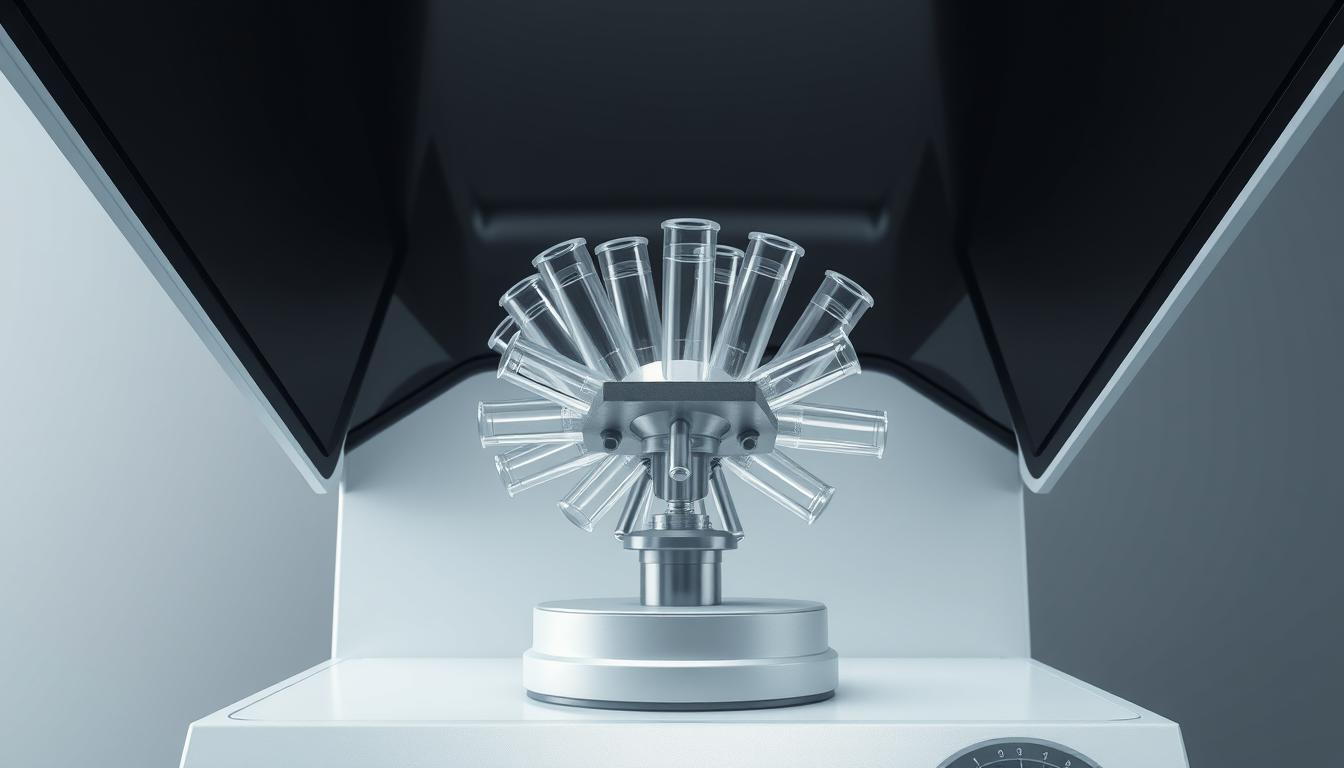
Ever wondered how doctors find secrets in biological samples? It’s thanks to tube centrifuges, the hidden stars of medical science.
Laboratory centrifuges are a big step forward in science. They spin samples fast to show tiny details we can’t see. This helps in blood tests and genetic studies, giving us clues about cells and molecules.
Centrifuges help doctors get important info from small samples. They work in many fields, leading to new discoveries in medicine and research.
Key Takeaways
- Tube centrifuges are key for precise medical sample analysis
- Speeds range from 500 to 1500 RPM for thorough separation
- Essential for separating cellular components in medical research
- Used across multiple scientific disciplines
- Enable detailed molecular and cellular investigations
Introduction to Tube Centrifuges
Clinical centrifuges are key in today’s medical world. They help separate biological samples quickly. This lets doctors and scientists study complex molecules with great accuracy.
Centrifugation tubes are advanced tools for sample processing. They use the difference in particle density to work. By spinning samples fast, they separate parts based on size and weight.
Defining Centrifuge Functionality
Centrifuges work in a few main ways:
- They create high-speed forces
- They separate biological parts
- They get samples ready for detailed study
- They keep samples safe during processing
Importance in Medical Testing
Medical labs use centrifugation tubes a lot. They help separate blood parts, analyze cells, and do research well.
| Centrifuge Type | Speed Range (RPM) | Typical Applications |
|---|---|---|
| Low-Speed Centrifuges | 0-7,500 | Large-volume sample processing |
| High-Speed Centrifuges | Up to 20,000 | Cellular and molecular research |
| Ultracentrifuges | 60,000-150,000 | Virus and ribosome separation |
Centrifugation tech keeps getting better. It helps doctors get important info from biological samples.
Types of Tube Centrifuges
Laboratory centrifuges come in many types, each for different needs. Knowing about these helps scientists pick the right one for their work.
Medical and research labs use different centrifuges. There are two main types:
Fixed Angle vs. Swinging Bucket Rotors
Centrifuge rotors are key for processing samples. Each type has its own benefits:
- Fixed Angle Rotors: Keep a steady angle, great for precise pelleting
- Swinging Bucket Rotors: Best for big samples, offering top separation
Microcentrifuges and Large Capacity Options
Microcentrifuges are for small samples. They work well with tiny amounts, offering high precision.
Big centrifuges handle lots of samples. They’re used in many fields, like:
- Pharmaceutical research
- Clinical healthcare testing
- Biotechnology studies
Choosing the right centrifuge depends on what the lab needs, the sample size, and the research goals.
Key Features of Tube Centrifuges
Modern medical labs use advanced centrifuges to handle important samples. Refrigerated and benchtop centrifuges are key tools for separating complex biological materials.
Knowing the main features of tube centrifuges helps scientists pick the right one for their needs.
Speed and RCF Capabilities
Centrifuge performance is measured by two key factors:
- Rotational Speed (RPM): Shows how fast it spins
- Relative Centrifugal Force (RCF): Shows how well it separates
Different centrifuges spin at speeds from 500 to 15,000 RPM. It’s important to choose the right RCF for your samples.
Temperature Control Options
Refrigerated centrifuges are vital for keeping sensitive samples cool. They help:
- Keep samples safe
- Stop proteins from breaking down
- Follow precise research steps
They can cool samples from -20°C to 40°C. This range is perfect for many research tasks.
Sample Volume Considerations
Centrifuge tubes come in different sizes for various needs:
- Microcentrifuge tubes: 0.2 mL to 2 mL
- Standard tubes: 15 mL and 50 mL
- Large capacity tubes: Up to 100 mL
Choosing the right tube size is crucial for accurate sample handling and avoiding mistakes.
The Role of Tube Centrifuges in Diagnostics
Clinical centrifuges are key in today’s medical world. They help process and analyze biological samples. These tools allow doctors to separate complex mixtures with great precision, giving them important insights into patient health.
Tube centrifuges are essential for turning raw biological samples into something that can be analyzed. They use gravity to separate substances by density, creating layers of different cellular materials.
Blood Sample Processing Techniques
Medical labs use tube centrifuges for detailed blood analysis. The process includes several important steps:
- Rapid spinning of blood samples at controlled speeds
- Separating blood into distinct components
- Isolating specific cellular elements for detailed examination
Cellular Component Separation
Advanced clinical centrifuges can separate cellular components with great precision. This allows for detailed diagnostic investigations. The separation process helps researchers:
- Isolate red and white blood cells
- Extract plasma and serum
- Prepare samples for genetic and molecular testing
“Precision in separation determines the accuracy of medical diagnostics” – Laboratory Research Journal
| Centrifuge Component | Function | Medical Application |
|---|---|---|
| Rotor | Spins samples at high speeds | Blood component separation |
| Sample Tubes | Holds biological samples | Diagnostic testing preparation |
| Speed Control | Regulates rotational velocity | Precise cellular isolation |
Thanks to tube centrifuges, doctors can get crucial diagnostic information with high accuracy and speed.
Selecting the Right Tube Centrifuge
Choosing the right laboratory centrifuges is crucial. Medical research experts need to think about several important factors. They must make sure the centrifuges work well and keep samples safe.
Finding the perfect high-speed centrifuges means knowing a few key things. These things affect how precise scientific research can be.
Essential Factors in Centrifuge Selection
- Sample volume requirements
- Rotational speed capabilities
- Temperature control features
- Compatibility with specific research protocols
Critical Performance Parameters
Medical labs need to look at certain performance traits when picking centrifuges. They should check the technical details to see if they match their research needs.
| Parameter | Recommended Range |
|---|---|
| Rotational Speed | 5,000 – 20,000 RPM |
| Temperature Range | -20°C to 40°C |
| Tube Capacity | 0.5 mL – 50 mL |
Manufacturer Recommendations
It’s important to follow the maker’s advice to get the best results and avoid damage. Research teams should look over the technical details and use guidelines for their centrifuges.
- Review equipment certification
- Verify compatibility with research protocols
- Check maintenance requirements
- Evaluate long-term reliability
Choosing the right centrifuge is key to good research. So, it’s vital to do a thorough check before starting any study.
Safety Features in Tube Centrifuge Design
Modern benchtop centrifuges come with key safety features. These protect lab workers and make sure samples are processed right. Safety is a big deal with centrifugation tubes, so new tech is used to lower risks.
Laboratory safety depends on smart design. This design stops accidents and keeps research safe. The main safety parts are:
- Robust lid locking mechanisms
- Advanced imbalance detection systems
- Automatic speed regulation
- Sealed containment structures
Critical Lid Locking Mechanisms
Lid locks are a key safety feature in centrifuges. They stop lids from opening during fast spins. This keeps workers safe from flying debris or spills. Precision-engineered locking systems keep tubes closed during the whole process.
Intelligent Imbalance Detection Systems
Imbalance detection is a big safety step in modern centrifuges. These systems spot uneven samples and stop the machine. This prevents damage to the equipment and the samples.
When picking a centrifuge, look for models with lots of safety features. This ensures the best performance and safety in the lab.
Maintenance and Care for Tube Centrifuges
Keeping laboratory centrifuges in good shape is key for accurate medical tests and longer equipment life. Tube centrifuges are big investments that need regular care to work well.
Regular upkeep includes important steps that lab workers must follow to keep their equipment safe.
Routine Cleaning Protocols
Cleaning tube centrifuges right needs careful attention. Here are some cleaning tips:
- Use 70% isopropanol mixture for daily disinfection
- Inspect equipment for scratches, dust, or spilled materials
- Clean refrigeration mesh at least twice annually
- Avoid harsh chemical agents that might cause corrosion
Troubleshooting Common Issues
Laboratory centrifuges face many problems that need quick fixes:
- Balance load carefully to prevent unnecessary vibration
- Check rotor for potential cracks or corrosion
- Verify proper seal and lid mechanisms
- Monitor temperature consistency during operations
Experts say to do full maintenance checks every six to twelve months. This depends on how often you use it. In places like Germany, laws say high-power centrifuges need yearly checks.
Regular maintenance is not just a recommendation—it’s a critical practice for ensuring accurate scientific research and preventing expensive equipment failures.
By sticking to strict maintenance plans, labs can make their tube centrifuges last longer. This helps with precise medical tests and research results.
Innovations in Tube Centrifuge Technology
The world of medical lab equipment is always changing. High-speed centrifuges are now at the forefront of science. They come with advanced digital controls and energy-saving designs, making research better.
Modern refrigerated centrifuges have changed how we process samples. They bring several important improvements:
- Automated digital control systems
- Enhanced energy conservation mechanisms
- Smart connectivity features
- Improved data management capabilities
Automation and Digital Controls
Today’s centrifuges have digital interfaces that give researchers more control. Intelligent programming lets them set speed, temperature, and time with ease. This reduces mistakes and makes results more reliable.
Advances in Energy Efficiency
New high-speed centrifuges save a lot of energy. They use advanced cooling systems that cut down on power use. This helps the environment and saves money for labs.
Technological progress transforms scientific research through smarter, more efficient laboratory equipment.
New technologies are making centrifuges even better. They promise more advanced tools for labs in the future.
Regulatory Standards for Tube Centrifuges
The medical testing world needs strict rules to keep things safe and precise. Clinical centrifuges must follow detailed guidelines. These rules protect both doctors and patients.
Regulatory compliance is complex. Labs must follow several important steps:
- Adhere to FDA safety rules
- Get ISO certification
- Follow strict quality control
- Keep an eye on equipment performance
FDA Compliance in Clinical Centrifuges
The FDA sets tough standards for lab centrifuges. These rules cover:
- Designing safe equipment
- Ensuring reliable performance
- Checking calibration
- Keeping maintenance records
ISO Certification Importance
ISO certifications are a worldwide standard for clinical centrifuges. Manufacturers need to show they meet quality, precision, and safety standards through detailed checks.
Following rules is not just a must—it’s a promise to do great work in medical testing.
Healthcare places must have strong quality control. This includes regular upkeep, calibration, and keeping records of centrifuge use. This helps meet both national and international standards.
Best Practices for Tube Centrifuge Use
Laboratory experts need to be precise when using centrifugation tubes. This ensures accurate and reliable results. It’s important to handle and operate microcentrifuges correctly to keep samples safe and research quality high.
Sample Loading Techniques
Starting with careful tube loading is key. Researchers should follow certain steps to get the best from their centrifugation:
- Check tubes for cracks or damage before use
- Make sure tubes are balanced in the rotor
- Fill tubes to the right volume
- Choose the right tube type for each task
Optimal Operating Procedures
To get the most from microcentrifuges, pay close attention to these details:
| Parameter | Recommended Practice |
|---|---|
| Speed Selection | Choose RPM based on the sample’s needs |
| Temperature Control | Use the right cooling for sensitive samples |
| Duration | Stick to the exact centrifugation time |
Following these best practices leads to consistent and reproducible results in labs. It’s crucial for professionals to keep equipment in good shape and use precise techniques. This ensures the best performance with centrifugation tubes.
Future Trends in Tube Centrifugation
The world of medical testing is changing fast. High-speed centrifuges and benchtop centrifuges are leading this change. New trends are making labs better at processing and analyzing biological samples. This means big improvements in how we diagnose diseases.
Centrifugation in medicine is going through a big change. This is thanks to several important developments:
- Artificial Intelligence (AI) integration for automated parameter optimization
- Miniaturization of laboratory equipment
- Enhanced predictive analytics for faster diagnostics
- Advanced material technologies improving centrifuge performance
Impact of Technological Advancements
The global medical centrifuge market is growing fast. It’s expected to go from USD 1.80 Billion in 2022 to USD 2.56 Billion by 2030. Innovative benchtop centrifuges are leading this change. They make medical research more efficient and precise.
Predictive Analytics in Medical Testing
New high-speed centrifuges are using machine learning to improve sample processing. These new technologies help researchers:
- Automate complex separation protocols
- Reduce human error
- Speed up research discoveries
- Support multi-omics research approaches
Research shows North America is leading the market. But Asia-Pacific is growing the fastest. The use of advanced materials and AI is changing centrifugation in medical diagnostics.
Conclusion and Summary of Tube Centrifuges
Tube centrifuges are key in today’s medical and scientific fields. They help separate cells and process samples, making research precise. These tools are vital in labs around the world for advanced testing and research.
Tube centrifuges are used in many ways. They range from small models for basic samples to big ones for detailed molecular studies. They do more than just separate, helping in biology, chemistry, and medical tests. This makes it easier for scientists and doctors to study and analyze samples.
New tech is making tube centrifuges even better. We can expect more automation, digital controls, and energy savings soon. As medical tests get more complex, these machines will keep helping us make new discoveries.
Getting good tube centrifuges can really help labs. They make research and testing more reliable. As technology keeps improving, these machines will keep playing a big part in our scientific journey.
FAQ
What is a tube centrifuge and how does it work?
A tube centrifuge is a lab tool that separates samples by density. It spins them fast to use centrifugal force. This helps doctors isolate cells and molecules for tests.
What are the main types of tube centrifuges?
There are many types, like fixed-angle and swing-bucket rotors. Also, microcentrifuges and large ones. Each is for different sample sizes and needs in labs.
How do speed and relative centrifugal force (RCF) impact sample separation?
Speed and RCF are key. Higher speeds and RCF separate samples better. This makes medical tests more precise.
Why are temperature-controlled centrifuges important?
Refrigerated centrifuges keep samples cool. This is vital for sensitive biological materials. It stops them from breaking down during tests.
What safety features should a medical laboratory centrifuge have?
Important safety features include lid locks and imbalance detection. They also have solutions for biohazards. These protect people and ensure safe sample handling.
How often should a tube centrifuge be maintained?
Regular upkeep is essential. Labs should clean regularly and get professional checks. Following the maker’s maintenance tips keeps it working well.
What are the most common applications of tube centrifuges in medical testing?
Tube centrifuges are mainly for blood work. They separate cells, prepare serum, and isolate cells for tests and research.
How do I choose the right tube centrifuge for my laboratory?
Think about speed, volume, and temperature needs. Also, consider rotor types and your lab’s specific needs. This helps pick the right one.
What recent technological innovations are improving tube centrifuge performance?
New tech includes digital controls and energy saving. There’s also smart connectivity and data systems. These boost precision and efficiency in labs.
What regulatory standards govern tube centrifuge use in medical settings?
Medical centrifuges must meet FDA and ISO rules. These ensure safety, quality, and performance in medical tests.






Leave a Comment
Your email address will not be published. Required fields are marked *