


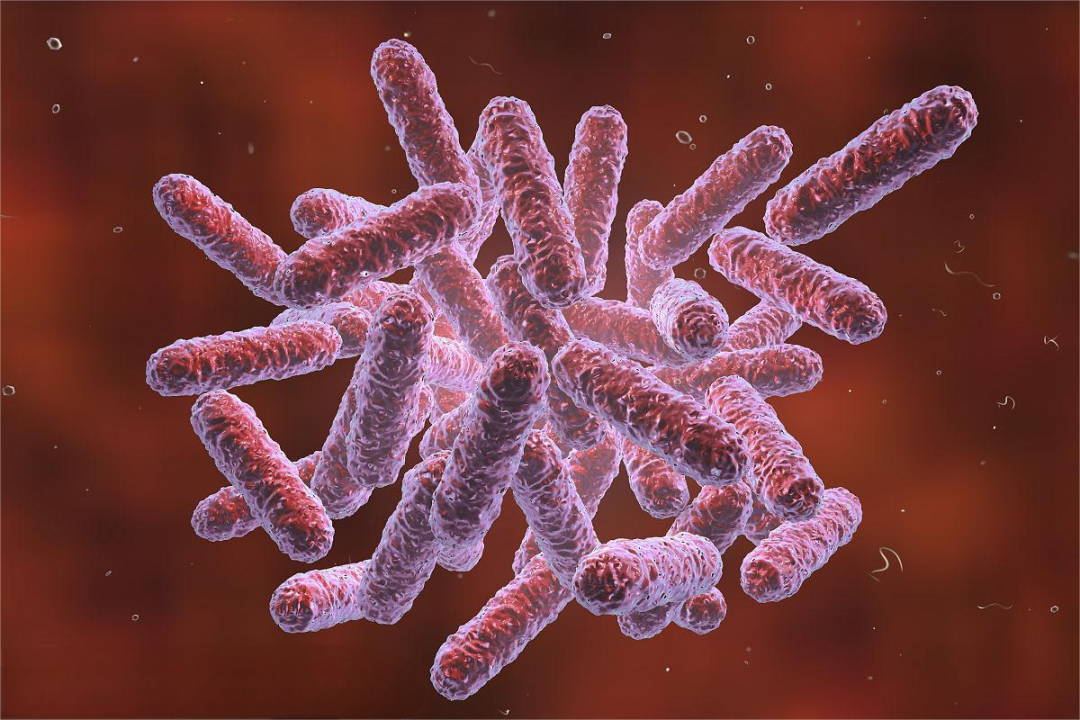
Ever thought about how scientists track the fast growth of tiny bacteria in just hours? Learning about measuring bacterial growth opens a world of tiny life that affects health and industry.
Measuring bacterial growth is key in microbiology. It helps scientists count changes in populations and understand how cells work together. Labs use advanced methods to study how bacteria grow and adapt.
Figuring out how to measure bacterial growth involves many detailed techniques. Scientists use these methods to track the life cycles of tiny organisms. They count colonies and measure density to get accurate data on bacterial growth.
Key Takeaways
- Bacterial growth measurement provides crucial insights into microbial behavior
- Multiple techniques exist for accurately tracking bacterial populations
- E. coli can divide every 20 minutes under optimal conditions
- Different bacterial species exhibit unique growth characteristics
- Precise measurement techniques are essential for scientific research
Understanding Bacterial Growth
Bacterial growth is key in microbiology, showing how microbes grow and change. These tiny creatures grow by splitting into two identical cells. This is called binary fission.
Bacteria go through different stages in their growth. Each stage shows how they adapt and survive. These stages are like chapters in a story of growth and interaction with their environment.
Characteristics of Bacteria
Bacteria have special traits that affect how they grow:
- They can reproduce quickly
- They can live in many different places
- They have complex ways of breaking down food
- They can change their genes to survive
Phases of Bacterial Growth
Understanding bacterial growth means knowing about four main stages:
| Growth Phase | Characteristics | Duration |
|---|---|---|
| Lag Phase | Initial adaptation period | Variable |
| Exponential Phase | Rapid cell division | Most active growth |
| Stationary Phase | Balanced growth and death rates | Nutrient equilibrium |
| Death Phase | Cell population decline | Resource depletion |
Each type of bacteria grows differently. For example, Escherichia coli doubles in about 20 minutes. On the other hand, Mycobacterium tuberculosis takes 12-16 hours to double.
Importance of Measuring Bacterial Growth
Understanding how bacteria grow is key in many fields. Scientists use special methods to study bacteria. This helps them learn about bacteria and their effects.
Measuring bacterial growth is more than just lab work. It’s vital for many areas:
- Medical diagnostics and disease prevention
- Food safety and quality control
- Environmental monitoring
- Pharmaceutical research
- Antibiotic development
Applications in Microbiology
Microbiologists study bacteria using growth measurements. Precise growth measurements reveal:
- Genetic changes and adaptations
- How bacteria metabolize
- How they interact with their environment
- How they evolve
Implications for Public Health
Tracking bacterial growth is key to public health. Scientists use it to:
- Spot disease outbreaks early
- Find better treatments
- Keep an eye on antibiotic resistance
- Make sure food and water are safe
Researchers use tools like optical density and colony counting. These help them track bacteria accurately. They do this in different places and conditions.
Common Methods for Measuring Bacterial Growth
To track bacterial growth, scientists use precise methods. They study how bacteria grow and change. This helps them understand these tiny organisms better.
There are two main ways to measure bacterial growth: direct and indirect methods. Each method gives different insights into how bacteria grow. This information is key for scientific studies.
Direct Methods in Bacterial Enumeration
Direct methods count bacterial cells directly. They use:
- Viable plate counting
- Microscopic cell enumeration
- Direct cell counting using specialized chambers
Indirect Methods of Bacterial Population Assessment
Indirect methods measure things that show how bacteria grow. They look at:
- Turbidity measurements
- Metabolic activity assays
- Optical density readings
Comparative Analysis of Measurement Techniques
Each method has its own benefits:
| Method | Accuracy | Time Required |
|---|---|---|
| Plate Counting | High | 24-48 hours |
| Microscopic Counting | Medium | 2-4 hours |
| Optical Density | Low | 1-2 hours |
Scientists pick the best method based on their research needs. They consider what they can do and how accurate they need to be.
Direct Methods: Counting Bacteria
Scientists use different direct methods to measure bacterial growth. These methods help understand how many and how healthy bacterial cells are. This is important in research and medical settings.
There are two main ways to count bacteria directly: viable cell counting and total cell counting. Each method has its own benefits for counting colonies and studying bacteria.
Viable Cell Counting Techniques
Viable cell counting looks for living, growing bacteria. It involves several steps:
- Preparing serial dilutions of bacterial samples
- Plating diluted suspensions on nutrient-rich agar media
- Incubating plates to allow colony formation
- Counting visible colonies after 12-24 hours
To calculate bacterial concentration, researchers use this formula: Total CFU/mL = (Number of colonies) × (Dilution factor).
Total Cell Counting Techniques
Total cell counting looks at all bacteria, alive or dead. Scientists use special techniques:
- Microscopic counting chambers
- Flow cytometry
- Direct microscopic examination
The Petroff-Hausser counting chamber is a classic tool for measuring bacterial growth. It has a depth of 0.02 mm and a specific area for detailed analysis.
Researchers usually count at least 100 cells for reliable results. This ensures a true picture of the bacterial population.
Indirect Methods: Estimating Bacterial Numbers
Researchers use indirect methods to estimate bacterial growth when direct counting is hard. These methods are quick and efficient. They don’t need a lot of manual labor.
Optical Density Measurement
Turbidity measurements for bacterial growth are a fast way to understand microbial populations. Spectrophotometry lets scientists measure light absorption through a cell suspension. This helps estimate bacterial concentration.
- Spectrophotometric analysis works best with bacterial concentrations of 10^7 cells/mL or higher
- Absorbance readings directly correlate with bacterial cell numbers
- A reading of 0.1 corresponds to approximately 22.5 x 10^6 cells/mL
Metabolic Activity Measurement
Metabolic activity is another indirect method for bacterial growth quantification. Researchers can check bacterial viability by measuring specific metabolic indicators.
| Method | Measurement Characteristic | Typical Concentration Range |
|---|---|---|
| Acid Production | pH Changes | 10^7 – 10^8 cells/mL |
| Oxygen Consumption | Respiration Rate | 10^6 – 10^9 cells/mL |
| Dry Weight | Microbial Mass | Dense Suspensions |
Key advantages of these methods include rapid results and minimal sample manipulation. Researchers can quickly estimate bacterial populations without extensive processing time.
Culture Media for Bacterial Growth
Choosing the right culture media is key for studying bacteria. These media provide the nutrients and conditions needed for bacteria to grow. Each type supports different bacteria and research goals.
- All-purpose media
- Enriched media
- Selective media
- Differential media
- Defined media
- Enrichment media
Nutrient-Rich Media Types
Nutrient-rich media give bacteria the nutrients they need to grow. Trypticase soy broth (TSB) is a good example. It has proteins, peptides, and other growth factors.
| Media Type | Key Characteristics | Primary Use |
|---|---|---|
| Chemically Defined Media | Known complete chemical composition | Precise nutritional control |
| Complex Media | Undetermined variable compositions | General bacterial cultivation |
| Enriched Media | Contains growth factors and vitamins | Supporting fastidious organisms |
Selective Media for Specific Bacteria
Selective media help target specific bacteria. MacConkey agar is an example. It stops other bacteria from growing while letting gram-negative ones thrive. This helps researchers focus on certain bacteria.
Differential media also help by showing color changes. These changes help identify bacteria by sight. It makes studying bacteria easier and more accurate.
Factors Affecting Bacterial Growth Rate
Understanding how bacteria grow involves looking at many factors. Scientists study these to see how bacteria grow in different places.
To measure bacterial growth, researchers look at important factors. These factors affect how bacteria reproduce and survive.
Critical Environmental Conditions
Environmental factors are key for bacterial growth. Important conditions include:
- Temperature ranges
- Oxygen availability
- pH levels
- Moisture content
Different bacteria like different temperatures:
- Psychrophiles: Grow between -5°C and 15°C
- Mesophiles: Grow best at 25°C to 45°C
- Thermophiles: Thrive between 45°C and 70°C
Nutritional Factors Impacting Growth
Nutrients are crucial for bacterial growth. Bacteria need:
- Carbon sources
- Nitrogen compounds
- Trace minerals
- Vitamins
To study bacterial growth, researchers must control these factors. This helps them understand how bacteria grow in different places.
Statistical Analysis in Measuring Bacteria
Understanding statistical analysis is key for accurate bacterial growth measurement. Researchers use advanced statistical techniques to turn raw data into useful insights. This helps them understand microbial populations better.
Statistical methods give scientists tools to analyze complex bacterial growth patterns. They help evaluate growth dynamics under different conditions. This makes it easier to understand how bacteria grow.
Data Interpretation Strategies
Effective data interpretation uses several mathematical approaches:
- Calculating growth rates
- Determining generation times
- Measuring population dynamics
- Evaluating experimental variability
Common Statistical Methods in Bacterial Research
Microbiologists use various statistical techniques to study bacterial growth:
- Mean calculations to establish baseline measurements
- Standard deviation analysis for result consistency
- Confidence interval determinations
- Regression analysis for growth curve modeling
In bacterial growth measurement, statistical methods are crucial. They help validate results, compare strains, and predict population behaviors. This makes research more accurate and reliable.
Quality Control in Bacterial Growth Studies
Precision is key in tracking microorganism growth. Quality control makes sure bacterial growth studies are accurate and consistent. This is crucial in scientific research.
To have effective quality control, a systematic approach is needed. It helps reduce variability and keeps research standards high.
Importance of Standard Operating Procedures
Standard operating procedures (SOPs) are essential for reliable microbial research. They guide researchers to follow consistent methods.
- Develop comprehensive written protocols
- Train laboratory personnel systematically
- Implement regular procedural reviews
- Document all experimental steps meticulously
Maintaining Consistency in Measurements
To get consistent bacterial growth measurements, focus on several key factors. This is important for tracking microorganism growth.
- Calibrate scientific instruments regularly
- Use biological and technical replicates
- Implement standardized record-keeping
- Utilize reference strains for validation
Researchers should also focus on standardizing methods across labs. This ensures that bacterial growth studies are consistent everywhere.
Precision in methodology is what makes scientific discoveries in microbial research reliable.
Challenges in Measuring Bacterial Growth
Measuring bacterial growth is full of complex challenges for scientists. They face many obstacles when trying to evaluate microbial growth in different settings.
- Detecting slow-growing or unculturable bacterial species
- Distinguishing between live and dead cells
- Accounting for significant population heterogeneity
- Managing technical and biological variability
Variability in Measurement Results
Studies show big differences in detecting bacterial growth. For example, spectroscopy can spot between 105 and 107 colony-forming units per milliliter. Different bacteria grow at different speeds:
- Klebsiella pneumoniae: Fastest detection at 0.3 minutes
- Staphylococcus aureus: Detection at 3.6 minutes
- Enterococcus faecium: Detection at 6.3 minutes
Limitations of Current Methods
Today’s methods for measuring bacterial growth have big limitations. They can’t always find viable but non-culturable (VBNC) cells. They also struggle with mixed bacterial populations. Real-time monitoring is hard, especially in complex environments.
Scientists need to keep finding new ways to solve these problems. They aim to make microbial growth evaluation more precise.
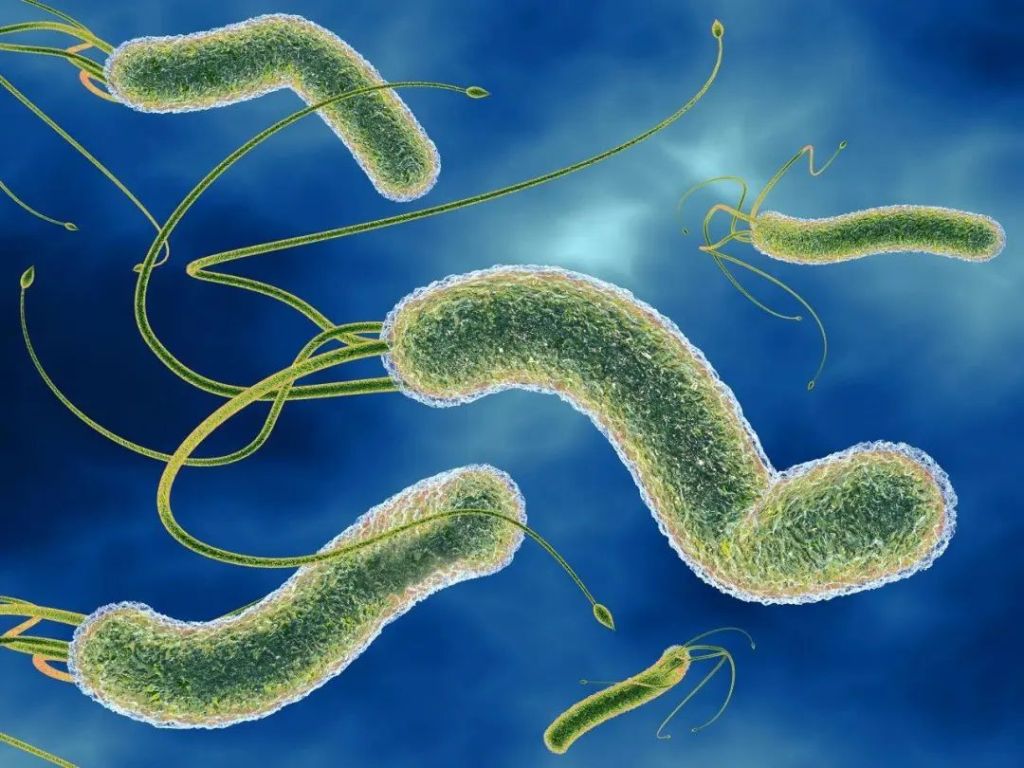
Helicobacter pylori
Future Trends in Bacterial Growth Measurement
The field of bacterial growth measurement is changing fast. New technologies like microfluidics and single-cell analysis are making big strides. They help scientists understand bacteria in ways they never could before.
Now, scientists can study bacterial growth in great detail. Deep learning models can even tell different bacterial densities apart with 86.25% accuracy. This lets researchers see how bacteria grow in six different levels of density.
Innovations in Laboratory Techniques
Scientists are finding new ways to measure bacterial growth. They use high-throughput screening and label-free monitoring systems. These tools use advanced computer methods, like artificial intelligence, to track bacterial growth accurately.
Integration of Technology in Microbiology
The future of studying bacteria is all about combining technology. Automated systems and real-time monitoring are changing microbiology. With deep learning, advanced imaging, and data tools, scientists can now study bacterial growth in ways we couldn’t imagine before.
References and further readings:
1.Rogers, A. T., Bullard, K. R., Dod, A. C., & Wang, Y. (2021). A new analysis method for evaluating bacterial growth with microplate readers. PLOS ONE, 16(1), e0245205*.
https://journals.plos.org/plosone/article?id=10.1371/journal.pone.02452052.Christian, R. R., Hanson, R. B., & Newell, S. Y. (1982). Comparison of methods for measurement of bacterial growth rates in mixed batch cultures. Applied and Environmental Microbiology, 43(5), 1160–1165.
https://journals.asm.org/doi/10.1128/aem.43.5.1160-1165.19823.ernardez, L. A., & De Andrade Lima, L. R. P. (2015). Improved method for enumerating sulfate-reducing bacteria using optical density. MethodsX, 2, 249–255.
https://www.sciencedirect.com/science/article/pii/S2215016115000291?via%3Dihub
FAQ
What are the key phases of bacterial growth?
Bacterial growth goes through four main phases. First, there’s the lag phase where bacteria adapt. Then, the exponential (log) phase where they divide quickly. Next, the stationary phase where growth and death are balanced. Finally, the death phase where the population starts to decline.
How do researchers measure bacterial growth?
Researchers use direct and indirect methods to measure growth. Direct methods include counting colonies and using microscopes. Indirect methods use spectrophotometry to measure density and activity.
Why is measuring bacterial growth important?
Measuring growth is key for many reasons. It helps in research, diagnostics, and food safety. It also aids in understanding bacteria and developing treatments.
What factors influence bacterial growth?
Many things affect bacterial growth. This includes temperature, pH, and oxygen levels. Nutrients and the type of bacteria also play a role. Controlling these factors is crucial for accurate measurements.
What is colony-forming unit (CFU) counting?
CFU counting is a direct way to measure growth. It involves diluting and plating samples. This method counts viable cells, giving a clear picture of bacterial populations.
How does optical density measure bacterial growth?
Optical density (OD) uses spectrophotometry to measure growth. It looks at light scattering or absorption. As bacteria grow, the culture becomes more turbid, showing cell density. This method is quick and non-destructive.
What challenges exist in bacterial growth measurement?
Measuring growth faces several challenges. These include biological variability and detecting non-culturable cells. Mixed populations and consistent conditions also pose problems. New technologies are helping to overcome these issues.
What role does culture media play in bacterial growth?
Culture media is vital for growth. It provides nutrients and can select specific bacteria. Different media types can affect growth rates and outcomes.
How do environmental conditions affect bacterial growth?
Environmental conditions greatly impact growth. Temperature, pH, oxygen, and nutrients are all important. Each species has its optimal conditions, and small changes can significantly affect growth.
What statistical methods are used in analyzing bacterial growth?
Statistical methods are used to analyze growth data. This includes calculating growth rates and means. Advanced techniques help interpret complex data and compare conditions.
Leo Bios
Hello, I’m Leo Bios. As an assistant lecturer, I teach cellular and
molecular biology to undergraduates at a regional US Midwest university. I started as a research tech in
a biotech startup over a decade ago, working on molecular diagnostic tools. This practical experience
fuels my teaching and writing, keeping me engaged in biology’s evolution.




Leave a Comment
Your email address will not be published. Required fields are marked *