


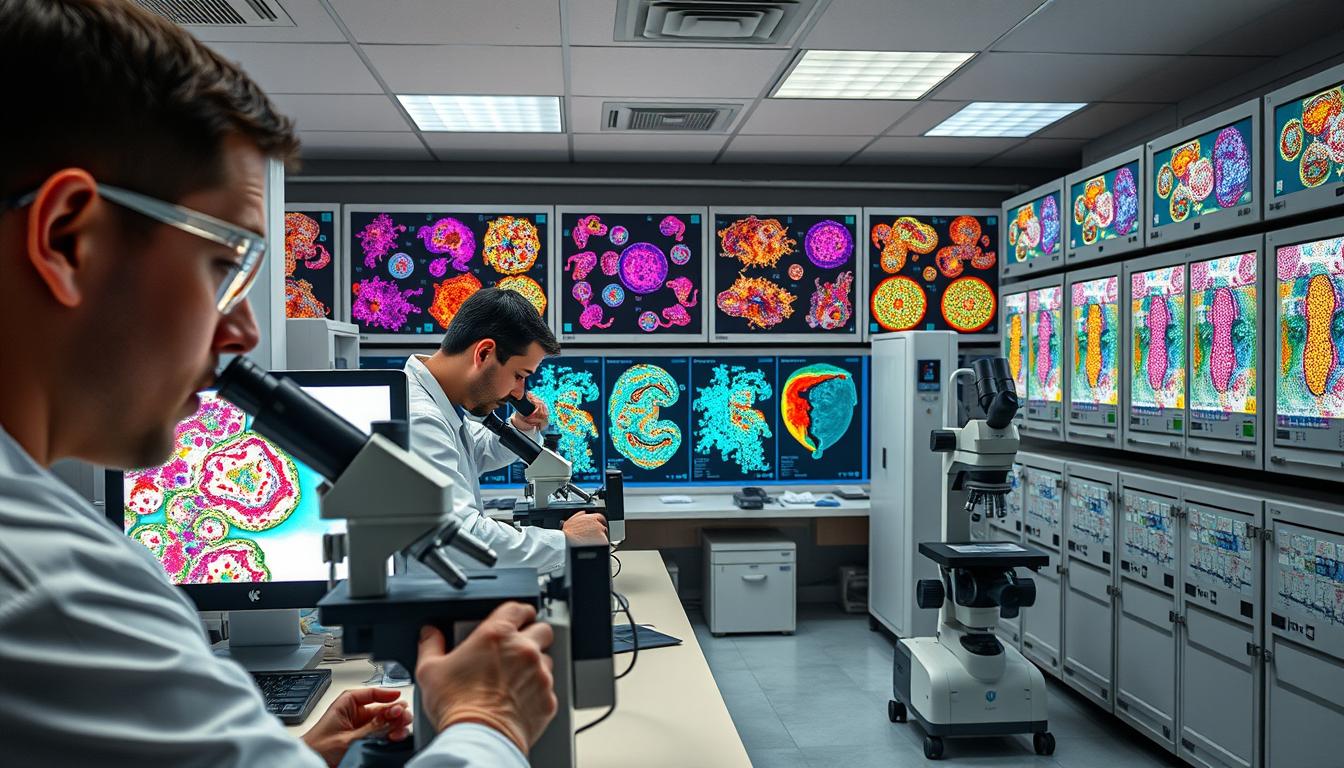
Imagine a single drop of blood revealing new insights into health and disease. The PBMC lab is at the forefront of medical research. It changes how scientists study cells and immune responses.
Peripheral blood mononuclear cells (PBMCs) are key in medical research. They show the complex world of human immune systems. This gives researchers a chance to study complex biological interactions.
Modern PBMC labs use advanced tech to work with these cells. They achieve over 90% cell viability through better isolation methods. This is changing how we understand human immunology, cancer, and personalized medicine.
Key Takeaways
- PBMCs provide critical insights into immune system functionality
- Advanced lab techniques ensure high-quality cell preservation
- Cutting-edge technologies enable precise cellular analysis
- PBMC research supports breakthrough medical discoveries
- Innovative methodologies enhance understanding of complex biological systems
Introduction to PBMC Labs
Peripheral Blood Mononuclear Cells (PBMCs) are key in biomedical research. They give us deep insights into how our immune system works. These cells help us understand complex biological processes and find new treatments.
PBMCs are taken from human blood using special techniques. They include important immune cells that help us fight off diseases.
What Are PBMCs?
PBMCs are made up of several immune cell types. These cells are vital for our body’s defense:
- Lymphocytes (T cells, B cells, NK cells)
- Monocytes
- Dendritic cells
Even though they make up only 1% of our blood, they are crucial. The way we separate these cells affects the quality of our research.
Importance of PBMC in Research
“PBMCs are the cornerstone of modern immunological investigations, providing unprecedented windows into cellular interactions.” – Dr. Emily Rodriguez, Immunology Research Institute
| Research Application | PBMC Contribution |
|---|---|
| Immunotherapy Development | Critical for understanding cellular responses |
| Disease Mechanism Studies | Enables detailed immune system analysis |
| Drug Research | Provides insights into cellular interactions |
Today, we have advanced ways to get high-quality PBMC samples. These methods, like density gradient centrifugation and magnetic-activated cell sorting, help us isolate cells accurately. This keeps the cells intact for detailed research.
Overview of PBMC Lab Services
PBMC lab services are key in modern biomedical research. They offer advanced cell processing and analysis. Specialized labs provide detailed services for top scientific studies in many fields.
Cell Processing and Isolation
Density gradient centrifugation is the main way to purify lymphocytes. It helps separate blood cells from whole blood. This process needs to be quick and precise to keep cells healthy.
- Rapid processing within 5 hours of sample receipt
- Consistently high cell viability (>95% pre-cryopreservation)
- Typical cell yield: 0.8 to 3.2 x 10^6 cells/mL of blood
Cryopreservation Techniques
Advanced cryopreservation methods keep cells safe for a long time. Strategic storage solutions help keep cells alive, with recovery rates over 80% after thawing.
| Storage Method | Temperature Range | Preservation Duration |
|---|---|---|
| Ultralow Storage Units | -75°C ± 10°C | Short to Medium Term |
| Liquid Nitrogen | Below -145°C | Long Term (20+ Years) |
Advanced Cell Analysis
Modern PBMC labs use advanced analysis to understand cells better. They run tests like chromosome checks, cell movement studies, and cell growth tests. These tests give a full picture of cell health.
- Flow cytometry for detailed cellular profiling
- Intracellular cytokine staining
- NK cytotoxicity assessments
Applications of PBMC in Biomedical Research
Peripheral blood mononuclear cells (PBMCs) are key in biomedical research. They give us deep insights into how cells work together and how diseases start. These cells help us learn more about human health through new scientific studies.
Scientists use special methods to get PBMCs. This lets them do detailed studies in many fields. The buffy coat extraction is one way to get these important cells very accurately.
Immunology Studies
PBMCs are a powerful tool for studying the immune system. They help researchers in many ways, including:
- Looking into how the immune system reacts
- Studying how autoimmune diseases get worse
- Creating vaccines that target specific diseases
- Understanding how cells talk to each other
Cancer Research Insights
In cancer research, PBMCs give us important clues about tumors and how to treat them. Scientists use these cells to:
- Finding new cancer markers
- Creating treatments that fit each person’s needs
- Learning about the environment around tumors
- Exploring ways to boost the immune system against cancer
| PBMC Research Domain | Key Applications | Research Impact |
|---|---|---|
| Immunology | Immune system mapping | Enhanced disease understanding |
| Oncology | Biomarker discovery | Targeted treatment development |
| Infectious Diseases | Pathogen response analysis | Vaccine strategy optimization |
PBMCs are made up of lymphocytes (70–90%), monocytes (10–20%), and dendritic cells (1–2%). This mix makes them very useful for studying how cells work together. It also helps in creating new medical treatments.
Quality Control in PBMC Labs
Keeping high standards is key in clinical research with peripheral blood mononuclear cells (PBMCs). The success of PBMC labs depends on precision and strict quality control. This ensures reliable and consistent scientific results.
Isolating PBMCs requires careful attention. Researchers use advanced methods like Ficoll-Paque density gradient separation. This helps get the best cell purity and survival rates.
Standards and Best Practices
Effective PBMC processing involves several important steps:
- Keeping cell viability above 90%
- Processing samples within 6-48 hours of collection
- Keeping processing temperatures between 18-25°C
- Using precise cryopreservation methods
Regulatory Compliance and Certifications
Top PBMC labs follow strict rules. They have accreditations like CLIA, CAP, and ISO. These show their dedication to excellence in clinical research.
Important compliance metrics include:
- 21CFR Part 11 biospecimen management
- Global Good Clinical Laboratory Practice (GCLP)
- Comprehensive documentation and traceability
The strict standards make sure each PBMC sample is top-notch. This supports major breakthroughs in immunology and personalized medicine.
Innovative Technologies in PBMC Analysis
The study of peripheral blood mononuclear cells (PBMCs) is changing fast. New technologies are being developed in PBMC labs. These advancements help us understand cells better than ever before.
Flow Cytometry Breakthroughs
Flow cytometry has changed how we analyze PBMCs. It lets researchers study cells in detail. They use special antibodies to look at different parts of cells.
- Supports analysis of up to 12 color combinations
- Enables precise phenotyping of immune cells
- Provides rapid characterization of cell subsets
Molecular Profiling Innovations
PBMC labs are using new ways to study cells. Techniques like single-cell RNA sequencing and mass cytometry give us a close look at cells. They help us see how different cells are.
| Technology | Key Capabilities | Research Impact |
|---|---|---|
| Single-Cell RNA Sequencing | Genome-wide transcriptome analysis | Identifies rare cell populations |
| Mass Cytometry | High-dimensional cellular characterization | Enables comprehensive immune profiling |
These new tools help scientists learn more about cells. This knowledge is key for better medicine and finding new drugs.
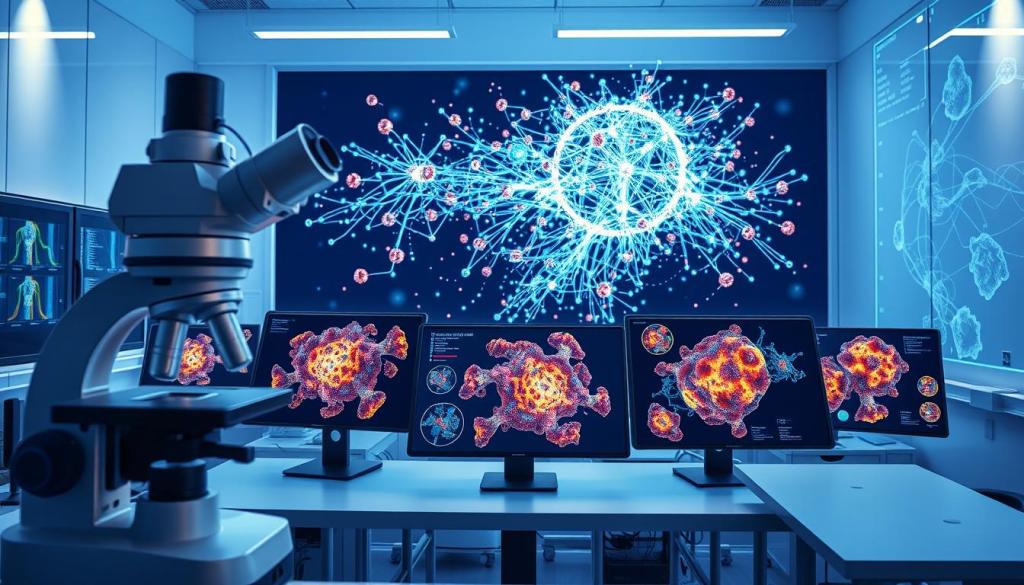
The Role of PBMC Labs in Drug Development
Pharmaceutical research depends heavily on PBMC labs. These labs are key in drug development. They help understand how cells work together and test new treatments.
Drug development needs exact methods to isolate and separate immune cells. Researchers use PBMCs to test new medicines in many areas of study.
Preclinical Testing Strategies
PBMC labs play a big role in preclinical testing. They use several methods:
- Comprehensive drug efficacy evaluation
- Toxicity risk assessment
- Immune system response modeling
- Early-stage therapeutic intervention screening
Biomarker Discovery Techniques
Advanced PBMC analysis helps find important molecular signs. These signs show:
- How well a drug works
- How diseases progress
- How a treatment will work for a patient
- How to tailor treatments to each person
Processing PBMCs requires careful cell separation. This keeps cells in good shape. From just 1 mL of blood, researchers can get 300,000 to 1,200,000 T cells. This is a big help for drug research.
Precision in PBMC isolation is crucial. It leads to reliable and consistent research. This can change medical treatments for the better.
Collaboration and Partnerships in Research
PBMC labs are key in advancing science through partnerships. They connect academic and industry worlds, fostering innovation. This connection is crucial for groundbreaking discoveries.
Today’s research needs strong partnerships and advanced tech. Tools like density gradient centrifugation and lymphocyte purification are essential. They help researchers overcome complex challenges.
Academic Research Partnerships
Universities and research centers rely on PBMC labs for support. They focus on:
- Standardizing cell isolation protocols
- Sharing cutting-edge research methodologies
- Developing specialized lymphocyte purification techniques
- Conducting joint immunological investigations
Industry Connections
Pharmaceutical and biotech firms need PBMC labs for research. These partnerships lead to innovation in:
- Drug discovery and development processes
- Advanced cell analysis techniques
- Refined density gradient centrifugation methods
- Biomarker identification strategies
PBMC labs help deepen our understanding of cells and speed up medical breakthroughs. This can greatly improve patient care.
Ethical Considerations in Cell Research
Cell research needs strict ethical rules to protect donors and keep science honest. It’s a complex field, especially in areas like leukocyte purification and buffy coat extraction.
Research places must follow detailed ethical rules to keep people safe and move science forward. Here are the main ethics of cell research:
- Protecting personal privacy and genetic data
- Getting clear consent from donors
- Being open about research methods
- Following strict rules and laws
Patient Consent and Rights
Getting donor consent is key in ethical cell research. Comprehensive informed consent protocols must explain risks, goals, and rights clearly. Different donors face different risks:
- Healthy donors face “Minimal to Slight” risks
- Autologous donors might face “High” risks
- Kids need extra consent from parents
“Ethical research starts with respect for human dignity and informed participation.”
Regulatory Frameworks
Rules from bodies like the FDA and global ethics groups set high standards. They help keep research safe and advance science.
Groups must follow strict rules, like keeping records, screening donors, and watching collection methods. The need for human samples makes strong ethics even more crucial.
Data Management and Biorepository Services
Biorepository services are key for advanced clinical research. They offer solutions for keeping biological samples safe for a long time. These places make sure valuable research materials, like samples from Ficoll-Paque, stay good and easy to get to.
Today’s biorepositories use the latest tech to keep samples safe and track them well. Labs focused on cell research have detailed plans to care for and manage biological samples.
Biobank Establishment
Setting up a strong biobank needs careful planning and the right setup. Important parts include:
- Multiple storage temperature options
- 24/7 temperature checks
- Smart alarm systems that send texts or emails
- Good plans for managing samples
Sample Tracking Technologies
For advanced clinical research, managing samples well is crucial. New tracking tech helps with:
- Watching samples in real-time anywhere
- Electronic systems for lab info
- Computerized ways to keep track of inventory
- Good ways to follow samples
“Effective biorepository management is the backbone of breakthrough scientific discoveries.”
Using smart tracking systems lets researchers handle and find biological samples with confidence. They use cryogenic storage, like liquid nitrogen, to keep PBMCs and other important research materials safe.
Future Trends in PBMC Research
The world of peripheral blood mononuclear cells (PBMCs) is changing fast. It’s leading to new ways in personalized medicine and cell therapies. PBMC labs are exploring new tech, opening doors to major medical breakthroughs.
Personalized Medicine Approaches
Personalized medicine is changing healthcare by focusing on PBMCs. The market for PBMCs grew to USD 216.52 million in 2021. It’s expected to grow even more, with a CAGR of 9.38% by 2027. Some key advancements include:
- Advanced genetic profiling of individual immune cell populations
- Precision treatment strategies based on unique immune signatures
- Enhanced diagnostic capabilities for complex diseases
Advances in Gene Editing and Therapy
Gene editing is changing PBMC research in big ways. Tools like CRISPR-Cas9 allow for detailed genetic changes. This opens up new ways to treat diseases.
| Research Area | Potential Applications |
|---|---|
| Immunotherapy | Cancer treatment modifications |
| Genetic Disorders | Targeted cellular repairs |
| Infectious Diseases | Enhanced immune response development |
The future of PBMC labs is bright. They will use the latest tech to understand human cells better. As research gets better, these labs will help create new medical solutions.
Conclusion: The Impact of PBMC Lab Services on Modern Science
PBMC labs have changed biomedical research a lot. They use advanced ways to isolate and separate immune cells. This helps scientists understand how cells work together, leading to big discoveries in many fields.
These labs are key for studying how our bodies fight off diseases. They help us learn about the tiny details of how cells interact. This knowledge is crucial for finding new treatments and medicines.
New technologies are making PBMC research even better. They’re working on keeping cells alive longer and finding better ways to separate them. Also, using computers and artificial intelligence will help us learn more about how cells work together.
PBMC labs are leading the way in scientific discovery. They help us understand how our bodies react to diseases. Their work is important for finding new treatments and medicines. They will keep playing a big role in medical research as we learn more.
FAQ
What are Peripheral Blood Mononuclear Cells (PBMCs)?
PBMCs are key players in our immune system. They include lymphocytes, monocytes, and dendritic cells. These cells help fight off infections and are vital for research in immunology and drug development.
How are PBMCs isolated from whole blood?
PBMCs are usually isolated using Ficoll-Paque density gradient centrifugation. This method separates them from other blood cells based on density. The process involves layering blood over Ficoll-Paque and then centrifuging to extract PBMCs.
Why are PBMCs important in scientific research?
PBMCs are crucial for understanding the immune system and diseases. They help in studying immunological disorders and cancer. Their use in drug development and personalized medicine makes them essential for research.
How are PBMCs preserved for long-term storage?
PBMCs are frozen for long-term storage using cryopreservation. This involves freezing them in liquid nitrogen at -196°C with cryoprotectants. Proper freezing techniques help keep the cells viable for future research.
What advanced analysis techniques are used with PBMCs?
Advanced methods like flow cytometry and single-cell RNA sequencing are used. These techniques help identify cell types and study their functions. They provide detailed insights into molecular characteristics.
What ethical considerations are involved in PBMC research?
Ethical research with PBMCs requires informed consent and privacy protection. Researchers must handle samples carefully and follow strict guidelines. This ensures ethical use of biological samples in studies.
How do PBMC labs contribute to drug development?
PBMC labs are vital in drug development. They conduct preclinical tests and discover biomarkers. They assess how drugs affect the immune system, helping to understand drug efficacy and side effects.
What are the future trends in PBMC research?
Future trends include personalized medicine and advanced gene editing. Researchers aim to develop tailored treatments and explore new cell therapies. Techniques like CRISPR-Cas9 and single-cell sequencing will provide deeper insights into cellular functions.





Leave a Comment
Your email address will not be published. Required fields are marked *