


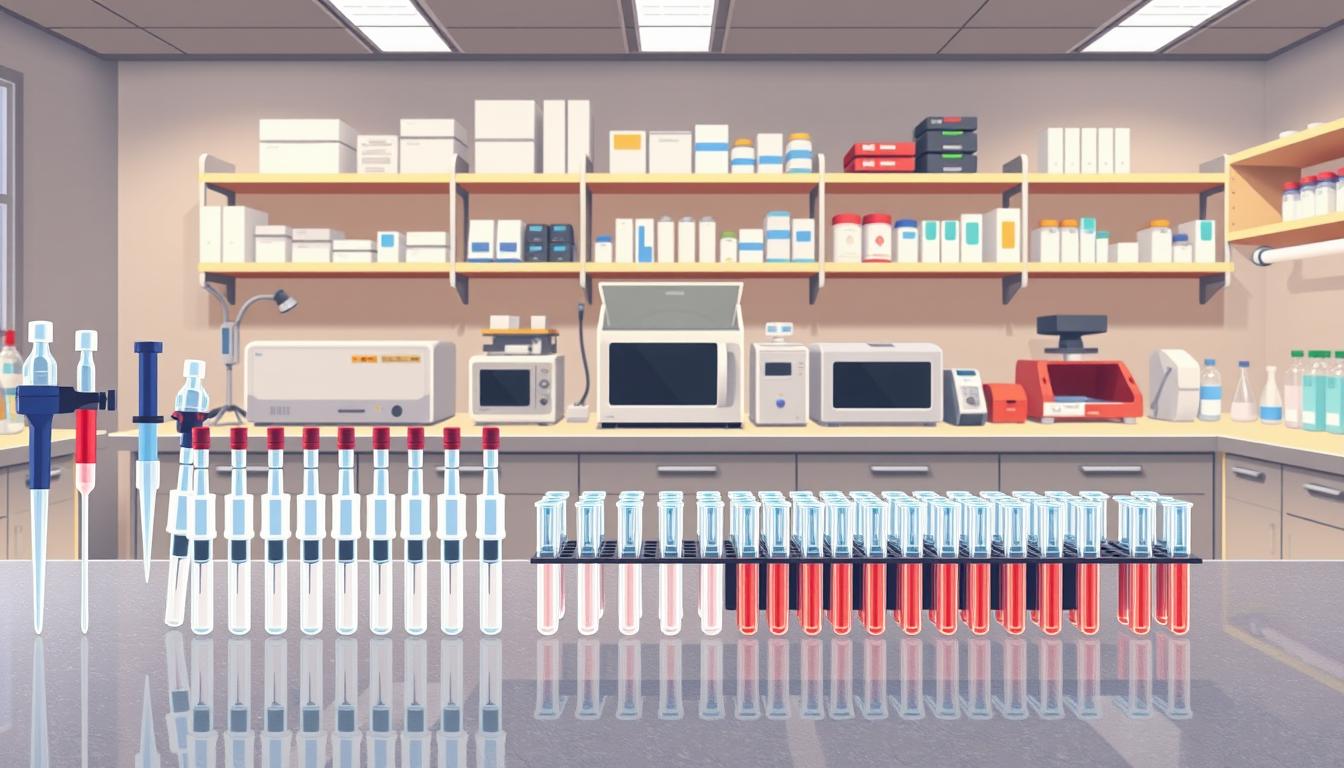
What if the tiny tools in your laboratory could change the game in science? PCR consumables are the hidden gems of molecular biology. They make it possible for scientists to make big discoveries with great precision.
Today’s research labs need top-notch PCR consumables to make new discoveries. These lab supplies, like reagents, tubes, and pipette tips, are key for doing accurate molecular analysis and genetic research.
Scientists use PCR consumables to turn complex questions into clear answers. They help in medical tests and genetic engineering. These tools are the backbone of advanced scientific research.
Key Takeaways
- PCR consumables are critical for molecular biology research
- Quality lab supplies directly impact experimental accuracy
- Advanced materials enhance research capabilities
- Precision tools enable breakthrough scientific discoveries
- Comprehensive range of PCR consumables supports diverse research needs
Understanding PCR and Its Role in Molecular Biology
Polymerase Chain Reaction (PCR) is a game-changer in molecular biology. It lets scientists copy DNA with great accuracy. This is key for studying genes, diagnosing diseases, and solving crimes.
PCR needs special tools to work well. These tools, called PCR consumables, help make sure the DNA copying is precise. DNA polymerase, a special enzyme, is at the heart of this process. It makes millions of DNA copies fast.
What is PCR?
PCR is a way to make lots of copies of specific DNA parts. It uses three main steps:
- Denaturation at 95°C, which separates DNA strands
- Annealing between 55-72°C, where primers bind to target sequences
- Extension at 72°C, where DNA polymerase builds new DNA strands
“PCR can amplify a single DNA molecule into millions of copies within hours” – Molecular Biology Research Insights
Importance of PCR in Research
PCR is vital for many research areas. It helps in:
- Genetic disease diagnosis
- Forensic DNA analysis
- Pathogen detection
- Genetic engineering
| PCR Characteristic | Typical Values |
|---|---|
| Amplification Cycles | 25-35 cycles |
| DNA Amplification Range | 10^6 to 10^9 copies |
| Primer Length | 20-25 nucleotides |
PCR is getting better with new technology. This includes better DNA polymerase. It’s opening up new ways to study and diagnose genetics.
Types of PCR Consumables
Molecular biology research needs special equipment for accurate results. PCR consumables are key, giving scientists the tools for precise genetic analysis.
Scientists use many PCR consumables in their work. These supplies come in different formats to meet various research needs.
PCR Tubes and Plates
PCR tubes and plates are vital in molecular biology. They are made to handle extreme temperatures during the PCR process.
- Standard profile PCR plates have a 0.2 ml capacity per cavity
- Low profile plates feature a 0.15 ml nominal volume
- Available in multiple well configurations (32-well to 384-well)
Reagent Kits
PCR reagents are key for successful genetic amplification. These kits include enzymes, nucleotides, and buffers needed for DNA replication.
- Master mixes for rapid protocol setup
- Individual component kits for customized experiments
- Quality-controlled formulations ensuring reproducibility
Pipette Tips
High-quality pipette tips are crucial for keeping experiments clean. They prevent contamination and ensure accurate sample handling during PCR preparation.
- Designed for precise liquid transfer
- Available in various sizes and configurations
- Made from ultra-pure polypropylene materials
Choosing the right PCR consumables is vital for accurate research. Knowing the differences in PCR tubes, plates, and reagents helps scientists improve their molecular biology work.
Key Components of PCR Consumables
PCR consumables are advanced tools for DNA amplification. They need specific enzymes and nucleotides for accurate genetic research. Scientists use these to get reliable results.
Knowing the important parts of PCR consumables is key for good genetic analysis. These elements work together. They turn small DNA samples into millions of copies for detailed study.
Essential Enzymes in PCR
DNA polymerase is the main enzyme in PCR. It helps replicate DNA by adding nucleotides during amplification. Usually, 1-2 units of DNA polymerase are used in a 50 µL PCR reaction.
- Taq DNA polymerase: Most common enzyme
- Heat-stable characteristics
- Incorporates approximately 60 bases per second
- Functional at high temperatures
Nucleotide Mixes and Their Functions
Nucleotides are crucial for DNA synthesis in PCR. A final concentration of 0.2 mM for each nucleotide is recommended for best results.
- Provides genetic material for replication
- Supports precise DNA strand elongation
- Enables millions of DNA segment copies
Using high-quality DNA polymerase and the right nucleotide mixes is vital. It ensures PCR results are reliable and accurate for different research needs.
Selecting Quality PCR Consumables
Researchers know that the success of molecular biology experiments depends on top-notch PCR consumables. The right pcr consumables can greatly improve results, making sure experiments are reliable and accurate.
Choosing the best pcr reagents is not easy. Scientists must look at several important factors to ensure their research goes well.
Critical Selection Factors
When picking PCR consumables, researchers should keep these key points in mind:
- Structural integrity of consumables
- Material thermal conductivity
- Compatibility with specific research protocols
- Contamination prevention capabilities
- Temperature resistance range
Certification Importance
Certification is key to knowing if PCR consumables are reliable. High-quality products should have:
- DNA-free
- RNase-free
- Endotoxin-free
Laboratory experts must choose consumables that pass strict quality checks. Impurities in reaction tubes can cause big problems in amplification curves, which can ruin research.
The precision of your scientific work begins with selecting the right PCR consumables.
It’s important to look at tube thickness, well setup, and how they handle light. For example, white PCR tubes are better for quantitative PCR, showing better results than clear ones.
Researchers should also think about well size, plate setup, and how to seal them. These details are crucial for their specific experiments.
The Role of PCR Consumables in Diagnostics
PCR technology has changed how we diagnose diseases in labs. It gives us deep insights into detecting diseases and studying genes. The quality of PCR consumables is key to making these tests accurate.
Clinical labs use PCR to quickly find pathogens. Choosing the right pcr primers and pcr master mix is crucial for good results.
Applications in Clinical Diagnostics
PCR consumables are used in many important areas in labs:
- Infectious disease screening
- Genetic disorder identification
- Viral load monitoring
- Cancer marker detection
Significance in Pathogen Detection
PCR’s sensitivity helps find pathogens fast and accurately. Specialized PCR consumables let researchers spot tiny amounts of genetic material. This has greatly improved diagnostic abilities.
“PCR consumables are the unsung heroes of modern diagnostic medicine, enabling unprecedented precision in disease detection.”
| Diagnostic Application | PCR Consumable Requirements | Key Considerations |
|---|---|---|
| Viral Screening | Low-volume PCR tubes | High sensitivity |
| Genetic Testing | 96-well PCR plates | Reproducibility |
| Bacterial Identification | Specialized master mix | Contamination prevention |
Using top-notch PCR consumables leads to accurate test results. This cuts down on mistakes and boosts lab efficiency.
Storage and Handling of PCR Consumables
Keeping PCR consumables in good shape is key for science. Researchers must follow strict rules to keep PCR tubes and pcr buffers reliable. This is important for lab work.
Labs need smart ways to keep molecular biology supplies quality. It’s important to prevent contamination and store things right. This helps experiments succeed.
Best Practices for Storage
- Store pcr tubes at consistent temperatures (typically -20°C or -80°C)
- Protect consumables from direct light exposure
- Use clean, designated storage containers
- Implement organized labeling systems
Avoiding Contamination
Stopping contamination is a big deal. Researchers must use strong methods to keep samples clean.
“Contamination can ruin whole research projects – it’s better to prevent than to fix.”
| Contamination Prevention Strategy | Key Recommendation |
|---|---|
| Personal Protective Equipment | Use sterile gloves, lab coats, and face masks |
| Workspace Management | Dedicate separate areas for PCR preparation |
| Equipment Maintenance | Regular cleaning and UV sterilization |
By following these steps, researchers can keep pcr buffers reliable. This helps keep science at its best.
The Impact of PCR Consumables on Research Validity
Scientific research needs precision, and PCR consumables are key to achieving it. The quality of these consumables affects the trustworthiness of molecular biology studies. Choosing the right ones is vital for any research.
PCR experiments come with challenges. Even small contaminants can skew results. But, using top-notch pcr reagents helps avoid these issues, ensuring reliable results.
Ensuring Accurate Results
Getting accurate PCR results involves several factors:
- Precise material selection
- Contamination prevention
- Consistent experimental conditions
- High-grade consumable materials
Studies show that the quality of consumables greatly affects research results. DNA polymerase can sometimes add wrong nucleotides. This highlights the need for superior pcr consumables.
Reducing Variables in Experiments
Variables can greatly affect research validity. To reduce them, consider:
- Using certified PCR consumables
- Implementing strict laboratory protocols
- Selecting consumables with proven consistency
- Regular equipment calibration
Professional researchers know that quality pcr consumables are crucial for reliable data. By managing variables well, scientists can make their research more credible and reproducible.
Innovations in PCR Consumables
The world of molecular biology is changing fast. New advancements in PCR consumables are pushing research forward. These changes are making genetic analysis and testing better.
New materials are making pcr tubes and plates better. The demand for these lab tools is growing fast. It’s expected to grow by 4.8% from 2024 to 2032.
Breakthrough Material Advancements
Scientists are seeing big improvements in PCR consumables:
- Enhanced thermal conductivity for precise temperature control
- Reduced sample adhesion to improve experimental accuracy
- Advanced polymers that minimize contamination risks
- Ultra-thin wall designs for faster thermal transfer
Future Trends in PCR Technology
The PCR consumables market is seeing big changes. Key trends include:
- Development of specialized low-profile pcr plates for real-time applications
- Increased focus on 384-well formats for high-throughput screening
- Integration of smart materials with embedded sensing capabilities
- Sustainable manufacturing approaches for environmental responsibility
The PCR tubes segment is expected to hit USD 352.3 million by 2032. These advancements are not just about technology. They also bring big economic benefits to molecular diagnostics and research.
Environmental Considerations for PCR Consumables
The scientific world is moving towards more sustainable practices, especially with PCR consumables. People are now aware of the plastic waste from molecular biology experiments.
Today’s labs are looking for new ways to cut down on waste while keeping research quality high. PCR tubes and other items are key in this effort.
Sustainable Options for PCR Consumables
Scientists have many green choices for PCR consumables:
- Recyclable polypropylene PCR tubes
- Biodegradable plastic options
- Low-volume items to reduce waste
- Reusable PCR plate systems
Lab Practices for Waste Reduction
There are smart ways to lessen environmental harm:
- Make sample prep more efficient to use less
- Choose durable, high-quality PCR tubes
- Start recycling programs
- Support makers who focus on sustainability
| Sustainability Approach | Potential Impact |
|---|---|
| Biodegradable PCR tubes | Reduces plastic waste by 40-60% |
| Reusable consumable systems | Decreases annual plastic consumption |
| Efficient sample management | Minimizes unnecessary consumable usage |
It’s a big challenge to balance caring for the environment with doing precise science in molecular biology.
Regulatory Standards for PCR Consumables
The world of scientific research depends on precise PCR consumables. Regulatory standards are key to ensuring these tools are of high quality and reliable.
Understanding PCR consumables requires knowledge of regulatory frameworks. The Food and Drug Administration (FDA) sets strict guidelines. These guidelines help manufacturers ensure the quality of PCR consumables and reagents.
Compliance with FDA Guidelines
FDA guidelines cover important aspects of PCR consumables production:
- Material purity and consistency
- Manufacturing process controls
- Performance validation
- Quality assurance protocols
Importance of Quality Control
Quality control is crucial for scientific research. Researchers need PCR consumables that meet strict standards. This ensures:
- Reproducibility of experimental results
- Minimization of experimental variables
- Consistent performance across different laboratory settings
Professional certification and rigorous testing are vital for reliable PCR consumables. Laboratories must follow these standards. This ensures the highest level of scientific accuracy and credibility.
Conclusion: The Essential Role of PCR Consumables in Science
PCR consumables have changed molecular biology a lot in the last 30 years. They help scientists do precise genetic analysis in many fields. This includes medical research and biotechnology in farming.
Choosing the right PCR consumables is very important. Labs need products that are top quality and meet ISO standards. Using the best PCR tubes and plates can make experiments more accurate, especially in qPCR.
Key Takeaways for Scientific Success
Scientists should think carefully about their PCR consumables. They should look at the material quality, how well it prevents contamination, and if it works with their lab equipment. Buying the best PCR consumables helps make research more reliable and trustworthy.
Moving Forward in Molecular Research
As molecular biology grows, scientists need to keep up with new PCR technologies and products. Using the best PCR products and following strict lab rules helps them make new discoveries. This opens up new ways to understand complex biological systems.
FAQ
What are PCR consumables?
PCR consumables are key items in molecular biology labs. They help with Polymerase Chain Reaction (PCR) experiments. This includes PCR tubes, plates, and special kits. Also, DNA polymerase, primers, and nucleotides are important for making and analyzing DNA.
Why are high-quality PCR consumables important?
High-quality PCR consumables are vital for good science. They ensure experiments are accurate and reliable. Bad consumables can cause errors and mess up data.
What factors should researchers consider when selecting PCR consumables?
Researchers need to think about several things. Purity, consistency, and how well they work with PCR are important. They should also check for certifications and follow quality control standards.
How do PCR consumables impact diagnostic testing?
PCR consumables are key for diagnosing diseases. They help find genetic disorders and detect infections quickly. The quality of these items affects how well tests work.
What are the best practices for storing PCR consumables?
Keeping PCR consumables in the right conditions is crucial. Store them away from light and moisture. Use clean techniques and follow the maker’s storage tips to keep them good.
Are there environmentally friendly PCR consumables available?
Yes, there are green options like recyclable PCR tubes and plates. These help reduce waste without sacrificing quality for science.
How do innovations impact PCR consumable design?
New ideas are making PCR consumables better. They improve how well they conduct heat and reduce sticking. This helps make PCR reactions more efficient.
What regulatory standards govern PCR consumables?
PCR consumables must meet strict FDA rules. These ensure they are safe and work well for research and clinical use.
How can researchers prevent contamination when using PCR consumables?
To avoid contamination, use clean methods and wear protective gear. Work in clean spaces and use dedicated tools. Follow strict lab rules for handling PCR materials.
What role do nucleotide mixes play in PCR consumables?
Nucleotide mixes are vital for PCR. They have dNTPs that help build DNA during the process. This is how PCR replicates genetic material accurately.





Leave a Comment
Your email address will not be published. Required fields are marked *