


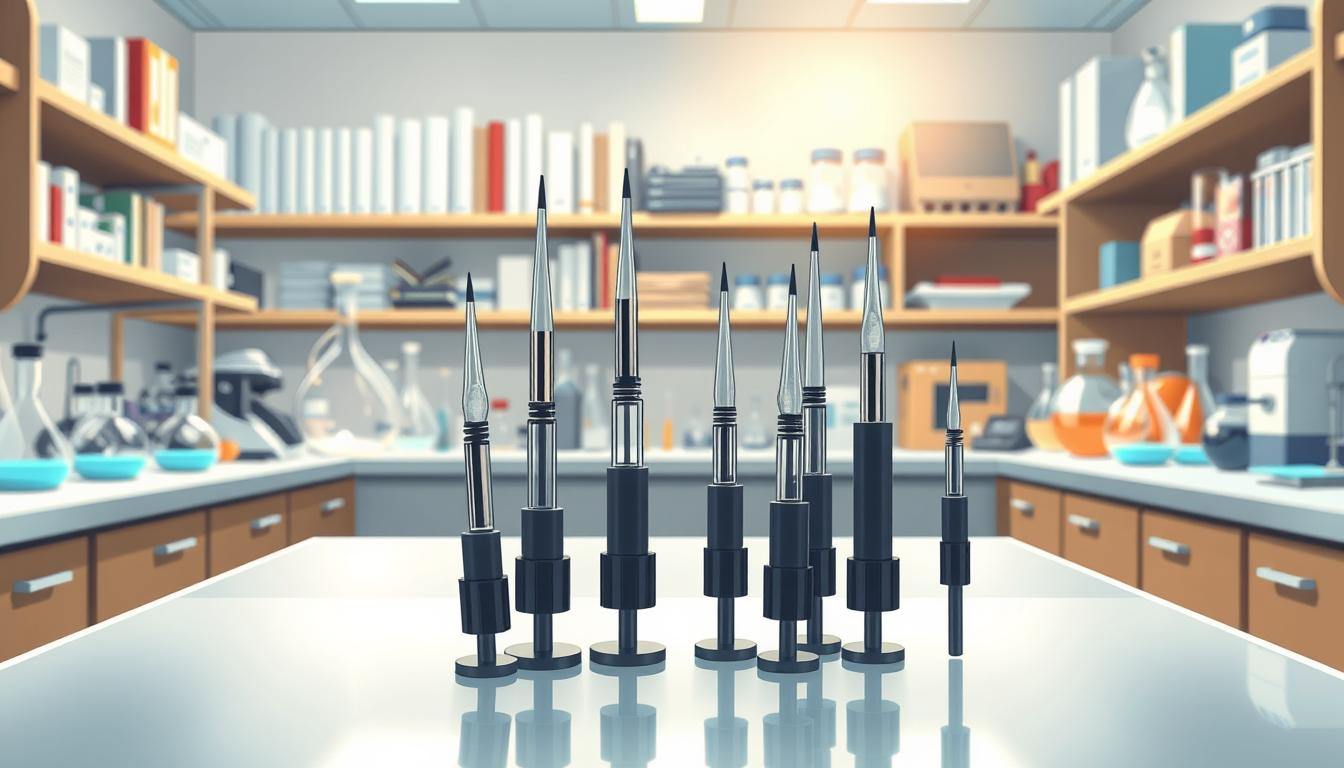
Have you ever wondered how scientists achieve microscopic precision in liquid handling? This precision can change the course of medical research.
The micropipette is a key tool in scientific labs. It lets researchers move tiny amounts of liquid with great accuracy. These tools are crucial for many biological and chemical studies, linking theory to practice.
Pipettes are more than just lab tools. They are precise instruments that make complex science measurable and reliable. They are used in medical tests and genetic studies, helping scientists understand the smallest parts of life.
Key Takeaways
- Micropipettes enable precise liquid transfer in scientific research
- Different pipette types serve unique experimental needs
- Accuracy and precision are critical in scientific liquid handling
- Proper pipette maintenance ensures reliable experimental results
- Pipettes are essential across multiple scientific disciplines
Introduction to Pipettes
Laboratory research needs precision, and pipettes are key. These tools help scientists move tiny amounts of liquid with great accuracy.
Pipettes are vital in scientific studies. They measure and move liquids with great consistency. This is crucial in many fields of research.
Definition and Purpose
A pipettor is a device for precise liquid handling. It comes in different types for various scientific needs:
- Volumetric pipettes for fixed volume transfers
- Micropipettes for microliter-scale measurements
- Multi-channel pipettes for simultaneous sample handling
Importance in Scientific Research
Scientific research needs high accuracy, and pipettes are key. Experimental results greatly depend on pipetting skills. Researchers use them for important tasks like:
- Molecular biology experiments
- Biochemical analysis
- Clinical diagnostic procedures
- Pharmaceutical research
Modern micropipettes use air displacement for precise measurements. This is crucial for work that needs to be very clean and precise in biological and chemical sciences.
Types of Pipettes
Scientific labs use various volume dispensers for precise liquid handling. Each precision pipette meets specific research needs. Choosing the right one is key for accurate results.
There are three main types of pipettes for different scientific needs:
Manual Pipettes: Precision and Durability
Manual pipettes are the traditional choice in biological research. They offer:
- Consistent liquid transfer
- Measurement ranges from 1 to 1000 μL
- High accuracy for routine work
- Lightweight and easy to use
Electronic Pipettes: Advanced Technology
Electronic pipettes bring new features to liquid handling:
- Ergonomic design for less strain
- Can measure volumes as low as 0.1 μL
- Reliable for repetitive tasks
- Digital settings for better accuracy
Multichannel Pipettes: High-Throughput Solutions
Multichannel pipettes handle liquid transfer in multiple channels at once. They’re great for:
- 96-well microplate use
- ELISA and PCR research
- Fast sample processing
- Less time in experiments
Each pipette type is a specialized tool for scientific precision and efficiency in today’s research.
Basic Components of a Pipette
Understanding the basics of lab equipment is key to scientific precision. Serological pipettes are complex tools for accurate liquid handling. They have several important parts that work together smoothly.
Modern pipettes have detailed mechanisms for precise liquid transfer. They are designed with many parts, each crucial for reliable performance.
Pipette Body
The pipette body is the main structure of the tool. It’s made from strong materials for:
- An ergonomic grip for easy handling
- Protection of internal parts
- A mechanism for adjusting volume
- A clear display for accurate measurements
Plunger Mechanism
The plunger is the heart of the pipette’s liquid control. Its design has three main positions:
- Rest Position: The pipette’s default state
- First Stop: For taking in liquid
- Second Stop: For pushing out all liquid
Tip Attachment
Pipette tips are vital for keeping things clean and precise. They fit perfectly onto the pipette, ensuring:
- Prevention of contamination
- Accurate liquid dispensing
- Compatibility with different research needs
Scientists count on these parts working together for reliable results in their work.
Selecting the Right Pipette
Choosing the right pipette is key for accurate scientific research. Lab professionals need to think about several factors. This ensures the integrity of their experiments.
Considering Sample Volume
First, understand how much sample volume you need. Pick a pipette that fits your liquid handling needs:
- Choose pipettes that can handle your sample volume
- Use variable volume pipettes for flexibility
- Go for fixed volume pipettes for consistent measurements
Experts say to use the nearest size pipette to your sample volume. This ensures the best calibration and technique.
Evaluating Accuracy and Precision
Accuracy and precision are vital when picking pipettes. Different types have different performance levels:
| Pipette Type | Accuracy Range | Best Use |
|---|---|---|
| Manual Pipettes | ±2-5% | Standard laboratory work |
| Electronic Pipettes | ±0.5-1% | High-precision applications |
| Multichannel Pipettes | ±1-3% | High-throughput screening |
Researchers should focus on pipettes that reduce human error. They should offer consistent results in various conditions.
Proper Usage Techniques
Mastering pipette techniques is key for researchers in biological labs. Getting liquid handling right is crucial. Even small mistakes can ruin experiments.
Those using micropipettes need to know the right techniques. These ensure accurate volume and keep samples safe. It all starts with basic skills that reduce errors.
Essential Pipetting Techniques
- Hold the pipette vertically at a 90-degree angle
- Use smooth, consistent plunger movements
- Pre-wet tips for viscous or protein-based liquids
- Maintain a consistent speed during aspiration and dispensing
Common Mistakes to Avoid
Improper handling can greatly affect pipette performance. Studies show errors like:
- Incorrect tip seating
- Inconsistent plunger pressure
- Rapid plunger release causing aerosol formation
- Failing to equilibrate tip temperature
Experts suggest practicing micropipette ergonomics to avoid strain. Taking breaks during long pipetting sessions helps. It keeps you focused and prevents tiredness.
Precision in pipetting is not just a skill—it’s an art that requires continuous practice and attention to detail.
Maintenance and Calibration
Keeping your pipettor in top shape is key for accurate science and lab work. Lab pros know that a well-kept pipettor can greatly affect your results and data trustworthiness.

Regular upkeep includes several important steps to keep your liquid handling gear precise:
- Daily visual checks
- Regular cleaning steps
- Calibration checks
- Professional tune-ups
Regular Cleaning Procedures
Cleaning your pipettor needs careful steps to avoid contamination and keep it working well. Always follow the maker’s cleaning guide for the best results.
Importance of Pipette Calibration
Calibrating your pipette is crucial for accurate and consistent measurements. The Clinical and Laboratory Standards Institute suggests calibrating every 3-6 months for dependable science results.
| Calibration Frequency | Recommended Action |
|---|---|
| Every 3-6 months | Standard calibration check |
| After significant impacts | Immediate recalibration |
| Annual professional service | Comprehensive maintenance |
Things like temperature and humidity can affect your pipette’s performance. Proper maintenance helps avoid these issues, ensuring your lab’s liquid handling is always reliable.
Understanding Pipette Tips
Pipette tips are key in lab work, ensuring accurate and clean research. These small tools are vital for keeping experiments reliable in labs.
Scientists use pipette tips to move liquids carefully and avoid contamination. Choosing the right tip is crucial for the success of their research.
Exploring Different Types of Tips
Pipette tips are made in many designs for different research needs:
- Standard tips: Great for everyday lab tasks
- Low-retention tips: Reduce sample left behind
- Filtered tips: Stop aerosol contamination
- Extended-length tips: Access deep containers
- Wide-bore tips: Work with thick or particle-filled samples
Ensuring Tip Compatibility with Liquid Handlers
It’s important for pipette tips to work well with liquid handlers. Universal tips with FlexFit technology fit different pipettes well, ensuring safe and precise liquid transfer.
When picking pipette tips, consider:
- Volume range (0-20µL, 20-200µL, 200-1000µL)
- How sensitive the sample is
- Risk of contamination
- What the experiment needs
Researchers should choose high-quality pipette tips for better results. Knowing about different tip types helps scientists improve their work and get more accurate results.
Pipette Performance Metrics
Scientific research needs precise measurements for reliable results. Precision pipettes are key to keeping lab experiments accurate and consistent.
Performance metrics for pipettes focus on two main areas: measurement precision and accuracy. These metrics help researchers check if their pipette technique and results are trustworthy.
Understanding Measurement Precision
Precision means the same results when you measure the same thing over and over. Important traits include:
- Reproducibility of volume dispensing
- Minimal variation between multiple measurements
- Statistical evaluation of measurement consistency
Studies show pipette accuracy should be within ±1% of the target amount. For example, a pipette set to 100 µL should deliver between 99-101 µL consistently.
Exploring Measurement Accuracy
Accuracy shows how close the dispensed volume is to the intended amount. Several factors affect accuracy, such as:
- Environmental conditions
- Pipette maintenance
- Technician skill level
| Volume Range | Systematic Error | Random Error |
|---|---|---|
| 10 µL | ±1.2% | ±0.12 µL |
| 100 µL | ±0.6% | ±0.6 µL |
| 1000 µL | ±0.6% | ±6.0 µL |
It’s important for researchers to calibrate their precision pipettes every three months for daily use. They should also calibrate them annually if the equipment is used less often to keep it working well.
Best Practices for Pipette Handling
Laboratory experts know that handling pipettes right is key for accurate science. A well-kept pipette can mean the difference between good results and bad experiments.
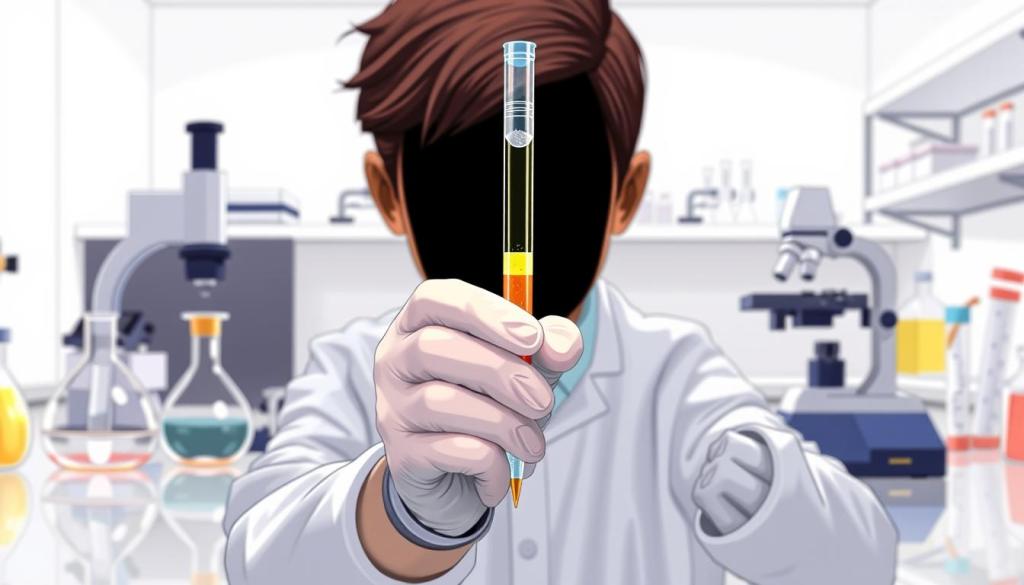
Good pipette care includes several important steps. These steps keep the tool and research safe. Scientists need to handle serological and standard pipettes with great care and precision.
Safe Handling Procedures
Safe pipette use means paying attention to a few important things:
- Keep the pipette straight when using it
- Don’t touch the shaft of the pipette
- Use the same amount of pressure every time
- Pause for a second after sucking up liquid
Tips for Avoiding Contamination
Stopping contamination is very important in labs. Here are some key steps to follow:
- Wet pipette tips 3-5 times before adding samples
- Use the right tips for the best seal
- Keep the area around you clean and steady
- Clean your pipettes often with the right solutions
The ISO8655 standard suggests special ways to improve pipetting accuracy. By using these methods, scientists can cut down on mistakes and keep their research top-notch.
Precision in pipette handling is not just a technique, but a commitment to scientific excellence.
Challenges in Pipetting
Scientific research needs to be precise. Volume dispensers are key to keeping experiments accurate. But, researchers face big challenges that can mess up their work.
Pipetting problems include technical limits and mistakes made by people. These issues can really affect the results and the trust in research.
Common Pipetting Problems
- Inconsistent volume dispensing
- User fatigue during repetitive tasks
- Technique variability
- Potential repetitive strain injuries
Solutions and Innovations
Modern labs are tackling pipetting problems with new tech. Electronic pipettes are a big help. They make results more accurate and cut down on mistakes.
| Challenge | Innovative Solution |
|---|---|
| Technique Variability | Connected Electronic Pipettes |
| User Fatigue | Ergonomic Design |
| Volume Accuracy | Advanced Calibration Techniques |
Pipette calibration is very important for keeping things precise. Experts say to calibrate pipettes every year or every 3-6 months if you use them a lot.
Advanced Pipetting Techniques
- Use reverse pipetting for volatile liquids
- Implement pre-wetting techniques
- Maintain consistent aspiration speed
- Select appropriate tip types
Electronic pipettes can cut down errors by up to 50%. This makes labs more efficient and research results more reliable.
The Future of Pipette Technology
The world of biological research is changing fast with new micropipette tech. We’re seeing a big move towards better liquid handler systems. These systems focus on being precise, easy to use, and smart.
Electronic pipettes are becoming the norm, replacing old manual methods. A big 77% of users want to make their work easier and more efficient.
Today’s labs are getting a new way to handle liquids. New micropipette designs use smart tech to make work easier and cut down on mistakes. Electronic pipettes can fill a 384 multiwell plate in just 30 seconds. This makes research faster and safer, helping to avoid injuries that affect over 75% of lab workers.
Automation in pipetting is a big step forward. It helps solve tough scientific problems. New liquid handler systems can do more work, make results more reliable, and save reagents.
The goal of pipette tech is to create smart systems that meet many research needs. These systems will help keep researchers safe and healthy. As tech gets better, micropipettes will become key tools in biological research.
FAQ
What is a pipette and why is it important in scientific research?
A pipette is a tool used in labs to move small amounts of liquid. It’s key for research because it helps make experiments reliable. This is by allowing scientists to add the exact amount of solution needed.
What are the main types of pipettes used in laboratories?
There are mainly three types of pipettes. Manual pipettes are traditional and precise. Electronic pipettes are ergonomic and efficient. Multichannel pipettes can fill many wells at once, perfect for high-throughput applications.
How do I choose the right pipette for my research?
Choosing the right pipette depends on several things. Consider the volume you need, how often you’ll use it, and the samples you’re working with. Think about the accuracy needed, the volume of your samples, and the specific research area.
What are the key components of a pipette?
A pipette has a few main parts. The body is the main structure. The plunger mechanism is for moving liquid. The tip attachment ensures precision and sterility.
How often should I calibrate my pipette?
Pipettes should be calibrated every year or 6-12 months. This depends on how often you use it and what the manufacturer says. If you use it a lot or in critical research, you might need to calibrate more often.
What are common mistakes to avoid when pipetting?
Don’t make these mistakes when pipetting. Avoid wrong tip insertion, uneven plunger pressure, and not pre-wetting tips. Also, don’t use the wrong angle or technique. These errors can mess up your results.
How do I maintain my pipette to ensure optimal performance?
To keep your pipette working well, clean it regularly and handle it carefully. Store it vertically and calibrate it often. Avoid extreme temperatures and humidity. Always use clean tips and be gentle with the pipette.
What types of pipette tips are available?
There are different pipette tips for various needs. Standard tips, low-retention tips, and filtered tips are available. Each type helps prevent sample loss, reduces contamination, and boosts precision.
What factors affect pipette accuracy and precision?
Several things can affect how accurate and precise a pipette is. User technique, environment, tip quality, and calibration status are important. Also, the pipetting method used matters. Good training, maintenance, and technique are key for reliable results.
What are the latest innovations in pipette technology?
New pipette tech includes better designs and smart features. These advancements aim to cut down on errors, boost efficiency, and ensure more accurate volume dispensing. They make lab work easier and more precise.






Leave a Comment
Your email address will not be published. Required fields are marked *